
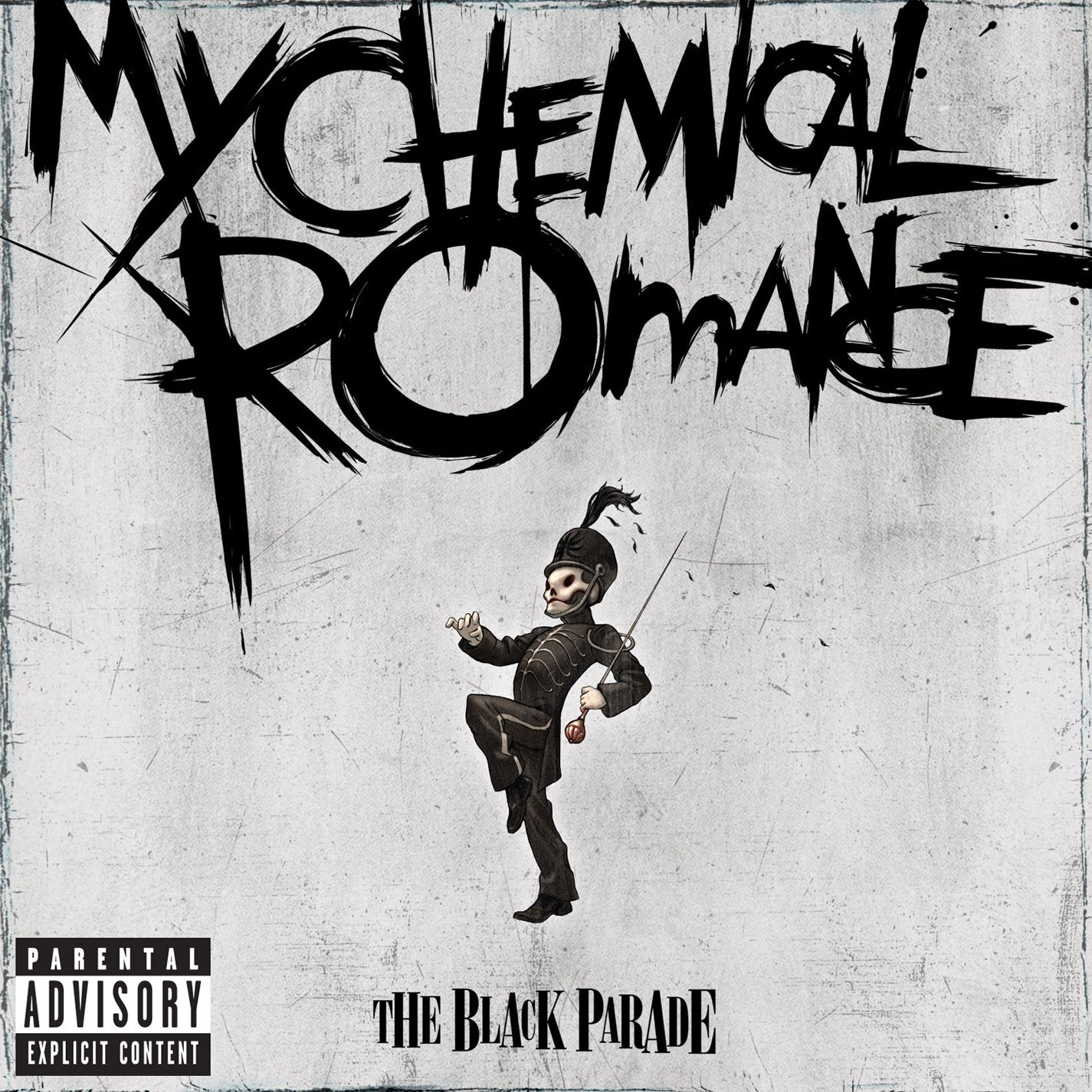
Reprise2006You can't just decide to make a classic album. If it were that easy, everyone would do it. We'd have to sort through piles of classic albums every week. An artist can't simply make up their mind that their new album is about to be a classic. But one thing that artists can do is try. They can put everything out there, hammering away at their own biggest ideas with all the resources available to them. That's a risky strategy. It doesn't work out often, and when it fails, the artist looks like a self-important fool. The conditions have to be exactly right. The artist has to be in the right place, mentally and temporally, to make something that will resonate and endure. In 2006, My Chemical Romance had the opportunity and the motive. They went for it, and they made it happen. They won.I didn't think that My Chemical Romance's third and best album was a classic when it first came out. I resisted it. The Black Parade, which turns 20 on Saturday, came with a whole lot of advance hype. There would be strings on this album. Horns. Choirs. Liza Minelli. Visual themes. A grand, pretentious overarching storyline. The band invented whole new personas for themselves. They wore matching costumes and added theatrical props to their live show. Every night on tour, they played the entire record in full before digging back into their previous hits. During the pre-release press cycle, Gerard Way even cut his hair short and bleached it to embody the cancer-patient alter ego that he'd conjured for the record. (He was really imitating past generations of rockers inventing new looks for new albums. To the best of my knowledge, chemotherapy doesn't shorten your hair or turn it blonde.)I was wrong about The Black Parade, and in the wake of the album's anniversary, I've caught myself wondering why. When The Black Parade came out, I'd just turned 27, which means I was about the same age as the members of the band, not their fans. Their fans were about a decade younger than any of us. They were the products of the mid-'00s MySpace emo boom, an easy scene to dismiss if you were a snarky aspiring rock critic in the mid-'00s. Two decades later, it's apparent that the MySpace emo boom was the last moment in history that guitar-based rock music could achieve cultural dominance amongst wide swaths of young people. We've had little rock-is-back rumbles since then, but nothing on the level of what MCR and their peers achieved in that moment. I had fun keeping tabs on that stuff at the time, but I should've paid better attention. This was an historic moment. We only get so many of those.My Chemical Romance were around in the earliest days of the emo boom times, and they were by far the most theatrical band from that scene, at least until the actual theater dorks like Panic! At The Disco came along. The "Helena" video, with its smudged makeup and its Broadway choreography, seemed unbelievably silly, at least compared to the rap and indie rock stuff that I loved at the time. When I flipped over to Fuse and saw the girl jumping out of the coffin to dance, I laughed out loud. I let those fripperies distract me from an all-timer of a rock chorus. That's on me. Those fripperies were what drew so many kids to MCR, and the all-timer choruses were what made them stay. Or I don't know, maybe it's the other way around.In any case, My Chemical Romance's 2004 major-label debut Three Cheers For Sweet Revenge went platinum, and then it sold another two million copies in intervening decades. Its success shoved MCR into the same conversations as the other Warped Tour bands that blew up among teenagers in that Web 2.0 era: Fall Out Boy, Taking Back Sunday, Hawthorne Heights, Thrice, the Starting Line, Brand New. My Chemical Romance couldn't wait to get out of those conversations.The band came up on the New Jersey basement-emo circuit, and Thursday's Geoff Rickly, another rising star in that sudden emo explosion, produced their 2002 debut I Brought You My Bullets, You Brought Me Your Love. If that album had come out a few months earlier, I might've seen MCR at one of the same Syracuse hardcore matinee shows where I used to see Thursday. But My Chemical Romance didn't want to take the mutually supportive catharsis of those basement shows to the masses, the way Thursday did. They also didn't want to transform it into bright and glossy pop, like Fall Out Boy. They wanted to make a horns-blasting, flags-flying classic rock album of epic proportions.When Gerard and Mikey Way were young boys, their father took them into the city to see the Smashing Pumpkins play Madison Square Garden on the Mellon Collie tour. When the brothers saw that, that's what they wanted to make. The Pumpkins' appetite for grandeur set them apart in the time of grunge, and My Chemical Romance had a similar relationship to the emo spaces from whence they sprang. They operated within the larger Warped Tour ecosystem, but that wasn't how they saw themselves. In Chris Payne's extremely readable emo oral history Where Are Your Boys Tonight?, Mikey Way says, "We wanted to be a rock band. At the time, we were at odds with the term 'emo,' and we did everything we could, kicking and screaming, to get away from it. Even if it meant risking everything."When they made The Black Parade, My Chemical Romance risked everything. They went into the process with the clear intent of crafting a vast and ambitious concept album. The record's working title was The Rise And Fall Of My Chemical Romance, but they decided, quite sensibly, that this idea was too cute. Before any of the music was written, Gerard Way came up with the Black Parade title, as well as the mythology, the arc, and the aesthetic. Mikey says that Gerard "had costumes and characters immediately, just drawing them in his notebook." Maybe Green Day's similarly grandiose, genre-defying 2004 album American Idiot was a precedent, too. MCR toured with Green Day in 2005, and they enlisted that band's greatest collaborator, Rob Cavallo, as their Black Parade co-producer. When they started making videos for the album, MCR brought in "Smells Like Teen Spirit" director Samuel Bayer. Their choice of collaborators purposefully aligned them with the previous decade's alt-rock titans, not with their own jelly-bracelet peers.MCR and Cavallo decamped to LA's famously spooky Paramour Mansion to record The Black Parade before they'd written almost anything, and they struggled through the sessions. Mikey Way, in particular, had a paralyzing fear of ghosts, and people love to talk about how that place is haunted. He developed night terrors so extreme that he had to take a mental-health break from the band. A newly sober Gerard threw himself into the writing process, coming up with an involved storyline about a dying man trying to make peace with his own regrets, inadequacies, and broken connections on the way out. Showbiz legend Liza Minnelli recorded a vocal cameo, probably more for symbolic presence than for actual vocal texture, though she did sing the hell out of her extremely brief part. Minnelli had never met the band, but she was happy to be included, and she did her work for free.When the painstaking production process was finally complete, Rob Cavallo celebrated by renting a private jet and flying the band to Vegas, where they stayed at the Real World suite in the MGM Grand. That's not emo behavior, or least it hadn't been emo behavior until emo became big business. It's arena rock behavior. The truly cool thing about The Black Parade is that My Chemical Romance weren't just dressing up in arena rock drag. It's a righteously stirring over-the-top opus, way closer to Queen or Bowie or Guns N' Roses than the Promise Ring or Sunny Day Real Estate. MCR kept the frantic energy of their earlier records, and they translated it into something truly absurd and majestic. It's inspiring that they tried, and it's even more inspiring that they nailed it.The Black Parade has the great rock-star combination of sincerity and irony, one of those classic situations where you can't tell where one ends and the other begins. When they play a blazing, soaring guitar solo, are they putting quotation marks around the blazing, soaring guitar solos from classic rock radio, or are they doing it for real? When Gerard Way brings a cheeky, sneery preen-snarl to his songs about love and death, is he distancing himself from his own words, or does that just come naturally to him? Does it matter? When I hear the tidal swells of melody on "I Don't Love You" today, I stop worrying about whether it's the obligatory power-ballad moment, and I just feel the power. This century has given us vanishingly few over-the-top power ballads on the level of "I Don't Love You." In the rare and miraculous case where a band has the clout and the inclination to put the necessary resources into the creation of a song like that, the listener must really stop fretting about intent.I couldn't stop fretting about intent, and context, and whatever ideas of coolness I had in 2006. I was not prepared to take The Black Parade seriously when it came out, and I had to be like, "Damn, that's pretty good" when I finally heard it. But I wasn't a convert immediately. A few months after the record came out, I got together with some critic friends and trucked out to Long Island to see My Chemical Romance headline Nassau Coliseum, the vast hulk of a dilapidated arena that wasn't as close to New York City as I thought. The building wasn't full, but the kids who gathered for the MCR experience were all-in. Thousands upon thousands of teenagers wore skeleton-hands gloves, and there was so much Nightmare Before Christmas merch on display that you'd think Jack Skellington was an emo frontman — which, come to think of it, maybe he was. The kids of Long Island were there for a Hot Topic rock opera, and MCR delivered.When I think back on that MCR show, it scarcely feels real — the Tim Burton-looking set, the matching costumes, the intro where stagehands wheeled Gerard Way out on a gurney. But when I read what I actually wrote in the moment, I see my own resistance at work, even the review was mostly positive: "My Chemical Romance isn’t an arena band, at least not yet; they’re still an emo band playing at an arena and pulling out every trick they know to convince us that they know what they’re doing... I couldn’t escape the nagging impression that MCR’s reach slightly exceeds its abilities." Maybe the decades have erased any awkwardness from my memory, or maybe I was just determined to hold back on my enthusiasm for a band that I still considered to be kids' stuff on some fundamental level.There is some awkwardness in The Black Parade. The oompah affectations of "Mama" still grate on me 20 years later, and I can feel Gerard Way reaching a little too hard for majesty here and there. Maybe the concept itself was a crutch. Both then and now, my favorite song on The Black Parade is the one that exists entirely outside of the overarching narrative. "Teenagers" is a bitchy blast, a turbo-glam anthem with nothing to tell us about life and death. It's just a half-joking Gerard Way roaring that teenagers scare the living shit out of him over some of the stompingest riffs of 2006. That night on Long Island, the teenagers ate it up. If I have one real complaint about The Black Parade, it's that it could use more songs like "Teenagers."Gerard Way said that he wrote "Teenagers" after finding himself on a New York subway car full of teenagers and realizing that they really did scare the living shit out of him. It got him thinking about his own not-that-distant teenage days and the adults that treated him as something less than human. It took forever to get back to Brooklyn the night after the Long Island show, and I vividly remembers all the teenagers who were on the train with me. They didn't scare me at all. I felt weirdly protective toward them. I had to take two or three trains to get back home that night, and the crowds of kids got smaller and smaller, but I could still tell who'd been at the show. By the time I reached my neighborhood, it was just me and a handful of Black and Latina girls in their skeleton-hand gloves. These kids defied the suburban mall-rebel image that I had for MCR fans, and maybe I should've thought a little harder about what their presence meant before writing that MCR weren't really an arena band.But then, The Black Parade didn't necessarily feel like a momentous cultural moment when it first came out, at least to someone as prematurely washed as me. The album was a hit, certainly. In its first week, it sold more than 200,000 copies but debuted at #2 on the album chart, stuck behind the first Hannah Montana soundtrack. (I wonder how many kids bought both of those albums that week.) "Welcome To The Black Parade" became the band's first and only top-10 hit on the Hot 100. The Black Parade ultimately went quadruple platinum, which means it sold more than Three Cheers For Sweet Revenge, but not much more. The album got generally positive reviews, and a few critics really went to bat for it, but it didn't crack the top 40 on the year-end Pazz & Jop poll. Right away, though, My Chemical Romance's peers knew that they'd all been lapped. In Where Are Your Boys Tonight?, there's a great moment where Taking Back Sunday's Fred Mascherino recalls the moment that MCR played The Black Parade for their Long Island peers: "Louder Now came out, and we're like, 'Oh man, we crushed this. No one can touch "Makedamnsure" or "My Blue Heaven!"' And then they played us Black Parade, and it's just like... motherfucker." Some of the press recognized The Black Parade as an event, too — the British vampires at the Daily Mail who published the alarmist trend-piece about "why no child is safe from the sinister cult of emo." That's dumber than fuck, but it's also a real sign of cultural impact.All these years later, it's clearer than ever that The Black Parade is My Chemical Romance's masterpiece and that it's the one true opus to come out of emo's arena moment. (Sorry, but My Chemical Romance are forever bound to that moment, whether or not that's what they wanted.) The band only had one more album in them, 2010's Danger Days: The True Lives Of The Fabulous Killjoys, before they hung it up. Now, they're back together, and they once again play The Black Parade in full every night on tour. They're still not an arena band, though. They leapfrogged that. They're a stadium band now. If anyone deserves that stadium status, it's them. When you set out to make a classic album and you actually succeed, stadiums are where you belong.
The Black Parade Turns 20
Full Article
Original Source
Read the full article at Stereogum →KhanList aggregates and links to publicly available news content. We do not host full articles from third-party sources. Always verify important information with original sources.