
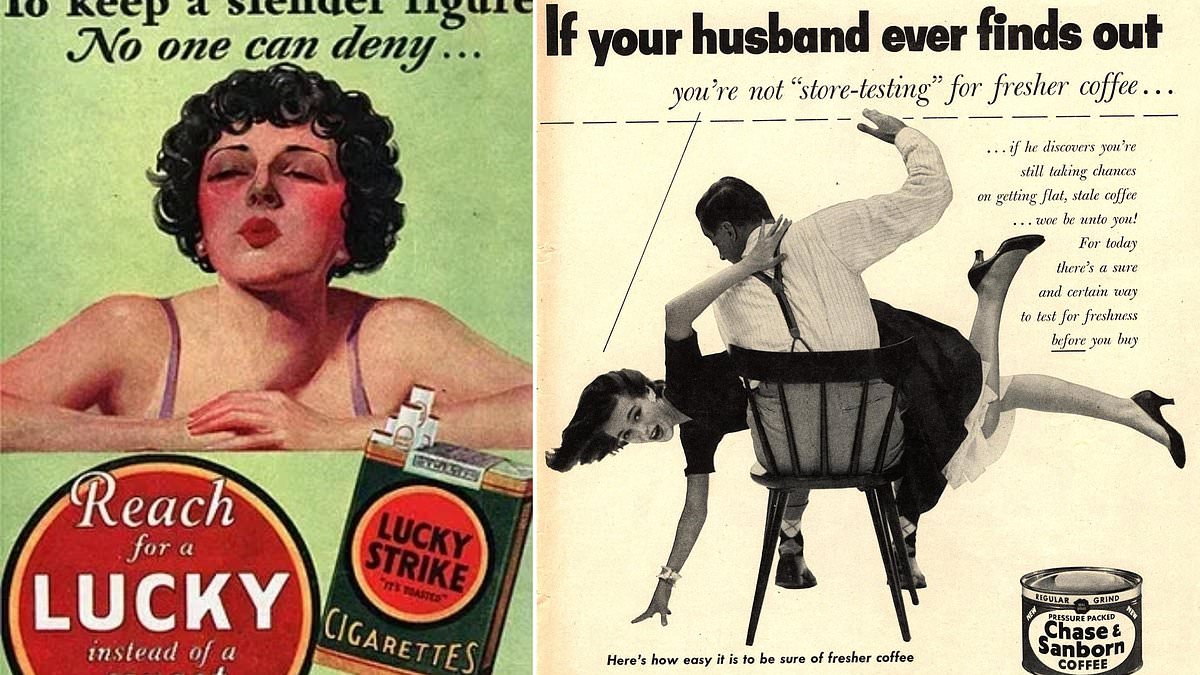
While brands tend to err on the side of caution when promoting their products in an era of social media and cancel culture, vintage posters unearthed from the 50s and 60s paint a very different picture of the marketing landscape. Far from being politically correct, these bizarre retro adverts - claiming cigarette smoking is good for you or using domestic violence imagery to promote coffee - would never even get made today. In some cases, it's the messaging that is cause for concern; an ad for Guinness claimed beer is 'good for you' while American cigarette brand Lucky Strike tried to appeal to women by suggesting smoking helps you achieve a 'slender figure'. Other advertisers used shocking visuals to sell their products; personal care brand Palmolive's ads for soap were criticised for sexualising the 'schoolgirl complexion' in the 40s. In rare instances, these posters were created for products that are now completely outdated or even downright illegal. Nearly 150 years ago, a New York pharmacy advertised 13-cent 'cocaine tooth drops' for children when the drug was used as a local anaesthetic in dentistry before its dangers became more widely known. American cigarette brand Lucky Strike tried to appeal to women by suggesting smoking helps you achieve a 'slender figure' In one unbelievable campaign for a coffee brand, the company uses an image of domestic violence in a poster for Chase & Sanborn coffee American tobacco companies were some of the worst offenders at the time, as brands like Chesterfield, Camels, Embassy and Viceroys falsely claimed smoking could ease 'throat irritation' or help you drop a dress size.Founded in Virginia by RA Patterson in 1871, Lucky Strike glamourised the cancer-causing habit in several posters, including one festive advert that turned Santa into a smoker along with the caption: 'Luckies are easy on my throat.' Reacting to the controversial promo on Reddit, one person wrote: 'In my experience as a smoker, Luckies were among the harshest on my throat.' Chesterfield, originally introduced in Missouri in the 19th century, flogged cigarettes as the perfect 'Father's Day gift' during an era where the visual of a young, freckle-faced boy buying cartons was 'as American as apple pie'. 'I remember Momma and Poppa!' the speech bubble on one such poster read, as the campaign was extended for Mother's Day. If Chesterfield appealed to family values and gifting traditions, Camels boldly declared 'More doctors smoke Camels than any other cigarette' in what became a widely known marketing slogan for the brand in the late 40s. As the dangers of smoking started to become known, tobacco companies featured actors posing as doctors - and even dentists - on their posters to claim that cigarettes weren't just harmless but that they were actually healthy. One slogan on a print ad for Lucky Strike read: '20,679 physicians say "Luckies are less irritating." Father Christmas somewhat loses his innocence when pictured holding a lit cigarette Chesterfield, originally introduced in Missouri in the 19th century, flogged cigarettes as the perfect 'Father's Day gift' during an era where the visual of a young, freckle-faced boy buying cartons was 'as American as apple pie' Camels boldly declared 'More doctors smoke Camels than any other cigarette' in what became a widely known marketing slogan for the brand in the late 40s Embassy claimed its cigarettes released 'milder smoke' in another example of tobacco companies irresponsibly suggesting the habit is harmlessIn 1955, 7Up ran a controversial campaign with the slogan 'Why we have the youngest customers' to convince customers that the sugary lime soda was actually 'pure' enough for babies to drink. One especially striking image showed an allegedly 11-month-old baby lifting a green 7Up bottle to his mouth as the brand declared 'he isn't even our youngest customer'. The beverage firm even encouraged mothers to add 'equal parts' 7Up to their baby's milk to create 'a wholesome combination'. As far as disturbingly inappropriate ads go, one of the worst offenders was American fragrance brand Love's Baby Soft's 70s 'innocence is sexier than you think' campaign. It featured a young girl wearing makeup while cuddling a cuddly toy as critics lambasted the brand for the vile suggestion, with one Reddit user writing: 'I understand that the 70s were a different time but how the f***was this ever thought to be acceptable?'Reddit users in the 21st century were similarly appalled when they discovered a series of sepia-tinged posters for the personal care brand Palmolive as part of the 'Now I'm Schoolgirl Complexion'. In 1955, 7Up ran a controversial campaign with the slogan 'Why we have the youngest customers' to convince customers that the sugary lime soda was actually 'pure' enough for babies to drinkThis poster for a cosmetics brand sexualises a young girl and promotes a highly inappropriate message Lustre Creme shampoo's 'pink is for girls' tagline would have drawn criticism for playing into gender stereotypes, some social media users declaredReddit users in the 21st century were similarly appalled when they discovered a series of sepia-tinged posters for the personal care brand Palmolive as part of the 'Now I'm Schoolgirl Complexion'One image showed a scantily-clad woman holding a towel up to her chest as a speech bubble read: 'Now I'm schoolgirl complexion all over!' The brand suggested that using its green olive oil-infused bar of soap would give customers youthful, soft and clear skin like a 'schoolgirl'. Finally, Lustre Creme shampoo's 'pink is for girls' tagline would have drawn criticism for playing into gender stereotypes, some social media users declared.
The bizarre vintage posters that would never get approved today - including Lucky Strike ads telling women to smoke for a 'slender figure'
Full Article
Original Source
Read the full article at Dailymail →KhanList aggregates and links to publicly available news content. We do not host full articles from third-party sources. Always verify important information with original sources.