
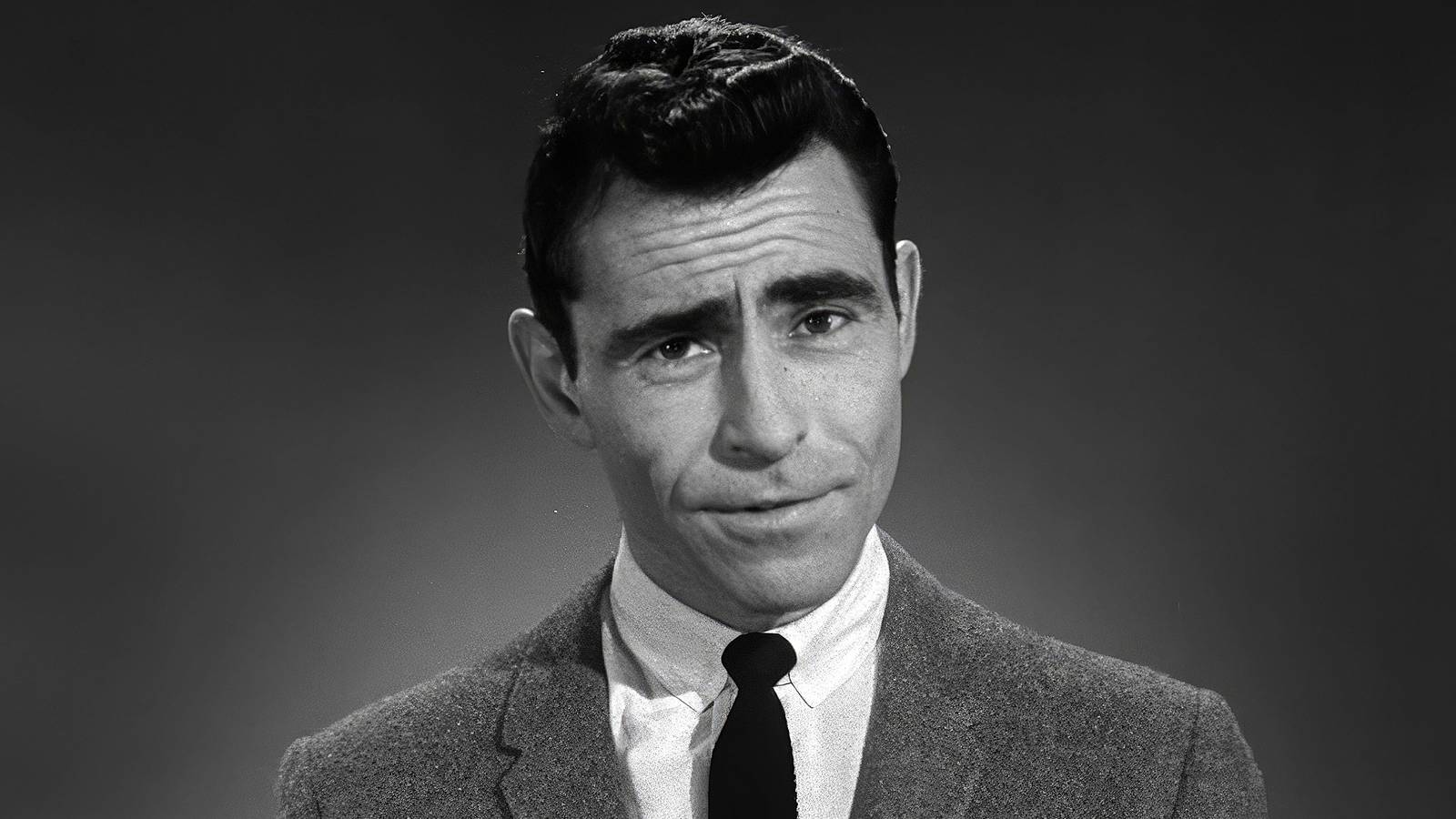
Image via CBS Published Aug 17, 2026, 11:16 PM EDT Lloyd 'Happy Trails' Farley: the man, the myth, the legend. What can be said about this amazing - and humble - man that hasn't been said before? Or, more accurately, what can be said in public? Born in Calgary, Alberta, Canada, Lloyd is a master of puns and a humorist, who has authored one pun book to date - Pun and Grimeish Mint - and is working on a second. His time with Collider has allowed Lloyd's passion for writing to explode, with nearly 1,000 articles to his name that have been published on the site, with his favorite articles being the ones that allow for his sense of humor to shine. Lloyd also holds fast to the belief that all of life's problems can be answered by The Simpsons, Star Wars, and/or The Lion King. You can read more about Lloyd on his website, or follow his Facebook page and join the Llama Llegion. Happy trails! Sign in to your Collider account Among the many things that make The Twilight Zone one of television's greatest achievements is the fact that even decades after its conclusion in 1964, many episodes remain relevant today, almost eerily so. One of its most lauded episodes, “Time Enough at Last,” is one of these. It tells the tale of a man, played by Burgess Meredith (the Penguin from the 1966 Batman series), who wishes for solitude so he can simply have time to read without interruption. And his wish is granted… in true Twilight Zone fashion, that is. The episode's lessons could, and perhaps even should, be taught today. 'The Twilight Zone's "Time Enough at Last" Proves That Maybe Wishes Should Never Come True Henry Bemis (Meredith) is a bank teller. He is also an avid bookworm, and his passion for books often crosses into his job, annoying a customer with a ceaseless barrage of information about the novel he's currently reading: Charles Dickens' David Copperfield. Both his boss and his wife berate him for wasting far too much time reading, with his wife going so far as to destroy a book of poetry in front of him. But Bemis is not one to let others impinge on his passion, and one day, like every other day, he takes refuge in the bank's vault during his lunch break, allowing him to read without being disturbed. Collider Exclusive · Sci-Fi Survival Quiz Which Sci-Fi World Would You Survive? The Matrix · Mad Max · Blade Runner · Dune · Star Wars Five universes. Five completely different ways the future went wrong — or sideways, or up in flames. Only one of them is the world your instincts were built for. Eight questions will figure out which dystopia, galaxy, or desert wasteland you'd actually make it out of alive. 💊The Matrix 🔥Mad Max 🌧️Blade Runner 🏜️Dune 🚀Star Wars TEST YOUR SURVIVAL → 01 You sense something is deeply wrong with the world around you. What do you do? The first instinct is often the truest one. APull on every thread until I understand the system — then figure out how to break it. BStop asking questions and start stockpiling — food, fuel, weapons. Questions don't keep you alive. CKeep my head down, observe carefully, and trust no one until I know who's pulling the strings. DStudy the patterns. Every system has a rhythm — learn it, and you learn how to survive it. EFind the people fighting back and join them. You can't fix a broken galaxy alone. NEXT QUESTION → 02 In a world of scarcity, what resource do you guard most fiercely? What we protect reveals what we believe survival actually requires. AKnowledge. If you understand the system, you don't need resources — you can generate them. BFuel. Everything else — movement, power, escape — runs on it. CTrust. In a world of fakes and informants, a truly reliable ally is rarer than any commodity. DWater. And after water, information — the two things empires are truly built on. EShips and credits. The galaxy is big — you survive it by being able to move through it freely. NEXT QUESTION → 03 What kind of threat keeps you up at night? Fear is useful data — if you're honest about what you're actually afraid of. AThat reality itself is a lie — that everything I experience has been constructed to keep me compliant. BA raid. No warning, no mercy — just the roar of engines and then nothing left. CBeing identified. Once someone with power decides you're a problem, you're already out of time. DBeing outmanoeuvred — losing a political game I didn't even know I was playing. EThe Empire tightening its grip until there's nowhere left to run. NEXT QUESTION → 04 How do you deal with authority you don't trust? Every dystopia has a power structure. Your approach to it determines everything. ASubvert it from the inside — learn its rules well enough to weaponise them against it. BIgnore it and stay out of its reach. The further from any power structure, the better. CAppear to comply while doing exactly what I need to do. Visibility is the enemy. DManoeuvre within it carefully. You can't beat a system you refuse to understand. EResist openly when I have to. Some things are worth the risk of being seen. NEXT QUESTION → 05 Which environment could you actually endure long-term? Survival isn't just tactical — it's physical, psychological, and very much about where you are. AUnderground bunkers and server rooms — cramped, artificial, but with access to everything that matters. BOpen wasteland — brutal sun, no shelter, constant movement. At least the threat is honest. CA dense, rain-soaked city where you can disappear into the crowd and nobody asks questions. DMerciless desert — extreme heat, no water, and something enormous living beneath the sand. EThe fringe — backwater planets and busy spaceports where the Empire's attention rarely reaches. NEXT QUESTION → 06 Who do you want in your corner when things fall apart? The company you keep is the clearest signal of who you actually are. AA tight crew of believers who've seen behind the curtain and have nothing left to lose. BOne or two people I'd trust with my life. Any more than that and someone talks. CNobody, ideally. Alliances are liabilities. I work alone unless I have no choice. DA community bound by shared hardship and mutual survival — people who need each other to last. EA ragtag team with wildly different skills and total commitment when it counts. NEXT QUESTION → 07 Where do you draw the line — if you draw one at all? Every survivor eventually faces a moment that tests what they're actually made of. AI won't harm the innocent — even the ones who'd report me without hesitation. BI do what I have to to protect the people I've chosen. Everything else is negotiable. CThe line shifts depending on who's asking and what's at stake. DI draw a long-term line — nothing that compromises my people's future, even if it'd help now. ESome lines, once crossed, can't be uncrossed. I know which ones they are. NEXT QUESTION → 08 What would actually make survival worth it? Staying alive is one thing. Having a reason to is another. AWaking others up — dismantling the illusion so no one else has to live inside it. BFinding somewhere — or someone — worth protecting. A reason to keep moving. CAnswers. Understanding what I am, what any of this means, before time runs out. DLegacy — shaping the future in a way that outlasts me by generations. EFreedom — for myself, for others, for every world still living under someone else's boot. REVEAL MY WORLD → Your Fate Has Been Calculated You'd Survive In…Your answers point to the world your instincts were built for. This is the universe your temperament, your survival instincts, and your particular brand of stubbornness were made for. The MatrixYou took the red pill a long time ago — probably before anyone offered it to you. You're a systems thinker who can't help but notice the seams in things. You're drawn to understanding how the system works before figuring out how to break it. You'd find the Resistance, or it would find you — your instinct for spotting constructed realities is the machines' worst nightmare. You function best when you have access to information and the freedom to act on it. The Matrix built an airtight prison. You'd be the one probing the walls for the door. Mad MaxThe wasteland doesn't reward the clever or the well-connected — it rewards those who are hard to kill and harder to break. That's you. You don't need comfort, community, or a cause larger than the next horizon. You need a vehicle, a clear threat, and enough fuel to outrun it — and you're good at all three. You are unsentimental enough to survive that world, and decent enough — just barely — to be something more than another raider. In the wasteland, that distinction is everything. Blade RunnerYou'd survive here because you know how to exist in moral grey areas without losing yourself completely. You read people accurately, keep your circle small, and ask the questions others prefer not to answer. In a city where humanity is a legal designation rather than a feeling, you hold onto something that keeps you functional. You're not a hero. But you're not lost, either. In Blade Runner's world, that distinction is everything. DuneArrakis is the most hostile environment in the known universe — and you are precisely the kind of person it rewards. Patience, discipline, and political awareness are your core strengths — and on Arrakis, they're survival tools. You understand that the long game matters more than any single victory. Others come to Dune and are consumed by it. You'd learn its logic and earn its respect. In time, you wouldn't just survive Arrakis — you'd begin to reshape it. Star WarsThe galaxy far, far away is vast, loud, and in a constant state of violent political upheaval — and you wouldn't have it any other way. You find meaning in being part of something larger than yourself — a cause, a crew, a rebellion. You'd gravitate toward the Rebellion, or the fringes, or whatever pocket of the galaxy still believes the Empire's grip can be broken. You fight — not because you have to, but because standing aside isn't something you're capable of. In Star Wars, that willingness is what makes all the difference. ↻ RETAKE THE QUIZ Suddenly, an enormous explosion outside rattles the vault and lays Bemis out for a time, but after regaining consciousness, he dons his thick glasses and emerges from the vault, where he sees for the first time the utter devastation left by an H-Bomb. He finds the bank has been leveled, and his former coworkers lie dead, and as he ventures out further, he sees that the entire city has been destroyed, a city that was just recently bustling and now serves as nothing more than a graveyard. He realizes that nuclear war has devastated Earth, and he is the lone survivor in the immediate area, saved by being inside the vault. Bemis is truly and devastatingly alone, with no way of looking for other survivors. He'll live a lifetime on canned food and whatever other provisions he can find, but without anything to live for, his life is meaningless. He stumbles upon a revolver and comes achingly close to using it to end his life until his eye catches a public library in the distance. He makes his way there and is overjoyed to see that the books are still intact. Everything he has ever read, everything he has ever wanted to read, is right there, and with no one to interrupt or chastise him, he has all the time in the world to read. But as he rummages through the books, he trips, causing his glasses to fall off and shatter. In an instant, his own personal Heaven turns to Hell; he has everything he hoped for – time, solitude, and books – but he will never be able to read them. 'The Twilight Zone's "Time Enough at Last" Holds a Mirror to Today's World So, what does "Time Enough at Last" have to say? The threat of nuclear war is just as real today as it was then, and although we're generations away from having seen the horrors of Hiroshima firsthand, we are, literally, the press of a button away from global devastation and live under its shadow every day. Only that may be the first lesson "Time Enough at Last" has to teach us: we don't. Or, more accurately, it's just one of a legion of shadows we've learned to live with. We are constantly bombarded with news from around the world about wars, disasters, and global threats, but, just like the headline of the paper that Bemis glances at briefly that reads "H-Bomb Capable of Total Destruction," we read and move on, almost unable, or unwilling, to recognize it as anything more than just something else out of our control. That is if we're paying attention at all. Just like Bemis, who placed his own personal satisfaction over others when they were alive, their own wants and needs come first. 'The Twilight Zone's "Time Enough at Last" Exposes the Irony of Isolation Today Image via CBS There's a scene in Bruce Almighty where Jim Carrey's Bruce, who has taken on the responsibilities of Morgan Freeman's God, gives up on reading the world's prayers via email and just automatically gives everyone exactly what they're praying for. That decision is almost impressively bad, with the lack of foresight about the consequences of granting those wishful prayers leading to extreme chaos worldwide. Bemis longed for and wished for isolation, and he got it in spades. But that selfish desire puts himself first before everyone else, including anyone who might be able to repair his glasses (rather shortsighted, right?), and realistically, few people today think of what is to follow after they get what they want. Interestingly, it's Bemis' desire for isolation that speaks loudest to today's world. Social media and technology have effectively upended the idea of real-world relationships and social interaction, all of it then concentrated in a post-COVID world. But what's ironic is that we continue digging deeper into isolation while at the same time being instilled with the fear of being isolated. As much as Bemis rejoices over finally having the time to read uninterrupted, the moments before of utter despair will eventually return, broken glasses or not. "Time Enough at Last" is timeless, and we would do us well to learn the lessons from this iconic story before we're hit with our own personal Rod Serling-ized Twilight Zone ending. The Twilight Zone is streaming on Paramount Plus in the U.S. Release Date 1959 - 1964-00-00 Network CBS Showrunner Rod Serling Directors John Brahm, Buzz Kulik, Douglas Heyes, Lamont Johnson, Richard L. Bare, James Sheldon, Richard Donner, Don Medford, Montgomery Pittman, Abner Biberman, Alan Crosland, Jr., Alvin Ganzer, Elliot Silverstein, Jack Smight, Joseph M. Newman, Ted Post, William Claxton, Jus Addiss, Mitchell Leisen, Perry Lafferty, Robert Florey, Robert Parrish, Ron Winston, Stuart Rosenberg Writers Charles Beaumont, Richard Matheson, Earl Hamner, Jr., George Clayton Johnson, Jerry Sohl, Henry Slesar, Martin Goldsmith, Anthony Wilson, Bernard C. Schoenfeld, Bill Idelson, E. Jack Neuman, Jerome Bixby, Jerry McNeely, John Collier, John Furia, Jr., John Tomerlin, Lucille Fletcher, Ray Bradbury, Reginald Rose, Sam Rolfe, Adele T. Strassfield Creator(s) Rod Serling
The Best 'Twilight Zone' Episode of All Time Is Still a Chilling Masterpiece
Full Article
Original Source
Read the full article at Collider →KhanList aggregates and links to publicly available news content. We do not host full articles from third-party sources. Always verify important information with original sources.