
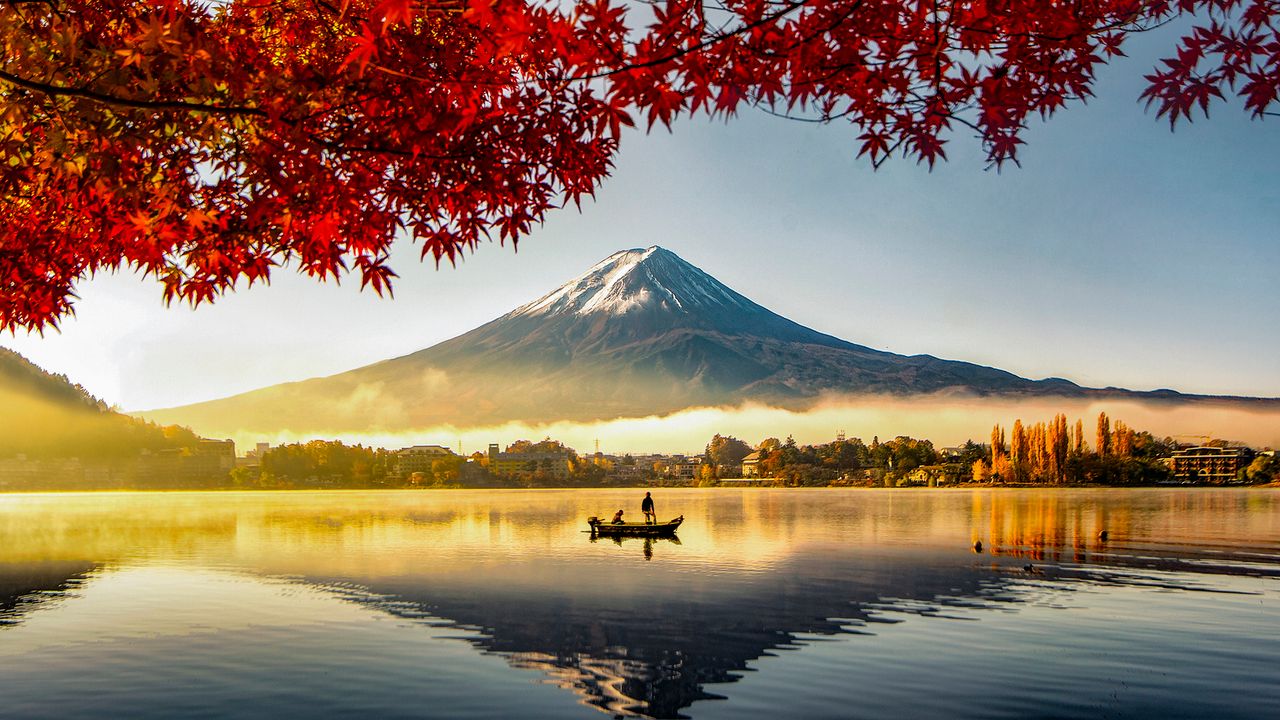
It all depends on what you'd like to get out of your trip.GettyAnother year, another ranking from our Readers’ Choice Awards that says the best time to visit Japan is now—the Land of the Rising Sun has once again been voted number one on our list of the best countries in the world. There’s so much to enjoy here, from relaxing ryokans in Kyoto and mesmerizing museums in Tokyo, to the contemporary art installations in the Setouchi Islands and the culinary craft of fermentation in the Niigata prefecture. But when to do it?Here to offer their advice on the best time to visit Japan, as well as some counsel for first-time visitors, are Condé Nast Traveler Top Travel Specialists who focus on trips to Japan: Andres Zuleta, founder of Boutique Japan, and Alys Colayera of Black Tomato.The first tip? Accept that you won’t be able to do everything you want to do in a single go. “Japan rewards thoughtful planning, but it’s best not to try to see too much in one trip,” says Colayera. “Allow time to enjoy each place rather than packing in a new city every day, and book sought-after hotels and experiences well in advance during peak seasons.” Just remember, this beautiful archipelagic country is made up of over 14,000 islands—that’s just 14,000 reasons to come back in the future.So whether you want to put together a wide-ranging grand tour of Japan’s off-the-beaten-path destinations or a perfect weekend in Tokyo, per pop star Rina Sawayama, here’s the best time to visit Japan.This article has been updated with new information since its original publish date.Beyond cherry blossom season in the spring, Japan has plenty to offer tourists in the summer, fall, and winter too. Getty ImagesWhen is the best time to go to Japan?Winter is the best time to visit Japan for an all-purpose trip. The brisk weather is perfect for enjoying the warmth of hot springs, and views of Mount Fuji are typically better in this season when the air is expected to be clearer. Zuleta of Boutique Japan recommends going after the New Year’s rush: “From around January 15 to March 15, you can almost feel as if you have the country to yourself. The exception is at winter resorts, which will be crowded with skiers and snowboarders.” Just be sure to avoid the winter holidays themselves, when there are significant closures—many shops, restaurants, and other places of interest close for several days or longer around this time of year.However, as with most destinations anywhere in the world, there are good reasons to go to Japan, regardless of season. When you should go depends on what you’re looking for. In the spring, you of course have cherry blossom season—a gorgeous, yet crowded and expensive time of year. Colayera of Black Tomato suggests setting realistic expectations: “Cherry blossom season is lovely and indeed beautiful, but it is absolutely heaving with people given its popularity and demand. Additionally, it is the most expensive time to be in Japan.” She recommends visiting in the autumn, when the equally-gorgeous changing leaves draw travelers to a lesser extent.It’s also a fabulous idea to visit Japan in the autumn, when comfortable temperatures and fall foliage arrive. The red and gold leaves draw lots of tourists too—though not as many as the cherry blossoms—so Colayera suggests less-trammeled areas like “the Kiso Valley, where the historic post towns and forested trails make a lovely autumn setting, or parts of Shiga Prefecture around Lake Biwa.” These places aren’t crowd-free, she says, but they often feel more relaxed than Japan’s best-known foliage spots.Summers in Japan are hot and humid, so they’re not for everyone, but Zuleta says the countless matsuri, or festivals, and can be a lively time of year to be in Japan. “It’s also a wonderful time for hiking in the Japanese Alps, visiting cooler highland areas, or exploring coastal destinations,” says Colayera. “Cities can be hot and humid, so plan outdoor activities for the morning, and build in time to rest.”When is the cheapest time to go to Japan?The cheapest time to visit Japan is in January and February. Bear in mind that this principle only applies outside the New Year holiday period and major ski destinations like Hokkaido. If you really want to get good bang for your buck, consider going to Japan in the summer.Alternately, Colayera says that summer is not a bad time to visit Japan: “It's the best-value time of year, even if June and July can be hot and humid—for some, that type of weather is fine and aligns nicely with school holidays for families.” That is also considered the rainy season, but in reality, you only really get little bursts of rain, rather than torrential downpour, she says: “Besides, everything in Japan is very well air-conditioned.”When planning your trip, be mindful of the Japanese holiday schedule, marked by many public observances like the Emperor’s Birthday and Coming of Age Day. Prices tend to rise around Golden Week (from April 29 to May 5), cherry blossom season, autumn foliage, and Obon celebrations in August.When is peak travel season in Japan?Springtime in Japan is undoubtedly the peak travel season because of cherry blossom season, say Wiggins and Tadehara. “Overcrowding of famous sites in Kyoto and Tokyo has resulted in tourists having to wait in excessively long lines. As a result, they plan spring trips years ahead of time to secure their spot.”To mitigate the effects of overtourism, Wiggins and Tadehara suggest the lesser-known regions of Japan that still have breathtaking cherry blossom vistas, even if they’re not as well-known as Kyoto: “In western and central Japan, mountain towns like Fukui, Tonami, and Toyama have developed their tourism industries to support travelers seeking a less hectic but equally meaningful visit to Japan to see the cherry blossoms.”I’m visiting Japan for the first time. Which cities should I visit?For first-timers to Japan, Tokyo and Kyoto are the must-visit cities, and for good reason. Tokyo has so much to offer that one can’t truly see everything in just one trip—and that’s the beauty of it, Zuleta says: “It's an incredibly layered city with quiet, charming neighborhoods as well as bustling neon-filled districts. It can be easy to have a touristy experience in Tokyo that barely scratches the surface without proper preparation. But with some research or the help of a travel specialist, you can get under the surface of this eclectic, ultra-walkable city, which abounds with adorable backstreets, cozy cafés and restaurants, amazing shops and art, and more.”While Kyoto is best known as a haven for astoundingly rich Japanese culture and history, Zuleta says that the city is also home to a thriving contemporary culture, with inspiring design, cuisine, and arts. “Like Tokyo, it's sadly too easy to fall into tourist traps and Instagram black holes, but with proper research or guidance, Kyoto is simply magnificent and a worthwhile destination.”To complement the cities, first-timers should spend at least a night or two at the rural traditional inns, called ryokan, somewhere in the countryside. There are beautiful ryokan all over the country, so the options for this are virtually endless. Zuleta suggests going to the lush Izu Peninsula; and the hot springs of Kaga Onsen, near the historic city of Kanazawa.For first-timers to Japan, Tokyo and Kyoto are the must-visit cities, and for good reason. Getty ImagesHow many days would I need to spend in Japan as a first timer?To get the most of a first-time trip to the country, all our travel experts recommend a trip of 10 to 14 days. This is an ample amount of time to explore both Tokyo and Kyoto, as well as some of the more rural towns in between, or even to see other nearby cities where there’s plenty to do, like Osaka, best known as Japan’s kitchen for its exemplary food scene. Beyond those ‘big three’ destinations, our Top Travel Specialists have also recommended places like the Kiso Valley, for its well preserved Edo-period post towns; Hiroshima, to witness the legacy of World War II; and Wazuka, renowned for its private tea plantations.Still, Zuleta emphasizes that any time you can spend in Japan is time well spent: “On the one hand, the more time you have the better. On the other hand, even with a week in Japan you can experience a lot, without too much rushing around. My advice would be to take any opportunity you have to visit, even if it's not necessarily as long as you wish you had.”What is the tipping culture in Japan?It is not customary to tip in Japan. In fact, you should not do it at all, as it can be considered offensive. “If you want to tip—for example, in some high-end ryokans—they may accept gratuities for exceptional service,” Colayera says. (To be safe, ask the staff if they accept cash tips as a gesture of thanks.) “If you do tip, you must put it in a sealed envelope. Cash is considered dirty and germy.”To express your gratitude to tour guides, Colayera suggests instead an exchange of gifts: “We sometimes encourage our travelers to bring something small from their hometowns, like some stationary or candy that one can’t get in Japan. Our clients may receive gifts from the guides—some stickers or a key ring—so if you give them something, you will have something to remember them by and they you.”What else should I know before visiting Japan?If it’s your first time to Japan, the etiquette and cultural expectations can seem complicated and overwhelming. “The good news is that most Japanese people don't expect visitors to know all the ins and outs of Japanese etiquette,” says Zuleta of Boutique Japan. Still, it’s important to always be respectful of the locals and follow their lead. For example, if all the people around you on the shinkansen (bullet train) are relaxing quietly, it would be considered very disrespectful to ruin the vibe by chatting loudly with your fellow travelers.That said, Zuleta emphasizes one particular cultural guideline in Japan: non-essential dietary requests and preferences. If you have an allergy or a religious dietary requirement, it’s important to give the restaurant, hotel, or ryokan significant advance notice, preferably when you book multiple days ahead of time. The staff can then say they will be able to help you, or kindly inform you that they cannot accommodate your need. “But otherwise, catering to individuals’ dietary preferences is not a common practice in Japanese culture,” Zuleta says. “Requests to modify menus—especially at the last minute—can be seen as highly disrespectful.” Again, part of being a good traveler is to respect the local culture, wherever you go, so adaptability and advance planning are key.As for other practical tips, Colayera suggests checking the dates of national holidays to know when things are operating or closed, and looking into services that can forward your luggage between hotels—navigating public transport in Japan with several bags in your possession can be a real pain. “And remember that travel times can be longer than they look on a map,” she says. “An IC transit card, some cash, and a few basic Japanese phrases can also make getting around easier.”Ready to book your own trip? Read more about our Curated Escapes with Abercrombie & Kent here.Matt Ortile was previously an associate editor at Condé Nast Traveler. He covers, among many topics: wine and spirits, LGBTQ+ travel, and sustainable and ethical tourism. As a writer, Ortile has reported from destinations like France, Saudi Arabia, Palau, Panama, and the Venice Simplon-Orient Express. As an editor, he published ... Read More
The Best Time to Visit Japan, Whether You Want to Save Money or Avoid Crowds
Full Article
Original Source
Read the full article at Cntraveler →KhanList aggregates and links to publicly available news content. We do not host full articles from third-party sources. Always verify important information with original sources.