
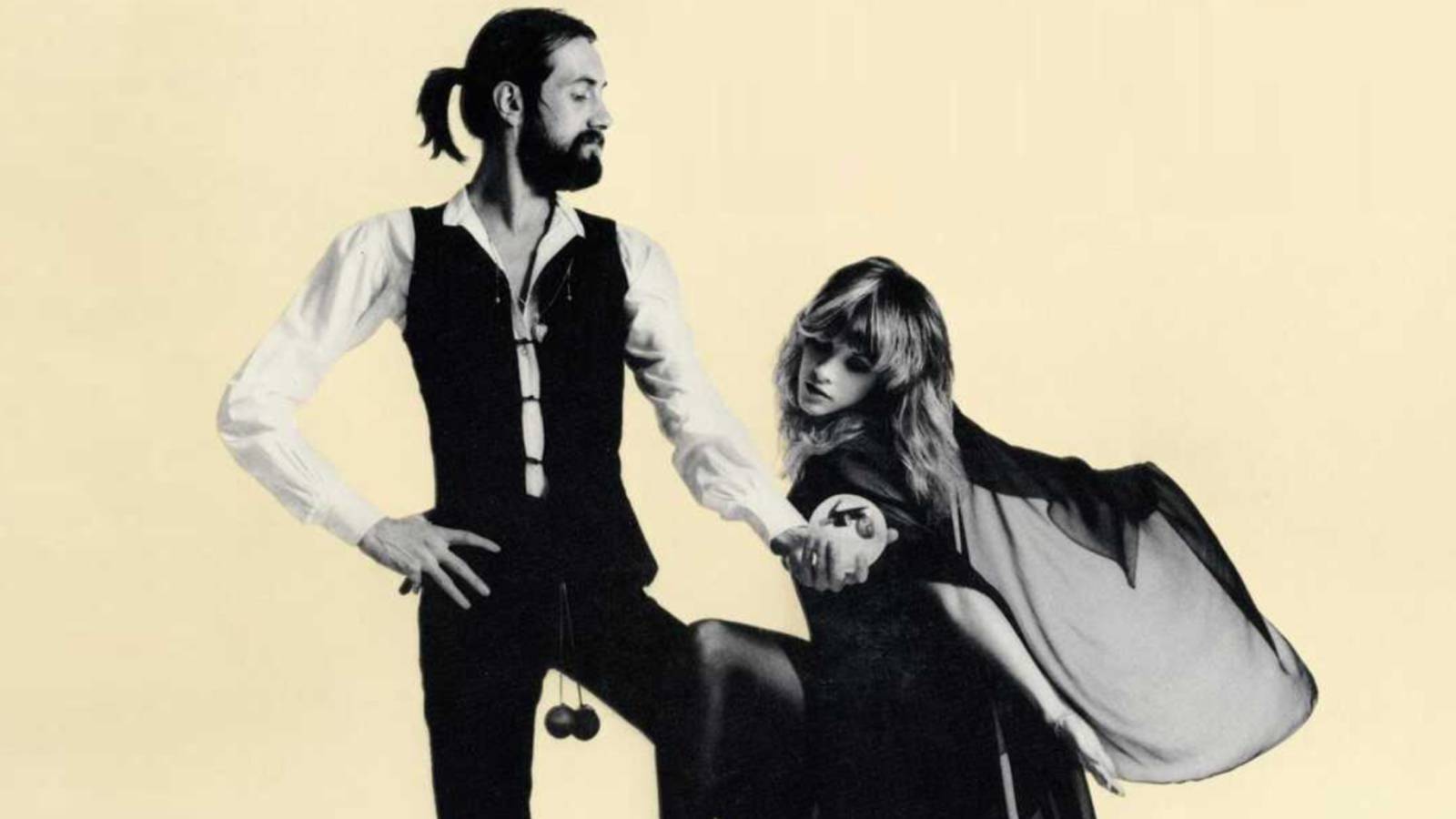
Image via Warner Records Inc. Published Jul 22, 2026, 1:25 PM EDT Kelcie Mattson is a Senior Features author at Collider. Based in the Midwest, she also contributes Lists, reviews, and television recaps. A lifelong fan of niche sci-fi, epic fantasy, Gothic horror, elaborate action, and witty detective fiction, becoming a pop culture devotee was inevitable once the Disney Renaissance, Turner Classic Movies, BBC period dramas, and her local library piqued her imagination. Rarely seen without a book in one hand and a cup of coffee in the other, Kelcie explores media history (especially older, foreign, and independent films) as much as possible. In her spare time, she enjoys video games, amateur photography, geeking out over music, and attending fan conventions with her Trekkie family. Sign in to your Collider account From producer Phil Spector's innovative "Wall of Sound" style to the "album era," the 1970s were a pivotal time for the rock-and-roll genre. Technological advancements and a keen hunger for self-expression ushered in previously unparalleled levels of experimentation; the category's heaviest hitters reframed their albums as interconnected storytelling rather than a collection of radio-driven singles, and they pushed engineering limits to their breaking point just to discover what possibilities lay beyond. Saying the results continue to resonate would be the understatement of the 20th and 21st centuries. The fearless history-makers of the '70s have inspired countless modern musicians to embrace forward-thinking reinvention. Narrowing each year down to one album involved some impossible choices, but that's a testament to the decade's abundant talent. 10 'All Things Must Pass' — George Harrison (1970) George Harrison didn't necessarily need to prove his worth, given his extraordinary contributions to the Beatles' prolific discography. Embarking on a solo career months after the band's dissolution, however, came with the baggage of expectation. Could the Quiet Beatle possibly match the standard set by John Lennon and Paul McCartney, the genre's most consummate hit-makers? The answer was a revelation. With "All Things Must Pass," the Liverpudlian lad whose trailblazing rhythm guitar technique cemented his bandmates' alchemy finally stretches his wings and soars. Harrison pours the years he'd devoted to honing his craft into an artistic declaration. The triple record revels in its freedom, nimbly bridging folk ballads, hard rock, blues, gospel, and Indian classical music. Harrison's affinity for toe-tapping hooks reaches a career apex, and he wraps the sublime anthemic hits inside a vulnerable emotional center; "All Things Must Pass" is a canvas of spiritual yearning, frustration, compassion, mourning, and catharsis. For pure god-tier rock, however, look no further than the thunderous "Wah-Wah" and the piercing slide guitar riffs on "Art of Dying" or "What Is Life." Mature, eloquent, and sincere to the bone, the introverted Beatle was silent no more. 9 'Blue' — Joni Mitchell (1971) Joni Mitchell's fourth album achieves the impossible by living up to its impossibly high reputation. The confessional to end all confessionals, "Blue" swirls Mitchell's autobiographical loneliness, sorrow, regret, and restlessness into poetic intimacy and painstaking urgency. The self-produced, stripped-down arrangements emphasize her agile phrasing, lyrical command, and luminous soprano texture. Every pluck of the acoustic guitar or Appalachian dulcimer feels like she's reached inside to play on our ribcage. Yet discounting "Blue" as nothing except melancholy does Mitchell a disservice. Her masterwork is also charged with adventurous vibrancy and bittersweet hope for the future — the portrait of a woman unapologetically forging ahead on her own terms. That raw independence makes "Blue" a resounding watershed moment for her successors; one can trace Mitchell's arresting self-reflection to Alanis Morissette, Tori Amos, Brandi Carlile, and Taylor Swift. It's a transcendent lodestar tied with Carole King's "Tapestry" as the perennial singer-songwriter triumph. 8 'The Rise and Fall of Ziggy Stardust and the Spiders From Mars' — David Bowie (1972) David Bowie's shapeshifting tendencies cast most of his career in an enigmatic light. Meanwhile, the man behind the mystique kept his finger right on the pulse of a changing world. He caught lightning in a bottle with the album that rocketed him into the indelible global consciousness, "The Rise and Fall of Ziggy Stardust and the Spiders From Mars." Both the quintessential glam rock record and the definitive Bowie experience, "Ziggy Stardust" fuses Bowie's varied interests (performance art, fashion, Kabuki) into a polished, high-concept rock opera about the flamboyant alien with a snow-white tan who fails to save himself from fame's toxic downsides. Bowie's extraordinary conviction and tireless ambition interrogate artifices, disillusionment, clutching onto hope for dear life, and, most importantly, queer liberation. His non-conforming Ziggy Stardust persona was and is a defiantly joyful symbol of gender fluidity and sexual identity. To those ends, Bowie follows the opening track's apocalyptic despair with pulse-pounding hope and an infectious cacophony of groovy grunge hooks and staccato drums. This career-defining cosmic gem coalesces Bowie's past and future as one of pop culture's most transformative titans. 7 'The Dark Side of the Moon' — Pink Floyd (1973) Even with seven albums under their belts, "The Dark Side of the Moon" was the skeleton key that catapulted Pink Floyd into a global phenomenon. Rare indeed is the person who will dispute the album's near-mythical status. Even after decades of progressive rock imitators, "Dark Side" remains a monumental feat of structure, narrative, and audio engineering — unpredictable yet coherent, somber yet kaleidoscopic, and an immersive experience unlike any other at the time. The band distills their disquieting thematic scope — mental health, mortality, philosophy, war, civil injustice, greed, the meaning of life — and enthralling stream-of-consciousness momentum into a sonically lush nutshell. It's impossible to argue against how the mellow "Time" escalates into David Gilmour's ferocious verses, how Roger Waters' bluesy bass line on "Money" slides along that 7/4 time signature, or the shuddering funeral march powering "Us and Them." When it comes to cutting-edge craft and irreplaceable influence, there's a music landscape before "The Dark Side of the Moon" and after it. 6 'Here Come the Warm Jets' — Eno (1974) Before he pioneered ambient music or collaborated with a "who's who" lineup too extensive to count, Brian Eno's self-produced debut album epitomized his avant-garde thinking. Credited under his last name, "Here Come the Warm Jets" spans glam, art, pop, and plenty more. Eno's refusal to be pinned down doesn't ring as a grand statement against genre but as a celebration of unbridled play. His team's abstract approach brims with energy, curiosity, and playful irreverence. Take how his free-associative lyrics compliment melodic cadence even though the wordplay borders on illogical (think: a proto-Max Martin), or the tongue-in-cheek dark humor he delivers with archly giddy inflections. The superb opener, "Needle in a Camel's Eye," announces the album as a rollicking good time, while the best-known track, "Baby's on Fire," slinks through its menacing two-chord structure. For an ever-relevant living legend, nothing could leap straight out of the gate with more dexterity. 5 'A Night at the Opera' — Queen (1975) Legal disputes pushed Queen to pour everything and the kitchen sink into "A Night at the Opera." They had nothing to lose and rock immortality to gain. Simultaneously riveting fun and an uncompromising tour de force, their breakout album established the musicians as peerless rock royalty. "A Night at the Opera" contains the expertise, substance, flair, genre-leaping versatility, and limitless creativity you'd expect from more seasoned musicians. Four men replicate a symphony; this particular faux-orchestra just happens to be distinctly intricate, audacious, and whimsical. Striking overdubbed harmonies aside, the entire quartet contributes to the album's dizzying whole through sincere serenades, bright cleverness, and searing nightmares. Yet to no one's surprise, only the formidable "Bohemian Rhapsody" deserves to be christened as the album's crown jewel and beating heart. For all its ubiquitousness, Freddie Mercury's six-minute brainchild changed how the industry defined radio-friendly singles. "A Night at the Opera" articulates Queen's ongoing relevance and encompasses their unique range: wit, tenderness, mastery over spectacle, and a frontman whose generational charisma and preternatural vocals stirred souls. 4 'Hotel California' — The Eagles (1976) Opening with the foreboding, hypnotic grandeur of "Hotel California" sets the tone for the Eagles' loose concept album of the same name. Their experiment doubles as a quasi-surrealist exhumation of America's dark heart, where self-destructive excess — disguised as decadent fun — lurks around every corner. It also signals the band's intent. The Eagles' fifth outing evolves their sound from country rock and bluegrass to more straightforward arena rock while preserving their commitment to exceptional storytelling. In short, "Hotel California" represents the group at the moment they ascended into the household-name kings of Top 40 radio. Despite the album's bordering-on-existential-crisis atmosphere, the Eagles lace their classic with infectious hooks. Who wouldn't shape a song around one of Joe Walsh's barn-burning guitar licks ("Life in the Fast Lane")? As for their titular showstopper, its irresistible magic imprints upon listeners' brains. A feature-length movie unfolds within six-and-a-half-minutes, one where a sinister undertow churns just below a wave of dreamy nostalgia. Walsh and Don Felder's diamond-sharp guitar solo/duet elevates the Grammy-winning track into legendary status. 3 'Rumours' — Fleetwood Mac (1977) Not many musicians can craft a touchstone so omnipresent that it morphs into the soundtrack to countless listeners' lives. Fleetwood Mac's "Rumours" is both a time capsule representing the band's fraying bonds and the kind of seismic cultural event against which all others are measured. Artists need not be tortured to produce their highest caliber work, but there's also no denying how the quintet operated with seamless interplay even at their most distressed and disconnected. Fleetwood Mac channeled their overlapping heartbreak into their magnum opus — a saga of profound emotions, eloquent flow, exquisite compositional instincts, timeless hooks, and the tightest harmonies known to human ears. Stevie Nicks' ethereal contralto rasp glides through the majestic and the gut-wrenching, Lindsey Buckingham wails his bitterness into tremendously punchy anthems, the mood-spanning (and immensely missed) Christine McVie embodies wistfulness and optimism, and "The Chain" could halt the Earth's rotation. The only track on which every member contributes is just that electrifying; John McVie's insidious fretless bass and Mick Fleetwood's brooding drum fills swell the fraught tension into an exhilarating conclusion. The only conceivable knock against "Rumours" is that Nicks' earth-shattering "Silver Springs" wasn't included until the 2004 remastered edition. 2 'Van Halen' — Van Halen (1978) Van Halen's sound struck the scene like a volcanic explosion. Listeners reeled, then raced back for more, from the larger-than-life proficiency and sophistication these newcomers displayed from the jump. Lead guitarist Eddie Van Halen, preening original singer David Lee Roth, and the band's not-so-secret weapons, bassist and backing vocalist Michael Anthony and drummer Alex Van Halen, helped shape '80s heavy metal and '90s grunge. If that wasn't enough, their self-titled debut — one of rock's strongest ever — illuminates what one set of electric strings could accomplish. Although their cover of the Kinks' 1964 hit "You Really Got Me" is a jolt of gritty adrenaline, visceral stand-outs like "Runnin' With the Devil," "Ain't Talkin' Bout Love," "Jamie's Cryin'," and the blistering showcase that is "Eruption" define the album's non-stop run of breathless head-bangers. The frantic timing of their rhythm sections, the surging dynamic shifts, and the chasm of reverb are a calculated onslaught of high-octane sensory overload in the best way. No one member can carry a full group, so "Van Halen" isn't single-handedly the Eddie hour. Still, it's impossible to ignore the virtuoso's gravitational pull; he annihilates guitars like an Olympic gold medalist. 1 'London Calling' — The Clash (1979) The third album by the Clash saw them turning their eyes from punk rock toward more all-encompassing horizons. Even as they folded reggae, R&B, rockabilly, new wave, jazz, funk, pop, and anything else their hearts desired into "London Calling," their newfound eclectic finesse didn't dilute their rebellious roots. The pristine double album never lets its foot off the figurative gas, boldly spanning United Kingdom and global politics, working-class discontent, anti-establishment and anti-capitalist sentiments, and adolescent responsibility. If the title track might as well be the world's catchiest horror movie theme, and "The Clampdown" possesses enough energy to make one feel capable of running through a brick wall, then the provocative "The Guns of Brixton" and "Spanish Bombs" swing with as much purpose as a brick to the face. The powerhouse quartet has never sounded better, even on successive albums; Joe Strummer snarls his way through vocals and rhythm guitar, Topper Headon's drumming snaps right in the backbeat's pocket, Strummer and lead guitarist Mick Jones infuse multiple tracks with sly humor, and bassist Paul Simonon adds the finishing touch. Approaching their next career phase with biting clarity transforms the Clash's 19 songs into revolutionary rock staples.
The Best Rock Album of Every Year of the 1970s
Full Article
Original Source
Read the full article at Collider →KhanList aggregates and links to publicly available news content. We do not host full articles from third-party sources. Always verify important information with original sources.