
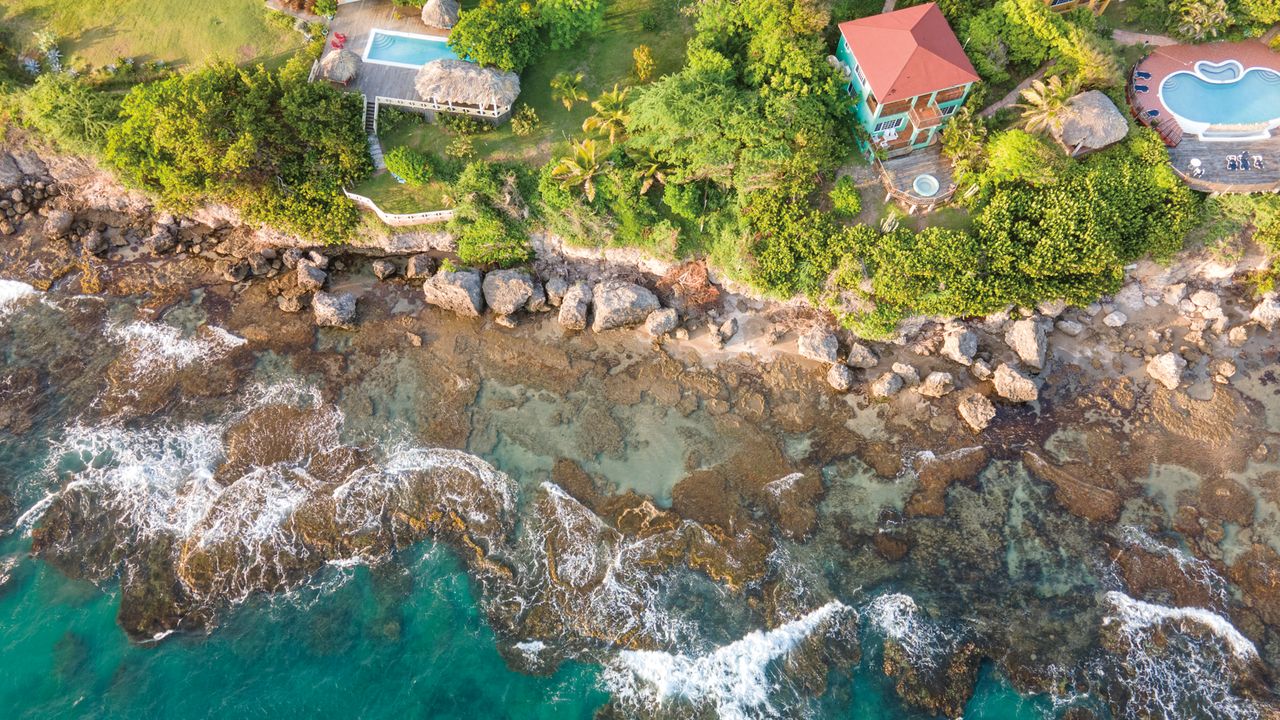
For immersive cultural escapes, off-grid retreats, and slow journeys through the mountains.How we choose where to travel next can vary greatly. Sometimes it’s a long-held fantasy, originally spurred by a book or a movie; other times, a trusted recommendation from a discerning friend. Increasingly, it’s a single image encountered online—the curve of a sandy cove, the tangled streets of a medieval old town, or a terrace set aglow at golden hour—that prompts us to hit Save. Our annual list of the best places to go takes a more considered approach, pairing the where with the why now. When it comes to the best places to go in North America—a confoundingly diverse set of landscapes that spans 9.5 million square miles—that motivation feels especially relevant: a recognition that the way we travel matters as much as where we go.Consider Jamaica’s South Coast: In the wake of Hurricane Melissa, you can support communities leading their own recovery, and still enjoy the turquoise waters, farm-to-table dinners, and design-forward boutique stays as rewards along the way. Meanwhile, tiny and culturally rich Curaçao is riding a wave of attention as a FIFA World Cup darling, and new flights and resorts showcase the island’s equally enticing on-the-ground energy. In Canada’s British Columbia, Clayoquot remains a secluded sweep of pristine wilderness. Here a new floating lodge owned by the Ahousaht First Nation is creating novel ways to experience this extraordinary landscape while engaging more deeply with its culture: Walk beneath ancient cedars. Soak in geothermal pools. Listen, learn, and slow down.Then there are the places revealing new dimensions beyond what first put them on the map. Oregon’s Willamette Valley, beloved by Pinot Noir devotees, is melding a varied and sophisticated food scene with its farm-first, sustainability-minded ethos. In Taos, New Mexico, an arts and cultural renaissance is unfolding against a backdrop of high-altitude adventure, and standout new restaurants will make sure you’re well-fueled for all the wandering.Each destination on this list comes with expert-backed picks for where to stay, what to eat, and what to do, so you can start planning every aspect of your trip immediately. Follow us into 2027 as we continue to share more about these journeys with on-the-ground reporting and enough inspiration to fill your calendar. See you on the road! —Arati MenonThis is part of our global guide to the Best Places to Go in 2027—find more travel inspiration here.Go for: wild coastal landscapes and a groundbreaking new Indigenous-owned luxury lodgeThe land and waters of UNESCO-designated biosphere Clayoquot Sound have been stewarded by the First Nations for generations. Mitch LeongKayaking, whale-watching, and hiking excursions can be coordinated directly through the lodges. Jeremy KoreskiClayoquot Sound has long drawn adventurous travelers to Vancouver Island’s wild western edge—a maze of forested islands, secluded inlets, and old-growth rainforests. But now, Indigenous-owned hospitality is giving this remote luxury escape a deeper sense of place, shaped by the First Nations that have stewarded its lands and waters for generations.A UNESCO-designated biosphere region spanning nearly 864,868 acres of land and sea, Clayoquot Sound is already home to the much-lauded Clayoquot Wilderness Lodge. But the July 2026 opening of Wahous Wilderness Lodge in secluded Quait Bay introduces a different kind of high-end stay. Owned and operated by the Ahousaht First Nation, the 16-room floating lodge and four forest cabins were reacquired in 2022 by the Nation’s hereditary chiefs through the Maaqutusiis Hahoulthee Stewardship Society (MHSS). Guests are welcomed into Ahousaht territory with tide-to-table dining, a shoreline spa, and a ceremonial welcome in the cedar longhouse. A stay begins and ends in the longhouse, concluding with a traditional klup-chus-tapčas, or salmon barbecue, in an evening that brings together food, storytelling, and cultural exchange in a final gathering rooted in Ahousaht tradition.The three-Michelin-key Clayoquot Wilderness Lodge is evolving too. Set on 600 acres at the mouth of the Bedwell River, the off-grid retreat is known for its 25 safari-style canvas tents, cedar-plank boardwalks, and wilderness adventures. Newer experiences in 2026 include after-dark bioluminescence kayaking, a floating sauna, and a guided walk across Flores Island through Ahousaht territory.New experiences and places to stay aside, Clayoquot Sound remains remote enough to preserve its deep sense of seclusion. This vast coastal labyrinth is best explored by water and on foot: Paddle between forested islands, walk beneath ancient cedars on Meares Island, hike Flores Island’s remote Wildside Trail, or soak in the geothermal pools at Hot Springs Cove. From March to October, join a whale-watching trip to spot orcas, humpbacks, or grey whales. Elsewhere, wildlife may simply find you: Black bears forage along the shoreline at low tide, and sea otters paddle through the inlets. Some excursions can be arranged directly through the lodges, while Tofino-based operators, such as Ahousaht-owned Ahous Adventures or Tofino Water Taxi, make the wider sound accessible. —Ashleigh StewartGo for: an island culture bursting with color, rhythm, and Blue Wave energyCuraçao’s UNESCO-listed capital, Willemstad, is a vibrant blend of European, African, and Caribbean influences. Frans Sellies / Getty ImagesNew nonstop flights from major US airports include American Airlines’ seasonal Chicago O’Hare route from December to April. Brandon Rosenblum / Getty ImagesIn 2026 the tiny Caribbean island of Curaçao made history as the least-populated nation to ever compete in the FIFA World Cup and stole hearts along the way. But the exuberant “Blue Wave” was just a taste of the vibrant energy humming across this 171-square-mile Dutch Caribbean island. In Willemstad, the UNESCO-listed capital, Curaçao’s multicultural spirit—rooted in European, African, and Caribbean influences—is on vivid display. Pastel Dutch colonial buildings house eclectic pubs, boutique galleries, and jazz cafés reverberating with tumba, a blend of Afro-Caribbean and Latin jazz.By the end of 2026, Curaçao will welcome two new resorts that promise buzzy stays with access to all of the above. The adults-only, 305-key Pyrmont Curaçao, an Autograph Collection All-Inclusive Resort will occupy a beachfront stretch in Willemstad’s bohemian Pietermaai neighborhood, a walkable historic district with a side of nightlife. Here, they will reimagine one 19th-century Neoclassical mansion as a spa, and another as one of six restaurants and bars. In the quieter northwest, which is home to some of the island’s most scenic beaches and national parks, the 297-room Tui Blue Curaçao will feature swim-up suites, six Caribbean restaurants, and a private beach on aquamarine Santa Martha Bay, with daily yoga sessions on the sand. In more good news, the island is also easier to reach than ever before: New nonstop flights from major US airports include American Airlines’ seasonal route that runs from December through April from Chicago O’Hare, launched in late 2025. —Jessica PuckettGo for: an off-the-beaten-path, community-focused escape—and a chance to support tourism’s recovery after Hurricane Melissa.South Coast's Treasure Beach has become known for its boutique properties such as Jakes Hotel, founded by local artist Sally Henzell. Brie WilliamsThis October marks the one-year anniversary of Hurricane Melissa, the strongest and costliest hurricane to ever hit Jamaica. With most of the damage centered in the west and southwest of the island, Jamaica’s South Coast has been at the forefront of recovery efforts—and is now welcoming travelers back with open arms.Jamaica is so much more than reggae and resorts, and there’s never been a better time for more meaningful travel to one of its most under-the-radar coastal regions. The best-known South Coast area, Treasure Beach, is a mellow seaside town known for its black sand beaches and slow-paced bohemian lifestyle. Every other year, it’s also host to the Calabash International Literary Festival, the largest in the Caribbean (in 2027 it will be held in May). The beaches here are lined with colorful guesthouses and design-forward boutique stays like Jakes Hotel, a beloved family-run establishment founded by local artist Sally Henzell. Further up the coast, Bluefields Bay Villas & Suites is another family-run gem that reopened in February 2026. For a resort stay, Sandals South Coast will reopen in November 2026 following a multimillion-dollar renovation.It’s also become easier for travelers to pair the beachy South Coast with the lush hills of St. Elizabeth Parish—Jamaica’s breadbasket. The island’s agriculture industry took the biggest hit from the hurricane, prompting Jakes Hotel to double down on its agro-tourism offerings. In March, the hotel launched farm tours and monthly full-moon farm-to-table dinners for guests; its nonprofit arm also provides direct cash grants and equipment vouchers to farmers in the region.For travelers planning a longer trip, the drive between Negril and Treasure Beach is one of Jamaica’s most scenic. Along the way, stop at the natural swimming pools at YS Falls, sample Jamaican street food beneath the shaded archway of Bamboo Avenue (don’t skip Middle Quarters’ famous peppered shrimp), and take a dip in the turquoise waters of Bluefields Bay. If you have a few days to spare, continue driving east to Kingston, the urban epicenter of Jamaican nightlife and culture. —Hannah ToweyGo for: Tennessee’s other music city whose evolving arts scene is going bigThe riverfront Memphis Flyway, an elevated walkway in Tom Lee Park, opened June 2026. Courtesy Memphis River ParksThe walkway has become an ideal spot for bird-watchers that intersects with several major migratory routes. Getty ImagesThe city of Memphis is best known as a cradle for all things low and slow, from the city’s signature hickory-smoked ribs to the moody numbers emanating from the blues clubs on Beale Street. But the west Tennessean cultural icon also knows how to pick up the tempo, and in 2027 its revitalized arts scene will be in full swing.As the state’s largest majority-Black city, Memphis is showing off its rich cultural tapestry with the back-and-better-than-ever Memphis Art Museum—the state’s oldest and largest. Facilities reopen in December 2026 at a reimagined three-acre campus located downtown. The new legroom includes a 10,000-square-foot courtyard and a sprawling rooftop sculpture garden. But the real pièce de résistance is what’s on the inside: Inaugural exhibitions revisit and subvert history, from “Rhapsodies in Black,” an examination of the interplay between jazz and Black American abstraction, to “Making Beauty: Hooks Brothers Studio, 1907–1984,” a look back on Hook Brothers, a legendary photography studio that documented Black life in Memphis from 1907 until 1979.Long-anticipated renovations to the National Civil Rights Museum—including five interactive galleries dedicated to addressing the structural issues of poverty, education, housing, gender equality, and nonviolence—debuted earlier this May. The Metal Museum, one of the few institutions in the world dedicated to the craft, also celebrated a grand reopening in September.For a breath of fresh air, the riverfront Memphis Flyway, an elevated walkway in Tom Lee Park, opened this June—an ideal spot for bird-watchers that intersects with several major migratory routes. Evenings are well spent at the newest venues in Tennessee’s second music city, like the 4,500-seat Grind City Amp, which opened in April 2026, followed by the intimate vinyl room at Satellite Music Hall in September.Memphis’s food and hotel scenes also bring high notes to back it all up. Michelin’s inaugural American South edition honored five of the city’s restaurants, including farm-to-table Italian restaurant Hog & Hominy, which nabbed a Bib Gourmand. And when it comes to hospitality, in 2027 Memphis is in with the new thanks to projects like Cooper Hotel, an art-filled boutique set to join the thriving midtown Arts District, with the 160-key 100 N. Main Autograph Collection hotel, to be housed inside the city’s tallest building, following soon after. —Kat ChenGo for: a mountain road trip through New England’s wild sideThe White Mountains region comprises of nearly 800,000 acres including White Mountain National Forest, which stretches across central and northern New Hampshire and slightly into western Maine. NH Division of Travel and TourismIf you want a New England trip where the scenery does all the talking, look to New Hampshire. The Granite State has long played second fiddle to its more famous neighbors, but that’s part of its appeal: Dense with forests, winding mountain roads, glassy lakes, and small towns, it’s wilder than coastal New England, less manicured than Vermont’s resort towns, and gloriously road-trip friendly. At its heart is the White Mountains, a roughly 800,000-acre region of high peaks, and White Mountain National Forest, which stretches across central and northern New Hampshire and slightly into western Maine.The region is getting harder to overlook, not least of all because lodgings are getting much more attractive. Under Canvas White Mountains opened on 86 acres in the quaint river town of Dalton in June 2026 with 45 safari-style tents, including stargazer tents with cutouts for gazing up at the night sky. In the scenic Monadnock region, The Inn at Hancock, New Hampshire’s oldest continuously operating inn, has reopened after a three-year restoration with 15 individually designed suites. In Bretton Woods, with grand-hotel history and big mountain views, the iconic Omni Mount Washington Resort completed its major reimagining of its historic rooms and dining in July 2026.And the food scene has its own unique momentum: Born-and-bred Dover chef Evan Hennessey of Stages became New Hampshire’s first winner of the James Beard Best Chef: Northeast honor in 2026; his newer Topolino brings his Mediterranean-inspired dishes to a more casual setting. Make the trip to Seven Birches Winery in Lincoln for European-style classics and New England ciders enjoyed on a vineyard; it’s located within the recently renovated Riverwalk Resort, tucked away on sprawling Loon Mountain. Add a stately stay at seaside Portsmouth’s new Treadwell Mansion, in a Federal-style brick home, and you have a circuit that makes the Granite State feel both classic and freshly worth discovering. —Jessica ChapelGo for: world-class wine and a meteorically rising culinary scene with small-town vibesRestaurants such as Michelin-starred Alea Bakery and Cafe have cemented Willamette Valley's farm-first culinary scene. Britt EiseleSouth of Portland, Willamette Valley is Oregon's premier wine region—but also a mecca for truffle foraging and coastal pursuits. Grant HarderJust south of Portland, Oregon’s premier wine region has attracted Pinot Noir devotees since 1985, when the valley’s signature grape beat French Burgundies in a blind tasting and stunned the world. Now winemakers are also earning international acclaim for Chardonnay and dialing in highly regarded traditional-method sparkling wine.Yet the Willamette Valley—long the pantry of Portland—is now staking its own culinary claim, with a food scene rooted in the sustainability-minded, farm-first values that have long defined Oregon. For those heading southwest from Portland through forested hills and rolling vineyards, Newberg makes a natural first stop. Join an adorable canine crew for “truffle tromps” with Black Tie Tours and visit the self-serve Friendly Fellas Farm Stand for fresh baked goods. Then head 15 minutes west to Carlton, where James Beard–recognized chef Kari Shaughnessy’s Hayward arrived in 2025. Start with the miso-chocolate-chip cookies—they go fast—and then go all in on the Kickback, a taste of everything on the weekly rotating menu. Complete the tasty triad with another 15-minute drive south to the culinary mecca of McMinnville, where chefs Brendan and Haley Byer quietly brought their Michelin-starred pedigrees to town with the beloved Alea Bakery & Cafe. Mainly open for breakfast and lunch, it has become a hot dinner ticket on select Tuesday nights, when it offers a curated menu of elevated flavors that changes every few months. One recent highlight was its interpretation of a traditional Japanese izakaya. Together these restaurants showcase the best of the valley’s interconnected local sourcing, from Even Pull Farms and Revel Meat Co. meats to OoNee Sea Urchin Ranch and Garnetts Red Prairie Farm grains. Another local purveyor, Tabula Rasa, is a regenerative farm available for tours and whose own farm-to-table fare is served at its downtown Grounded Table.McMinnville is also adding refined lodging to the mix. Piquette, a 17-room boutique hotel, is slated to open on vibrant Alpine Avenue in early 2027. Following will be Marriott’s AC Retreat at Evergreen, which will offer vineyard views, a pool, and a wine bar. In Carlton, Shaughnessy’s team opened Lucky Duck, a two-bedroom rental in the small town’s original bank complete with a Hayward-stocked fridge. The result is an increasingly ambitious and food-focused wine destination that remains refreshingly unpretentious. —Rebecca ToyGo for: a vibrant culinary scene that puts fresh spins on familiar flavors in a long-loved beach cityBeyond its beaches and robust surf culture, San Diego's restaurants—new and old—are redefining its culinary identity. Getty ImagesSunny San Diego’s beautiful blue-water beaches have long lured laid-back surfers, while its world-class zoo has created generations of conservation-minded kids. But only recently has America’s Finest City emerged as a culinary mecca where savvy food lovers come in search of their next great meal.In the seaside community of La Jolla, long home to some of the county’s foundational restaurants, seasoned local chefs and a new guard are making their mark. Consider native chef Travis Swikard of the lauded Cal-Med restaurant Callie, known for dishes like juicy Aleppo chicken and smoky harissa-grilled lamb chops. His sophomore spot, Fleurette, opened at the end of 2025 with a modern French Provençal cuisine that’s built around California ingredients—think Dover sole meunière amandine and buttery soft scrambled duck eggs with San Diego uni. Nearby at Michelin-starred Lucien, in the heart of downtown, a fresh cohort of Per Se alums crafts an intricate tasting menu that celebrates local farms and fishermen. A 20-minute drive north, in Carmel Valley, chef William Bradley’s recently redesigned Addison offers a contemporary Cali tasting menu. The three-Michelin-starred destination, housed in the Fairmont Grand Del Mar, just celebrated its 20th anniversary with the launch of a new champagne lounge—so slip in for a glass before dinner. If fast-fine dining is more your vibe, head to Encinitas, where Chick & Hawk serves spicy fried chicken sandwiches and craft cocktails in a space that pays homage to Southern California’s skate and surf culture of the ’80s and ’90s—which is fitting, given that skateboarding legend Tony Hawk is a partner. For a more intimate, upscale affair, head about 15 minutes up the 101 to idyllic Carlsbad, where the 22-seater Lilo serves a seafood-heavy tasting menu from chef Eric Bost, an LA transplant who has helped shape the city’s dining scene. But it’s not just the flashy new spots that make San Diego’s dining scene great. Barrio Logan’s legendary Las Cuatro Milpas relocated a few blocks away earlier in 2026 after nearly a century in business. While we miss the OG location, we’re happy to report the flour tortillas are still worth the journey.You’ll need somewhere to rest between all those meals. In Coronado, the historic Hotel del Coronado announced a $550 million restoration in the summer of 2025, while the 31-room Baby Grand is its flashy maximalist foil. And over in Carlsbad the chic new Hotel Solea, Autograph Collection is within walking distance of Legoland. If that’s your draw, know that United Airlines started operating out of its local airport earlier this year. —Omar MamoonGo for: pristine blue water, mountains, and a new wave of boutique hotels and world-class restaurantsDespite being a long-beloved weekend getaway in Canada, Simcoe County has flown under the radar for those outside the province seeking a culinary coastal getaway outside of ski season. UnsplashNew to North America’s 50 Best list, The Pine's husband-and-wife team put a spin on fine dining with dishes like a Shanghai-style lamb schnitzel served with a black-garlic-infused eggplant purée. Frances Beatty PhotographyCanada will always be associated with natural beauty: the Rocky Mountains of the west, the rugged coastline of the Maritimes, and the otherworldly fjords of Newfoundland. Only recently have people started looking closer to the middle of the country for their dose of outdoor adventure. Ontario, specifically the Simcoe and Grey County regions just a couple of hours northwest of Toronto, has long been a beloved weekend getaway for city folk—but has flown under the radar for those outside the province.Until recently, you most likely ended up here for a ski trip at Blue Mountain resort or as a guest at a friend’s cottage, as there was little in the way of notable accommodation. But new hotels have popped up in the last few years: starting with the understatedly luxe The Dorchester hotel in 2022, followed by the hip and modern Somewhere Inn Collingwood in 2024, and, most recently, in July 2026, the nine-room Leeward House in the historic town of Thornbury.The region is anchored by the beauty of Georgian Bay’s Caribbean-like waters and its rugged cliffs—a great place for swimming, boating, and caving in the summer, and complementing Blue Mountain’s Stay and Ski lodging-and-lift-ticket packages in the winter. However, if outdoor adventure isn’t your thing and your palate tends to dictate the itinerary, it has plenty to tempt, with a growing community of globally trained chefs bringing fresh energy to the local dining scene, while championing the producers and purveyors who define the region. Nowhere is this more evident than at The Pine, recently added to North America’s 50 Best list, where husband-and-wife team Jeremy and Cassie Austin are putting their spin on fine dining with a Chinese twist—expect dishes like a Shanghai-style lamb schnitzel served with a black-garlic-infused eggplant purée. They also opened seafood-focused Lore this June, where the menu features gussied-up tuna melts and playful, utterly delicious scallop nuggets. A scenic, 45-minute drive inland takes you to Down Home, where a weekly tasting menu places emphasis on produce from regenerative organic farms. There are plenty of casual but equally delicious options too, like Heart’s Tavern, where chef Teo Paul and partner Luke Wood bring a French bistro sensibility to a 19th-century farmhouse. Even the natural wine scene has found its way here with Chin Chin, a bar from which locals and visitors spill out onto sidewalk benches with glasses of wine and grazing boards stacked with freshly baked baguette and cheese. —Kyle BeecheyGo for: a mountain town meets cultural hotbedTaos sits at the foothills of the Sangre de Cristo mountains, part of the New Mexico stretch of the Rockies. Mona Makela / Getty ImagesBoutique ski resorts famed for deep powder, narrow chutes, and a roster of high-altitude summer thrills. A thousand years of Indigenous arts and culture in one of the West's longest continuously inhabited pueblos. A buzzy contemporary art scene encompassing visual arts, film, music, installation, and craft. These all combine to create a magnetism that has drawn visitors to Taos ever since a ragtag group of creatives descended on the scrappy mountain town to found the Taos Society of Artists in 1915.The town’s pull is only getting stronger with a series of high-profile openings and reimaginations, from the unveiling of the spiffed-up historic Taos Plaza—its cultural and geographic center—this past summer to the anticipated fall 2027 opening of an ambitious Tribal Heritage Center. Occupying a 14-acre grant returning ancestral lands to the Taos Pueblo, the complex will feature a cultural center, restaurants, galleries, and a pueblo-inspired Marriott TownePlace Suites and Fairfield Inn & Suites. Also next year, the community observatory Cielo Centro, which will house the largest publicly accessible telescope in New Mexico, begins its phased opening with a 1,600-square-foot classroom building, an outdoor amphitheater, and an observation plaza. Recently, too, Hotel Willa, a 52-room motor lodge at the gateway to the Taos Arts District, has been retrofit as adobe-desert chic down to its sun-splashed pool, stargazing deck, gallery, and onsite art programming courtesy of the Paseo Project. Guests can shuttle to nearby ski areas in the hotel’s new electric Volkswagen ID.Buzz.The best way to appreciate Taos’s role as a base camp for the surrounding Sangre de Cristo mountains is to drive the 84-mile Enchanted Circle Scenic Byway, or head straight for Taos Ski Valley, which debuted a new, modern triple-chairlift last year as part of a multimillion-dollar renovation. Family-friendly resort Angel Fire, which offers snow tubing and the only night-skiing in the state, has vastly expanded access with the high-capacity Angel Express lift, whisking up to 1,800 riders an hour at a speed of 1,000 feet per minute. This upcoming year will see the return of the beloved outdoor Paseo Festival, known for envelope-pushing installations and performance art, which took a pause in 2026 to reboot as a biennial event. The Taos Film Festival, which debuted in 2026, returns April 29 to May 2 at the Taos Center for the Arts.The little town punches above its culinary weight, too. Make sure to check out the newly opened Dawn Butterfly, the first modern, full-service restaurant inside Taos Pueblo, where local Carpio J. Bernal Jr. serves up indigenous heritage dishes like slow-roasted bison and blue cornmeal with chokecherry sauce. Suchness specializes in unexpected juxtapositions like lamb loin with Moroccan tomato jam and smoked eggplant and rigatoni topped with a smoked carrot Bolognese and vegan ricotta. And for breakfast sample the wood-fired bialy-style bagels topped with wild-caught salmon at Tomorrow and Tomorrow, or indulge in brunch at Juliette in Hotel Willa, where the Dutch pancake is a standout. —Melanie HaikenGo for: a seafood-forward wine country getaway—with elevated new wellness staysThe weathered granite mountains and rugged terrain of Valle de Guadalupe have greeted a new wave of hospitality offerings such as Mira Earth Studios. MiraWhen you come to a stop at the sole traffic light in Mexico’s Valle de Guadalupe, you can see weathered granite mountains and rugged, sun-drenched terrain unfold in every direction. This is the environment that nurtures Mexico’s premier wine region, which might still be young and pliable but produces the mineral Chenin Blanc, the historic misión, unconventional red blends, and the pitch-dark nebbiolo that have drawn savvy oenophiles for years. The region’s culinary offerings are just as compelling: When the Michelin Guide México debuted in 2024, the state of Baja California, anchored by Valle de Guadalupe, emerged as the second-most-decorated region behind Mexico City. All of this awaits less than an hour by car from the closest US–Mexico border crossing point—and it is aging like fine wine.The 2026 edition of Mexico’s Michelin Guide spotlights several new restaurants, as well as esteemed ones. Damiana, which began as a pop-up and has since found a permanent home in the shade of trees at the Viñedos de la Reina winery, has energized the Valle with chef and co-owner Esteban Luis’s oceanic array of buttery spider crab croquettes, smoked Kumiai oysters, and bluefin tuna dressed with soy sauce then topped with gooseneck barnacle rings. Then there’s Olivea Farm to Table, led by chef Daniel Nates, which dazzles diners on an impressive farm tour that ends in the dining room, where plump mussels are steamed with saffron, and roasted aged duck is balanced by a pair of quenelles in an earthy blackberry sauce. Stalwarts like Animalón, a romantic campestre set under a 200-year-old live oak tree, and Lunario, in an intimate greenhouse-like building, have held on to their Michelin distinctions for innovative tasting menus—anchored in local seafood but also indigenous herbs and seasonal vegetables—that have helped define Baja California’s innovative cuisine.A new wave of hospitality offerings have quietly opened in recent years to meet this moment. And their flavor here is consistent: sustainable hotels committed to preserving viticulture. The amenity-rich Mira Earth Studios offers a curated selection of local wines, a hot tub, and an infrared sauna in each of its 10 studio suites, which are made of earth and tucked into the hillside. Hike up to the pool for a feast of raw shellfish served with a mosaic of sauces at Mira Fireside by chef José Luis Hinostroza. In like manner, the Banyan Tree Veya, built by renowned Mexican architect Michel Rojkind, features a private plunge pool and 30 villas, each with its own wide terrace, that recede into the landscape. Overlooking the property is Amapola, a showcase restaurant that serves the property’s Pictograma wines and regional ingredients like grilled spot prawns, callo catarina (scallops), and grilled quail over fideos in a minimalist style, courtesy of Baja California chefs Benito Molina and Solange Muris.There is more to come: Bruma Wine Estate—the hospitality juggernaut that houses iconic restaurants Fauna and Bruma Wine Garden, plus hotels Ático, Casa 8, and Casa Montaña—has a 62-room Montage Hotels and Resorts property targeted for 2028. Valle de Guadalupe has never been loud in its evolution, but with each passing year, it promises a richer experience. —Bill EsparzaShannon McMahon-Hamdy is the Senior Editor leading Destinations, Condé Nast Traveler's guides vertical. She has a background in news and destination features, and previously reported on travel and the coronavirus pandemic for The Washington Post, as well as local and national news for Boston.com. A former resident of Seville, Spain, ... Read MoreArati Menon is the Global Digital Director at Condé Nast Traveler. Her experience as an editor and writer has spanned the areas of design, fashion, food, and business—and across print, digital, and documentary video—and her current role happily sits at the intersection of it all. She has previously worked at ... Read More
The Best Places to Go in North America, Mexico, and the Caribbean
Full Article
Original Source
Read the full article at Cntraveler →KhanList aggregates and links to publicly available news content. We do not host full articles from third-party sources. Always verify important information with original sources.