
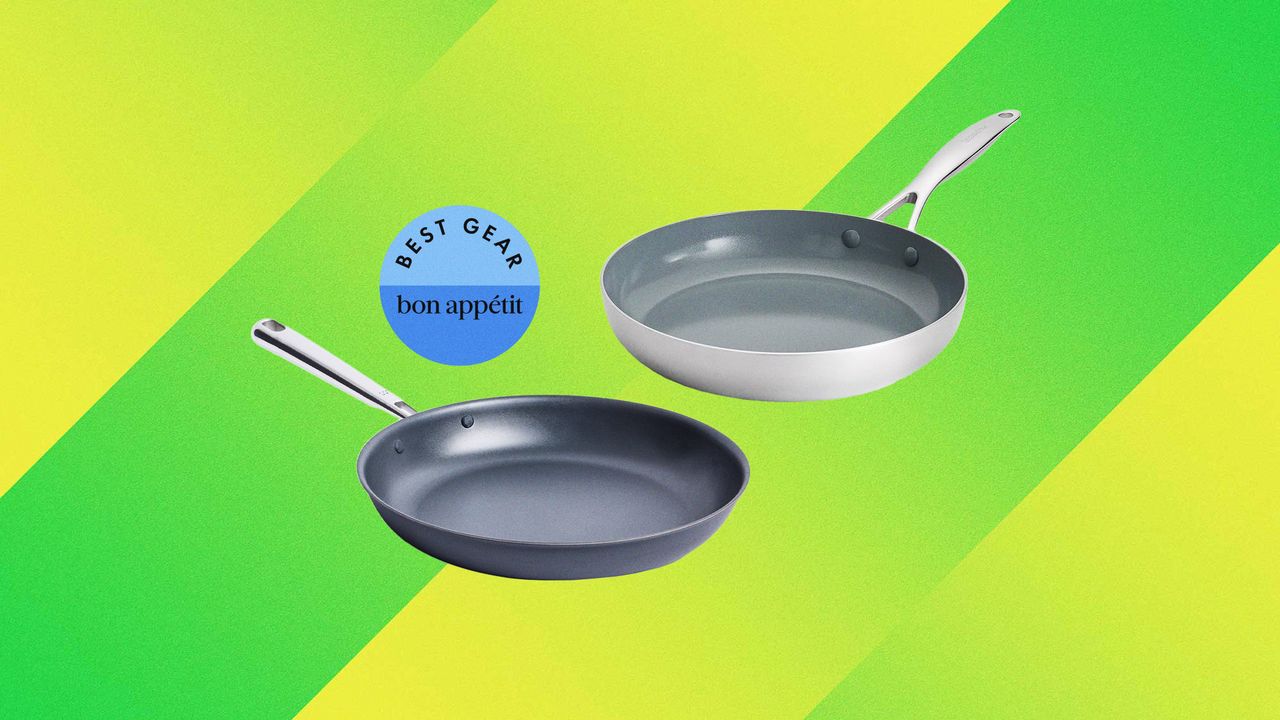
If you’ve shopped for nonstick pots and pans in the past decade, you’ve had the term nontoxic cookware thrown at you with increasing velocity. As you've thought about getting new pans you may have even searched for the best nontoxic cookware without being totally sure what “toxins” they supposedly do not have in them. So what exactly makes cookware “toxic,” and why do these “safe” or “healthy” pans claim to be better?The answer begins with a class of synthetic chemicals known as PFAS, short for per- and polyfluoroalkyl substances. These chemicals, which repel liquids, have been used in everything from waterproof jackets to nonstick cookware coatings, and after decades of use, the health concerns raised by scientists started to break through to the public more broadly in more recent years.The best nontoxic cookwareThe best ceramic nonstick pan: GreenPan Valencia ProAn “I-can't-believe-it's-not-Teflon-or-ceramic” nonstick pan: Misen Carbon Nonstick Frying PanThe best stainless steel cookware: All-Clad D3 Stainless Steel SkilletThe best nontoxic cookware set: All-Clad D3 Stainless-Steel 7-Piece Cookware SetThe best cast-iron skillet: Lancaster Cast Iron SkilletThe best enameled cast-iron Dutch oven: Staub CocotteThe best carbon steel skillet: De Buyer Blue Carbon SteelWhether you’ve never heard of PFAS or you’re already familiar with their nearly 100-year-old history, you’re in the right place if you want to avoid them. We’ve tested dozens of nonstick and “nontoxic” pans to find the best options to help you keep PFAS out of your cookware. Read on for the lowdown on all things nontoxic cookware.Is traditional nonstick toxic?What does “nontoxic cookware” mean?The best ceramic nonstick cookwareThe best stainless steel cookwareThe best cast-iron skilletThe best enameled cast-iron Dutch ovenThe best carbon steel skilletFAQIs traditional nonstick toxic?When companies label their cookware “nontoxic,” it's a marketing move as much as anything, designed to position it as a safer alternative to traditional nonstick, which is typically coated in a chemical called polytetrafluoroethylene, or PTFE. And to understand why people began to colloquially refer to old nonstick pans as “toxic,” we need a little history of PTFE.Discovered accidentally in 1938 and trademarked by chemical company DuPont as Teflon in the early 1960s, PTFE was an earthquake in the home cookware market during the second half of the 20th century because it provided consumers with a completely nonstick, no-oil-needed cooking surface. By the turn of the century, Teflon had become ubiquitous, finding its way into a staggering number of American kitchens in the form of PTFE-coated skillets, muffin tins, baking dishes, and more.PTFE though, is just one of thousands of a class of chemicals in PFAS family mentioned earlier. Around 1951, DuPont started using another PFAS called PFOA (short for perfluorooctanoic acid) in its Teflon manufacturing process. Over time, it became clear that PFOA could enter the human body by way of gaseous fumes or chipped coatings and have detrimental effects on human health and the environment, including increased risk of certain cancers, birth defects, ulcerative colitis, and thyroid disease. Under mounting pressure from public health and environmental advocacy groups, manufacturers phased out PFOA by 2013.These days, traditional nonstick cookware is made using PFOA-free PTFE (which is also typically free of PFOS, another harmful PFAS). You’ll see it marketed under names like T-fal, Dura-Slide, or hard-anodized aluminum. While PTFE itself is considered less harmful than other PFAS, there is still a broader concern. Thousands of PFAS compounds remain unregulated, and there is ongoing research into the class of chemicals as a whole. A label that says “PFOA- and PFOS-free” does not necessarily mean the product is free of all potentially risky chemicals in the PFAS family.What does “nontoxic cookware” mean?While not necessarily the first recorded use of the term, the idea of “nontoxic” cookware was largely introduced to consumers when GreenPan released the first PFAS-free ceramic nonstick frying pans in 2007. Since then, “nontoxic cookware” has come to mean “PFAS-free nonstick cookware.” While there’s nothing inherently incorrect about this characterization, it’s important to recognize the degree to which it has become a marketing buzzword.While “nontoxic cookware” typically refers to ceramic nonstick, which is made from silica using a method called the sol-gel process, any cookware that’s made without the use of harmful chemicals like PFAS can be considered “nontoxic.” That includes some tried-and-true options you probably already know and love: stainless steel, cast iron, and carbon steel.Ceramic nonstick comes closest to mimicking the ease of traditional Teflon, but like any coating, it will degrade over time and can chip (more on that below). That’s why we recommend getting comfortable with uncoated stainless, cast iron, and carbon steel. With the right technique, your food won’t stick to them either, and they’ll last a lot longer.The best ceramic nonstick pan: GreenPan Valencia ProGreenpanValencia Pro Ceramic Nonstick 12" FrypanPros:Rated for high heatComfortable handleInduction compatibleOven-safeGood conductivityCons:It’s important to keep in mind that the ceramic nonstick coating will wear down after a few years—but this is true of all nonstick cookware, regardless of price or type of coating.Available sizes: 8", 10", 12"Induction compatible: YesDishwasher-safe: Yes, but hand-washing recommendedMetal-utensil-safe: Theoretically, but wood or silicone recommendedOven-safe: Up to 600ºFWarranty: 1 yearAbout ceramic nonstick: I have to be honest here, I've personally sworn off coated nonstick pans for good, because no matter which one you buy, it will only last you a few years tops before the coating starts to degrade and you need to replace it. That said, I understand why people gravitate towards them—and if you're dead-set on buying one, ceramic nonstick is the way to go. These pans are typically made of stainless steel or aluminum and lined with a silica-based coating that makes them nice and slick—for a few years, at least. The exact makeup of that coating varies brand to brand, which is why we’ve spent years testing lots of ceramic nonstick pans to find the ones that best deliver on their nonstick promise.Our top pick: GreenPan’s ceramic nonstick pans were the first to hit the market in 2007, and the brand’s products have consistently come out on top in our best nonstick pan testing. Its Valencia Pro line is our favorite for a few reasons: It’s hefty enough to feel durable while remaining lightweight enough to be easily maneuverable. It’s also affordable enough that you won’t have to break the bank when you inevitably need to replace it in a few years, and more scratch-resistant than some earlier GreenPan iterations we've tried. Oh, and it's induction compatible too.A budget option: If you don’t cook on an induction stovetop and are looking for a cheaper option, you can go with GreenPan’s Paris Pro line, which performed similarly to the Valencia in our testing.Read more about our favorite nonstick pans.An “I-can’t-believe-it’s-not-Teflon-or-ceramic” nonstick pan: Misen Carbon Nonstick Frying PanMisenDeeper Carbon Nonstick Frying Pan & Glass LidPros:Truly metal-utensil-safeNonstick surface actually improves over time rather than degradesWithstands incredibly high heatLonger-lasting than ceramic nonstickCons:Slower to season than regular carbon steel after factory coating wears awayAvailable sizes: 8", 10", 12"Induction compatible: YesDishwasher-safe: NoMetal-utensil-safe: YesOven-safe: Up to 1100ºFWarranty: LifetimeAbout carbon nonstick (or nitrided carbon steel): At the outset, these pans act like traditional nonstick but can hold up to high heat, metal utensils, and years of use because they aren't coated. Instead the carbon steel is nitrided, a process that infuses nitrogen into the metal to make it tougher, slicker, and both corrosion- and rust-resistant.Our top pick: When we first got a hold of Misen’s Carbon Nonstick pan it seemed like the holy grail for anyone trying to quit Teflon without giving up easy-release eggs. Unlike traditional carbon steel pans, Misen’s version has an aluminum core that heats quickly and evenly, and its surface repels oil straight out of the box. In testing, fried eggs, chicken thighs, and sautéed onions all slid right off with minimal oil (food director Chris Morocco said it was “practically allergic” to eggs). It’s lightweight, durable, and will develop a terrific nonstick seasoning. However, as our lead cookware tester Wilder Davies continued cooking with the Misen, he noticed the initial corn oil seasoning layer started to wear, and the miraculous oil repelling characteristics decreased. Once that happened we assigned four more people, myself included, to work with these pans and we all noticed a reduction in the nonstickiness as time went on. However, the nonstick curve on these has proven to be more U-shaped, as we've continued to cook on and season them, food release started to become easier again.Read our full review of the Misen Carbon Nonstick Pan.The best stainless steel cookware: All-Clad D3All-CladD3 Stainless 3-ply Bonded Cookware; Saute Pan with lid; 3 quartAll-CladD3 Stainless Steel 14-in Skillet with LidPros:LightweightBuilt to lastCons:PriceyAvailable sizes: 10", 12", 14"Induction compatible: YesDishwasher-safe: NoMetal-utensil-safe: YesOven-safe: Up to 600°FWarranty: Limited lifetimeAbout stainless steel: Stainless-steel cookware is a staple in home and professional kitchens because of its versatility, durability, and low maintenance needs. Use it on the stovetop, in the oven, or with metal tools—unlike shorter-lived ceramic pans, a stainless-steel skillet can serve you well for a lifetime. And here’s the thing: With the proper technique, stainless steel can release almost as easily as ceramic nonstick. The key in guaranteeing your food slides right off instead of becoming a stuck-on mess is using sufficient fat and heat. Make sure to wait until your oil is shimmering before adding whatever you’re cooking, give it enough time in the pan to let the maillard reaction do its thing, and you should have no issues with stickage.Our top pick: We’ve tested many types of stainless-steel cookware throughout the years here at BA, and one brand has repeatedly stood out time and time again for its consistently well-made, durable, high-performing products. That brand is All-Clad.In our testing of stainless-steel frying pans and sauté pans, product testers and test kitchen editors alike lauded All-Clad’s D3 Everyday line as the best mix of value and performance for home cooks. The “3” refers to these pans’ 3-ply construction, which features an aluminum core sandwiched between two layers of stainless-steel cladding. That aluminum allows the pan to conduct heat quickly and evenly, and it makes the pan more lightweight than solid stainless-steel cookware. In our testing, we found that those promises held true, and that the D3 pans were easy to clean (just hand-wash with a little soapy water, plus some Bar Keepers Friend if you need a hand getting any remaining bits off) and have continued to perform well over the many years we’ve been using them.Read more about our favorite stainless steel pans.The best nontoxic cookware set: All-Clad D3 Stainless-Steel 7-Piece Cookware SetAll-CladD3 3-Ply Stainless-Steel 7-Piece Cookware SetPros:LightweightBuilt to lastCons:PriceyIncludes: 10-inch fry pan, 3-quart saucepan with lid, 3-quart sauté pan with lid, 8-quart stockpot with lidInduction compatible: YesDishwasher-safe: NoMetal-utensil-safe: YesOven-safe: Up to 600°FWarranty: Limited lifetimeOur top pick: While we recommend building your lineup of cookware piece-by-piece over time, a preassembled set is a good, fast solution if you’re looking to replace your arsenal of Teflon. This 7-piece collection of top-performing D3 stainless-steel cookware from All-Clad has everything you need and nothing you don’t, making it the best option for most people. Tight on space? This 5-piece version is a great choice too.Read more about our favorite cookware sets.The best cast-iron skillet: Lancaster No. 8 SkilletLancasterNo. 8 Cast Iron SkilletPros:LightweightSmooth cooking surfaceHeats quicklyTwo pour spoutsCons:PriceyPreseasoning could be more robustAvailable sizes: 10.5" (4.5 lb.), 12" (6 lb.), 13.5" (7.5 lb.)Induction compatible: YesDishwasher-safe: NoMetal-utensil-safe: YesOven-safe up to: UnknownWarranty: Limited lifetimeAbout cast iron: If you’re willing to put just a bit of work into caring for your cookware, a cast-iron skillet will easily fill the nonstick pan-size hole in your kitchen. Cast-iron cookware will never quite reach the level of nonstick that a Teflon-coated piece offers, but in our testing, we’ve found that a properly seasoned cast-iron pan is on par with ceramic nonstick—plus it only gets more slick over time as you continue to use it.Our top pick: After testing more than 20 cast-iron skillets over several years, our current top pick is the Lancaster No. 8 because it's lightweight, has a smooth pre-seasoned surface that’s nice and slick right out of the box, and even heat distribution. The one downside is that it’s quite pricey compared to something like Lodge's iconic cast iron, which we recommend as a great budget alternative. The Lodge is probably the pan most people think of when they hear “cast-iron skillet,” and at around $20, depending on where and when you buy it, it’s one of the best values in the cookware world—particularly because you can keep it forever rather than replacing it every few years. In our testing, it performed just as well as many more expensive pans.Read more about our favorite cast-iron pans.The best enameled cast-iron Dutch oven: Staub CocotteStaubRound Cocotte, 5.5-QuartPros:Heirloom-quality cookwareEven heatingDark, textured cooking surface browns quicker and hides stainsLots of size and color optionsLifetime warrantyCons:ExpensiveHeavier relative to its liquid capacityLint from some dish towels can catch on interior enamelAvailable sizes: .425-qt., .85-qt., 1.25-qt., 1.75-qt., 2.75 qt., 4-qt., 5.5-qt., 7-qt., 8.75-qt., 13.25-qt.Induction compatible: YesDishwasher-safe: NoMetal-utensil-safe: NoOven-safe: Up to 500ºFWarranty: Limited lifetimeAbout enameled cast iron: You may have also heard of enameled cast iron, which is frequently seen in products like our favorite Le Creuset and Staub Dutch ovens. Many people expect enameled cast-iron pots and pans to be nonstick because the ones with light-colored interiors sort of resemble the kinds of ceramic nonstick coatings we wrote about above, but in reality, that’s not the case. That doesn’t mean you can’t cook food in these things without it sticking, but you’ll need to use sufficient fat and heat to make that happen, as you do with a stainless-steel pan. The benefit of enameled cast iron is that it provides superior heat retention and distribution, and protects the cast-iron core from rust and acidity. It's become one of my favorite types of cookware to use at home over the past few years.Our top pick: The Staub Round Cocotte is my personal top pick when it comes to Dutch ovens, and tied with the Le Creuset in our official product testing. I prefer the Staub's dark textured enamel interior, which is less prone to showing discoloration. In addition to the round cocotte, I also own the braiser and a deep skillet, both of which I find myself pulling out constantly.Read more about our favorite Dutch ovens.The best carbon steel skillet: De Buyer Blue Carbon Steel Frying PanDe BuyerBlue Carbon Steel Fry PanPros:Good factory seasoningWelded handleCons:Relatively small cooking surfaceAvailable sizes: 8", 10.25", 11", 12.5"Induction compatible: YesDishwasher-safe: NoMetal-utensil-safe: YesOven-safe: Up to 500ºFWarranty: Limited lifetimeAbout carbon steel: Carbon steel is sort of the Goldilocks cookware because it affords you the nonstick qualities and lightweight feel of a coated nonstick pan and the durability of a cast-iron or stainless-steel skillet. The one caveat is that in order to achieve those nonstick qualities, you’ll need to spend some time properly seasoning your new pan, just as you would with cast iron. But with a bit of work at the outset and occasional maintenance, you’ll be rewarded with an heirloom-worthy piece of cookware that has a well-earned nonstick patina.Our top pick: De Buyer is one of those famed, old European cookware brands that lots of American home cooks may not be that familiar with. Its “blue” frying pan comes pre-seasoned and will just get better and better as the seasoning improves. As senior writer Wilder Davies notes, you can take specific steps to season it—use a thin layer of oil (as thin as you can possibly get) and put it in a hot oven for an hour—but you can also just keep cooking with it and that seasoning will develop on its own. Another nice feature of this pan in particular, and one that has nothing to do with its seasoning, is its welded-on handle. That means there are no rivets to clean around when you’re done.Read more about our favorite carbon steel pans.FAQWhat types of kitchen gear is PTFE found in?A skillet may be the first thing you think of when you think of nonstick cookware, but PTFE coatings show up in a host of other items in the kitchen and beyond. On top of skillets, pots, saucepans, and Dutch ovens, you'll also find PTFE in rice cookers, waffle irons, baking sheets, and grill baskets.What is ceramic nonstick cookware?You may recognize ceramic nonstick as the material of choice of many of the aesthetically-pleasing, Instagram-viral cookware companies that started popping up in the late 2010s (I’m looking at you, Our Place and Caraway). Ceramic nonstick pans are made without any PFAS. Instead, a gel made from silica is applied and then dried onto the cookware’s metal body to create a nonstick surface.Sounds great, right? Well, there are a few caveats, the main one being that ceramic nonstick coatings are not built to last. That means you’ll want to be sure to avoid using metal utensils when cooking with them, opting instead for wood or silicone. You’ll also want to avoid exposing them to extremely high temperatures: Even though ceramic cookware is technically more heat tolerant than cookware made with PTFE, high heat will wear down the pan’s ceramic coating. Many manufacturers claim their pans are oven-safe up to certain (often high) temperatures, but we’d recommend using one of our other recommendations above for any stove-to-oven cooking, as those trips to the oven will only further degrade that ceramic coating over time. Similarly, despite any of being dishwasher-safe, hand-washing your pans will prolong their lifespans.What is the best nontoxic cookware?Even if you treat your ceramic nonstick cookware with the utmost care and attention, you still shouldn’t expect it to last you more than one to three years before it starts to lose its nonstick properties. That’s why the best nontoxic nonstick cookware is not necessarily a coated piece of PFOA- or PFAS-free gear—in fact, we’d argue the best nontoxic “nonstick” pans money can buy are made of cast iron, or carbon steel. While these materials are not actually manufactured or marketed as nonstick, each has nonstick properties that can be achieved with proper use and care. .The bottom line here is that no one needs a coated pan in their life. There is no recipe on this website (or in this world) that requires you to use one, and we tend to think you’re better off investing some time in learning to cook with a more durable type of cookware than spending you money on a full nonstick cookware set. That said, we’re recommending a range of cookware options here for those who are looking for alternatives to traditional PTFE-base nonstick, including a ceramic option for people who aren’t quite ready to kiss coated nonstick goodbye.
The Best Non-Toxic Cookware Trusted by BA Editors (2026)
Full Article
Original Source
Read the full article at Bonappetit →KhanList aggregates and links to publicly available news content. We do not host full articles from third-party sources. Always verify important information with original sources.