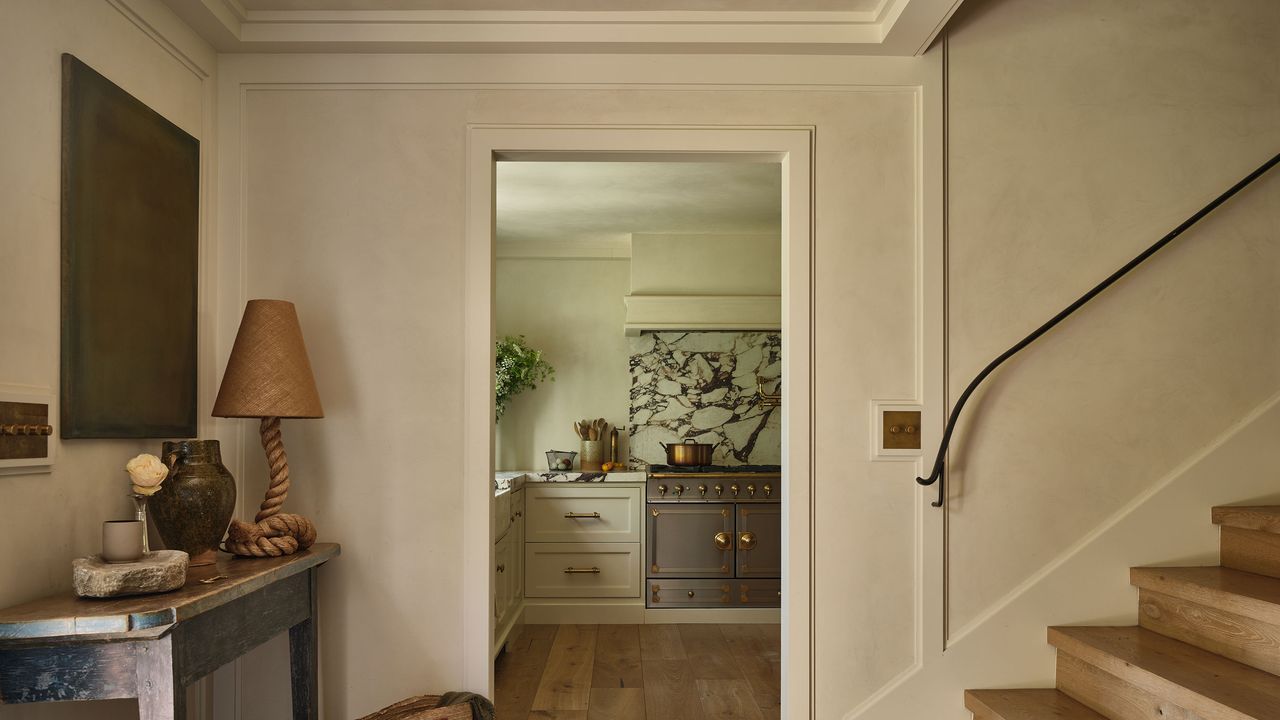
There are rooms that are impeccably designed, and then there are rooms that make you feel something. The difference is rarely obvious. More often, it lives in the details you register before you consciously notice them: an unexpected color pairing, a curved edge, or something positioned just far enough off-center to keep the eye moving. These nearly missed decisions are what give a room tension, depth, and that elusive sense of life. Here’s how top interior design talents make the smallest details do the most work.Painted built-ins at the home of Connecticut interior designer Sydney Jackson. Photo: Kate S. Jordan Kate S JordanDesign Millwork Around the Way You LiveCustom millwork is a hallmark in practically every professionally designed home. But interior designer Linette Dai, founder of a Los Angeles–based AD PRO Directory firm, looks for opportunities to make it personal. One method, she says, is “incorporating bespoke millwork that has all the necessary amenities for your life rituals, integrated within reach.” For example, a custom sofa Dai created features a built-in side table with drawers, meant to store remotes and other TV-watching necessities.Leah Ring, principal of AD PRO directory firm Another Human, uses techniques like decorative flourishes and radius corners on millwork. “It’s one of the key ways we make our clients’ homes feel really special and one-of-a-kind,” offers Ring.Let the Hardware Disappear Into the Design“Light switches and socket plates are among the most frequently touched elements in a home, yet they’re often overlooked,” says Sarah Solis. “Thoughtfully designed switches add a layer of refinement that quietly elevates the entire experience of a space.” The founder of the Malibu-based AD PRO Directory design studio prefers finishes that “age gracefully,” like unlacquered brass or bronze.But these opportunities extend beyond switch plates. Daniella Gohari, design director of AD PRO Directory design practice Electric Bowery, points to a recent project where a stovetop’s knobs were integrated directly into the surrounding millwork. “It allows the wood cabinetry’s materiality and craftsmanship to take center stage, creating a visually calm composition,” she says.Interior designer Sydney Jackson’s Connecticut kitchen. Photo: Kate S. Jordan Kate S JordanUse Subtle Color Shifts to Add DimensionColor delivers instant impact, but the most sophisticated rooms rarely rely on the obvious pairing. Instead, designers use small, strategic contrasts to build depth: a trim color that quietly shifts from the walls, or a related tone that sharpens the architecture without overpowering it. Ring often turns to both contrasting and tonal trim for precisely that reason. “Even if the color difference is subtle or tone-on-tone, it creates more visual interest in the room.”Connecticut-based designer Sydney Jackson relies on this approach frequently, particularly in kitchens. “The most layered and interesting kitchens rarely rely on a single wash of color throughout the space,” she says. She often uses the island as a chance to introduce a more dramatic or unexpected hue, creating contrast without overwhelming the room.Give Upholstery a More Tailored FinishCustom upholstery has the ability to make a space feel singular. But going a step further with the customization has understated benefits. Ring turns to contrasting fabric welt on upholstery as an occasion for a color pop or “an easy and elegant way to make a piece look more tailored and considered.”Jackson favors a bit of blind tufting (a tailoring technique to suggest the look of buttons) when fabricating custom cushions: “It brings depth and texture to what is otherwise a very small moment,” she says.Inside a Carmel cottage by Heidi Caillier. Photo: Haris Kenjar Let Something Sit Slightly Off-CenterAlmost every decorator knows that a room can be so perfectly composed that it loses its spark. AD100 designer Heidi Caillier often uses asymmetry to interrupt that sense of perfection and make a space feel less overtly “designed.” “It brings a feeling of tension and makes you think, instead of just letting your eye pass over it,” she says. “Something off-center helps the room feel more layered and less perfect.”Nina Freudenberger takes a similar approach, guided by the idea that “idiosyncrasies can subtly elevate a space.” In a Montauk, New York, home, she designed a built-in bookcase with staggered shelves, trading predictable symmetry for what she calls an “effervescent sense of whimsy.”Sometimes, the detail that feels slightly off is exactly what makes a room click.
The Best Interior Design Details Are the Ones You Almost Don’t Notice
Full Article
Original Source
Read the full article at Architecturaldigest →KhanList aggregates and links to publicly available news content. We do not host full articles from third-party sources. Always verify important information with original sources.