
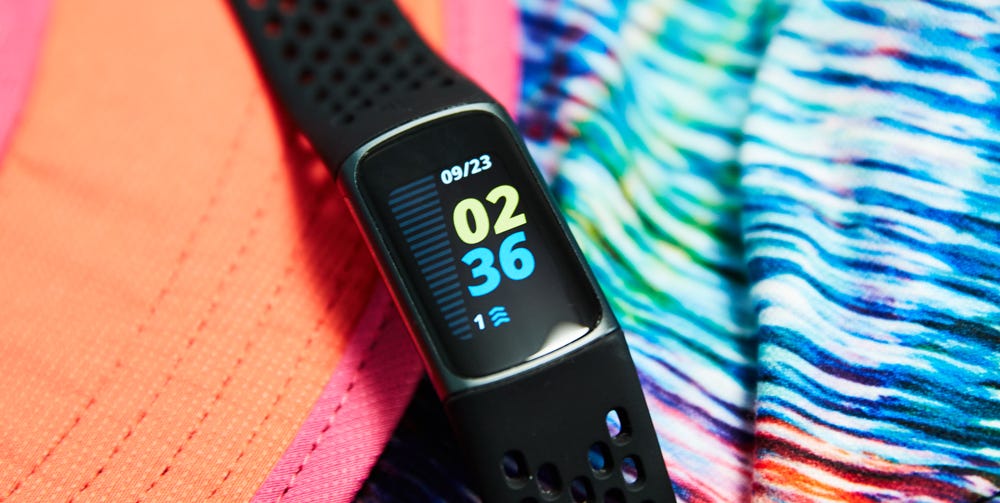
I’ve tested every one of the most popular running watches there are, so trust me when I say most people can get away with a simple fitness tracker to monitor their health. If you want to know how you slept, how much you moved, and whether that “restful” night was 40 minutes of actual deep sleep and a lot of angrily rolling over, a fitness tracker does it for less money and with fewer buttons.But “fitness tracker” covers a lot of ground. Some are glorified step counters. Some are basically running watches in a trench coat. Some have no screen at all and charge you monthly to read your own data. I’ve worn most of them, and the expanse between a good fit and a bad one usually has little to do with what’s on the spec sheet.If you want the data without a gadget that’s overwhelming, bulky, and just plain old annoying? We get it. Below, I’ll walk you through what to look for, what’s worth paying for, and what’s just nerdy excessiveness, so you can pick one and get freaking at it. The best fitness trackers, as we see them, cover every budget and every kind of person, from “I just want to hit 8,000 steps” to “I need to hit reset on my goals.”Best Overall: Garmin CirqaBest Value: Fitbit AirBest for Sleep Tracking: Oura Ring 4Best Fitness Band With Built-In GPS: Fitbit Charge 6Best Smart Ring Without a Subscription: Ultrahuman RingBest for Long-Term Health Trends: Hume BandBest for Everyday Fitness and Cross-Training: Garmin Vívoactive 6Best for iPhone Users: Apple Watch Series 12Best for Recovery Tracking: Whoop 5.0How We TestedThese were all tested over a period of weeks, used as they were intended, with multiple workouts tracked, sleeping, and any possible health metrics available. We evaluated the trackers, their apps, the battery life, ease of use, cost, and overall quality and comfort. These are our favorites.ProsNo required subscriptionDries fastLong battery lifeDeep Garmin metricsConsCannot use concurrently with watchNo built-in GPSLive Connect needs Garmin+Key SpecsSubscription FeeSubscription fee: None required; optional Garmin Connect+ is $6.99/month or $69.99/year Battery LifeA week with some activity useGPSNoWater Resistance5 ATM swim-ratedThe Garmin Cirqa is what happens when a company that makes arguably the best running watches on the planet asks, “What if we took the screen away?” And I’ll be straight up: after years of testing Garmins, I was concerned it would feel lacking comparatively, and while it’s no Forerunner 970 (my sweet baby), it’s a dang fine fitness tracker.This screenless band sends everything to the Garmin Connect app (which I am still holding out hope for a redesign), so you get the Body Battery, HRV Status, Training Readiness, and sleep data that Garmin watch owners know and love, minus the glowing rectangle. It’s perfect if you want the data without another screen in your life. It’s also a great sidekick if you already own a Forerunner and want to keep collecting sleep and recovery numbers on the nights you’d rather not wear a watch.What I love as a spec nerd and professional shopper is that the core features don’t need a subscription. Connect+ is optional and adds things like A.I. coaching and live heart rate during workouts. The trade-off is that no screen means no pace or heart rate on your wrist midrun. If you want real-time numbers while you move, you’re going to have to buy a watch. It also carries a 5 ATM swim rating and a single button to start workouts, so you can leave it on in the pool or the shower without a second thought, which suits sleep tracking nicely.I do wish it were a bit softer about the edges, because it is noticeable, but overall, even as someone with significant sensory issues, it’s not bad.Garmin Cirqa ReviewProsAffordableLight and easy to switch between bandsEasy, app is greatKey SpecsSubscription FeeSubscription fee: None required; optional Google Health Premium is $10/month or $100/yearBattery Life5-ish daysGPSNoSleep TrackingYesWater Resistance50 metersThe Google Fitbit Air is the budget pick for the person who wants to start tracking without spending much or wearing a bulky device. It’s a tiny screenless pod that weighs just about 12 grams with the band, tracks sleep, heart rate, and activity, and costs $100. For a first tracker, I’m a big, big fan of that price.It’s also designed to disappear. The Air has no screen, no notifications, and around five-ish days of battery life, with a five-minute charge giving you about another day (again-ish). That means you can wear it for sleep without worrying about its imminent demise. It’s water-resistant to 50 meters, and the swappable bands let you dress it up or down. It does dry a lot more slowly than the Cirqa, so I suggest having a second band on hand.But! There’s something important you need to know. The Air has no built-in GPS, so it borrows your phone's signal for runs. And while the basics work without a subscription, Google’s AI Health Coach requires Google Health Premium, which costs $10 a month or $100 a year after a three-month trial. If you want the coaching, the initial cost-effectiveness becomes less effective. For most of us, it’s a simple, comfortable way to see how you sleep and move. Google also includes a three-month Premium trial with purchase, so you can try the coaching before deciding whether to keep paying for it.ProsAll the metrics you want without a feeLight and cuteGreat appConsNot really a training tool outside general metrics and recoveryKey SpecsSubscription FeeSubscription fee: None Battery LifeFour daysGPSNoSleep TrackingYesWater Resistance100 meters (but it can slip off pretty easily when wet)The cost of entry is higher than the Oura, but you get basically all the insights without a subscription. Yes, there is the availability of super in-depth metrics for a price, but it’s largely unnecessary. It’s a lightweight titanium ring that tracks sleep, heart rate, HRV, skin temperature, and recovery, and you get lifetime access to your data in the Ultrahuman app with no membership. And, it comes in a bunch of colors.What I like is how it keeps things simple. Each morning, it boils your overnight data down to a Sleep Index, and over time, you see what actually helps or hurts your rest. There’s also a caffeine “stimulant window” feature, which is exactly the kind of nerdy extra I like to see in a tracker. I assume if you don’t have ADHD and caffeine doesn’t put you to sleep, it’s a good thing. It’s also light as heck, and pretty freaking thin.Now the not-so-fun stuff. Ultrahuman rates the battery at up to six days, but my testing found closer to four, so you’ll be charging more often than a bigger battery would need. The finish can also pick up scratches, and a ring this small can't compete with a watch for workout detail. It has no GPS and no screen, so think of it as a sleep and recovery tool, not a training one. A sizing kit is available, which is smart, because fit affects accuracy and fingers swell through the day.ProsDoes everythingFast chargingSuper simple to useConsiPhone onlyBattery dies in a hurryKey SpecsSubscription FeeNopeBattery Life24-36 hoursGPSYepSleep TrackingYepWater Resistance100 metersThe Apple Watch Series 12 is my pick for iPhone owners who want a fitness tracker that does everything. It handles workouts with built-in GPS, tracks sleep (with a Sleep Score), and adds health features like sleep apnea and hypertension notifications. Then it also texts, pays for your coffee, gets you on the train, and navigates you home. My 18-year-old has one, and he uses it for pretty much his whole life—including getting him on campus thanks to his ID being in his apps.Battery life isn’t spectacular. You can count on about a day and a half, but it charges to full in less than an hour in testing. But, it’s essentially a tiny wrist computer, so there’s the trade-off: you’ll be charging it daily, so you need to plan for that to track your sleep. Most folks I’ve spoken with aren’t bothered by this, though, because if you charge it for just 15 minutes, you get a full night of charge.The big caveat: it only works with iPhone, so Android users are out. It’s also pricier than most trackers, but there’s no subscription, so what you pay is what you pay. For serious runners, a Garmin will beat it on battery and training depth. For everyone else who wants a great all-rounder, we love it. The 2,000-nit display and 42 and 46 mm case sizes make it easy to read outdoors and a good fit for most wrists.ProsSome really cool proprietary metricsEasy to organize dataComfy bandConsMore of a rental than a purchaseNo GPSKey SpecsSubscription FeeYes, price dependent on tierBattery Life12-14 daysGPSNoSleep TrackingYupWater Resistance10 meters, not really for swimmingI’ve tested several models and liked each one. It’s built for recovery and overall fitness insights, and it does that really well. It’s a comfy, screenless band that reads your sleep, strain, and recovery and gives you that little push you need through the app. If you’re the sort who is motivated by a daily readiness number, you’ll adore it.One thing to know before you click: the hardware price is lower, because Whoop is a membership. You pay $199 a year for One, $239 for Peak, or $359 for Life, which includes the Whoop MG with ECG. With this link, you’re getting a year of Peak, which is my favorite option. You don’t own a tracker with Whoop, so much as rent access to the platform, and if you stop paying, the band stops being useful. Add that up over a few years before you commit.The hardware itself is great. The 5.0 got me about 12 days of battery and charges while you’re wearing it, and it’s water-resistant to 10 meters, but with a slow-drying band, your best bet is to grab a second. Only the Peak and Life tiers include the wireless charger, and some of the newer features, like Healthspan, sit behind higher tiers. There’s no built-in GPS, either, so it uses your phone. If you want a one-time purchase, this isn’t the one for you. But, it is about 7 percent smaller than the Whoop 4.0, which helps if you plan to sleep in it.ProsMost comfortable wearableMost rich metricsMost accurate HRVConsNot comfy when lifting heavy, especially farmer's carry and pull upsKey SpecsSubscription Fee$6/mo or $70/yearBattery Life5-ish daysGPSNoSleep TrackingYupWater Resistance100 meters (but it can slip off when wet)If you’ve watched any of my videos or seen images of me on this site, you can see I’m never without my Oura Ring 4. I love her. It’s a slim titanium ring (I have it in gold), and the sensors sit flush, so it doesn’t feel like a gadget. I adore that. And nothing humbles you quite like its morning readiness score that feels like a test I will always fail.Oura’s strength is the app. It turns a pile of data (sleep stages, HRV, resting heart rate, temperature trends) into plain-English guidance, and that’s where it outshines most of the field. It’s also comfortable enough to sleep in, and since you can switch between your first and middle fingers, it’s easy enough to get the right fit for day or night.But there is a catch, because of course there is. If you’re like me and you hate surprise bills? Heads up: the ring costs $349 and up, and you need an Oura membership on top of that, $6 a month or $70 a year, to unlock most of the good stuff. Not going to lie, it adds up in a hurry. Battery is rated for up to eight days, though in testing, it tends to land closer to five or six. Step counting can also be a little wobbly, especially if you hold your phone in your ring hand as you walk. Charging takes about 80 minutes on its dock, so it’s nowhere near the quickest on this list, but dang, you get a crapton of insights I love like my perimenopausal score and the HRV lands me closer than what my Garmin does.ProsSlim and lightGreat suite of metricsEasy to useConsMay have you wanting to level upKey SpecsSubscription FeeOptional Garmin Connect+ is $7/month GPSAbout a weekSleep TrackingYesWater Resistance5 ATM, swim ratedSo you want a Garmin, because you’ve heard how great they are, but you’re not quite Forerunner-ready? Here you go. As someone who has tested a lot of the Garmin running watches, I’m happy to say this is freaking terrific for casual runners or people just looking to get or stay fit. It has a bright AMOLED touchscreen, built-in GPS, more than 80 sports modes, and the Garmin health suite: Body Battery, HRV Status, sleep coaching, and nap detection. All of that for about $300.It’s also easy to live with. Garmin rates it for up to 11 days in smartwatch mode, though in testing, you’ll see closer to a week, and around 15 hours with constant GPS. That’s plenty for a long run or a hike. You also get music storage, Garmin Pay, and safety features like live tracking, which is a lot of extras for the price.Where does it fall short? There’s no barometric altimeter, so elevation is estimated, which hardcore hikers will for sure notice. There’s also no subscription required for the core experience, but Garmin's optional Connect+ plan exists if you want extras like AI coaching. If you want a real running watch with serious training tools, you’ll want to go up the line. But! It only weighs just 23 grams and takes standard 20 mm quick-release bands, so swapping styles for work is easy.ProsSo many things to connectRich insightsComfortableSubscription FeeSubscription fee: None required; optional Hume Plus is $9/month Battery Life7-ish daysGPSNoWater Resistance IP68 (1 meter for up to 2 hours) The Hume Band is for the person who wants a screenless wrist tracker, a big pile of health data, a ton of connected devices available, and no required paywall. Full disclosure: it’s pitched as a “longevity” tracker, which can sound a little (or a lot) woo woo. But when I look at what it is you’re getting with the Hume, I like it. It tracks sleep, HRV, recovery, and, new with the 2.0, blood pressure trends, all with no mandatory subscription for the core features.Their battery estimates are way off, though. Hume says up to 14 days, and our testing found closer to seven. Still a solid week, and way better than most rings or bands. It’s water-resistant (IP68, up to one meter for two hours), so showers and pool laps are fine, but it’s not really built to be in the pool.What makes Hume special is that it has a few nifty connected devices like a smart scale and glucose monitoring that give you more insights. Hume also sells an optional Hume Plus plan at $9 a month for AI coaching and deeper analysis, so the “free” part has limits. And blood pressure trends are for wellness, not a medical device, so treat them as a conversation starter with your doctor, not a diagnosis. Charging takes between 20 and 80 minutes depending on how low it is, so a quick top-up at your desk keeps up without a ton of time on the block.ProsBuilt-in GPSSlim color screenComfortable and slimConsBest metrics behind a paywallKey SpecsSubscription FeeNone required; optional Google Health Premium is $9.99/month Battery Life5-ish daysGPSYesSleep TrackingYesWater Resistance5 ATM (50 meters, swim rated)Fitbit is really the OG of fitness wearables, and in a lot of ways, it is still one of the best. The Charge 6 is a slim band with a bright color screen, which already puts it ahead of the screenless crowd if you like checking your stats at a glance. It’s also one of the rare trackers at this price with built-in GPS, so you’re not draining your battery and the accuracy is better.The Charge 6 handles the basics well: heart rate, sleep tracking, workout modes, Google Wallet, and a week of battery on paper. Turn on the always-on display and use GPS regularly, and that week goes down in a hurry, so tweak your settings.Annoyingly, some of the best features, like the Daily Readiness Score and deeper sleep insights, live behind Google Health Premium, which costs $10 a month after the trial. You can use the Charge 6 without it, but you’ll probably be disappointed. It’s highly giftable, especially with a subscription, though, so for sure check it out.How to Buy a Fitness Tracker1. Decide what question you’re trying to answer.Steps and sleep? Workouts? Heart rate? Stress? Every tracker is a pile of sensors, and every sensor answers a different question. Figure out what’s critical to you and go with one that aligns with your goals. Otherwise you're paying for data you’ll never open.2. Be honest about running.Even if you’re not a runner, you might become one (welcome, in spite of what you may have heard, we are not a cult—per se), so this matters. Here’s what I’d check:📍 Built-in GPS vs. connected GPS. Built-in GPS is usually a heckuva lot more accurate than relying on the connected GPS in your phone. Plus, if you plan on leaving your phone in the car? You need this.🫀 Heart rate accuracy. Wrist-based optical sensors do a good job on steady efforts and a mediocre job on intervals, where your heart rate jumps faster than the sensor can keep up. If you care about training zones, look for a tracker that pairs with a chest strap.🏃🏽♀️ Real workout modes. Running, walking, cycling, swimming, and strength should each be their own mode, not one generic “workout” button. Better modes mean better calorie and effort estimates.📊 Structured workouts. If you want intervals, tempo runs, or a plan, check that the tracker can load and guide you through them, instead of only logging what you did after the fact.🔋 Battery life in GPS mode. Advertised battery life is almost always for everyday wear. Turn GPS on and it drops—by a lot. Assume that GPS will shorten your battery by a few days, and make sure it covers your longest run with room to spare.💧 Water resistance. Water-resistant and swim-ready are not the same. If you’ll swim, check the rating and look for a swim mode.3. Connected devices are important. A great many of these link with additional devices like smart scales, blood pressure cuffs, even your continuous glucose monitors. If you plan on using (or need to use) any of these, it’s important to make sure that you grab one that works with the ecosystem you are most comfortable with.4. Read the subscription fine print before you fall in love.This is where trackers quietly get expensive. There are three kinds:🟢 No subscription. You buy it and everything works, like with the Garmin Cirqa. Some brands lock a few extras behind a paid tier, so check what’s included before you assume.🟡 Optional subscription. The core features are free, and a paid tier adds deeper insights, coaching, or longer data history. Fine if you’re happy with the basics, annoying if the paid features are the reason you bought it.🔴 Subscription required. Some screenless trackers and smart rings are barely useful without a membership. The hardware price is just the entry fee. (Looking at you, Oura!)The math is simple: add the monthly fee over two or three years to the sticker price, then compare. A cheaper tracker with a subscription can end up costing more than a pricier one without. Plans and prices change often, so check current pricing right before you buy.5. Make sure you’ll sleep in it.Sleep tracking only works if the thing stays on overnight. If it’s bulky, itchy, or has a hard edge that digs into your wrist, that thing will be thrown aside in a hurry. Comfort is a feature. A screenless band or a ring can be easier to forget you're wearing than a watch.6. Respect the battery.A tracker on the charger isn’t collecting data. Some last a day or two, others a week or more. Be honest about how often you’ll actually plug it in. If you’re someone like me who forgets, buy for battery life.7. Judge the app, not just the hardware.The app is where you find your data and your activity settings, and you’ll open it daily. It should be easy to read, work with your phone (iPhone or Android), and give you insights that are meaningful to you. Pretty graphs mean jack squat if they’re not simple enough to understand.8. Be skeptical of the extras.I’ve worn the watches with every sensor going, and most people use about a third of them. GPS, ECG, blood oxygen, and skin temperature are great if you’ll be using them; otherwise, they’re just extra cost.9. Set a budget and stick to it.There are good trackers at nearly every price. Spend more only when you can name the feature you're paying for.Cat Bowen, senior editor of commerce; reviews, is a seasoned runner with more than 20 years of distance running experience, including dozens of marathons, half marathons, and even a few ultra marathons. For over a decade, she has tested parenting, fitness, home, and running gear and written in-depth guides to help readers with their next purchase. Holding multiple advanced degrees and currently studying kinesiology, Cat Bowen brings research-backed insight to all of her guides. Passionate about women’s health and neurodivergent inclusion, she advocates for closing research gaps and helping others—especially AudHD people—find joy in running and fitness.
The Best Fitness Trackers for Running, Walking, and Everyday Activity
Full Article
Original Source
Read the full article at Runnersworld →KhanList aggregates and links to publicly available news content. We do not host full articles from third-party sources. Always verify important information with original sources.