
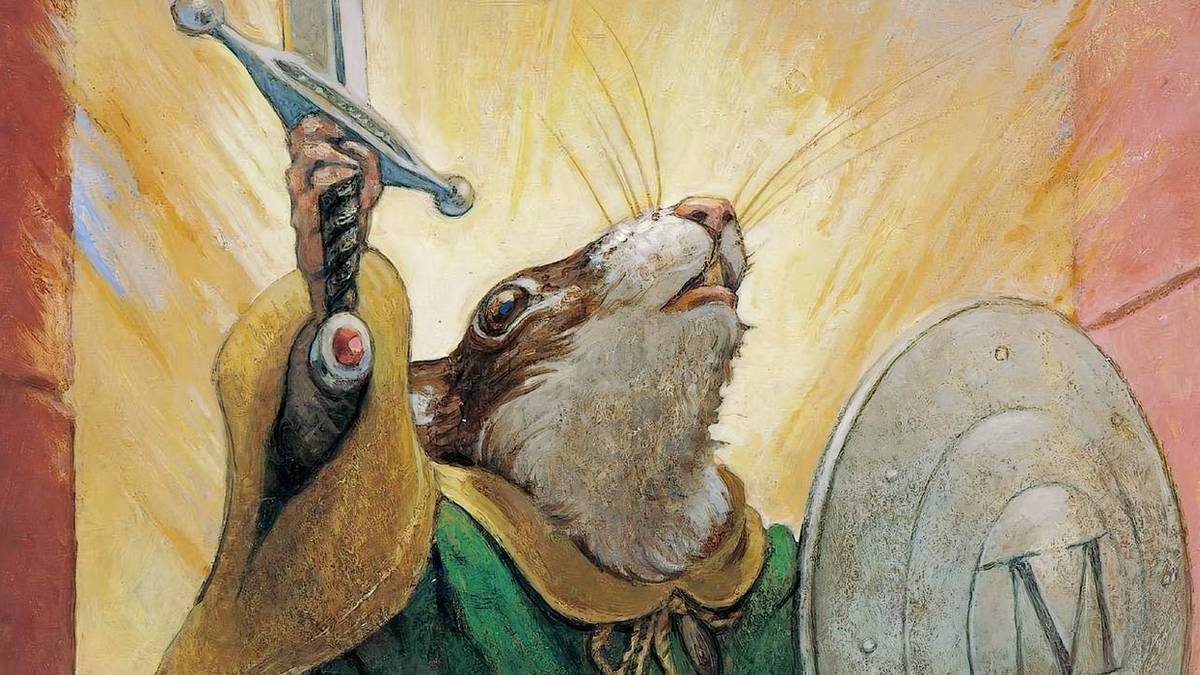
Published Aug 13, 2026, 11:49 AM EDT Kelcie Mattson is a Senior Features author at Collider. Based in the Midwest, she also contributes Lists, reviews, and television recaps. A lifelong fan of niche sci-fi, epic fantasy, Gothic horror, elaborate action, and witty detective fiction, becoming a pop culture devotee was inevitable once the Disney Renaissance, Turner Classic Movies, BBC period dramas, and her local library piqued her imagination. Rarely seen without a book in one hand and a cup of coffee in the other, Kelcie explores media history (especially older, foreign, and independent films) as much as possible. In her spare time, she enjoys video games, amateur photography, geeking out over music, and attending fan conventions with her Trekkie family. Don't let the category fool you — children's fantasy books are often just as enduring, influential, and substantive as their adult counterparts. Look no further than The Hobbit, A Wrinkle in Time, The Chronicles of Narnia, A Wizard of Earthsea, The Dark Is Rising, and another timeless page-turner: Brian Jacques' Redwall series. For 40 years, the medieval fantasy epic has captivated millions of hearts and minds thanks to Jacques' top-notch worldbuilding, thrilling action, sophisticated topics, gallant heroes, and malicious villains. The adult readers who grew up with the English author cherish their worn, well-loved books with a fondness typically reserved for old friends. In 2021, after major studios spent decades failing to launch a feature film (Canada premiered a three-season television show in 1999), Netflix secured the rights to Jacques' full series. Netflix's adaptation would begin with a full-length children's movie based on the first book and penned by a screenwriter with relevant credits, followed by an "event" prequel show about Redwall's most revered warrior. By all accounts, this should've been the long-awaited slam-dunk. Instead, Netflix reportedly sealed Redwall's cancelled fate earlier this year. It's another example of the company's unfair and perplexing choices. Artistically, a cinematic interpretation of Redwall deserves to see the light of day. 'Redwall' Is a Fantasy Masterpiece for All Ages Redwall's origin as an ode to the schoolchildren Jacques met during his time as a delivery driver is reflected in the series' accordant gentleness. Jacques fills his tales from cover to cover with warmth, wit, celebratory joy, and rollicking yarns. Redwall follows the anthropomorphic residents of Redwall Abbey, nestled within the cozy Mossflower Woods, as well as all the fluffy cuties (mice, hares, squirrels, otters, badgers) who call Mossflower's neighboring lands home. These otherwise peaceful forest-dwellers embark on adventures and fend off vicious attackers (snakes, foxes, rats, weasels) over multiple generations. Jacques joined a lucrative tradition of superimposing potent metaphors upon his talking creatures. Redwall walks the delicate line of respecting children's capacity for somber scenarios (murder, war, enslavement, tyranny), affording the depictions the requisite gravity, and keeping them age-appropriate. Within his charming framework also dwell tried-and-true archetypes: myths and legends, quests, suspenseful battles, scrumptious feasts, and flawed heroes who choose to protect communal values and practice individual compassion, wisdom, and responsibility. Jacques' lush yet agile prose, comfortably formulaic plot structure, and intricately crafted environment — history, mythology, geography, linguistics — constitute the final cherry on top. The fact that each species rarely strays from its simplistic classifications — good and courageous versus villainous and conniving — can be interpreted as Jacques replicating the same binary that defines ancient morality-lesson fables or the author playing into racial and ethnic stereotypes (unintentionally, one hopes). Without diminishing how any adaptation must add nuance to these narrative facets, Jacques making diminutive-sized wildlife his default protagonists is a spectacular thematic move akin to J. R. R. Tolkien creating the Hobbits. Fictional enemies and adult readers alike view mice, for instance, through their active and subconscious biases; both parties dismiss them as defenseless and unimportant or inconvenient pests, respectively. Instead, their tiny frames harbor enormous hearts and equivalent acts of altruistic bravery. Women warriors get to partake in this noble swashbuckling, too. (Three cheers for quasi-gender equality in classic kidlit!) Netflix Cancelling 'Redwall' Is a Misstep on Several Fronts For Redwall's screenwriter, Netflix hired arguably the dream creative overseer. Patrick McHale created the Over the Garden Wall miniseries and co-wrote director Guillermo del Toro's Netflix original film, Pinocchio. The award-winning and critically acclaimed masterpieces demonstrate his keen feel for whimsical atmospheres tempered by eeriness and heart-wrenching maturity. Yet McHale departed Redwall in December 2022 for unspecified reasons. During an interview with Inverse published that same month, he referenced the layoffs that struck the Netflix Animation department in September as a development that cast Redwall's future into "uncertainty." It's unknown how much this consolidation affected Redwall's progress. At this point, however, one can't ignore Netflix's somewhat notorious tendency to cancel highly-watched shows. Unless Redwall's circumstances fell apart beyond achievable repair — a Forbes report from April alleges that a director and a cast were attached, but the team's work hadn't advanced past pre-production and "Netflix recently allowed its option on Jacques' works to lapse" — there's no logical reason for Netflix to have scrapped the immensely anticipated project. Even from a business metric, it continues a disappointing and likely unnecessary trend. What's more, axing Redwall could be a strategic oversight. Viewership has dropped for the latest seasons of many Netflix originals, and the streamer currently lacks a flagship genre franchise with truly widespread, fan-favorite appeal, aside from perhaps Black Mirror and Wednesday. If their Redwall adaptation had held to the novels, then the intellectually stimulating, family-friendly-with-an-edge saga could've transcended viewership demographics — seizing younger kids, adolescents, and adults in one fell swoop. Between the profit-generating power of correctly wielded nostalgia and an audience of reachable newcomers, a considerable hit — Top 10 rankings, many seasons, multiple spin-offs — was in immediate sight. With the rights reverted to Penguin Random House and The Redwall Abbey Company, Redwall can hopefully find a suitable new home. The story deserves at least another chance.
The Best Fantasy TV Adaptation Is Hiding in Plain Sight After Netflix Quietly Cancelled It
Full Article
Original Source
Read the full article at Collider →KhanList aggregates and links to publicly available news content. We do not host full articles from third-party sources. Always verify important information with original sources.