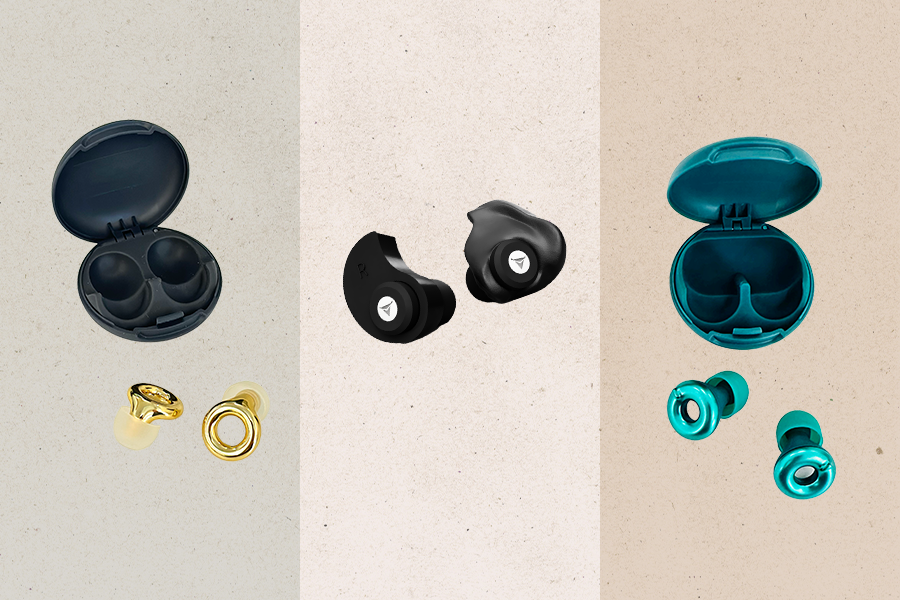
These specialized earplugs reduce harmful concert volumes and still let you hear the music (and your friends) If you purchase an independently reviewed product or service through a link on our website, Rolling Stone may receive an affiliate commission. It took me years to invest in earplugs for concerts. Now I never go to shows without them. I loved the immersiveness of booming sound (enough to put up with ringing ears afterward), but recurring tinnitus and premature hearing loss led me to finally invest in some of the best earplugs for concerts. At a Glance: The Best Earplugs for Concerts The big discovery, for me, was how good earplugs for concerts have gotten. Today, there are many high-quality options that partially block harmful volumes, letting you fully enjoy the music and even hold conversations without taking your ‘plugs out. In other words, there’s no reason not to wear earplugs to shows. In fact, I’ve started bringing them out with me everywhere for bars and other loud spaces, as well as concerts. However, not all earplugs for concerts are worth your money. To help find the best ones, our team of experts reviewed several popular options to find the best earplugs for concerts. How We Tested & Selected The Best Earplugs for Concerts To find the best earplugs for concerts, another product editor and I brought several best-selling pairs to different concerts and compared their performance, comfort/fit, and in-ear aesthetics. All earplugs also have a noise reduction rating (NRR), which indicates how many decibels the earplugs block. For example, if you’re at a 100 dB concert and you use earplugs with an NRR of 20 dB, the sound will be reduced to 80 dB. For most people, the best earplugs reduce the volume but still allow all components of the music (and any friends in your ear) to be clear and intelligible. That means you’ll want a lower NRR — around 20 dB is generally ideal. In my testing, I used each pair of earplugs at shows playing different genres at different volumes, including quieter, intimate house shows, loud rock concerts, and even noisy bars blasting hip-hop. The best earplugs let me comfortably hear the music and (in most cases) my friends as well. Fit and comfort are also crucial. Proper fit helps improve noise reduction, as too-small ‘plugs won’t filter sound as effectively. Earplugs should also be comfortable enough that you all but forget about them (and don’t need to adjust at any point). The best earplugs for concerts offer different ear tip sizes in one package so you can test all of them to find your Goldilocks fit. Lastly, I considered how the plugs look in your ear. No one wants plastic jutting out — both for aesthetic reasons and so that they don’t get accidentally swiped out by dancing shoulders. The Best Earplugs for Concerts Below are some of the best earplugs for concerts, after our editors’ testing. Editor’s Pick Loop Switch 2 NRR: 20-26Ear tips: XS, S, M, L Over the last couple of years, Loop has established itself as the leader in universal-fit earplugs. Most of our staff (myself included) have extensively tested the brand’s best-sellers and can confidently say the hype is real. I love their metallic, jewelry-like design, which makes them better-looking than most earplugs (unless you want total discretion), and you get a great range of colors to choose from. More importantly, I love Loop’s excellent noise-reduction, which turns down the volume without sacrificing audio quality. The Loop Switch 2 is our top pick from the brand. Unlike most earplugs, you can adjust how much volume is let in by shifting a dial (no need to swap tips). The plugs have three modes: “Quiet”, “Experience,” and “Engage,” ranging from almost full quiet to noise-dampening. The former is great for non-concert activities, as well as extremely loud shows, while the “Engage” option is ideal for full immersion and occasional conversations. Runner-Up Loop Experience 2 NRR: 17Ear tips: XS, S, M, L Loop’s Experience 2 is also worth considering. It’s $25 cheaper than the Switch and offers top-tier sound reduction designed specifically for concerts, music festivals, and similar environments. They’re exceptionally comfortable, largely thanks to the namesake loop that fits snugly in your ear to lock them in place. Sound quality is as good as you’ll get with universal-fit earplugs, and the three eartip sizes offer a good fit for almost everyone. Just like the Switch 2, the Experience 2 comes in a range of stylish colors, including ones co-designed by Harry Styles’ Pleasing, Coachella, and Tomorrowland. Budget Pick Vibes NRR: 15Ear tips: S, M, L As much as we wish hearing protection was cool, the truth is that most people would probably rather not advertise that they’re wearing earplugs at the concert. Vibes gets it, which is why these earplugs are incredibly discreet, with transparent stems that are nearly invisible in the ear. In our testing, we found that they sufficiently reduced loud noises without music sounding overly muffled, and they were comfortable enough to wear for a whole concert. They feature replaceable ear tips and come in a small case that’s easy to take on the go, making them the ideal companion for venues with no-bag policies. Moldable Decibullz Moldable Earplugs for Concerts NRR: 12Ear tips: S, M, L If all earplugs don’t seem to fit properly, try these semi-custom plugs from Decibullz. The eartips are moldable; just soften them in hot water and push them into your ears while they cool down (like a mouthguard). The molding process is very easy, and the result is a pair of earplugs that stay extra secure (and comfortable) through any headbanging. They do have a slightly lower NRR than others (12), which means music will sound slightly louder than the options above. Discreet Eargasm High Fidelity Earplugs NRR: 21Ear tips: S, L Eargasm’s affordable earplugs were the first pair I used after a friend gifted them to me. With an NRR of 21 dB, they’re good for even the loudest shows and offer very good value at $44 for the basic colorway. They’re very discreet, sitting deep in the ear with a pull tab to get them out after the show. I’m also a big fan of the small metal keychain case, which is easy to slip on a keyring and carry everywhere. The one downside is that you only get two size options, which can mean a poor fit for some ears. Disposable Walker’s Pro-Tek Passive Hearing Protection NRR: 25Ear tips: one size Most disposable earplugs offer too much sound reduction for concerts. This is sometimes a shame, since earplugs will get a decent amount of wax on them, and getting a fresh pair after a few uses can be nice. These Walker’s Pro-Tek earplugs will work, however. The disposable earplugs have an NRR of 25, which is slightly higher than is ideal, but still usable for loud shows. The pack, which includes a neckband and two pairs of ear tips, normally costs less than $10 but is almost always discounted for around $5 on Amazon. The neckband is also great for concerts, letting you pull out one earplug to talk or order a drink without holding a ‘plug or sticking it into your pocket. How Do Noise Reduction Earplugs Work? Noise reduction earplugs are designed to reduce the volume of outside noise instead of simply blocking it (like foam earplugs do). They do this using filters that allow in some but not all frequencies. These types of earplugs are “passive,” which is different than the “active” noise cancellation you find in most earbuds and headphones, such as AirPods. Active noise-canceling earbuds and headphones pick up outside noise and emit a frequency opposite to the one coming in, which “cancels” out that incoming noise. Noise reduction earplugs, on the other hand, filter outside sound to reduce the overall decibel level that reaches your ears. Foam earplugs are an example of this, since they create a physical barrier between your ear canal and the outside sound, but they don’t have a filter that lets in some sound, like the earplugs above.
The Best Earplugs
Full Article
Original Source
Read the full article at Rollingstone →KhanList aggregates and links to publicly available news content. We do not host full articles from third-party sources. Always verify important information with original sources.