
Published Oct 17, 2026, 1:45 PM EDT Padraig is a Senior Features Writer and has been part of Screen Rant since 2017. Padraig is a writer, editor and retired Game of Thrones extra who has been writing about movies and TV online for over a decade. He has also written for The Irish Times, Den Of Geek, Little White Lies and many more. It's pronounced Paw-rick, BTW. Here are the best and worst Westerns of John Wayne's career. In a career that spanned exactly 50 years, Wayne explored all kinds of genres. He made heartfelt dramas, intense war movies and even romantic comedies. Of course, John Wayne's Westerns are what really made him a star. There was something about Wayne's persona and drawl that made him perfect for the "Oaters" of Hollywood's Golden Age, and he didn't mind the typecasting that came with it. The various John Wayne/John Ford collaborations yielded some of the greatest Westerns ever produced, and Wayne himself continued to front them right up to his final movie. Even when Westerns all but died during the 1970s and his own health was in decline, he was ready to saddle up and dish out justice suitable for audiences of all ages. John Wayne fronted 80 Westerns through his half-century onscreen. Now, there are plenty of outright duds amongst that list, but Wayne's star power tended to carry even those lesser outings, and here are the best and worst of Wayne's Western efforts. Best Of The 1930s: Stagecoach (1939) While Wayne appeared in many movies through the 1920s, he was always an uncredited extra or non-speaking bit player. He got his first shot at leading man status with 1930's The Big Trail, which was such a bomb that it demoted Wayne to B-Westerns for a decade. It was John Ford who not only saved Wayne's career, but made him a star with Stagecoach. John Wayne's introduction in Stagecoach is about as iconic an entrance as any star has ever made, and the story truly comes alive when his character Ringo Kid arrives. That said, the film is really an ensemble, where a group of disparate characters share the titular stagecoach and learn to work together to survive. At its core, Stagecoach is a character study, but it has plenty of thrillingly staged action too. While he might have been the lead of dozens of B-Westerns before this Ford classic, it truly was the start of his movie star era. Worst Of The 1930s: The Telegraph Trail (1933) After The Big Trial tanked, Wayne found himself fronting a swath of "Poverty Row" Westerns, which were movies produced on tiny budgets and shot in about a week. On the upside, these chintzy productions allowed Wayne to craft the screen persona that would make him an A-lister, but it also means there's lots of largely forgotten swell to wade through. 1933's The Telegraph Trail is just about the worst, and its slim 55-minute runtime feels two or three times that length. It's a cheap and cheerless effort where Wayne's scout runs afoul of a corrupt businessman and a Native American tribe whilst trying to complete a telegraph line. Wayne brings little to a thinly written role, the film is overloaded with stock footage, and it's hard to invest in anything happening onscreen. Best Of The 1940s: Red River (1948) While Wayne never played a true villain, Red River is about as close as he came. This Howard Hawks classic casts Wayne as a cattle rancher named Dunson, with the star aging himself up for the part. The story focuses on a generational clash between the arrogant Dunson and his more sensitive adopted son, played by Montgomery Clift. While Wayne could certainly lean on his screen persona in his weaker Westerns, he's fully engaged in Red River. Dunson is one of Wayne's most complex characters, and even when he's been a bully and a tyrant, he's weirdly likable. It helps that Hawks has crafted a rousing story around him, and it is possibly the best of the collaborations between actor and director. Worst Of The 1940s: Dakota (1945) A rather interminable blend of Western and romantic drama, Dakota casts Wayne as a gambler who makes an enemy of Ward Bond's businessman. Like The Telegraph Trail before it, Dakota feels much longer than its 80-minute runtime, and is badly hampered by the unengaging romance at its center. Wayne has almost no chemistry with leading lady Vera Ralston, which is a real problem since their characters are meant to be wildly in love. Wayne has much better chemistry with co-stars like his old pal Ward Bond, which only underlines the issues with Ralston's miscasting. Maybe with a better script and a leading lady Wayne had some kind of spark with, Dakota may have fared better, but it's one of his most skippable efforts. Best Of The 1950s: The Searchers (1956) While Wayne might be tied to Westerns for all eternity, he didn't actually star in that many during the 1950s. He tended to take three-year gaps between efforts like Rio Grande and 1953's Hondo, but this decade is a true case of quantity over quality. Case in point is that both The Searchers and Rio Bravo are in close contention for his best Western of the 1950s. Incredible as the latter is, The Searchers is considered a masterwork for a reason. Its dark, powerful story combined with Wayne's stunning performance and its beautiful photography has seen it cited as a major influence by Steven Spielberg, George Lucas and Martin Scorsese, who all remade it in some form with films like Taxi Driver or Star Wars. Sure, parts of The Searchers have aged poorly, including its depiction of Native Americans (even though the film was still quite progressive for its time) and its comic relief, but it's still a stunning piece of work. Anyone who calls themselves a Western fan must see The Searchers at least once. Worst Of The 1950s: The Horse Soldiers (1959) The Horse Soldiers is a perfectly solid offering that is only Wayne's worst Western of this decade by virtue of it being against Hondo, Rio Bravo and The Searchers. Still, it's definitely a lesser offering for both Wayne and John Ford, and feels a tad stock. It benefits from pairing Wayne with the great William Holden, while Ford knows how to put together a standout setpiece. It's visually accomplished too, but The Horse Soldiers does get a touch dull and leaden at times. The film also suffered from a troubled production. The famously temperamental Ford clashed with Holden and cost overruns - compounded by its leading men's large salaries - turned it into a box-office dud. Again, it's no turkey, but there's a reason few film historians cite it as a career highlight for Ford. Best Of The 1960s: The Man Who Shot Liberty Valance (1962) Another Wayne/Ford banger, this black-and-white Western pairs Wayne with the great James Stewart. It's a morality tale where Stewart's famous senator speaks with a reporter as he returns to a frontier town to attend the funeral of Wayne's rancher. It's not hard to figure out the answer to the title mystery, but what makes The Man Who Shot Liberty Valance such a fascinating drama is the way Valance's (Lee Marvin) death impacts the lives of the three leads. This includes Vera Miles' Hallie, who is in a love triangle with Stewart's meek lawyer and Wayne's manly rancher. In addition to the core drama, Ford's Western examines the old adage "Print the legend." Even when the reporter is told the unvarnished truth about what happened to Valance that night, he decides not to run the story, since the lie is way more exciting. The final shot, where Stewart and Miles' characters reflect on the repercussions of that lie, is one that will stick with viewers long after the credits end too. Worst Of The 1960s: The Alamo (1960) One of the few movies directed by Wayne, The Alamo was the ultimate passion project for "Duke." This war epic came with a huge (for the time) $12 million production budget, with Wayne putting a lot of his own money into the pot. The resulting film is one with an impressive cast and large scope, all in service of a leaden and curiously flat blockbuster. The film is riddled with historical inaccuracies and self-serious speeches, but given the scope of The Alamo, it's hard not to admire Wayne's ambition. It was clearly a labor of love, and at times, the production design and sheer scale of the film are genuinely impressive. At the end of the day, though, it's all in service of an epic lacking a genuine pulse. Best Of The 1970s: The Shootist (1976) Featured Image by Yailin Chacon The Shootist wasn't intended as Wayne's screen swansong, but his declining health kept him from making another movie. He couldn't have picked a better final role, where he plays a dying gunfighter reflecting on his life and determined to go out in a blaze of glory. While Wayne would later pass away due to cancer, he wasn't actually ill with the disease when he filmed The Shootist, as is often reported. Still, there is something poignant about the screen icon portraying a character with the illness, as Wayne's Books tries to come to terms with the violent life he led while making such the teenager he befriends (Ron Howard) doesn't follow his path. In truth, The Shootist feels a few steps away from greatness. It should have done for Wayne what Unforgiven did for Clint Eastwood, but his unwillingness to truly play with his screen persona means it doesn't get too dark or introspective. Still, it's a very entertaining final outing and features one of Wayne's most vulnerable performances. Worst Of The 1970s: Rio Lobo (1970) The third and final outing in the unofficial Rio Bravo trilogy isn't necessarily awful, but boy, does it feel tired. The final film by legendary helmer Howard Hawks, it again remixes the plot of Rio Bravo, casting a far too old Wayne as a Colonel chasing down two traitors who caused the death of a friend. Outside of a well-staged outing sequence involving a train heist and a spirited supporting turn from the ever-reliable Jack Elam, Rio Lobo is really lacking in verve. Hawks originally intended it as a two-hander between Wayne and another star like Robert Mitchum, but he couldn't hook any other A-listers. This means Wayne is stranded in a very familiar, routine adventure where it feels like even Hawks was deathly bored. Rio Lobo might hit the spot during a rainy Wednesday afternoon, but it's far from John Wayne's best. John Wayne
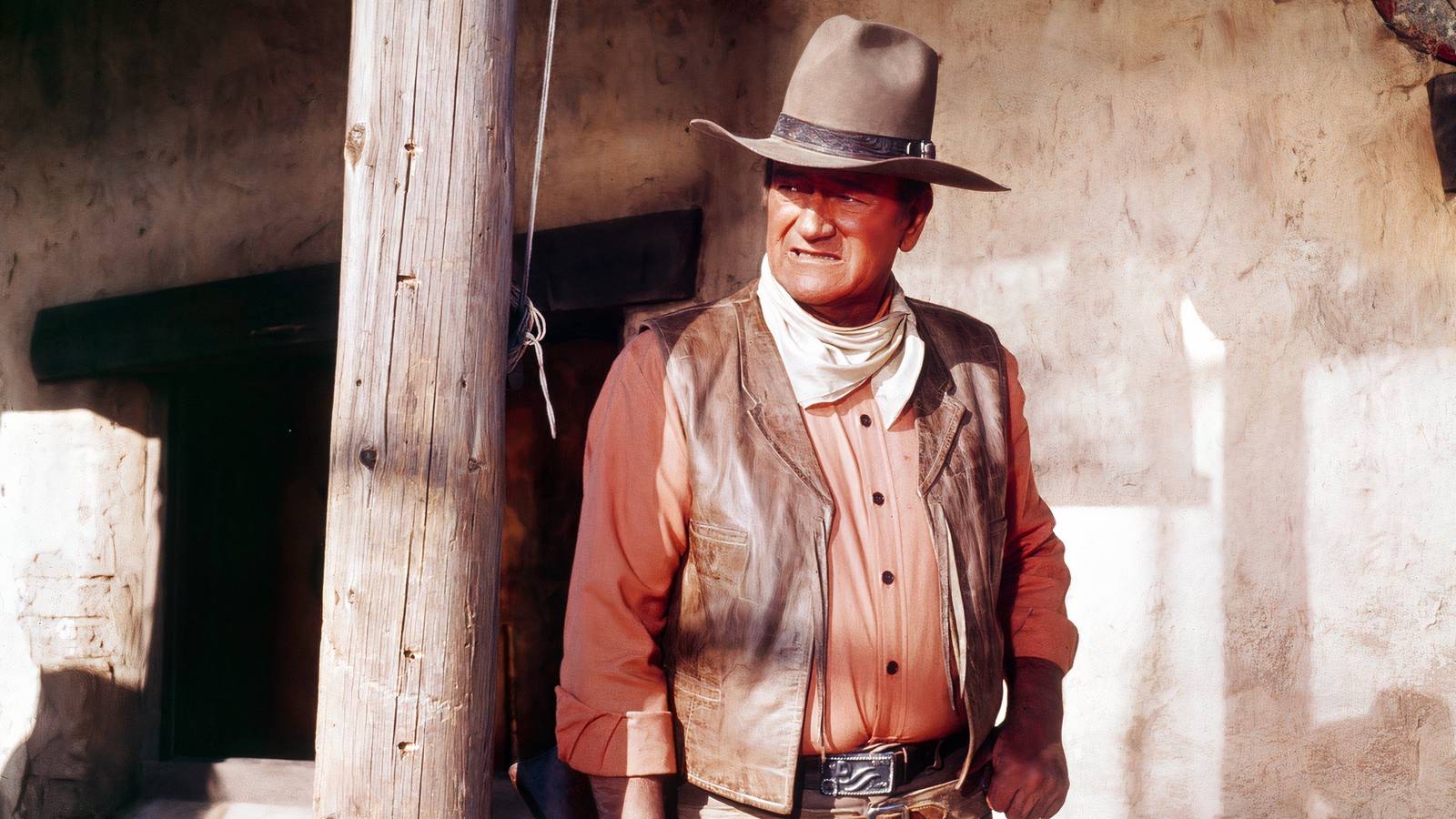
The Best & Worst John Wayne Westerns From Each Decade Of His Career (1930s - 1970s)
Full Article
Original Source
Read the full article at Screenrant →KhanList aggregates and links to publicly available news content. We do not host full articles from third-party sources. Always verify important information with original sources.