
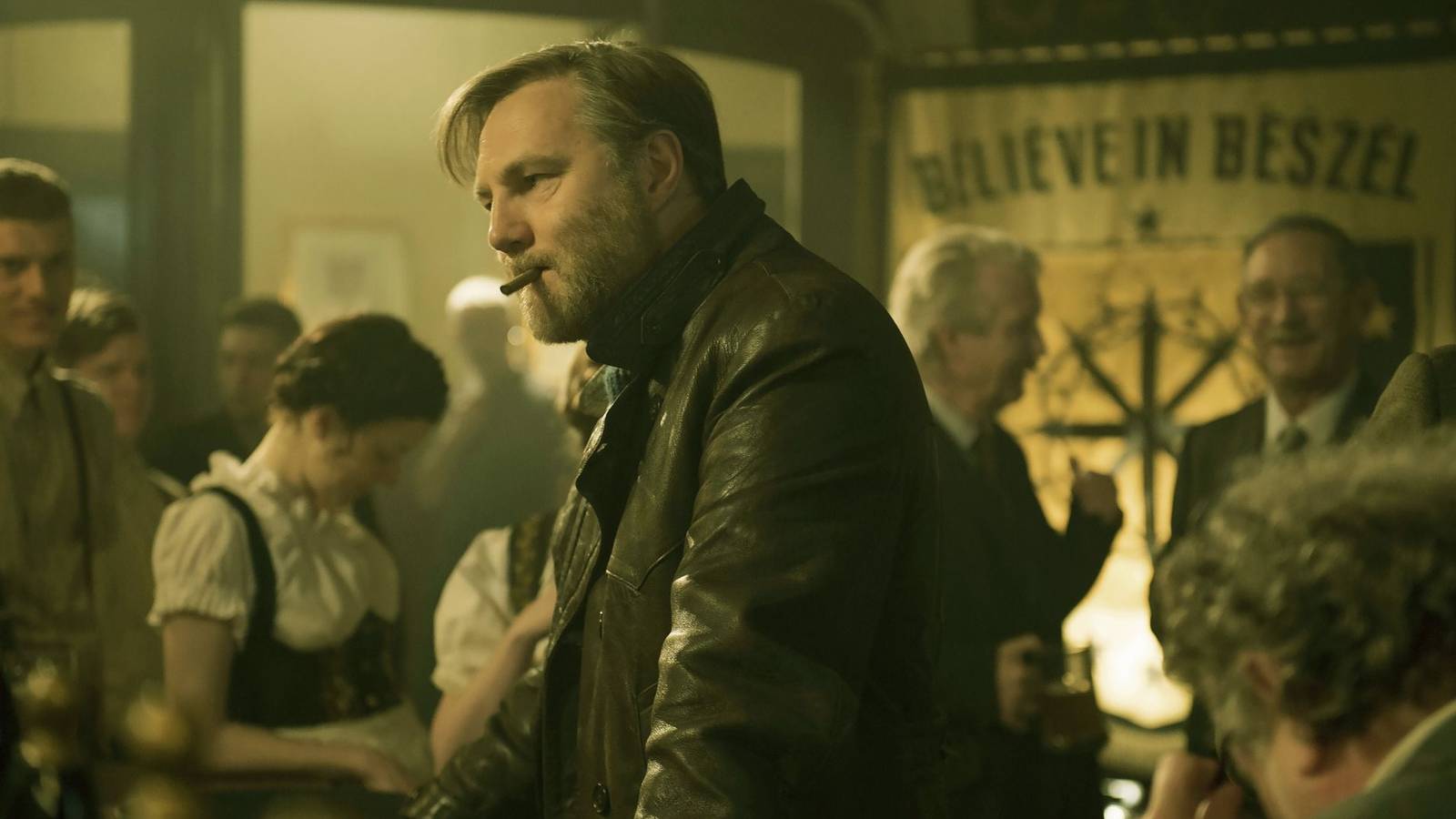
Published Nov 26, 2026, 6:01 PM EST Cathal Gunning has been writing about movies, television, culture, and politics online and in print since 2017. He worked as a Senior Editor in Adbusters Media Foundation from 2018-2019 and wrote for WhatCulture in early 2020. He has been a Senior Features Writer for ScreenRant since 2020. One of the best BBC sci-fi shows of the last ten years was criminally under-seen upon its initial release, but the miniseries has only grown better with time. The sci-fi TV landscape of the 2020s makes it worryingly easy to ignore the many great shows that came before, thanks to the sheer number of new critically acclaimed series in the genre that arrive with every passing month. On Netflix alone, there is the long-running satirical anthology show Black Mirror, the acclaimed adaptation 3 Body Problem, and the long-awaited comic adaptation The Eternaut. On Apple TV, the home of ambitious sci-fi TV, viewers can choose from Severance, Silo, Invasion, Foundation, Monarch: Legacy of Monsters, Dark Matter, and many more titles. Meanwhile, Prime Video has Fallout, Upload, The Peripheral, and the upcoming cyberpunk spinoff Blade Runner 2099. This preponderance of quality small-screen sci-fi content is both a blessing and a curse, since it means viewers might be less likely to seek out older shows from earlier decades. This would be a shame, since 2010s sci-fi shows like Hulu’s 11.22.63 remain as unmissable as ever, even if they don’t have novelty on their side. Similarly, the BBC’s 2018 miniseries The City and The City is one of the decade’s best sci-fi shows, and risks being lost to time thanks to its endless stream of genre competitors. The City And The City Was Good At The Time, But Is Aging Well Based on the novel by weird fiction legend China Miéville, The City And The City takes place between the fictional Eastern European cities of Besźel and Ul Qoma. Even though these two cities have different societies, languages, and cultures, they overlap and exist in the same place at the same time, a premise that saw Miéville’s source novel dubbed an example of “Weird Fiction” by many reviewers. An organization known as Breach enforces the separation of the two cities by ensuring that the residents of both cities “unsee” each other, and any unsanctioned border crossing results in the offender being “disappeared” by Breach. However, when David Morrisey’s Besźel-based detective, Tyador Borlú, is tasked with solving the murder of Mahalia Geary, he receives a tip from a resident of Ul Qoma telling him to check the twin city for the answer to this mystery. Thus, the stage is set for a richly allegorical sci-fi mystery that blends the whodunit plotting of DC’s thriller Lanterns with the trippy futuristic world building of Philip K. Dick’s Do Androids Dream of Electric Sheep or George Orwell’s 1984. While the original book’s blend of police procedural and offbeat sci-fi saw Miéville win the World Fantasy Award, the Locus Award for Best Fantasy Novel, and the Arthur C. Clarke Award, the qualities that made the book a hit also made The City and The City seem almost impossible to adapt. How The City And The City Compares To The Original Book Custom Image by Yeider Chacon The City and The City both simplifies and complicates the original story of Miéville’s novel. By adding a missing wife to Borlú’s backstory, the adaptation gives him more of a personal connection to the case, and thus more reason to get invested in the disappearance of Mahalia Geary. However, at the same time, the series also simplifies the everyday process of unseeing that the inhabitants of both Besźel and Ul Qoma have normalized. In the book, much like Ursula K. Le Guin’s groundbreaking sci-fi novel The Left Hand of Darkness, the writing itself is used to signify how strange, disorienting, and dehumanizing the act of “Unseeing” is. In contrast, the BBC show necessarily renders this process more straightforwardly, with blurred backgrounds and highly contrasting settings ensuring viewers know one setting from another. While a few reviewers found this to be a cop out, many complimented the BBC show for, like Apple TV’s later hit Pluribus, skirting the limits of approachability and accessibility while still telling a profoundly weird, disorienting story. Thus, the BBC’s still underrated The City And The City became one of the most underrated sci-fi shows of the 2010s. Release Date 2018 - 2018-00-00 Network BBC Two Directors Tom Shankland Cast David Morrissey Tyador Borlú Maria Schrader Senior Detective Dhatt Lara Pulver Katrynia Borlú
The BBC's 4-Hour Sci-Fi Miniseries Only Gets Better With Age
Full Article
Original Source
Read the full article at Screenrant →KhanList aggregates and links to publicly available news content. We do not host full articles from third-party sources. Always verify important information with original sources.