
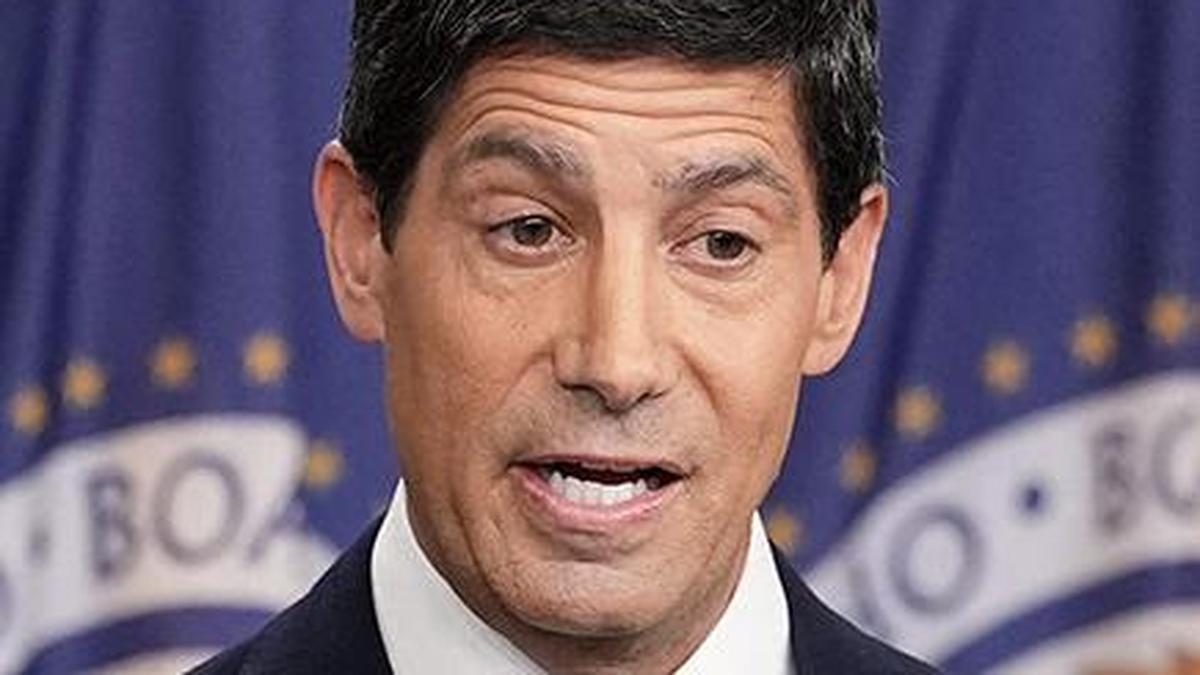
Kevin Warsh Andrew Harnik | Photo Credit: Andrew Harnik On September 16, the U.S. Federal Reserve raised the short-term interest rate — its main policy rate, broadly comparable to the Reserve Bank of India’s repo rate — for the first time in three years, by 25 basis points from a range of 3.5% to 3.75% to a range of 3.75% to 4%.The chart shows the short-term interest rate, also called the federal funds rate, seeing its first increase this month after being brought down a few times since 2023.Coming ahead of the mid-term polls in the U.S., the interest rate hike disappointed supporters of President Donald Trump as its current Chair Kevin Warsh was handpicked by Mr. Trump, who has been vociferous in his opposition to increases in the interest rate.Soon after the announcement about the increase, Mr. Trump took to Truth Social to register his opposition and said the interest rate “should be 1 % or less” and argued that higher rates have allowed other countries to benefit.However, multiple indicators that influence each other show that the increase was almost inevitable. The key indicator is the inflation rate that has not come down to acceptable limits since the beginning of the war the U.S. and Israel started with Iran earlier this year. Long-term bond yields, pushed up by inflation fears and by heavy government borrowing, added to the pressure on the Fed as holding the rates risked signalling that it was going soft on inflation.Need to bring down inflationMr. Warsh, along with 11 members of the Federal Open Market Committee, made this decision to combat inflation. “The plain fact is that inflation is too high and has been for too long,” he said at a press conference.As per the Consumer Price Index data released for August, overall inflation in the States continued to be at 3.4% in August.The sharpest jump in inflation took place in March, after the beginning of the U.S.-Israel war with Iran in February.Inflation in the U.S. hit a peak in May, at 4.2%, after which it climbed down to 3.4%, still far above the Federal Reserve’s 2% target, which it measures using the Personal Consumption Expenditures (PCE) price index.Meanwhile, the benchmark 10-year U.S. Treasury bond yields also started increasing after the Iran conflict, resulting in higher borrowing costs for the government.The increase was seen in other major economies as well. While the chart shows monthly data till August, the yield on the 10-year bonds crossed the key threshold of 5% on September 14.Rising debtOne of the factors influencing the markets to drive the long-term bond yields up is the public debt of the U.S., which is increasing at a rate faster than the growth of its Gross Domestic Product (GDP).The country’s debt-to-GDP ratio saw sharp rises in 2008, during the housing finance crisis, and its highest jump of more than 25 percentage points was in 2020, during the COVID-19 pandemic.As of the first quarter of 2026, debt was 122.6% of the country’s GDP. This ratio is nearly twice of what it was just 20 years ago, in 2006.The cost of servicing the increased debt is so high that the net interest payments by the U.S. government is higher than its spending on Medicare, health, and interestingly even defence — which according to the Stockholm International Peace Research Institute accounts for one-third of global military spending. Published - September 24, 2026 05:39 pm IST
The backdrop in which the U.S. Fed raised interest rate
Full Article
Original Source
Read the full article at Thehindu →KhanList aggregates and links to publicly available news content. We do not host full articles from third-party sources. Always verify important information with original sources.