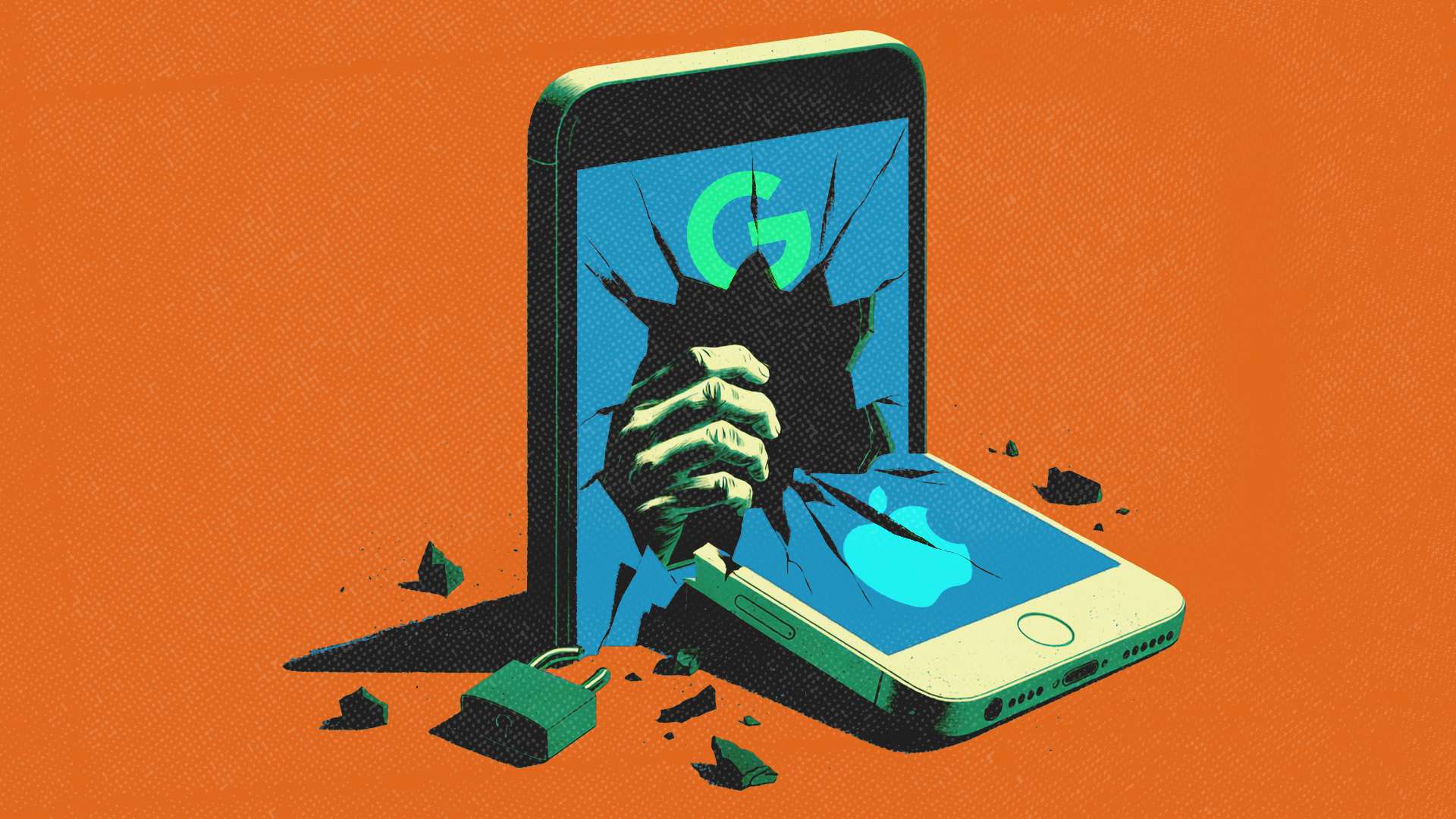
Apple And for competition and innovation too | 7.23.2026 3:00 PM (Illustration: Google/Apple/Midjourney) With federal crackdowns on Big Tech in vogue, a bipartisan bill is floating in the halls of Congress that would stymie innovation and hurt American competition abroad. On Wednesday, the House Subcommittee on Commerce, Manufacturing, and Trade held a hearing on the App Store Freedom Act (ASFA). Introduced by Reps. Kat Cammack (R–Fla.) and Lori Trahan (D–Mass.), ASFA would mandate that Apple and Google allow side-loading—the ability to download third-party app stores and apps—on iOS and Android and prohibit them from conditioning developers' respective access to the App Store and Play Store on the exclusive use of their in-app payment systems or acceptance of most-favored-nation agreements. The bill also forces the companies to allow developers to direct users to third-party payment processors without paying fees—and to grant developers the same access to platform features as their own apps. It even forbids the companies from using nonpublic business information about apps to compete with those apps. ASFA marks a dramatic departure from existing antitrust and unfair competition laws, which are already more than able to provide substantial relief for these types of practices, as shown by courts' prohibitions of certain anti-steering mechanisms in Epic v. Apple and Epic v. Google. Indeed, unlike the Sherman Antitrust Act, the bill requires no demonstration of market power or dominance before its strictures apply. Moreover, its bans do not require plaintiffs to show anti-competitive harm or allow defendants the opportunity to present procompetitive justifications. Instead, ASFA closely mirrors the European Union's Digital Markets Act (DMA) that is saddling leading American technology companies with costly compliance regimes as well as extracting hundreds of millions of dollars from them in fines. With other countries beginning to adopt their own versions of the DMA, implementing ASFA would undercut the U.S. government's efforts to resist these discriminatory regimes; foreign nations would be right to point out that the U.S. has adopted the very competition policy it opposes abroad. When she introduced her bill last May, Cammack said it was intended to combat "higher prices and limited selections for consumers and anti-competitive practices for developers that have stifled innovation." To characterize the App Store or the Play Store as expensive beggars belief: 95 percent of App Store and 97 percent of Play Store apps are free. To say that Apple and Google should offer payment options besides their native billing systems is like saying department stores should advertise to shoppers at the checkout counter that they can purchase directly from suppliers at a discount—in both cases, suppliers free ride off the downstream firm's distribution services. Far from fleecing developers, Apple collected zero commission on 90 percent of the $1.4 trillion in App Store billings in 2025, and Google reports that 99 percent of developers are eligible for a fee of 15 percent or less on its Play Store. Considering the more than 2.3 million apps on the App Store and Play Store as well as the companies' nearly $100 billion in combined research and development spending in 2025—evidence of the cutthroat competition between the two firms—it is hard to believe that they have "stifled innovation" in their app stores or broader digital ecosystems. As the bill seeks to solve a nonexistent problem, it would actively impede innovation. Federal courts have recognized that limitations on third-party app distribution, in-app payment requirements, and anti-steering practices can have procompetitive benefits. These benefits include recouping the costs associated with the billions that Apple and Google invest in their platforms, which ASFA's provisions would jeopardize. Specifically, by enabling large developers—who pay the vast majority of app store commissions—to free ride off Apple's and Google's investments in their mobile platforms, the bill discourages the innovation that defines their inter-ecosystem competition and benefits consumers. ASFA is unlikely to become law, but, if it does, it risks compromising American technological leadership by chilling incentives to innovate and by importing a hostile antitrust framework that is being used to discriminate against American tech abroad. NEXT: Brendan Carr Says ABC's Refusal To Air a Trump Speech Could Affect Renewal of Its Broadcast Licenses AppleGoogleTechnologyRegulationEuropeAntitrustFederal governmentInnovation
The 'App Store Freedom Act' Would Be Bad for Freedom
Full Article
Original Source
Read the full article at Reason →KhanList aggregates and links to publicly available news content. We do not host full articles from third-party sources. Always verify important information with original sources.