Welcome to Trump’s America, The i Paper’s World Insight series presenting the sharpest, deepest thinking on an era-defining shift in history and politics, investigating how Donald Trump and his administration have changed the US and the world – and where we go from here. • America can’t afford to retire• The US is becoming impossible to live in• The White House I worked for would have condemned this image. Trump refuses• Maga leaders want ‘traditional American families’ – but can’t stop having affairs• Sin City has lost its shine. It shows how far America has fallen• The Florida street that exposes America’s growing homophobia• Inside America’s most loyal Trump town – where people still think he’s ‘a good man’ Erick Paramo, a 34-year-old Chicago resident, works 65-70 hours a week. He has a full-time, 40-hour-a-week maintenance job and his own lawn-care business where he works after hours and on weekends. His wife works full-time too; his mother helps watch their two daughters. He has two weeks of holiday a year — though it can be difficult to get days approved, not least because his employer counts on him to provide Spanish translation for other employees. Even when Paramo can take annual leave, he’s hesitant of doing so. He told The i Paper that he started his lawn business in part because he thought “the money would allow us to go on vacation, to go camping, to go to [visit family in] California. But now everything’s so expensive, it’s gotten to the point where that money that was extra is put into the bills — food, the light bill, the gas bill, the rent, the car. It’s difficult because the price of everything has gone up.” Paramo can generally take sick days if he needs them, but if he asks for emergency time off for family appointments or other issues, his employer often asks him to come in early or late to make up the time. Long hours, sparse vacation time and a bleak work-life balance has been typical of American workers at just about every income level for decades. Under Donald Trump, however, Biden-era wage-over-inflation gains have been reversed, and unemployment has crept upwards. As a result, as Paramo notes, workers have even fewer options — and less opportunity to claw back some of their time. The United States is notorious for its endless grind. American employees work an average of 36.27 hours a week, while Germans work 29.66 and the British work 31.17, according to the International Labor Organisation. The average full-time US employee worked around 8.49 hours each weekday in 2025, according to the Bureau of Labour Statistics, while full-time employees in the UK put in about 7.3 hours a day in a five-day week, the Office for National Statistics reported. Lengthy working hours in the US are in large part a function of the fact that many Americans don’t take holiday. The US is the only advanced economy with no federally mandated paid vacation days. Eighty per cent of private-sector, full-time employees in the US are entitled to paid time off, but that varies wildly by industry. In finance, 98 per cent of workers have paid time off, while just 46 per cent of leisure and hospitality workers do. Only 40 per cent of part-time employees get paid time off, and only 43 per cent of the lowest 10 per cent of earners do. Even when workers do have paid time off, they often don’t use it. Half of American workers do not take all of the holiday time they have accrued, scholar Karen Tan wrote in The Conversation, thanks in part to a phenomenon known as “vacation guilt”. Tan, who surveyed almost 900 workers, found many said they were afraid to take leave because they believed managers would believe they were shirking or were not dedicated. Economics professor Betsey Stevenson, from the University of Michigan, told The i Paper she believes that this attitude is largely down to America’s lack of a national paid leave policy. In most European nations, the government mandates paid time off: 25 days a year in France and Austria, 22 in Spain, 20 (minus bank holidays) in England and Germany. In the US, even those who have paid time off only receive 11-18 days. The lack of federal regulation shapes “the culture of work-life balance”, Stevenson says. “It’s not cultural, as in Americans hate vacation, but it’s systematic. When large shares of people don’t have rights to take time off, you don’t have traditions around people taking time off, which makes people feel nervous about their employment attachment.” Workers in the US also lack workplace protections. US workers, unlike those in most comparable countries, are “at-will”, which means they can be fired for almost any reason. That makes it easy for employers to retaliate against employees they feel aren’t team players or aren’t sufficiently committed. Under Joe Biden, the unemployment rate dipped to historic lows, which meant that workers — especially low-income workers — had leverage to push for higher wages and better benefits. But Trump’s tariffs, wars, federal firings and attacks on immigrant labour have weakened the economy: long-term unemployment is up and inflation is outpacing wages. “Whenever job opportunities get worse,” Stevenson says, “what people end up sacrificing is work-life balance, because they’re desperate to have whatever job they can.” Progressive Democrats have tried to mandate two weeks of annual paid vacation for all full-time workers, but there’s little hope of the legislation moving forward under Trump and Republicans. So Americans continue to work and work, with little in the way of life balance and little prospect of improvement. On the contrary, Paramo says, things have gone in the other direction, and “everything is a little harder now”.
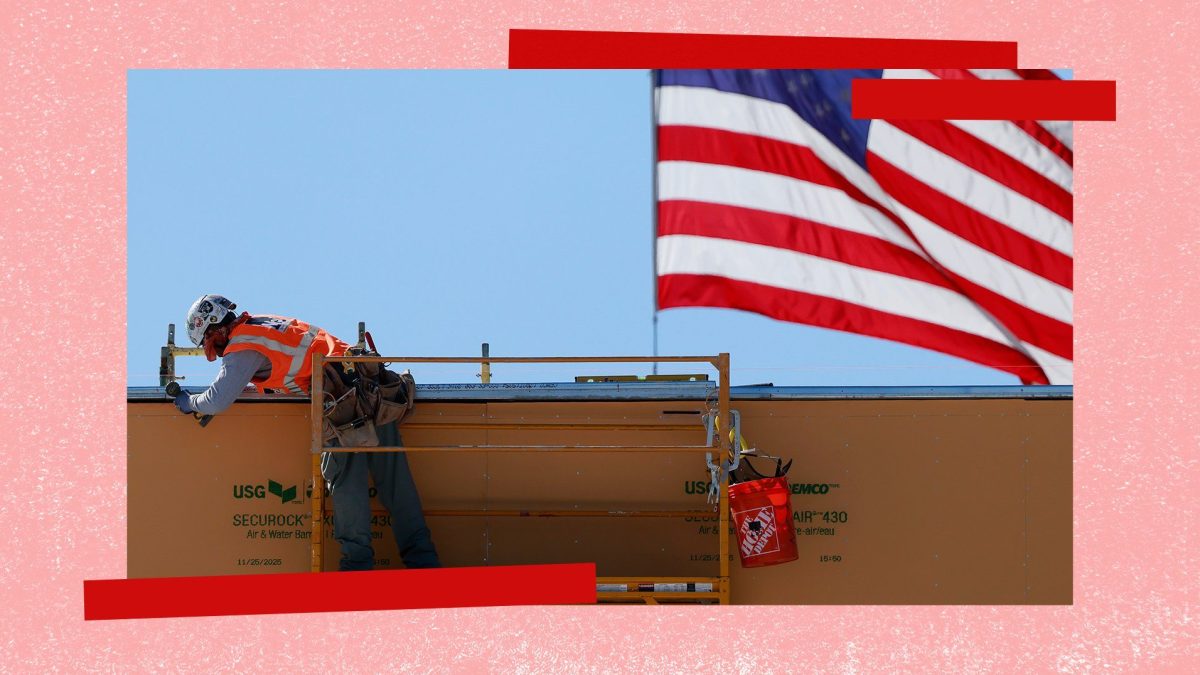
The Americans working themselves into the ground
Full Article
Original Source
Read the full article at Inews →KhanList aggregates and links to publicly available news content. We do not host full articles from third-party sources. Always verify important information with original sources.