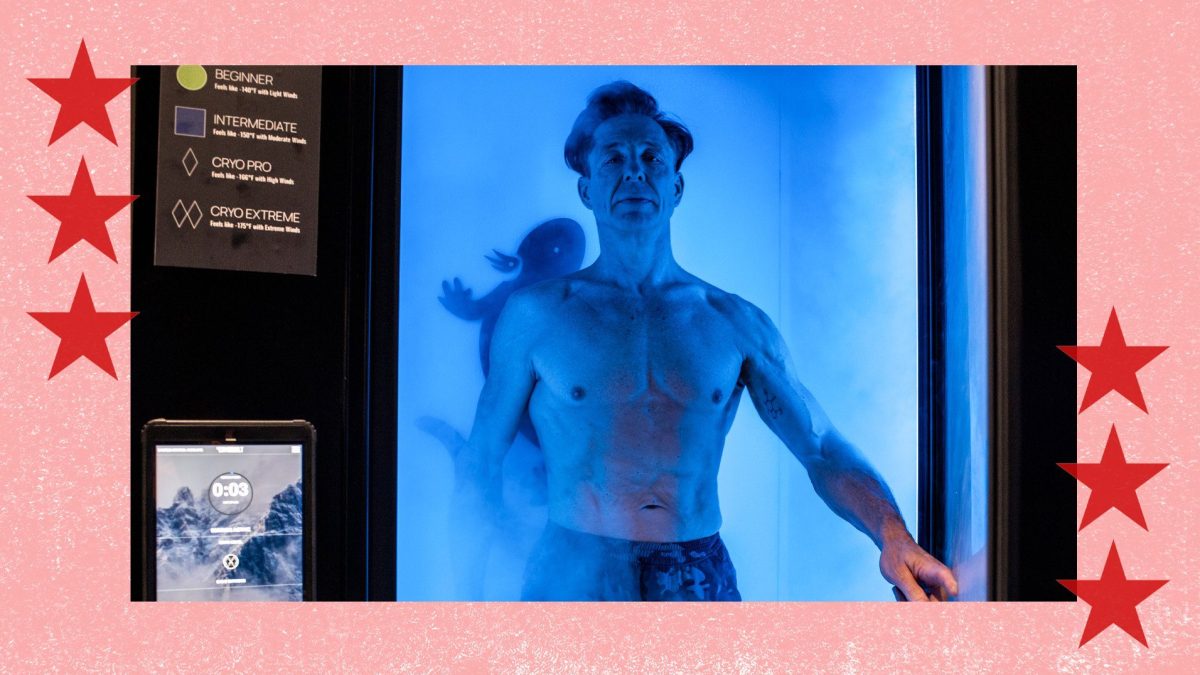
Welcome to Trump’s America, The i Paper’s World Insight series presenting the sharpest, deepest thinking on an era-defining shift in history and politics, investigating how Donald Trump and his administration have changed the US and the world – and where we go from here. • Hegseth is running a PR firm disguised as a defence department• The rich are building their own America• This heartbreaking video shows how low Trump’s White House has sunk Gary Brecka, a human biologist and professional “longevity expert” with celebrity clients like Mel Gibson and Mark Wahlberg, stresses one message above all others: “Test, don’t guess.” “The most dangerous health strategy is hoping everything is fine because you haven’t looked,” Brecka, who is based in Miami, tells The i Paper. The 55-year-old, who also works with Dana White, a former mixed martial arts fighter and a friend of Donald Trump, is one of many American “biohackers” revolutionising the way people are thinking about their health. Their aim is not simply to stay fit and keep looking good, but to extend their lives by decades. Shorts Some of the most controversial in this field – like Bryan Johnson, the venture capitalist who injected himself with his son’s blood – claim they are actively getting younger and have set as their goal “conquering death”. Others, such as self-described “father of biohacking and human optimisation” Dave Asprey, talk of extending human life to 180 years using specialist training, supplements and rigorous monitoring of the body’s key markers. An earlier generation of wealthy Americans who were obsessed with cryonics – freezing their dead bodies at super-low temperatures in the belief they could be resuscitated once medical science had advanced – has been replaced by individuals and an attendant industry promoting the notion that death can be avoided altogether. Johnson, 48, said last year: “This is the first moment in the history of the human race where somebody can say with a straight face, ‘We may be the first generation who will not die.’” Big business The “longevity industry” is lucrative business, too. A report earlier this year by SNS Insider, a market research firm based in India, suggested the longevity market could grow from $27bn in 2025 to $67bn by 2035. It’s no wonder that the world’s richest men are getting involved. Earlier this year, Elon Musk told podcaster Peter Diamandis that “semi-immortality is an extremely solvable problem”. He added: “You’re pre-programmed to die, and so if you change the programme, you will live longer.” Jeff Bezos co-founded Altos Labs in 2021, a biotechnology firm with a mission of restoring “cell health and resilience through cell rejuvenation to reverse disease, injury and the disabilities that can occur throughout life”. Sam Altman, the CEO of OpenAI, invested $180m into Retro Biosciences, a biotech firm aiming to add “10 healthy years to the human lifespan”. Gary Brecka at a biohacking dinner in Miami in January with supermodel and businesswoman Elle Macpherson (Photo: Romain Maurice/Getty) In addition to training programmes and branded products, there are more than 800 so-called longevity centres in the US, where people pay for treatments such as immersion in extremely cold tanks of water and infrared light therapy. Many are located in New York City, southern Florida and California’s Silicon Valley. Dave Asprey, who has been accused of promoting “pseudoscience”, has a series of businesses centred around the longevity trend. He is the founder of Bulletproof – known for its coffee blended with butter – and Upgrade Labs, where people can receive “cryotherapy” (intense chilling) to rejuvenate cells and full-body red and infrared light sessions to “optimise physical and mental wellbeing”. Upgrade Labs memberships run from $150 to $800 per month. Media reports suggest Asprey is worth $30m. The trend is not limited to America, either. In London, Hooke offers treatments and a “body investigation” it says gives people the “foundation to live healthier, for longer”. Memberships start at around £20,000 a year and involve “pioneering diagnostics, including extensive blood panels, genome sequencing, cognitive testing, imaging and pioneering cancer screening”. The ‘don’t die’ generation For six hours a day, seven days a week, venture capitalist Bryan Johnson puts himself through an intense regime of exercise and treatments. In addition to physical workouts, he takes supplements containing more than 60 “super molecules” that include glycine, magnesium and lithium and has both a sauna and a session under red lights. He uses special lotions on his hair and face and consumes only vegan meals he has developed himself and sells. He stops eating at noon and is in bed by 8.30pm. He sleeps solidly until 5am and boasts of the erections he has while in bed. Indeed, he tells The i Paper, he would urge people to focus on getting sufficient sleep. Entrepreneur Bryan Johnson during the Milken Institute Global Conference in Beverly Hills (Photo: Kyle Grillot/Bloomberg via Getty) “Make sleep your number one life priority,” he says. “It’s the best longevity therapy anybody could do because sleep determines someone’s willpower and if they’re willing to exercise. It determines mood and how you feel about life.” He says people should stop eating four hours before bedtime and turn off electronic devices an hour in advance to permit the “nervous system to settle down”. Asked about criticism that he is hyping claims and cashing in, he says there are always moments in history when a person will challenge accepted wisdoms. He draws a parallel to developments in longevity science to what has happened to obesity, which appeared an unsolvable crisis before the discovery of GLP-1 treatments. “Death feels inevitable, but once we start getting our first really effective anti-ageing therapies, the zeitgeist is going to change rapidly,” he adds. “I’m just ahead of the curve.” Asked why he wanted to live forever, he said religious beliefs about an afterlife showed people don’t want to die. “What I’m doing is what humans have been doing for all of time, through the means of science and technology.” In a post on his website, he noted that 100 of his body’s “biomarkers” were constantly measured and recorded by means of blood samples, full-body imaging and continuous use of wearable fitness devices. He says he also carries out so-called epigenetic testing, in which his DNA is collected and measured to see if his cells have aged. He spends $2m annually on his treatments and claims he is ageing at between 0.48 to 0.54 years annually. He posts this data online and dares others to challenge him in what he calls the “Rejuvenation Olympics”. The scientific backlash Not surprisingly, claims made by Johnson and the like have triggered controversy. David A Sinclair, the biologist behind the book Lifespan: Why We Age – and Why We Don’t Have To, suggested that humans could live as long as bowhead whales, whose lives span 200 years. Sinclair has claimed “there is nothing in biology that says that there is an [age] limit”, claiming his biological age is a decade less than his actual 57 years. In one interview, he said: “I do think somebody born today will live [to 150] because the technology is just going so quickly.” Dave Asprey uses the ‘Metabolic Trainer’ at Upgrade Labs (Photo: Sergio Flores/The Washington Post via Getty) Charles Brenner, an American biochemist and professor of metabolic regulation at the University of Helsinki, told The i Paper he considered Sinclair’s book “an influential source of misinformation on longevity, featuring counterfactual claims about longevity genes”. He said assertions about cellular reprogramming technology’s ability to “rejuvenate mice has been greatly exaggerated”. Asked to explain the possible psychology of people looking to live beyond 150 or more, he said: “I don’t have a good answer.” Sinclair did not respond to inquiries from The i Paper. He has previously dismissed the criticism of Brenner and others, telling the Wall Street Journal his work was “ahead of the curve”. “I stand behind my track record as a trusted scientist in one of the most competitive professions of all,” he added. Data overload Brecka says the most important development for people seeking to extend their lives is not “a molecule or a machine”. Rather, he says, “ordinary people have started collecting data on themselves. 10 years ago you got a blood panel when something was already wrong. Now people know their vitamin D, their B12, their ferritin, their inflammatory markers and they act on them.” He adds: “That matters more than any exotic compound, because most people are walking around with a deficiency they’ve had for a decade and they’ve been told it’s stress.” Brecka says he takes daily supplements, the foundation being methylated multivitamin, which help the body absorb B vitamins (though experts say ordinary vitamins work equally well for most people). Brecka says the key, given many of his clients already have busy schedules, is not to add to their load but tweak what they already do. “Sleep doesn’t start when your head hits the pillow. Sleep is the result of the way you lived your day, so we build it from the morning,” he says. “That’s the honest answer about the people I work with: the ones who get results aren’t the ones with the most time or the most money, they’re the ones who attach small practices to things they already do every day.”
The American billionaires trying to cheat death
Full Article
Original Source
Read the full article at Inews →KhanList aggregates and links to publicly available news content. We do not host full articles from third-party sources. Always verify important information with original sources.