
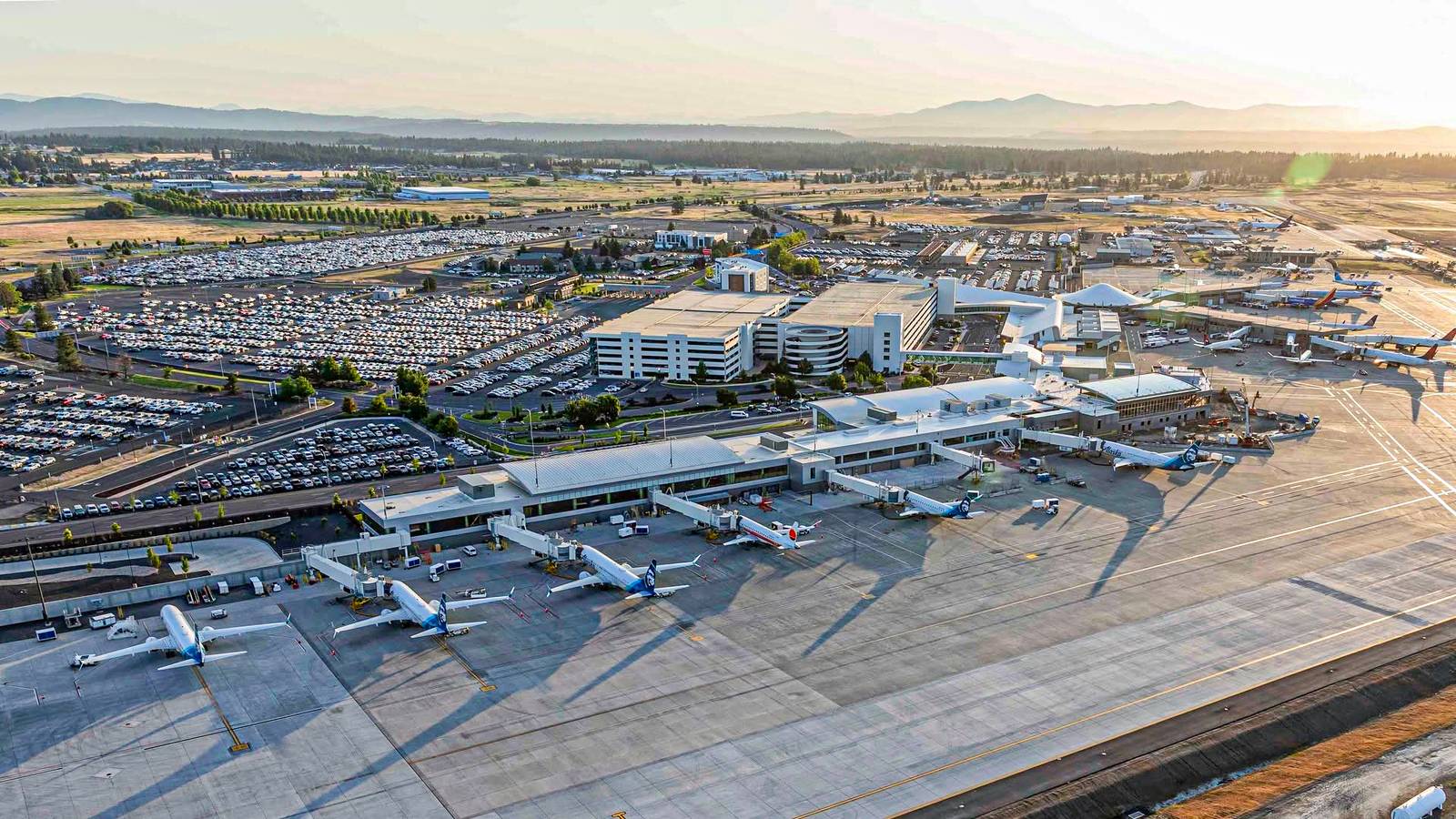
Spokane International Airport (GEG) is preparing for one of the most significant transformations in its history, but passengers will have to endure several years of disruption before experiencing the benefits. A major portion of the airport's main terminal curbside closed on October 21, 2026, forcing motorists onto a temporary two-lane bypass road that is expected to remain in place until 2030. Inside the terminal, baggage claim facilities are also being relocated, while construction crews prepare the site for a new 255,000-square-foot building. Central Hall is the project's centerpiece and is a $335 million project that will fundamentally change how passengers navigate GEG. The development is intended to eliminate the need for connecting passengers to leave the secure area and clear security again when transferring between concourses. But why has Spokane's existing terminal layout created this problem, and how will the airport maintain operations during such extensive reconstruction? The answers lie in its ambitious Terminal Renovation and Expansion (TREX) program. Why GEG's Current Layout Creates Problems For Connecting Passengers Credit: Lori Butcher | Shutterstock Spokane International Airport's existing terminal configuration has a significant limitation that many passengers might not immediately recognize: its concourses do not provide the seamless post-security connections available at many larger airports. Travelers transferring between certain areas of the airport may have to leave the secure area and undergo TSA screening again before reaching their next departure gate. This unnecessarily complicates connecting itineraries, especially when passengers have limited time between flights. The problem stems from the physical separation between Concourse C and the main terminal complex serving Concourses A and B. Although passengers can move between these areas using existing terminal infrastructure, the current arrangement does not provide the fully integrated airside circulation that Spokane wants to introduce. The airport's official TREX development plans identify the Central Hall as the solution, bringing together security screening, baggage claim, and passenger circulation in a centralized facility. For airlines, the existing arrangement can also complicate the passenger experience when itineraries involve connections between different concourses. Travelers must account for extra walking, potential security queues, and the time needed to re-enter the secure area. While Spokane is not among the largest connecting hubs in the United States, improving these arrangements could make the airport considerably more convenient for passengers traveling through the Inland Northwest. The question is how a single new building can resolve a problem that has existed across several different terminal areas. What Is The $335 Million Central Hall Designed To Change? Credit: JW_PNW | Shutterstock The 255,000-square-foot Central Hall will become the heart of Spokane International Airport's redesigned terminal. The estimated $335 million development is the centerpiece of Phase 2 of the TREX program and will consolidate security screening and baggage claim operations. According to the Spokane Journal of Business, the project will introduce a centralized security checkpoint serving all airlines, alongside a post-security connection linking Concourses A, B, and C. This is a major change from the airport's current setup. Instead of requiring passengers to navigate separate security areas, the Central Hall will provide one consolidated screening facility through which departing passengers can access the different concourses. After passing through security, travelers can move between concourses without returning to the terminal's public side. The building will also consolidate baggage claim facilities, creating a more straightforward arrivals experience and improving access to airport concessions and other passenger amenities. This project is intended to provide a more intuitive terminal layout, reducing the need for passengers to understand the airport's separate concourse arrangements. Airport CEO Dave Haring has described the development as offering the most significant improvement to passenger efficiency through consolidated screening services. As reported by KHQ, Haring has also emphasized the objective of giving passengers "one place to go." Central Hall: Project Specifications Estimated investment $335 million Building area 255,000 square feet (23,690 square meters) Security screening Consolidated checkpoint Baggage claim Centralized facilities Connected concourses A, B and C Passenger circulation Post-security connections Spokane Journal of Business Both departing and arriving passengers will benefit from these improvements, although the new building will require substantial preparation before its construction can progress. That work has already started, and the first visible consequences are being felt outside the terminal, where the airport has had to introduce a completely different traffic arrangement. Why Has Spokane Airport Closed Its Main Terminal Curbside Until 2030? Credit: JW_PNW | Shutterstock Building the Central Hall requires more than demolishing existing passenger facilities and building a replacement. Crews must first relocate important underground utilities, including water, sewer, and gas infrastructure, to prepare the site for the new building. This work has brought construction activity directly into the area around the main terminal, forcing Spokane International Airport to reorganize vehicle access. On October 21, 2026, a substantial portion of the main terminal's curbside area was closed to vehicles and pedestrians. All vehicle traffic is now being directed through a newly constructed two-lane bypass road, which is expected to remain operational until 2030. According to The Spokesman-Review, the airport previously had three inbound traffic lanes, so the temporary configuration reduces capacity for vehicles entering the terminal area. This bypass is intended to maintain access to the airport while construction crews work in the area previously occupied by the terminal's main approach roads. However, the reduced number of lanes could create additional congestion during peak departure and arrival periods. Passengers will need to follow updated signage to locate the available drop-off and pickup areas, while pedestrians using the parking facilities must access the terminal through the sky bridges. The airport has warned travelers to allow extra time for their journeys, particularly during busy periods. The construction program also involves demolishing the existing hallway connecting the main terminal with Concourse C and Concourses A and B. Passengers will therefore use temporary pathways to move between the affected areas until the permanent infrastructure is completed. As KXLY reported on October 20, 2026, the airport expects the temporary traffic and passenger arrangements to remain in place through 2030. This makes the current construction phase particularly challenging because the airport must maintain normal flight operations while simultaneously dismantling parts of its existing infrastructure. The situation is even more complicated for passengers using Concourse C, where the changes extend beyond pedestrian access and affect the entire baggage collection process. Which Airlines And Passengers Will Be Affected By The Construction? Credit: JW_PNW | Shutterstock Passengers flying with Alaska Airlines, Allegiant Air, and American Airlines are among those most directly affected by the changes at Spokane International Airport. These carriers operate from Concourse C, where the existing baggage claim facility is being decommissioned and demolished to make way for the redevelopment. Instead of collecting their checked luggage in the previous arrivals area, passengers will be directed to a temporary baggage claim facility in the Concourse C plaza. According to The Spokesman-Review, the interim facility is expected to remain in use through 2030. This means that passengers arriving on the affected airlines will need to pay attention to airport signage after landing, particularly if they are unfamiliar with the temporary arrangements. The temporary baggage claim is part of the wider reorganization of Concourse C, which requires removing existing facilities before constructing the Central Hall. The airport's parking arrangements have also changed. Its hourly parking lot has been closed for construction staging, requiring motorists to use alternative facilities depending on how long they intend to remain at the airport. Spokane recommends that visitors making stops of less than two hours use the short-term parking area on the first floor of the parking garage. Those collecting arriving passengers are encouraged to wait in the Cell Phone Lot until their friends or family members are ready for pickup. Further details are available through the airport's official parking information. Passenger Arrangements During Trex Phase 2 Passenger group What is changing? Alaska Airlines Temporary baggage claim in Concourse C plaza Allegiant Air Temporary baggage claim in Concourse C plaza American Airlines Temporary baggage claim in Concourse C plaza Short-term parking users Use the first floor of the parking garage Passenger pickups Use the Cell Phone Lot while waiting Parking garage pedestrians Access terminal through sky bridges Sources: The Spokesman-Review and Spokane International Airport. Airport management also recommends that passengers arrive at least two hours before domestic departures. Although Spokane has traditionally been relatively straightforward to navigate, the construction program means that familiar routes through the terminal may no longer be available. The advice is particularly relevant for travelers who need to park, check baggage, or arrange special assistance. Nevertheless, the current disruption follows an earlier phase of TREX that has already expanded the airport's passenger facilities. How The First Phase Of TREX Prepared Spokane For Its Biggest Expansion Credit: Jon Tetzlaff | Shutterstock The Central Hall is the second major component of Spokane International Airport's Terminal Renovation and Expansion program. Before beginning the main terminal redevelopment, the airport completed an extensive expansion of Concourse C, providing additional gates and ticketing capacity. The first phase was completed in June 2026 after construction began in 2022, creating the foundation for the subsequent terminal improvements. According to the airport's official TREX program overview, the Concourse C expansion added approximately 144,000 square feet (13,378 square meters) to the existing terminal. The development delivered three new gates, six additional ticket counters and a range of passenger amenities, including improved facilities for travelers requiring additional assistance. The project was completed through two major construction packages, Concourse C West and Concourse C East. The original expansion was designed to provide additional operational capacity before the airport undertook the more complicated task of rebuilding its central passenger facilities. It also introduced improvements such as a nursing mothers' suite, companion care rooms, and upgraded passenger amenities. According to the airport's TREX program information, a joint venture between Garco Construction and Q&D Construction managed construction, with Architectural Alliance International Group leading the architectural design. However, additional gates alone cannot solve the airport's existing security and connectivity limitations. The Central Hall is the program's most transformative element because it changes the relationship between the concourses rather than simply expanding their individual capacities. The airport's published schedule sets the start of Central Hall construction for the second quarter of 2027, after the current utility relocation and site preparation work. Spokane's $335 Million Investment Could Make Connecting Through GEG Much Easier Credit: Kirk Fisher | Shutterstock The new Central Hall could fundamentally change the way Spokane International Airport operates, particularly for passengers connecting between flights. Rather than treating Concourses A, B, and C as separate passenger areas, the airport plans to create a more integrated terminal where travelers can move between gates without repeatedly passing through security. The benefits could extend beyond shorter connection times, making the airport easier to navigate for passengers unfamiliar with its layout. The next major milestone is the anticipated groundbreaking in Q2 2027, with the temporary traffic arrangements and baggage claim facilities expected to remain until 2030. The airport's official TREX development program also identifies potential future modernization of Concourses A and B, although those improvements remain subject to additional funding. Consequently, the Central Hall is not necessarily the end of Spokane's terminal transformation. For now, the airport must balance its construction ambitions with the practical needs of airlines and passengers. The success of the $335 million investment will ultimately depend on whether the completed facility delivers the promised consolidated screening arrangements and seamless connections between all three concourses. If it does, Spokane will have addressed a longstanding weakness in its terminal design, even if passengers must endure several years of construction to get there.
The Airport Spending $335 Million So Connecting Passengers Stop Clearing Security Twice
Full Article
Original Source
Read the full article at Simpleflying →KhanList aggregates and links to publicly available news content. We do not host full articles from third-party sources. Always verify important information with original sources.