
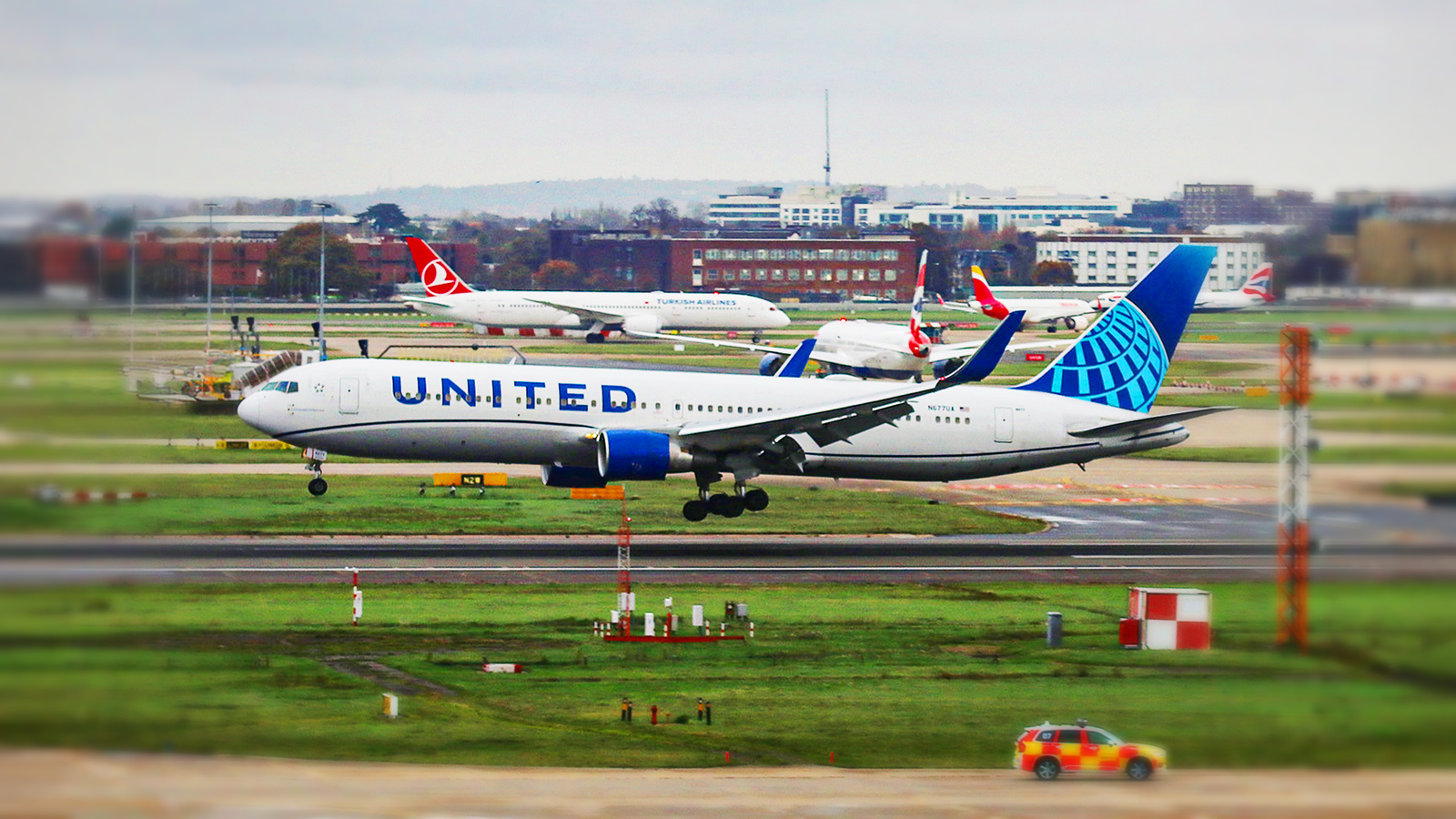
Published Nov 26, 2026, 4:01 AM EST Luke Diaz is a freelance military writer with experience with active duty experience in the US Navy as well as defense and industrial engineering. He is a former Naval Flight Officer who performed tactical air control on the carrier-based E-2 Hawkeye. United Airlines still uses the elderly twinjet for three daily round-trips between Chicago O'Hare and London Heathrow, despite the fact that its fleet of Boeing 767-300ERs has been in service for an average of almost 30 years. United's Midwest hub is still noticeably next in line as it launches its flagship 222-seat 'Elevated' Boeing 787-9 on competing Heathrow trips from San Francisco and is ready to add Houston on January 5, 2027. The way pilots, flight attendants, and business travelers experience Chicago's top transatlantic route will change if those outdated aluminum workhorses are replaced with carbon-composite Dreamliners. Replacing the 767-300ER is tricky because United configured 24 of them as boutique, 167-seat business shuttles packed with 46 lie-flat Polaris suites across narrow twin aisles. Any successor must squeeze even more high-yielding passengers into identical, slot-restricted Heathrow arrivals against winter headwinds. To retire all 53 remaining Boeing 767s around 2030, United has lined up more than 140 firm Dreamliner orders powered by GE Aerospace GEnx-1B engines. Elevated 787-9 flights to Heathrow are already operated out of San Francisco. Houston will join the fleet on January 5, 2027. Upgrading the London corridor is more about aircraft delivery scheduling than hub preparation because O'Hare already handles around one-fifth of United's Dreamliner flights across European hubs in Italy, Germany, and France. Why The Elevated 787 Targets Chicago To London Heathrow Credit: Michael Derrer Fuchs | Shutterstock For important financial routes like Chicago to London and Newark to Zurich, United Airlines set up 24 of its Boeing 767-300ERs as business shuttles. In order to accommodate 46 lie-flat beds and 22 premium recliners, United restricted these cabins to 167 seats, when other airlines put more than 200 seats onto a 767. United was unable to replace the aircraft with a regular widebody because of its hefty front cabin, which makes it particularly desirable on business corridors. Rather, to maintain that high-end configuration, the airline created the 222-seat Elevated Boeing 787-9. Nearly half the cabin is dedicated to upper-tier seating, featuring 64 Polaris suites and 35 Premium Plus recliners. Rather than scattering its first 16 upgraded Dreamliners across every hub, United concentrated them in San Francisco and Houston through 2026 while scaling to 33 aircraft by 2028. As CEO Scott Kirby stated in September 2025, United will be "well into retiring the 767" by the end of the decade. For smaller European markets that cannot sustain a widebody, United is introducing 50 narrowbody Airbus A321XLRs, starting with the first example in December to take over thinner 767 routes. Even with those replacements ordered, Boeing delivery delays meant United's newest Dreamliners still faced a bumpy debut. Early Teething Snags Versus An Aging 1991 Widebody Fleet Credit: Sonny Vermeer | Shutterstock Travelers who paid the $499 Polaris Studio upgrade charge were disappointed when Boeing delivered United's first Elevated 787-9s in early 2026 with sliding suite doors locked open until Federal Aviation Administration certification arrived in August. On November 22, 2026, the nine-month-old Dreamliner registered as N61101 returned to Singapore shortly after takeoff, creating further operational friction and necessitating an empty ferry journey to San Francisco. However, as United's 767 fleet approaches its fourth decade, more difficult mechanical problems have surfaced. Delivered in 1991, United's oldest operational mainline 767, tail number N641UA, had previously experienced a traumatic nose gear hard landing. The mishap happened in Houston in July 2023 with 202 people aboard and required months of structural repairs. Across the wider 767 fleet, United has also managed elevator fastener airworthiness directives, faulty escape slide deployments, and Pratt & Whitney PW4000 engine fan blade inspections. Despite mounting maintenance demands and Boeing delivery delays, United's October 2026 fleet plan keeps all 53 Boeing 767-300ER and 767-400ER jets active through year-end as premium cabin demand outpaces new aircraft arrivals. In July 2025, United CEO Scott Kirby underscored that momentum, noting that stabilizing travel demand supported a record 6.9 million quarterly premium seats alongside the Elevated Dreamliner rollout. Dreamliner Delivery Clocks And What Flips O'Hare Next Credit: Serhii Milekhin | Shutterstock Nearly 100 Boeing 787 Dreamliners are currently operated by United Airlines, and over 120 more aircraft are still awaiting assembly at Boeing. By 2028, the carrier will have more than doubled its initial fleet of 16 Elevated Dreamliners to more than 30 thanks to those upcoming deliveries. All 53 Boeing 767s must be kept in service until the end of 2026, until factory output picks up speed, at which point gradual retirements will start in 2030. Stan Deal, Boeing Commercial Airplanes CEO, commented in 2023: "United's unprecedented commitment to the 787 Dreamliner family is a testament to the market-leading operating economics and reliability of Boeing's widebody jets. With the 787, United will enjoy all the synergies of operating one of the largest, most efficient fleets in the skies." By summer 2027, that rollout will trigger a domino effect across O'Hare's transatlantic schedule. As incoming Airbus A321XLRs take over thinner European routes from the 767 and the Elevated 787-9 fleet passes two dozen active jets, United can finally pull its aging widebodies off Chicago's flagship London flights and replace them with 222-seat Dreamliners. Why Chicago To Heathrow Needs The 787 Over Any Other Jet Credit: Balta Mihaita Sorin | Shutterstock Chicago O'Hare to London Heathrow is one of the most fiercely contested corporate routes across the Atlantic, pitting United Airlines directly against American Airlines and British Airways. Because Heathrow caps daily takeoff and landing slots, United cannot simply add extra flights during peak morning arrival windows to capture more demand. Swapping a 167-seat Boeing 767 for a 222-seat, longer-range Boeing 787-9 boosts capacity by 33% on the same flight schedule, letting United sell more high-margin seats without needing a single new airport slot. The table below illustrates the specification contrast: Aircraft Variant Total Seats Polaris/Studio Premium Plus Economy Range 767-300ER 167 46 22 99 5,980 nautical miles (11,075 km) Elevated 787-9 222 56/8 35 123 7,565 nautical miles (14,010 km) 787-9 257 48 21 188 7,565 nautical miles (14,010 km) 787-10 318 44 21 253 6,330 nautical miles (11,720 km) A321XLR 150 20 12 118 4,700 nautical miles (8,700 km) As United phases out its aging Boeing 767s and 777-200s, the Dreamliner family anchors the modernized international fleet. Each Elevated Boeing 787-9 introduces front-row Polaris Studio suites alongside extra lower-deck cargo capacity built for high-margin transatlantic freight. That corporate heavy layout stands apart from the rest of United's Chicago European fleet, which uses larger Boeing 787-10s to Paris and Milan, smaller Boeing 787-8s to Munich and Rome, and incoming Airbus A321XLRs to serve thinner secondary markets. How Dreamliner Hardware Reshapes Pilot, Crew, And Passenger Experience Credit: Croatorum | Shutterstock When the Boeing 767 is replaced with the Elevated Boeing 787-9, the overnight Atlantic voyage becomes a completely different experience for crew and passengers alike. The 767's curtained main deck rest seats and restricted corridors have been replaced by overhead crew bunks and larger galleys designed to seat 99 premium passengers. Aside from the interior design, the Dreamliner's composite airframe modifies the cabin's outward appearance. In contrast to the aluminum 767, the 787 primarily uses carbon fiber composites in conjunction with GEnx engines, which dramatically lower cabin noise and fuel consumption by around 20%. The 787 can pressurize the cabin to an altitude of 6,000 feet (1,828.8 meters) instead of the 8,000 feet (2,438.4 meters) typical of older jets like the 767 because composites are resistant to metal fatigue and corrosion. When combined with increased cabin humidity, the denser air increases oxygen delivery and reduces jet lag. Specification 767-300ER 787-9 Max Takeoff Weight 412,000 pounds (186,880 kg) 560,000 pounds (254,011 kg) Engines 2 x PW4060 at 60,000 pounds of thrust (266.9 kN) 2 x GEnx-1B at 71,000-to-76,000 pounds of thrust (316 to 338 kN) Wingspan 156.1 feet (47.57 meters) 197.3 feet (60.1 meters) Andrew Nocella, United Airlines Chief Commercial Officer, commented in 2025: "We already deliver a superior international experience and fly to the most places across the Atlantic and Pacific - these innovations provide a more premium experience overall, give customers even more reasons to choose United, and set our airline up to grow into the next decade and beyond." Heathrow Slot Economics And Route Reliability Gains Credit: Michael Derrer Fuchs | Shutterstock Swapping a single daily 167-seat Boeing 767-300ER for a 222-seat Elevated Boeing 787-9 opens pure margin at slot-capped London Heathrow, where obtaining additional takeoff and landing rights can cost tens of millions of dollars. Scott Kirby, United CEO, commented during a media event at Los Angeles International Airport (LAX) announcing United Airlines' plan to take delivery of more than 250 new aircraft by April 2028: "For more than a decade, we've invested billions of dollars in our product, service, and technology as part of our plan to be the best brand loyal airline in the world, and the result is that more and more customers are choosing to fly us every day. Today we accelerate our plans and elevate our offerings to the next level, creating an even more consistent, premium onboard experience for every customer and delivering value across every cabin of service." Ultimately, the delay at Chicago O'Hare comes down to operational discipline rather than hub importance. By anchoring its first 16 Elevated Dreamliners at San Francisco and Houston ahead of Houston's daily 787-9 Heathrow launch on January 5, 2027, United consolidates spare parts and pilot training before expanding eastward. Once Boeing deliveries scale toward 33 upgraded Dreamliners by 2028, O'Hare, which already handles roughly 20% of United's 787 flying, stands directly in line to claim the flagship upgrade.
The Aircraft Replacing The Boeing 767-300ER On United Airlines’ Chicago O’Hare To London Heathrow Route
Full Article
Original Source
Read the full article at Simpleflying →KhanList aggregates and links to publicly available news content. We do not host full articles from third-party sources. Always verify important information with original sources.