
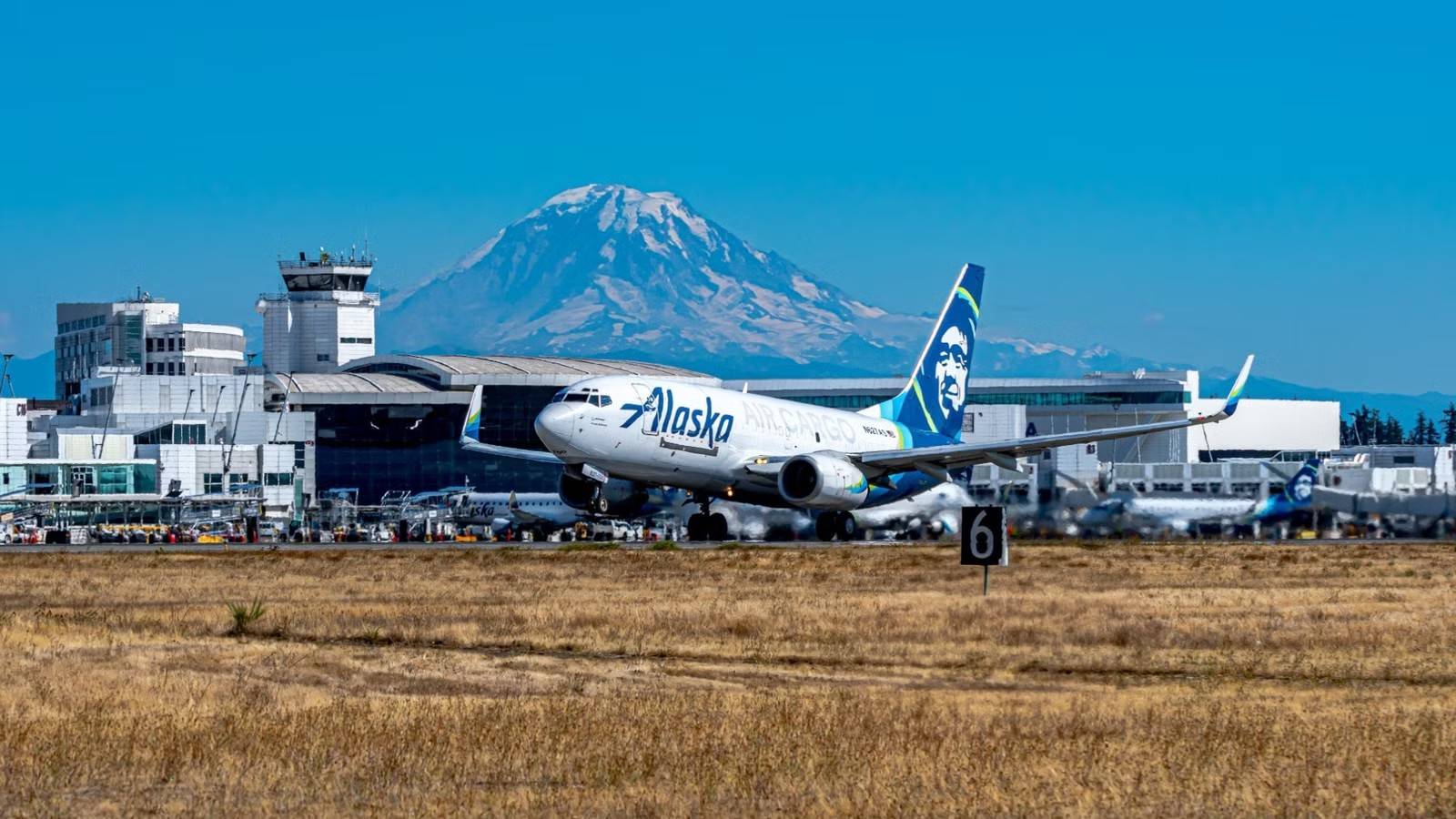
Published Nov 28, 2026, 8:00 PM EST Luke Diaz is a freelance military writer with experience with active duty experience in the US Navy as well as defense and industrial engineering. He is a former Naval Flight Officer who performed tactical air control on the carrier-based E-2 Hawkeye. Alaska Airlines is retiring all of its Boeing 737-700s next year, splitting the replacement between new 737 MAX 10s and older Next Generation 737-800s. The 25-to-26-year-old 737-700s currently fly Southeast Alaska’s 'Milk Run,' linking roadless coastal towns between Seattle and Anchorage. Since the stretched MAX 10 is oversized for the route, Alaska is putting the new deliveries on busier domestic routes and sending its 737-800s instead. As those new jets take over busy routes between early next year and the end of summer, Alaska will pull planes from its fleet of nearly 60 737-800s to cover stops like Ketchikan, Wrangell, Petersburg, and Juneau. About 20 feet (6 meters) longer than the 124-seat 737-700, the 161-seat 737-800 is the right size for the historic air corridor. The upgauge adds 37 seats and 50% more cargo space per flight without flying half-empty planes, as the Wrangell Sentinel covered. After the Federal Aviation Administration certified the MAX 10 on October 20, Alaska confirmed shortly after that all 11 of its 737-700s will be gone by the end of 2027. There is one caveat: three 737–700 freighters will stay in service to provide dedicated cargo lift to remote communities across Alaska. The airline has 168 firm 737 MAX orders, mostly for the MAX 10, with 27 set to arrive next spring to cut fuel costs while upgrading passenger experiences across the US. The Domino Effect: How Alaska’s New 737 MAX 10s Will Free Up 737-800s For The Milk Run Credit: Joe A. Kunzler | Shutterstock In January, Alaska placed the largest order in company history for 105 examples of the 737 MAX 10, plus purchase rights for 35 more and five Boeing 787 widebody jets. When it came to choosing the successor of the 737-700, Alaska opted to move up to larger airframes instead of the smaller 737 MAX 7 for a similar-sized replacement. The landmark agreement pushed Alaska's total Boeing orderbook to 245 aircraft on top of 94 MAX jets already on the flightline. Even so, the three converted 737-700BDSF freighters will serve on through cargo duty until 2028 in Alaska's far reaches. Alongside Alaska's existing freighters, Alaska announced in July that four leased Boeing 737-800BCF aircraft will enter service during the first half of next year across Alaska and Hawaii, expanding its 737 freighter fleet from five jets to nine. Alaska Market Manager Scott Habberstad confirmed that the passenger jets would be permanently phased out, according to the Wrangell Sentinel, describing the exit from service between early next year and late summer. He added, "Most will probably go to the graveyard." Once crews strip usable components, those aging airframes will likely be dismantled at a boneyard to recycle the remaining aluminum. Solving Two Fleet Retirements At Once Across Alaska And Hawaii Credit: Angel DiBilio | Shutterstock Due to short coastal runways, Alaska will assign 161-seat 737-800s to operate Southeast Alaska's Milk Run instead of 737 MAX 10s, serving communities such as Ketchikan, Wrangell, Petersburg, Juneau, and Anchorage. As the smaller 737-700 aircraft depart, switching to the 737-800 raises passenger capacity from 124 seats to 161 seats per departure. The accompanying hold space increase will allow for more high-value cargo or fresh-caught seafood on every sortie as well. Yet, reassigning 737-800s creates a second fleet squeeze. Alaska also announced in July that Hawaiian Airlines branded 737-800s will replace the retiring Boeing 717 fleet on Neighbor Island flights starting in 2028. Alaska introduced interim Honolulu to Kahului 737–800 flights last month while preparing for that switch. That means Alaska’s existing fleet is simultaneously needed to keep remote Alaskan towns connected and to keep Hawaii’s inter-island shuttle running, leaving zero margin for error if Boeing falls behind on deliveries. Freeing up those 737-800s for cargo duty depends entirely on Boeing delivering 27 new 737 MAX 10 jets next year without issue. Short Runways And Shorter Hops: Matching The Right 737 To The Route Credit: Robin Guess | Shutterstock At 129 feet, 6 inches (39.47 meters) long, the 737-800 is about 20 feet (6 meters) longer than the retiring 737-700, making it the right size for Southeast Alaska’s coastal towns. Boeing’s stretched 737 MAX 10 is nearly 144 feet (43.8 meters) long and holds up to 230 people. That is simply too many seats for communities of just a few thousand residents to regularly fill. Thus, the incoming jets are far better suited for packed cross-country flights. The Milk Run's rapid, multi-stop tempo also means pilots barely reach cruising altitude before descending after a 15-minute hop. Flying short island-to-island segments between stops such as Wrangell and Petersburg leaves little time for the 737 MAX 10 to benefit from its cruise efficiency. The modest upgrade from the 737-700 to the 737-800 is a logical and fiscally responsible choice for Alaska Air Group that will still grant communities higher seat capacity and cargo hold space as demand increases over time. Similarly, replacing the outgoing 717 on the Hawaiian Islands with larger Boeing 737 Jets not only improves the per-seat fuel efficiency of every flight but modernizes and standardizes the newly merged narrowbody fleets. Behind The Upgrade: MAX 10 Certification, Fuel Cuts, And $150 Million In Cargo Growth Credit: Robin Guess | Shutterstock Nearly 1,000 test flights totaling more than 2,000 flight hours and 1,000 ground test hours were necessary for the 737 MAX 10 to receive federal certification. Boeing completed extensive safety and human factors documentation under the 2020 federal certification reform law that followed the two fatal crashes of 737 MAX 8 jets. The FAA oversaw an overhaul of the flight control software, which had incorrectly induced both mishaps, and an enhanced angle-of-attack system before issuing amended type certificates. Compared to previous Next Generation 737 models, the 737 MAX family has 20% less fuel consumption and carbon emissions. Fuel consumption per seat is decreased, and airport noise footprints are reduced by 50% when more air is moved smoothly around the engine core. These savings directly increase route profitability for long mainland trips when fuel accounts for a large portion of operating expenses. Just as the passenger fleet will be upgauged, adding those four freighters supports Alaska's strategic expansion plan, which targets $150 million in new annual profit from cargo growth. Keeping three converted 737-700BDSF freighters flying alongside incoming 737-800BCFs prevents any dip in remote community cargo service. Deploying nine 737 freighters across Alaska and Hawaii gives the airline more flexibility to move perishable cargo, medical supplies, and commercial freight year-round. Cutting Costs On The Ground While Upgrading The Cabin In The Air Credit: Joe A. Kunzler | Shutterstock Alaska Air Group's third-quarter loss of $147 million on $4.31 billion in revenue highlights the need to retire older 737-700s. "While we're not satisfied with this quarter's result or the $1.8 billion fuel headwind this year, we are confident in our ability to execute on the things we can control, including increasing the spread between unit revenue and unit costs excluding fuel," stated Chief Executive Officer Ben Minicucci in Alaska's earnings report. Alaska Air Group also announced post-quarter workforce reductions affecting approximately 200 employees as part of broader overhead cuts, highlighting that cost-cutting reaches well beyond the flightline. Alaska recorded an $11 million fourth-quarter severance charge, amounting to $100 million in overhead reduction next year. Alaska Air Group has taken a dual-front approach to overcoming its margin squeeze through the combined payroll slashes and anticipated fuel savings with the incoming 737 MAX 10. The onboard hardware of the renovated 737–800 cabins is substantially better than that of retiring 737-700s and previous inter-island aircraft. When Hawaiian-branded 737-800s enter Neighbor Island service starting in 2028, each aircraft will feature more than 30 Premium Class seats, reclining leather seats, USB charging, 110V power outlets, twice as many first class seats, and free Starlink WiFi. Additionally, Alaska is implementing quick, free Starlink WiFi on both mainline and regional aircraft. When Alaska launches Aurora Suites and Premium Reserve rooms on a few 737 MAX 10 routes in 2028, cabin amenities will increase even further. These cabins complement the planned 787 long-haul fleet by adding larger reclining seats and lie-flat suites, which 25 737 MAX 10 airframes will eventually be equipped with as well. All Eyes On Renton: How Boeing’s Delivery Cadence Controls Alaska’s Timeline Credit: VanderWolf Images | Shutterstock With 27 deliveries of the 737 MAX 10 scheduled for next year and 23 more in 2028, Boeing must balance 1,555 global 737 MAX 10 orders across more than 30 airlines and lessor clients in order to deliver Alaska's 50 new aircraft during a two-year period. Clearing that backlog smoothly requires steady factory output. Any delivery bottleneck inside Boeing's Washington assembly plants would force Alaska to recalculate its fleet modernization strategy. Keeping both halves of the fleet plan on schedule hinges on next year's early delivery cadence before summer travel peaks. Under Scott Habberstad's Southeast Conference timeline, the first 737–700 retirements start early next year and wrap up by the end of next summer. Two operational milestones over the next 12 months will determine whether Alaska retires its oldest mainline jets without cutting Milk Run departures. Boeing must deliver all 27 scheduled 737 MAX 10s next year, so Alaska can release 737-800s for Southeast Alaska and Hawaii preparations. Alaska must also bring its four leased 737-800BCF freighters online on schedule before the final passenger 737-700 departs late next summer.
The Aircraft Replacing Alaska Airlines' Boeing 737-700s
Full Article
Original Source
Read the full article at Simpleflying →KhanList aggregates and links to publicly available news content. We do not host full articles from third-party sources. Always verify important information with original sources.