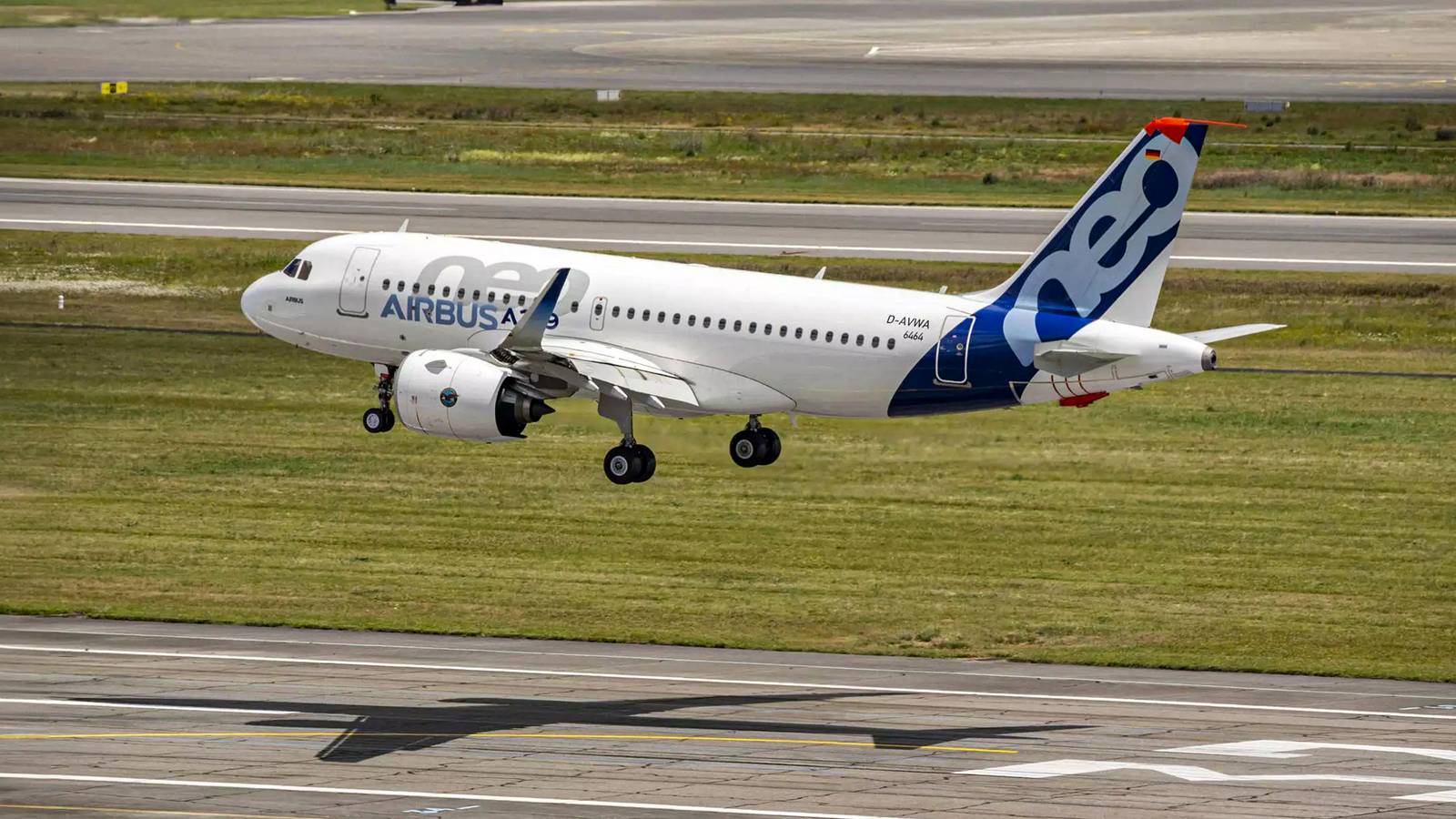
Published Jul 29, 2026, 7:00 PM EDT Daniel comes to Simple Flying with a business focused approach to the aviation world. Daniel enjoys analyzing strategy and how companies move against each other to gain a step ahead in the skies. Besides strategy, Daniel also has a passion for aircraft design and the history of aviation. Based in New York The Airbus A320 is the most successful commercial jet airliner of all time. Including the re-engined A320neo series, Airbus has sold over 20,000 examples since the program's launch in 1984 and has delivered nearly 13,000 units since 1988. With the first generation of the A320, Airbus stretched the base model, then shrunk it, and received thousands of orders. The A318, a second shrink of the A320, proved to be a dud, but the family as a whole was tremendously popular, and the A320neo family has already proven even more so. With the A320neo family, Airbus dropped the A318, while re-engining the A319, A320, and A321. Apart from the engines, the A319neo/A320neo/A321neo are nearly identical to the end-of-line A319-100/A320-200/A321-200. The A320neo has proven popular, while the A321neo has been a runaway success, receiving more orders than any other commercial aircraft variant in history. However, the A319neo has been another dud so far, having received only 57 orders compared to the thousands booked for its larger siblings. How Airliners Are Stretched And Shrunk Credit: Shutterstock Understanding the A319neo's lack of market popularity requires examining aircraft stretches and shrinks. With the A320 family, Airbus started with the base model A320 (first as the A320-100 and then the improved A320-200), which was followed up by the stretched A321 (initially as the A321-100, followed by the improved A321-200). Airbus then shrunk the aircraft to create the A319-100, and then shrunk it a second time to create the A318-100. Apart from some minor design differences, all four aircraft are the same except for their fuselage lengths (the A318 also has a different vertical stabilizer). Stretching an aircraft lowers per-seat costs since the stretch burns only slightly more fuel than the base aircraft, significantly improving its operating economics. The downside is that a stretch generally has less range and has worse field performance. Shrinking the aircraft has the opposite effect, worsening operating economics but increasing range and improving field performance. There are also the capacity differences, but this is only one factor that airlines weigh when deciding which model to buy. A manufacturer develops these derivatives to boost market appeal to a wider range of customers. With the original A320 family, the A320-200 was by far the most popular, receiving over 4,700 orders, followed by the A321-200 with over 1,700 orders. The A319-100 came in third place, but still received nearly 1,500 orders. As a whole, this trio offered a wide range of capacity options while also coming with different capabilities. The A319neo's Lack Of Market Appeal Credit: Shutterstock With 57 orders, the A319neo's lack of sales is striking compared to the 4,278 orders received by the A320neo, the 7,769 orders received by the A321neo, and the 1,486 orders received by the preceding A319-100. Apart from the engines, the A319neo is practically identical to the A319-100, and this is the first problem. The Pratt & Whitney PW1100G and CFM LEAP-1A engines weigh the same regardless of which aircraft they're attached to, which means that the A319neo has a larger weight gain relative to its siblings, slightly hampering fuel burn in comparison. The A319neo has a longer range than the A320neo and standard A321neo, but the range of the latter two aircraft is more than sufficient for nearly all airlines. The A319neo also has the best field performance out of any aircraft in the A320neo family, but all three variants feature improved takeoff performance compared to their predecessors. Except at the very edge, the A320neo is good enough for airlines needing good field performance, and the three airlines that have purchased the A319neo (Air China, China Southern, Xizang Airlines) ordered it to serve high-altitude airfields. With this in mind, you're essentially left with an aircraft that doesn't offer anything that airlines truly need, and has the downside of comparatively poor per-seat economics. The A319neo essentially costs the same to operate as the A320neo or A321neo, yet it can have 30 to 40 fewer seats than an A320neo. The A319-100 succeeded because it offered capabilities that made up for the shortcomings of the larger variants, but these planes have been improved enough that the A319neo is no longer necessary. The Capacity Situation (And Why This Favors The A321neo) Credit: Shutterstock Airbus's A319neo will seat between 130 and 150 passengers in most configurations, whereas the A320neo will seat 160 to 180 passengers. The A320neo is more economical than the A319neo, but if you can't fill the seats, then the A319neo seems like the better choice. However, airline network planning and aircraft allocation are more complicated than simply assigning planes based on capacity, because the economics of an aircraft depend on its operating cost versus its revenue potential. Because the A319neo costs the same to operate as the A320neo, running the Airbus A319neo with its lower capacity essentially leaves money on the table. While an A320neo may go out with empty seats on some days, worsening load factors, there's no real cost advantage to running the smaller variant, while the larger variant allows airlines to potentially sell more tickets, boosting revenue. This exact dynamic is also why the Airbus A321neo has become far more popular than the A320neo. With the ability to hold over 200 seats, the A321neo is an amazing tool for earning revenue, and it costs just slightly more to operate than the A320neo. The same was true of the A321-200, but the A321neo now has much more range and better takeoff performance. As such, the A321neo is quickly becoming the default narrowbody aircraft, since an airline doesn't take much of a penalty if it flies a half-empty A321neo compared to an A320neo with a 75% load factor, while the aircraft can earn significantly more revenue. Crushed From Below By The A220 Credit: Shutterstock The A320neo and A321neo have higher revenue potential than the A319neo, but selling an excessive amount of tickets can be detrimental to yields if an airline can't routinely sell all the seats, which is why airlines don't simply fly A321neos everywhere. On paper, this creates a small market for the A319neo, particularly for European airlines that prefer to right-size capacity with multiple frequencies. The problem, however, is that Airbus itself sells a better aircraft for this role in the form of the Airbus A220-300. The A220-300 seats about the same number of passengers as the A319neo, but it has lower operating costs. The aircraft also has more than enough range for any airline and is generally cheaper to acquire than the A319neo. While it lacks any commonality with the A320 family, airlines that genuinely need a fleet of small narrowbodies generally purchase enough units to sustain a unique type. The Embraer E195-E2 has also sold hundreds of units for this same reason. Aircraft Orders Airbus A220-300 999 aircraft Embraer E195-E2 464 aircraft Boeing 737 MAX 7 293 aircraft Airbus A220-100 108 aircraft Embraer E190-E2 68 aircraft Airbus A319neo 57 aircraft Meanwhile, the Airbus A319neo's direct competitor, the Boeing 737 MAX 7, has received just under 300 orders from only two customers (Southwest Airlines and Allegiant Air). It faces the same problems, although it is larger than the 737-700 and was designed as a direct shrink of the 737 MAX 8, whereas the 737-700 had more differences from the 737-800. It's an aircraft requested by Southwest and designed to fit the carrier's requirements, but has almost no market appeal otherwise. Airbus's Perspective On The A319neo Credit: Airbus Airbus isn't selling the A319neo, but the aircraft isn't a priority for the manufacturer. Airbus builds the A319neo, A320neo, and A321neo all on the same production line, but the A319neo is the lowest-priced aircraft on that line, which means that it earns Airbus less money. The purpose of an aircraft like the A319neo is to attract more sales, but the A320neo line is sold out for years while the A321neo is as popular as ever. Airbus would rather keep selling A321neos and has no shortage of demand, so the smaller variants take a backseat. Meanwhile, Airbus is selling the popular A220, but is struggling with production costs and is focused on making the program profitable. For the small narrowbody market, the A220 is the priority for Airbus, while the A319neo again takes the backseat. Aircraft Program Production Rate Variants Orders Total Orders Airbus A220 Seven to eight aircraft per month A220-100 108 aircraft 1,107 aircraft A220-300 999 aircraft Airbus A320neo 70 aircraft per month A319neo 57 aircraft 12,104 aircraft A320neo 4,278 aircraft A321neo 7,769 aircraft Ultimately, Airbus has no incentive to sell the A319neo, and the aircraft lacks market appeal. More recently, Airbus has stopped actively selling the A319neo, although it remains available to customers who actively request it, as it instead focuses on the A220 and the A320neo/A321neo. Airbus is now reported to be looking at a stretch of the A220, tentatively dubbed the A220-500, which would be roughly the same size as the A320neo. Compared to the A319neo, the A320neo is a more compelling product in the market, and an A220-500 wouldn't lead to a full stop in A320neo sales. However, the A320neo is already selling relatively slowly because the A321neo is so popular, and an A220-500 would further slow A320neo orders to a trickle.
The Airbus Jet Being Squeezed To Death Between The A220 & The A321neo
Full Article
Original Source
Read the full article at Simpleflying →KhanList aggregates and links to publicly available news content. We do not host full articles from third-party sources. Always verify important information with original sources.