
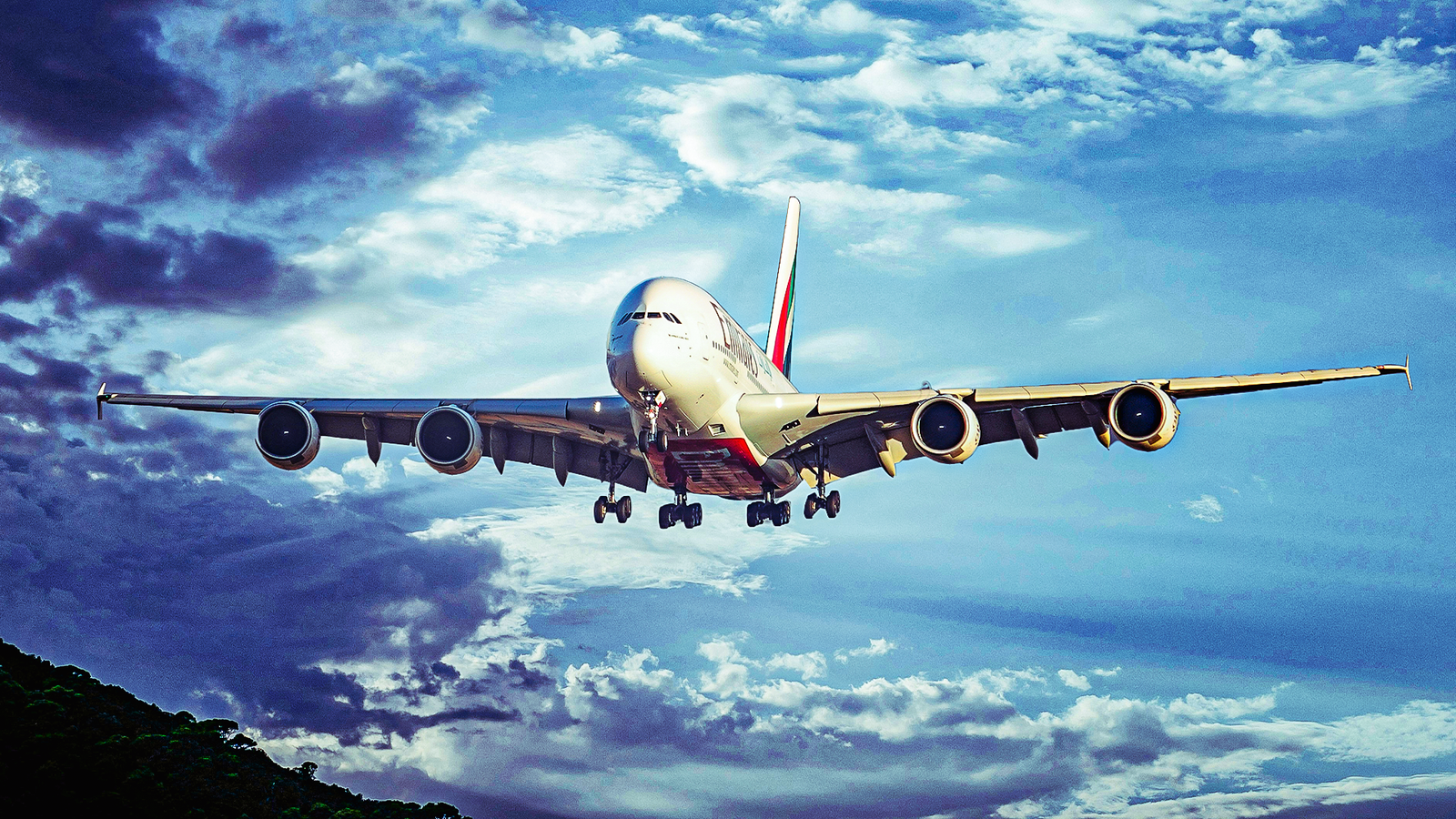
On the aprons of the world's major hub airports, the Airbus A380 still stands out as one of the most incredible feats of human achievement. Standing over seven stories tall with a wingspan of 261 feet, 8 inches (79.75 meters), the double-decker flagship was conceived at the turn of the millennium as aviation's ultimate response to global airport congestion. When the first commercial airframe touched down in Singapore Airlines colors in 2007, it was the zenith of European aerospace ambition, a leviathan protected by over 380 patents, hushed by acoustic engineering that made its cabin the quietest widebody in the sky, and crafted from advanced carbon-fiber composites. Airbus poured over $25 billion into developing a four-engine cathedral of the skies for a point-to-point world that was already turning toward nimble, fuel-efficient twinjets. When Airbus shut down the Toulouse assembly line in 2021 after building just 251 aircraft, far short of the 700 units needed to break even, the superjumbo was widely written off as a multi-billion-dollar commercial failure. However, across the sands of the Arabian Gulf, a single carrier saw the giant not as an obsolete white elephant, but as the cornerstone of a global empire. Unlike Anything Seen Before At the turn of the century, December 2000 to be exact, the A380 program kicked off. At the time, European aerospace executives bet on a future where mega-hub airports would become hopelessly congested. The solution was brute capacity: transport more than 500 passengers in a single flight slot between major international gateways. As InsideFlyer noted, when Singapore Airlines introduced the superjumbo into commercial revenue service in October 2007, the aircraft delivered an unprecedented passenger experience. With a cabin environment so hushed that ambient flight noise was reduced by half compared to previous widebodies, the double-decker airliner instantly became the crown jewel of international travel. From an engineering perspective, the superjumbo was a masterclass in advanced materials and digital design methods. European engineering teams registered over 380 patents during its development, making extensive use of lightweight carbon fiber reinforced plastics and GLARE, a glass-reinforced aluminum laminate that dramatically improved fatigue resistance. According to Simple Flying, the digital design frameworks and advanced aerodynamic modeling pioneered on the double-decker laid the crucial technical foundation for Airbus's later success with the twin-engine A350. The aircraft was a triumph of human ingenuity, but its brilliant physics could not shield it from shifting commercial realities. Airbus originally projected a global market for over 700 superjumbos, calculating that airlines around the world would line up to buy the double-decker. Instead, rapid improvements in engine reliability and aerodynamic efficiency allowed smaller, long-range twinjets like the Boeing 777-300ER and the Airbus A350 to fly point-to-point routes directly, skipping the crowded hubs altogether. As analyzed by Business a.m., with development costs topping $25 billion, the program fell far short of its financial targets, closing its assembly line in 2021 after delivering just 251 production aircraft. Building An Airport Around An Aircraft Major legacy carriers across Europe and North America shrank from the risk of filling 500 seats on a single departure, so Emirates saw the double-decker superjumbo as the ultimate engine for its geography. Operating out of Dubai International Airport(DXB), a geographical crossroads connecting Europe, Asia, Africa, and Australasia, the airline embraced a high-volume hub-and-spoke strategy. As reported by AeroCorner, Emirates committed to a staggering 123 A380 orders, taking nearly half of every superjumbo ever manufactured and making the flagship the absolute center of its international fleet strategy. Emirates transformed its ground infrastructure in Dubai to handle multiple superjumbo departures simultaneously. The carrier built Concourse A, the world's first purpose-built facility dedicated entirely to double-decker operations, equipping every gate with multi-level jet bridges that let hundreds of passengers board both decks at once. According to Bolt Flight, this massive capital investment let Emirates funnel vast waves of connecting traffic through Dubai, achieving economies of scale no competitor could match. When Airbus officially ended A380 production in 2021 after delivering its final aircraft to Emirates, industry observers assumed the double-decker would quietly fade into history. Instead, the opposite occurred, because while other airlines accelerated their superjumbo retirements, Emirates doubled down on its flagship. Keeping The A380 Modern Rather than letting its long-haul fleet age gracefully into retirement, Emirates launched one of the most ambitious retrofit initiatives in commercial aviation history. As detailed by Simple Flying, the carrier committed over $2 billion to refurbish its superjumbo fleet, completely stripping down and modernizing its cabins. By April 2026, engineering teams in Dubai had completed full interior overhauls on 93 aircraft, installing brand-new premium economy cabins, updated first class shower spas, and high-speed Starlink Wi-Fi technology, all designed to keep the onboard experience second to none. The heavy investment in cabin hardware is part of a deliberate operational effort to expand the active superjumbo fleet. To meet surging global travel demand, Emirates reactivated dozens of stored airframes, bringing its active flying fleet to just over 110 superjumbos, as per Planespotters. According to technical analysis from Simple Flying, extending the operational lifecycle of these four-engine giants allows Emirates to maintain massive passenger capacity across slot-constrained global hubs, while easing disruption from delayed deliveries of new twinjet models. Committing to operate its superjumbos well into the 2040s, Emirates has created a fleet concentration scenario unprecedented in commercial aviation history. What is even more interesting is the A380's use across other airlines, especially since no other airline in the world operates this many of these aircraft. Why Does The A380 Work For Emirates? Today, the global operational landscape of the superjumbo is defined by an unprecedented concentration of capacity. Out of the roughly 190 A380s remaining on airline active books worldwide, Emirates has 116 airframes, more than the other nine remaining global operators combined. As analyzed by AeroCorner, operators like British Airways, Singapore Airlines, and Qantas maintain modest fleets to serve high-density trunk routes, whereas Emirates stands alone in relying on the double-decker as its flagship aircraft. It may be a clear outlier in operational strategy, but this fleet concentration gives the Dubai-based carrier an unmatched competitive advantage at slot-constrained global airports. At major aviation gateways like London Heathrow Airport(LHR), where acquiring new landing slots is virtually impossible, flying a twinjet means capping per-flight capacity at roughly 350 to 400 seats. According to Bolt Flight, using 500-plus seat double-deckers to operate at these slot-restricted hubs maximizes revenue density per gate hour, extracting immense financial value from airport infrastructure never designed to handle such concentrated passenger volumes. Emirates has ultimately honed the A380's potential, building an entire business model around the aircraft's strengths. Airbus could not just rely on Emirates to fill its order book, and because other carriers moved away from the superjumbo, it is no longer in production. Crucially, this means that Emirates has a major challenge ahead when it comes to maintaining these out of production aircraft. Not Many Parts Left Flying an out-of-production widebody into its third decade is a risky decision, especially as Emirates relies so heavily on the type. With Airbus no longer manufacturing new airframe parts, Emirates has turned its engineering facilities in Dubai into a self-sustaining overhaul hub. As reported by Simple Flying, technical teams routinely perform heavy C-checks, structural fatigue inspections, and engine overhauls, as well as selectively harvesting parts from early-retired airframes across the secondary market to maintain a steady inventory of critical spares. From an economic perspective, the double-decker continues to hold a unique niche despite the superior fuel efficiency of modern twinjets like the Airbus A350-1000 or the Boeing 777X. While new twin-engine jets burn significantly less fuel per hour, the raw seat-mile economics of a fully loaded, 500-passenger superjumbo remain highly competitive on high-density routes. On routes where passenger demand consistently exceeds 80% load factors, the A380's massive seating capacity offsets its four-engine fuel burn, allowing Emirates to generate profit margins that smaller airframes are really not built to achieve. Emirates' job is to grow through the 2040s, though the A380 may not stick around that long. When the last Emirates superjumbo eventually makes its final landing in the desert, what aircraft will step up to fill the immense volume gap left by the quietest giant ever to rule the skies? Emirates sees the 777X as the most logical answer, but nothing can truly replicate everything the A380 can offer. Defying The Odds The story of the Airbus A380 is ultimately one of aerospace irony. European engineers conceived it as an architectural masterpiece to solve global airport congestion, but it was born into an era that rapidly pivoted toward point-to-point twinjet travel. Airbus paid a heavy price for that timing, absorbing over $25 billion in development losses on a program that ended after just 251 builds. In the hands of Emirates, the superjumbo transcended its financial reputation as a commercial failure. Emirates will most likely stand alone as the final guardian of the superjumbo era. Flying its refurbished flagships into the 2040s, the Dubai carrier is ensuring the quietest giant in aviation history will keep dominating the world's airways for years to come. When the last A380 eventually touches down for retirement, it will bring the end of an irreplaceable chapter in commercial flight, the moment aviation surrendered the majestic scale of the double-decker to the undeniable logic of twinjet economics.
The Airbus Engineering Crown Jewel That Never Turned A Profit, But Became An Airline's Prized Possession
Full Article
Original Source
Read the full article at Simpleflying →KhanList aggregates and links to publicly available news content. We do not host full articles from third-party sources. Always verify important information with original sources.