
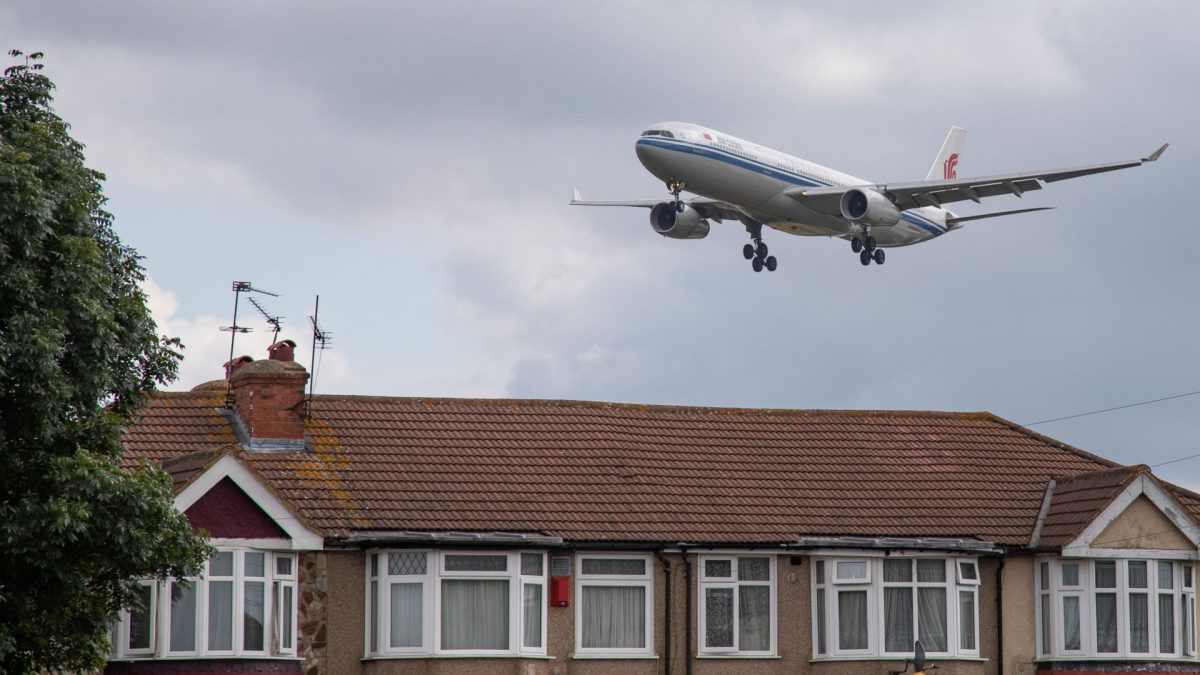
Britons have been warned of rising threats to air travel after President Volodymyr Zelensky said Russia’s airspace was no longer safe and Moscow ramped up sabotage operations against airports across Europe. Airlines including some Chinese and Gulf carriers that serve airports in the UK and carry British passengers are still flying over Russia more than four years after Western airlines stopped using its airspace (although Gulf carriers do not use Russian airspace on flights to and from the UK). Russia has closed its airspace to dozens of airlines, including all those from the UK, EU states, the US and Canada, as a result of sanctions imposed following Moscow’s invasion of Ukraine in 2022. Shorts But many airlines continue to use Russian airspace. Among them are Chinese airlines – often used as an economical route from the UK to Australasia – and some Gulf airlines. Lloyd Figgins, CEO at The Trip Group, and former overseas security adviser to the UK government, said that airspace being open did not automatically mean it was safe. “Military activity creates risks for civilian aircraft including misidentification which must be taken seriously,” he told The i Paper. “Traveller safety must come before commercial convenience. Airlines should continually reassess routes against the latest security intelligence and aviation guidance avoiding airspace where risks cannot be adequately managed.” UK Government guidance states that airlines may fly over areas of conflict or where there have been instances of terrorism. It adds that each airline regularly conducts their own safety and security risk assessments if they are flying over or near conflict regions. Ukraine has told the United Nation’s International Civil Aviation Organisation (ICAO) that Russian airspace is “not safe for civil aviation due to increased military activity” and urged that everyone avoid it. This month, Emirates planes have flown from Dubai to the US West Coast via Russian airspace (Photo: Gareth Fuller/P) Zelensky said Russian airspace was unsafe for civilian flights, and urged airlines not to fly over Russia as Ukraine increased drone strikes on its adversary. He said: “We want to warn every airline that uses Russian airspace, every insurer, everyone who still uses key Russian airports: the Russian sky is becoming completely dangerous.” The ICAO said it was “reiterating its calls for stronger commitments from all member states to protect civilian aircraft from all risks arising from conflict zones”. It added: “[This warning] comes as the risk of weapons targeting civilian planes grows worldwide. Long-range weapons systems, unmanned aircraft systems, global navigation satellite system radio frequency interference and advanced air defence systems are among the military technologies jeopardising civilian aviation. “ICAO is observing heightened risks of civil aircraft being targeted or caught in crossfire, and while the aviation industry is able to reroute flights and maintain operations during conflicts, this operational flexibility does not address the fundamental security threat.” A spokesperson for International Air Transport Association (IATA) told The i Paper: “The tragedies involving Malaysia Airlines flight MH17 and Azerbaijan Airlines flight 8243 are stark reminders of the risks that military activity poses to civil aviation.” Malaysia Airlines MH17 was a 2014 flight between Amsterdam and Kuala Lumpur in Malaysia that was shot down by Russian-backed forces with a surface-to-air missile while flying over eastern Ukraine, killing all 298 people on board. A UN investigation found Russia responsible. Azerbaijan Airlines flight 8243 from Baku, Azerbaijan, was damaged by a Russian missile while approaching an airport near Grozny, Russia, before crashing in Kazakhstan in 2024, killing 38. “President Zelensky’s comments reinforce the need for states to provide airlines with timely, accurate and actionable information about military activity that could affect civilian aircraft,” the IATA said. “IATA continues to monitor developments and supports the sharing of verified safety and security information through established international and regulatory channels.” The airlines using Russian airspace Live flight-tracking maps show fewer planes overflying Russia compared with Europe’s busy skies. But Flightradar24 data sourced for The i Paper showed that at least a dozen airlines with flights to the UK used Russian airspace over the seven days to 3 September. Among the airlines that had used Russian airspace on flights to or from the UK during the specified time period were, according to FlightRadar24, nine Chinese airlines, two Uzbekistan airlines and a Pakistani airline. The Chinese airlines were Air China, Capital Airlines, China Eastern Airlines, China Southern Airlines, Hainan Airlines, Juneyao Airlines, Shenzhen Airlines, Tianjin Airlines and Xiamen Airlines. The other airlines were Pakistan International Airlines, Uzbekistan Airway and Qanot Sharq (Uzbekistan). Chinese airlines fly over Russia on routes between Europe and China, an increasingly popular destination. Specialist tour operators such as Wendy Wu have noticed an increase in enquiries about trips to China since the Chinese government announced in February that UK nationals can visit the country for up to 30 days visa-free. Meeting growing demand for travel to Japan and South Korea, Chinese airlines can use Russian airspace to offer shorter flights and cheaper fares compared to airlines that do not fly over Russia. Chinese carriers offer connecting flights from China to destinations such as Tokyo, Seoul, Bangkok, Kuala Lumpur, Hanoi, Sydney, Melbourne and Auckland. Flights to these destinations from the UK can be a few hundred pounds cheaper with a Chinese airline compared with Western carriers. Meanwhile, Uzbekistan carriers can make use of Russian airspace when flying between London and the Uzbek capital of Tashkent, and Pakistan International Airlines uses Russian airspace on routes from the UK to Islamabad and Lahore. Emirates uses Russian airspace for routes from Dubai to the US West Coast, including Los Angeles, San Francisco and Seattle, on a regular basis, according to flight-tracking website FlightRadar24. The UK Government has not warned against flying on airlines that use Russian airspace, so travel insurance policies should not be invalidated by doing so. All airlines mentioned above were contacted for comment. A spokesperson for Hainan Airlines said: “Hainan Airlines has established a mature system and mechanism to continuously monitor and assess overseas conflict situations. We will adjust flight routes in a timely manner in light of the evolving situation and airspace conditions. “For international routes, we normally prepare two to three alternative routes in advance. Before each flight departs, an appropriate route will be selected based on the latest available airspace status.” Pulkovo Airport in St Petersburg, Russia which has been forced to suspend flights during the war as a result of Ukrainian drones in the area (Photo: Stringer/Anadolu Agency via Getty) Osprey Flight Solutions, an aviation risk management firm, emphasised that Russia was “highly unlikely to target civilian passenger aircraft directly” because this would create “limited strategic benefits for Russia, while carrying a significant risk of escalation”. Ukraine’s threats do not so far appear to have prompted flight cancellations in Russia. Though a Turkish carrier cancelled some flights to Russia on 2 September citing “technical and operational” reasons, there have been no mass cancellations by other non-Western airlines that still use Russian airspace, Osprey told The i Paper. The Russian Federal Air Transport Agency (Rosaviatsiya) announced it was “implementing additional measures to ensure the safe use of Russian airspace and enhance the security of ground transportation infrastructure”. A police officer works at Leipzig/Halle Airport in Germany after a DHL cargo aircraft hit a drone as it was taking off last month. Germany has named Russia as being behind drone plots on its territory (Photo: Axel Schmidt/Reuters) The dangers of sabotage operations Security experts have warned that increasing recklessness of Russian sabotage operations across Europe including drones in European airspace, radio frequency interference and explosives being planted at airports increase the chance of civilian aircraft getting caught up in military activity. Germany blamed Russia for a drone attack on a Ukrainian cargo planes at Leipzig/Halle Airport in eastern Germany last month. There have also been a number of Russian-backed parcel bombs over the last few years which have exploded in the UK, Germany and Poland. Osprey Flight Solutions said: “[The] greatest risk to civil aviation from Russia’s sabotage campaign outside the theatre of conflict is the incidental risk from drones flying near airports, signals disruption and efforts to down drones or other flying objects near airports including via kinetic means and the use of electronic warfare.” Aviation logistics were viable targets, Osprey said. “This also contributes to a secondary objective of Russia, which is to weaken European resolve to support Ukraine by creating an atmosphere of fear and imposing economic costs on Ukraine’s European allies. “Russia may seek to disrupt operations at airports by flying drones nearby in pursuit of this, as was seen in 2025. It should be noted that airports already contend with drone sightings near by frequently, most of which are benign in intention, being conducted by hobbyists, or are false reports.” Lloyd Figgins said that passengers should follow official travel guidance, check updates with their airline and allow for disruption. But he added that: “Risks associated with conflict-affected airspace should not be taken to mean that all European aviation faces the same threat.”
The actual risk to British passengers who use airlines that still fly over Russia
Full Article
Original Source
Read the full article at Inews →KhanList aggregates and links to publicly available news content. We do not host full articles from third-party sources. Always verify important information with original sources.