
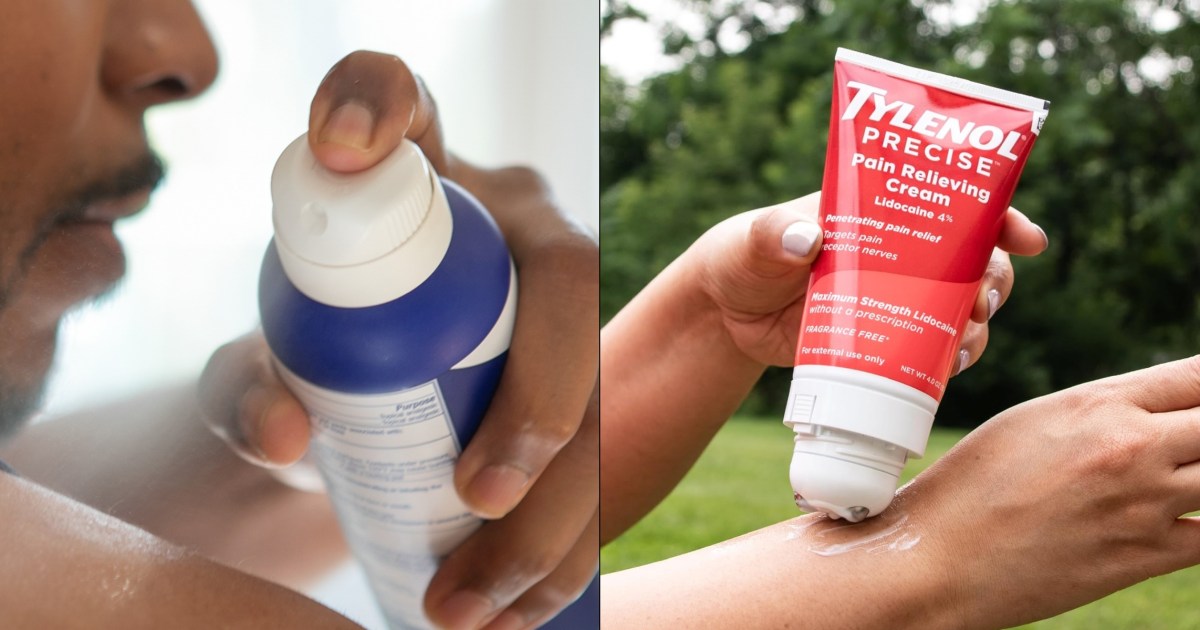
The twinge in your back after sleeping the wrong way. The soreness in your quads, knees, calves… actually, every part of your legs after running a half marathon. The stiffness in your wrists after typing all day. Pushing through this type of discomfort might be your default, but there’s a solution that helps you feel better quickly: muscle pain relief creams. They’re made with ingredients that temporarily soothe symptoms so you can live more comfortably, and there’s lots of effective options available over the counter.As someone who lives a very active lifestyle, I’m constantly sore, so I tested over a dozen muscle pain relief creams to find out which ones actually work. I also consulted doctors and physical therapists about what to pay attention to while evaluating options, and the do’s and don’ts of using them. Here’s everything you need to know.Selected.Our top picksBest extra-strong formulaLearn moreMost advanced formulaLearn moreWant more from NBC Selected? Sign up for our newsletter, The Selection, and shop smarter.The best muscle pain relief creams I curated this list of the best over-the-counter muscle creams based on my testing and expert guidance — learn more about how I picked each option here. For each product, I included information about what type of muscle pain relief cream they are and what active ingredients they’re made with, topics you can read more about below. It’s worth noting that many muscle creams are FSA/HSA-eligible, so if you have an account, check before buying one.Best gelOne of the most common active ingredients in over the counter muscle creams is menthol, which has a cooling, almost icy and minty sensation that’s meant to distract you from discomfort, says Thomas Cunningham, a doctor of physical therapy and board-certified clinical specialist in orthopedics at the Hospital for Special Surgery. When I think of that feeling, I’m immediately reminded of what I experience after applying Biofreeze to sore spots. I buy the colorless gel that comes in a roller applicator, and my skin starts tingling in the best way as soon as it makes contact. The gel dries very quickly and doesn’t leave behind any residue, so I can put it on under clothes without worrying about it rubbing onto fabric.Best creamIf you don’t love the cooling (or warming) sensation that’s common among muscle pain relief creams, try one made with lidocaine, an active ingredient that gets rid of discomfort by numbing the area you apply it to, says Dr. Kevin Farmer, an orthopedic surgeon at University of Florida Health. My top pick is Tylenol’s Precise Pain Relieving Cream, which I’ve used for years. Since it doesn’t have a cooling or warming effect, which can be a little distracting, I put it on and practically forget I did until I realize how much duller my muscle pain got. I’m an especially big fan of the roller applicator that’s on this cream’s tube: It’s made from three metal balls that are cold against my skin and give it a little massage.Best extra-strong formulaWhen you see “extra-strong” (or some version of that) on a muscle cream’s packaging, it means the product has a higher concentration of active ingredients compared to the brand’s standard formulation, says Cunningham. Icy Hot’s Advanced Pro (a.k.a. extra-strong) cream is a good example: It’s made with 16 percent menthol, while the original formulation has 10 percent menthol.Since this muscle pain relief cream is on the stronger side, I save it for post-workout recovery. I reach for it after challenging strength training workouts or long runs, like half marathons, because it gives me fast relief and an extra intense tingle-y cool to soothing warm feeling wherever I apply it. The cream comes in a squeezy tube with a hands-free massaging applicator, and the tube is compact, so I can fit it in my gym bag.Most advanced formulaBengay’s Ultra Strength muscle cream is the only option on this list that uses three active ingredients to relieve aches and pains. When you apply it to problem areas, it has an immediate cooling effect, which gradually turns into a gentle warm feeling that lasts for up to eight hours, according to the brand. It comes in a tube that’s on the smaller side, which I appreciate for travel’s sake since I can stuff it in my toiletry bag, but I find myself having to buy it more often than other creams I’ve tried. That said, it typically costs around $10 or less, so I can’t complain that much.Best for arthritis and other inflammatory conditionsThose dealing with arthritis and other types of inflammatory conditions benefit most from creams classified as topical non-steroidal anti-inflammatory drugs (NSAIDs), says Farmer. You could previously only get topical NSAIDs via a prescription, but as of 2020, there’s one available over the counter. The most popular version of it is sold under the brand name Voltaren. Voltaren’s cream relieves joint pain, improves mobility and reduces stiffness, according to the brand. It comes in a tube with an easy-twist cap, which you can open with your palm or finger, as well as with one hand — in fact, the thoughtful packaging earned it an Ease of Use Certification from the Arthritis Foundation. You also get an included dosing card to follow. Note: Voltaren is a medicated topical, so the experts I talked to recommend consulting your doctor before using it and following the directions exactly as specified. Best sprayUsing a spray formula, like this one from Vick’s, is the easiest, quickest way to apply a pain-relieving topical to a large or hard-to-reach part of your body. It’s ideal for back pain, for example. You use the lightweight, fast-absorbing spray similar to how you apply spray sunscreen: hold the nozzle a few inches away from your skin, spray the product on and rub it in. The only downside to a pain-relieving spray is that it can be messy — when you apply it, the formula might get on your walls or floor due to the wide spray area, so be careful or use it outside.Best homeopathic formulaAlternative muscle creams are made with plant-based ingredients like arnica, which may have anti-inflammatory effects. “The evidence is promising, but not definitive,” says Cunningham. “Some people report meaningful relief from soreness and bruising, while others notice little difference.” Overall, experts agree that arnica-based muscle creams are relatively useful for managing symptoms, but like all other options, you’ll need to address underlying issues for total relief.Penetrex’s muscle pain relief cream is formulated with arnica, so I was curious to try it after having so much success with standard options. Overall, I felt mild pain relief post-application, which I ultimately appreciated — I’ve gotten into the habit of consistently using Penetrex’s cream for subtle aches and pains, and reserving my stronger creams for more noticeable problem areas, especially after workouts.How I picked the best muscle pain relief creamsTo pick the muscle pain relief creams featured on my list above, I spoke to doctors and physical therapists about the most important factors to consider while shopping. Then, using their guidance, I chose a handful to test — brands sent me a few as courtesy samples and I bought others. I evaluated over the counter muscle creams based on overall efficacy, ease of application, absorption time, feel on skin and relief duration.I’m a long-distance runner who logs over 30 miles a week and cross trains at least five times a week with weightlifting, Pilates, sculpt and yoga. I also live in Manhattan and walk 20,000 steps a day on average. Long story short, I’m pretty much sore all the time and I constantly reach for muscle cream, so I can very easily evaluate different options.What are the different types of muscle pain relief cream?CounterirritantsHow they work: Counterirritants “trick” certain nerves in your skin, making them feel a cooling or warming sensation instead of muscle and joint pain wherever you apply them, says Mallory Behenna, a doctor of physical therapy and an orthopedic physical therapist at Brooks Rehabilitation. For example, when you apply a counterirritant to your knee, the nerves in your skin sense the cooling or warming feeling in that general area, distracting your brain from the localized pain. Cunningham says some people find cooling counterirritants more soothing for acute soreness, exercise-related discomfort and mild inflammation, and warming ones better for relaxing the muscles and reducing stiffness. Some products are made with cooling and warming ingredients to offer the benefits of both. Ultimately, however, all counterirritants are effective pain relievers, so choose what works best for you, says Cunningham.Best for: muscle and joint painActive ingredients: menthol (cooling), methyl salicystate (cooling), capsaicin (warming), camphor (warming)Availability: over-the-counter, stronger options available via a prescriptionExamples: Icy Hot, Biofreeze, BengayTopical anestheticsHow they work: Topical anesthetics reduce your nerves’ ability to transmit pain signals from wherever you apply them to your brain, creating a brief numbing effect, says Cunningham. Best for: muscle and joint pain, nerve-related painActive ingredients: lidocaine, dibucaine, benzocaine, phenol, pramoxine, prilocaineAvailability: over-the-counter, stronger options available via a prescription Examples: Tylenol Precise, Icy Hot with LidocaineTopical NSAIDsHow they work: Topical NSAIDs (non-steroidal anti-inflammatory drugs) are a class of medications that cause the cyclooxygenase (COX) enzymes to make less prostaglandins, a.k.a. chemicals that cause inflammation, says Farmer. The active ingredients in topical NSAIDs get absorbed by your skin and make their way into your bloodstream, but at significantly lower concentrations than oral NSAIDs like Tylenol, Advil and Aleve. Because of this, topical NSAIDs work in the general area where they’re applied, not throughout your entire body. That said, they’re still medicated, so check with your doctor before using them to make sure they won’t interact with anything else you’re taking.Best for: muscle and joint pain caused by arthritis and/or other types of inflammatory conditionsActive ingredients: diclofenacAvailability: Diclofenac 1 percent is the only topical NSAID currently available over-the-counter in the U.S. You need a prescription to get other topical NSAIDs, including stronger concentrations of diclofenac. Examples: Voltaren is the most popular brand-name over the counter 1 percent diclofenac cream, although other brands make their own nearly identical versions, like Amazon Basic Care.What’s the difference between muscle pain relief creams, gels, balms and sprays?People commonly search for “muscle pain relief creams” while looking for pain-relieving topicals in general — that’s the more accurate way to refer to this category of products that encompasses creams, gels, balms and sprays, as well as patches. Each form is effective and uses the same active ingredients, so choosing one is a personal preference. Here are a few factors to consider while deciding what’s best for you.Base type: You tend to feel pain relief for a longer period of time when you use topicals made with mostly oil-based ingredients (like creams and balms) compared to those made with mostly water-based ingredients (like gels and sprays), says Cunningham. The skin doesn’t absorb oils as quickly, so they give pain-relieving products an extended release effect. In contrast, the skin absorbs water-based ingredients very quickly, so you won’t feel relief for as long. Products with oil-based ingredients also tend to be more easily spreadable, so you likely won’t have to use as much at one time.Absorption time: Topicals made with mostly water-based ingredients absorb into skin faster— that means you’re less likely to feel them on your skin over time, and they won’t rub off onto clothes. The opposite is true of topicals made with mostly oil-based ingredients: They take longer to absorb into the skin, so they’ll give you relief for longer, but they may linger on your skin and rub off onto clothes.Application method: Muscle creams, gels and balms come in pots and squeezy tubes, as well as rollers. If you plan on applying the topical to a larger area, buying a pot or squeezy tube is best — you can dispense however much you need and rub it in. If you’re targeting a smaller area, rollers are ideal, and you won’t get the product on your hands, which is a bonus. Sprays also let you apply a topical hands-free, but they’re best for larger areas. Frequently asked questionsYes, muscle creams work. They alleviate minor to moderate aches, pains, stiffness, tension, soreness and in some cases, inflammation, letting you comfortably and more easily move throughout your life, says Cunningham. That said, while they’re useful for symptom management, they’re not an end-all be-all solution: Muscle pain relief creams temporarily reduce discomfort, but they don’t fix the underlying cause of that discomfort. “We’re all going to have aches and pains that come and go, but if they linger for multiple days and don’t start feeling better, you need to get checked by a physician or physical therapist,” says Behenna. Muscle creams are especially beneficial for people who need relief but can’t take oral pain relievers and anti-inflammatories because they’re on other medications that may interact, like blood thinners and those for certain kidney, stomach and heart issues, says Farmer. Muscle creams address discomfort locally, meaning only in the area where it’s applied, and their active ingredients don’t interact with other medications, so they’re the ideal choice for this group.Muscle creams are short-acting to provide temporary relief from pain, soreness, stiffness and, in some cases, inflammation, says Farmer. They only work for a few hours. Read the label on your muscle cream’s packaging to learn how long that specific option lasts, how often you can reapply it and how many days in a row you can use it before the brand recommends consulting a doctor or physical therapist.There isn’t necessarily a wrong way to apply muscle pain relief cream, says Cunningham. You simply rub it into the specific part of your body that’s painful, tense or strained as needed, and reapply it according to the brand’s directions, which are printed on the packaging. Overall, if applying muscle cream makes you more comfortable in your daily life, experts say it’s a great tool.One important note: If you plan to use muscle cream to deal with exercise-related soreness, Behenna recommends using it as a post-workout recovery tool, not a pre-workout pain reliever. “You don’t want to decrease your muscles’ ability to perceive pain while you’re doing physical activity because that might cause you to push too hard, too fast,” she says. “You need to be able to tell when your body hits its limit.”Muscle cream is generally safe for most people to use, especially because it’s localized, which means it only works in the specific area you apply it to, says Farmer. That said, if you have a history of sensitivity to over the counter muscle creams, are allergic to ingredients they’re commonly made with or have open wounds of any kind that could potentially be irritated by them, don’t use them. Talk to your doctor about other pain management options instead. If you apply a muscle cream and feel discomfort or notice redness developing on your skin, use warm water and soap to remove it, says Cunningham.There are two main differences between muscle creams and pain relief patches: their application method and how long they work for. The active ingredients in muscle creams absorb into skin as you rub them in, and they only last for a few hours post-application, especially if your clothes rub against the treated area or you get sweaty. Pain relief patches, on the other hand, adhere to the skin, letting their active ingredients make long-term, continuous contact with the area you’re targeting, which allows for extended relief, says Cunningham.The difference between muscle creams and massage creams is that muscle creams are made with ingredients that help relieve muscle and joint pain, while massage creams are made with ingredients that help reduce friction between the hands and skin during manual soft tissue therapy, says Cunningham. Sometimes massage therapists incorporate muscle pain relief creams into sessions, but that’s often only the case when you book certain types of massages or opt to add-on a muscle cream to your treatment.Meet our expertsAt NBC Selected, we work with experts who have specialized knowledge and authority based on relevant training and/or experience. We also ensure that all expert advice and recommendations are made independently and with no undisclosed financial conflicts of interest.Dr. Kevin Farmer is an orthopedic surgeon at University of Florida Health. He’s also a professor in the department of orthopaedic surgery and sports medicine at the University of Florida College of Medicine.Thomas Cunningham is a doctor of physical therapy and board-certified clinical specialist in orthopedics at the Hospital for Special Surgery.Mallory Behenna is a doctor of physical therapy and an orthopedic physical therapist at Brooks Rehabilitation.Why trust NBC Selected?I’m a reporter at NBC Selected who has covered health and wellness products for over five years, including sunscreen, ingrown hair treatments, razor burn treatments, acupressure mats and posture correctors. For this article, I interviewed doctors and physical therapists about muscle pain relief creams, how to shop for them and how to use them. I used their guidance to test over a dozen muscle creams, ultimately narrowing down my list of recommendations to the very best ones. I’ve been using muscle creams in my daily life for years as a former competitive dancer and current long-distance runner with an active lifestyle.Catch up on NBC Selected’s in-depth coverage of tech and tools, wellness and more, and follow us on Facebook, Instagram, X and TikTok to stay up to date.
The absolute best muscle pain relief creams, tested by someone who’s always sore
Full Article
Original Source
Read the full article at Nbcnews →KhanList aggregates and links to publicly available news content. We do not host full articles from third-party sources. Always verify important information with original sources.