
Exactly 1,255 volunteers fanned out across Idaho’s rural 35 legislative districts to collect signatures, knocking on 66,000 doors and ultimately gathering more than 110,000. Not a single one was paid – a rarity in today’s politics.This effort was in service of Proposition 1, which asks voters a single question: Should abortion be legal in Idaho? A “yes” vote would lift one of the most restrictive abortions bans in the nation.“We’re not a large population state – we’re a flyover state, we’re a very red state,” said Melanie Folwell, the lead organizer of the Idahoans United for Women and Families, the group organizing the initiative, “and it’s very easy to forget about a million women and girls.”As Republicans delay major action on abortion until after the election, and Democrats focus on issues like affordability, high-stakes reproductive rights battles have faded from national attention even as they affect millions of women and girls.“It speaks to the very reason we had to run an initiative – because no one was coming to save us in Idaho,” said Folwell. “That is why we wrote an Idaho policy to fix our specific Idaho problem, did it with Idahoans, and funded almost entirely with Idahoans. We raised $3.5m over 6,000 contributions – almost entirely from inside our state.”‘Idaho’s new law would return the state to the standard set by Roe – allowing lawmakers to regulate abortion after ‘viability’.’ Photograph: Natalie Behring/The GuardianFour states including Idaho have ballot initiatives that attempt to pin down exactly what kind of landscape they want. The supreme court returned the issue to the states in 2022 when it overturned Roe v Wade, which previously provided a federal constitutional right to abortion up to the point of fetal viability.Idaho’s new law would return the state to the standard set by Roe – allowing lawmakers to regulate abortion after “viability”, or the point when a fetus can survive outside the womb, widely recognized as about 24 weeks’ gestation.Presently, Idaho prohibits abortion at every stage of pregnancy with an exception only to save a woman’s life – not her health. In practice, this means passing a miscarrying woman around like a “hot potato” or air-lifting women across state lines for emergency services doctors are too scared to provide in Idaho.Democrats have had difficulty building urgency around abortion rights as important cases quietly move through the judicial system, leaving a long list of contentious issues – including high gas prices, a war with Iran, ICE raids, a challenging job market and even datacenters – to take top billing.This could change in the spring. Idaho’s battles also represent a fragile national status quo. Abortion access in ban states relies on women’s ability to access medication abortion by mail – the two-drug combination of mifepristone and misoprostol. Medication abortions account for 63% of all abortions in states without bans.People seeking an abortion can obtain the drugs via telehealth prescriptions, which can then be mailed to people even in states where abortion is banned. “Shield laws” protect prescribing doctors from extradition to states where they would otherwise face criminal penalties for providing abortion care. Republican state attorneys general have worked diligently to assault that system, with at least three suits alleging the US Food and Drug Administration (FDA), which regulates medication, acted inappropriately when approving or expanding access to mifepristone.‘Abortion access in ban states relies on women’s ability to access medication abortion by mail – the two-drug combination of mifepristone and misoprostol.’ Photograph: Natalie Behring/The GuardianThe fastest-moving case is in Louisiana, where the state’s attorney general sued the US Food and Drug Administration (FDA) for allowing telehealth dispensing. The case is currently before a select panel in the appeals court.“It would not surprise anyone if there are new national abortion limits in 2027, but the Trump administration understands that’s not a good idea politically,” said the historian and law professor at the University of California Davis Mary Ziegler. “They’ve been doing everything they can to delay those actions until after the midterms.”The Trump administration has undertaken a “safety review” of mifepristone, despite dozens of studies which back up the drug’s safety. Conservative thinktanks have long attacked the drug, conflating routine doctors’ visits for bleeding – an intended, if unpleasant, effect of the drug – with adverse events.Changes in either the FDA’s assessment of safety or an unfavorable ruling from the fifth circuit appeals court, which covers Louisiana, could significantly restrict medication abortion.In Texas, a well-known anti-abortion attorney has been bringing wrongful death cases in an effort to revive the Comstock Act, an 1873 indecency law that some conservative legal theorists believe could be used to ban abortion medication nationally.Attorneys general in Alabama, Arkansas and Louisiana have sued California, Massachusetts and New York in an effort to end “shield laws”, which allow doctors in the latter states to send abortion medication to those in the former. Idaho, Kansas and Missouri are suing the FDA for approving mifepristone in the first place.“The Trump administration asked its own agencies and the courts to hit the pause button until after the midterms,” said Ziegler. “If you’re an average voter you just think, ‘There’s nothing to see.’”Ballot initiatives in other states point to the differential incentives placed on state politicians. A conservative-led ballot initiative in Missouri seeks to both restrict abortion rights and ban gender-affirming care for minors in the state’s constitution. The state was subject to a strict ban from 2022-2024, and was the first to enforce an abortion ban after Roe was overturned. It was also the first place where voters overturned the ban. Abortion is now protected in the state’s constitution. Locally, conservatives reportedly hope that the ban on abortion and gender-affirming care give Republicans a boost after a year of losses.“We’ll see if that carries over to November, but certainly there’s a lot of momentum for them,” James Lawson, campaign manager for Missouri’s anti-abortion referendum, told the Kansas City Star. Lawson described the referendum as, “a once-in-a-generation opportunity to bring reform to Missouri on this issue”.While it may be bad politics to push abortion bans nationally, in deep red states where a single party rules, there is little threat of voters crossing party lines, Ziegler argues.An appeals court ruling allows most of Idaho’s ban on abortion ‘trafficking’ to take effect. Photograph: Idaho Statesman/TNSCourt cases are also seeking to establish a new constitutional right to abortion. Idaho, once again, features prominently. A maternal-fetal medicine specialist in Boise, Dr Stacy T Seyb, sued Idaho arguing the strict abortion ban made it impossible for him to practice medicine. A federal district court in Idaho ruled the state’s law was unconstitutional.“This is the first case since Dobbs,” the supreme court case that overturned Roe v Wade, “to argue there continues to be a federal constitutional right to abortion in at least some circumstances, and the district court is the first court to come to that conclusion,” said Stephanie Toti, executive director of the Lawyering Project, which is representing Seyb.Idaho’s law is still in effect because of an injunction tailored only to Seyb. Such tailored injunctions were required by the justices in Trump v Casa Inc, a case better known for challenging birthright citizenship. Justices ruled that judges should not enact universal injunctions – that is, orders not to enforce a law – that provided relief to people beyond those directly involved in litigation. The injunction is now before an appeals court, which could rule any day.For her part, Folwell will spend the rest of October campaigning for a “yes”, facing opposition from religious groups such as the Catholic church, but personally buoyed by the bipartisan support the initiative needed to get on the ballot in the first place. As of early October, Folwell said the “yes” campaign for Proposition 1 was “neck and neck” with the opposition.“Idahoans are living with these consequences,” said Folwell, “and dying with these consequences.”
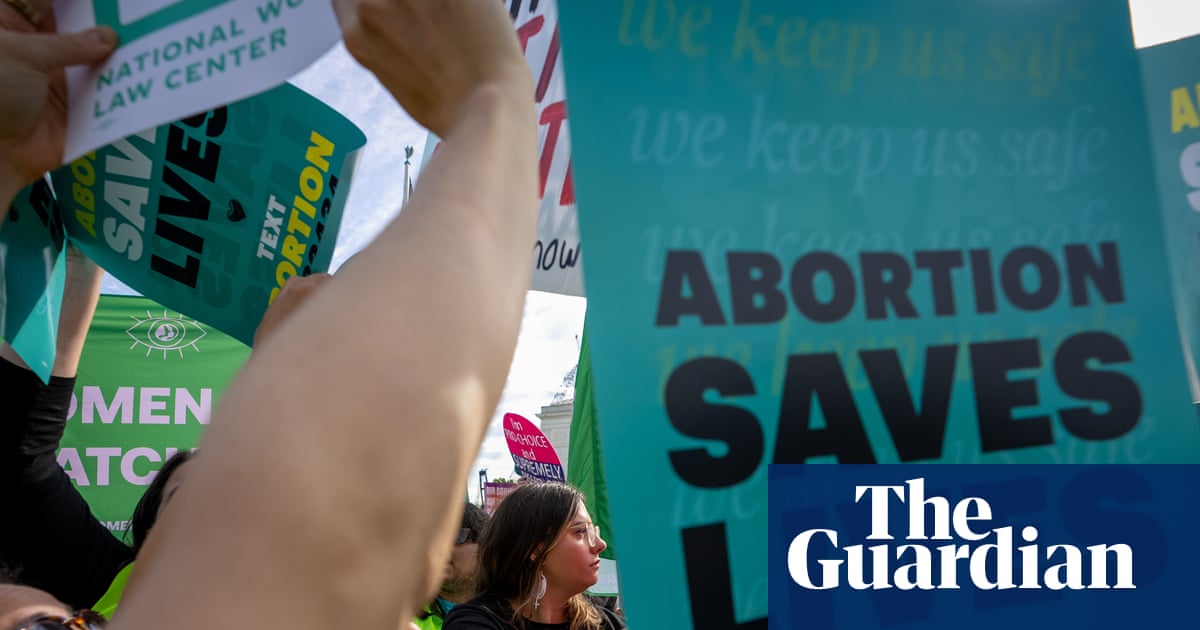
The abortion debate has gone quiet amid US midterms. In Idaho, the stakes remain high
Full Article
Original Source
Read the full article at Theguardian →KhanList aggregates and links to publicly available news content. We do not host full articles from third-party sources. Always verify important information with original sources.