
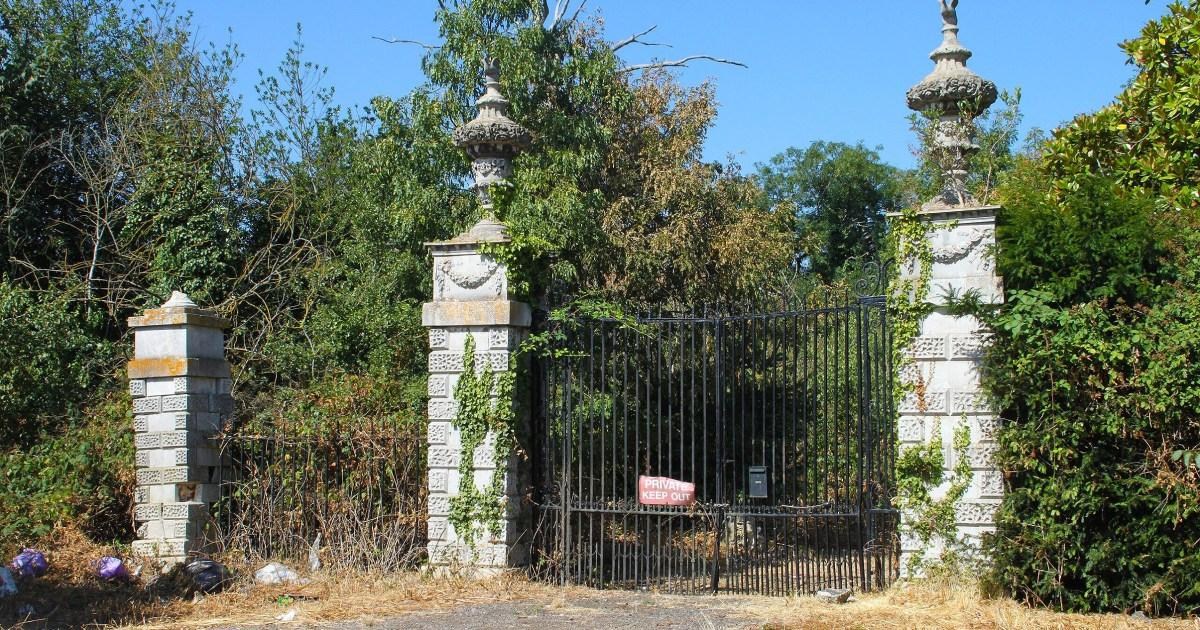
The entrance gates are all that remain of the estate (Picture: Yalebooksblog) In the shadow of Heathrow’s flight paths, in the otherwise unassuming village of Stanwell, the forgotten grounds of Stanwell Place quietly hold centuries of history. Once a grand estate and the residence of King Faisal II of Iraq, this manor now exists only in memory and scattered remnants, telling a story of aristocratic beginnings, wartime importance, and royal exile. Over the centuries, Stanwell Place expanded under various owners, with its most significant structural developments occurring in the early 19th century when the Gibbons family established the manor house. The estate included extensive parkland and tenant farms, reflecting the typical landed English gentry lifestyle. The surrounding parkland is believed to have been designed in the 18th century and spanned hundreds of acres. Over time, parts of the estate’s land were sold for various developments such as reservoirs and smallholdings, marking the start of its gradual reduction in size. The manor house was first built in he 19th Century (Picture: US Signal Corps) In 1933, Sir John Gibson, a notable civil engineer who was later knighted for his contributions during World War II, acquired Stanwell Place. Gibson’s wartime contributions included work on the Queen Mary Reservoir and serving as deputy director and general civil engineer at the Ministry of Supply. His expertise was crucial in the design and construction of the top–secret operation Mulberry Harbours, which facilitated the Allied invasion of Normandy in 1944. Ask Metro Use AI to go deeper into the stories you care about – powered by Metro and trusted publications. Gibson’s ownership brought Stanwell Place into the strategic sphere of World War II efforts. The manor served as an unofficial meeting place for commanders of the Supreme Headquarters Allied Expeditionary Force (SHAEF), placing it at the centre of planning for pivotal military operations such as D-Day. King Faisal II of Iraq owned the mansion until his death in 1958 (Picture: Hulton Royals Collection) Following Gibson’s death in 1947, parts of the estate changed ownership. In a notable transfer, 22 acres were sold to King Faisal II of Iraq. The young monarch, just 13 years old at the time, was about to begin his studies at Harrow School and frequently stayed at the manor with his family. But King Faisal’s connection to Stanwell Place was cut short when he was assassinated during a coup in Iraq in 1958, and the manor was soon abandoned By the 1960s, neglect had taken its toll on Stanwell Place. The manor house was demolished to make way for gravel extraction, erasing much of its physical presence. Today, only the imposing entrance gates remain as silent witnesses to the estate’s layered past. Deals of the Day Topman’s new-season collection has arrived and prices start at just £10 An Instagram mattress left me with back pain – this one completely changed my mind Book Val d'Isère, Val Thorens and Tignes for less in Club Med's ski sale Save 25% on red light therapy masks, sauna blankets and sleep gadgets in Bon Charge sale The viral LED face mask with over 350 lights that's currently discounted by £100 This article was originally published in November 2025. Do you have a story you’d like to share? Get in touch by emailing MetroLifestyleTeam@metro.co.uk Arrow MORE: What I Own: We spent £925,000 on our South West London home — now it’s valued at £1,500,000 Arrow MORE: New TfL map shows which Tube stations and lines now have mobile coverage Arrow MORE: Warning issued as mosquitoes carrying Zika virus found breeding in London The Key Sign up for must-read property stories, DIY hacks and tips for buying a home.
The abandoned mansion next to Heathrow Airport that was once home to a king
Full Article
Original Source
Read the full article at Metro →KhanList aggregates and links to publicly available news content. We do not host full articles from third-party sources. Always verify important information with original sources.