
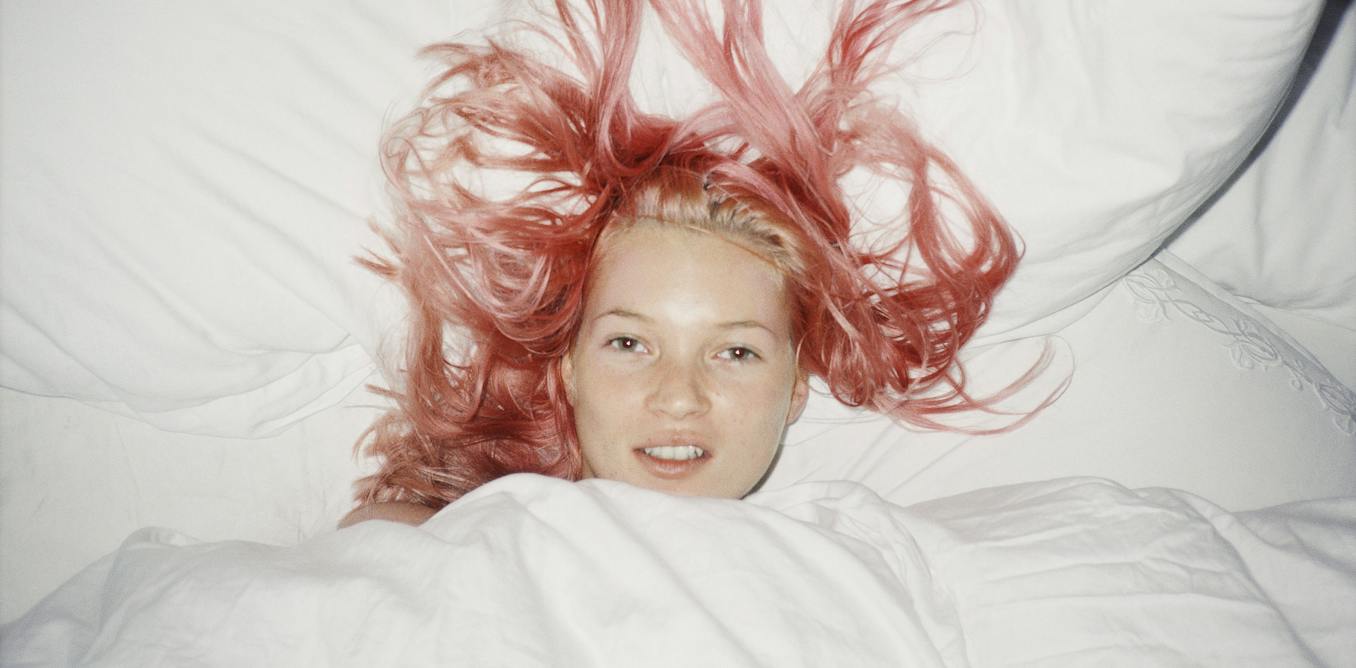
Walking through Tate Britain’s exhibition The 90s: Art and Fashion, you recognise the images, the clothes and the curated disregard for respectability of those years. But like me, you might struggle to find the spirit of what made the decade matter. Curated by former Vogue editor Edward Enninful, the show brings together many of the 1990s’ defining images, revealing how readily and comfortably the decade’s appetite for rebellion became a business plan. But the exhibition’s superficial and polished celebration leaves little room to ask what that rebellion actually changed, who benefited and who remained excluded. Perhaps this failure suggests something the exhibition is reluctant to confront. The 1990s were the decade in which fashion and branding became extraordinarily effective at eating up whatever residual danger and urgency art still possessed, making provocation a currency for profitability. Chicken Knickers by Sarah Lucas (1997). Sarah Lucas/Sadie Coles HQ London This alliance between provocation and commercial value is captured by artist Sarah Lucas’s Chicken Knickers placed next to Kristen McMenamy No.3 by photographer Juergen Teller. Lucas’s photograph captures a raw, plucked chicken on a seemingly young female body. Teller’s image shows a woman smoking and looking at the camera wearing only “Versace” scrawled inside of a lipstick heart on her naked chest. Together, these pieces show that a social critique of sexual objectification and branding can happily coexist in the same space. Fashion appropriated the visual language of feminist critique, using images that challenged conventional beauty and sexuality to attract attention and sell a look. Increasingly, the promise of transgression provided a route into mainstream media. The capacity to disturb, however insincere, became an asset, and outrage acquired an audience that had already been trained to enjoy it. The exhibition includes iconic work by photographers Corinne Day and Nigel Shafran whose unpolished, do-it-yourself approach helped shape the look of magazines such as The Face, i-D and Dazed & Confused (now just called Dazed). Other photographs show super models stripped of their usual glamour in seemingly mundane moments. For instance, we see Ellen von Unwerth’s shot of Naomi Campbell sitting on a toilet in heels, shaving her armpits. Then there’s again Juergen Teller’s Young Pink Kate (main image), which presents a make-up free, ordinary-looking girl in bed with messy hair. These images were an invitation to embrace our authentic selves and could feel liberating, suggesting that beauty did not require looking flawless. Yet their apparent ordinariness was carefully manufactured. It’s also worth asking who was allowed to disregard beauty’s conventions. A young, thin woman could look scruffy and be praised for challenging expectations of feminine beauty. However, someone whose body fell outside fashion’s preferred shapes and sizes at the time continued to face hostility. If there is one thing this exhibition shows, it’s that photographers, designers and brands acted as gatekeeper for the type of diversity that got to be celebrated. Designer Alexander McQueen’s minuscule corsets made of steel and wire exemplify that rigidity around a body, trapped and contained rather than liberated and celebrated. Bear by Steve McQueen (1993). Steve McQueen/Thomas Dane Gallery/ Marian Goodman Gallery/Tate Collection Black excellence and the myth of Cool Britannia The gallery dedicated to Black British artists offers a glimpse of what really happened behind the casual glamour of magazine covers. The fabricated myth of Cool Britannia with its promise of a young, creative and inclusive Britain, appears in all its shallowness contrasted against the horror of the racially motivated murder of 18-year old Stephen Lawrence in 1993. Under the label of “Black excellence” is a quieter story of pressure, marginalisation and isolation. We see artists challenge forms of exclusion from British society through their work. Then when these same artists became successful we see their achievements collectively credited to British inclusivity. This is despite the fact that their work was calling out how exclusionary they found the country in the first place. It’s difficult to reconcile this form of national storytelling with the outcome of the Stephen Lawrence public enquiry , which exposed a country where racism was deep-rooted in a national institution like the Metropolitan Police. Chris Ofili’s No Woman, No Cry artwork, a portrayal of Stephen Lawrence’s mother, Doreen, crying, is a reminder that we must individually confront what national celebration cannot repair. No Woman No Cry by Chris Ofili (1998). Chris Ofili/ Victoria Miro London/Tate Working on how people experience their bodies and how society treats them has made me particularly suspicious of the freedom we attribute to images. An unconventional identity could be celebrated in a magazine while the individual inhabiting that identity remains exposed to exclusion or violence. For instance, queer visibility in fashion expanded in the 1990s and became profitable. However, this happened during a decade in which Section 28 continued to prohibit local authorities from “promoting homosexuality” and created a climate of fear around discussing same-sex relations in schools. The 1990s commercial appetite for adventure and diversity co-existed with the decade’s wider reluctance to support truly adventurous lives. The Tate exhibition has the ambition to be an archive of the decade. Like all archives, it operates by inclusion and exclusion. It authorises certain convenient narratives, hides what does not fit its storytelling and risks making the uncomfortable disappear into a story of linear progress. Its failure to capture the true 1990s spirit stems from allowing insufficient room to examine the struggle over what those superficial pleasures really cost, who they served and whose lives they displaced. The 90s: Art and Fashion is on at Tate Britain, London, until February 14 2027
The 90s: Art and Fashion at Tate Britain struggles to challenge the enduring myths of Cool Britannia
Full Article
Original Source
Read the full article at Theconversation →KhanList aggregates and links to publicly available news content. We do not host full articles from third-party sources. Always verify important information with original sources.