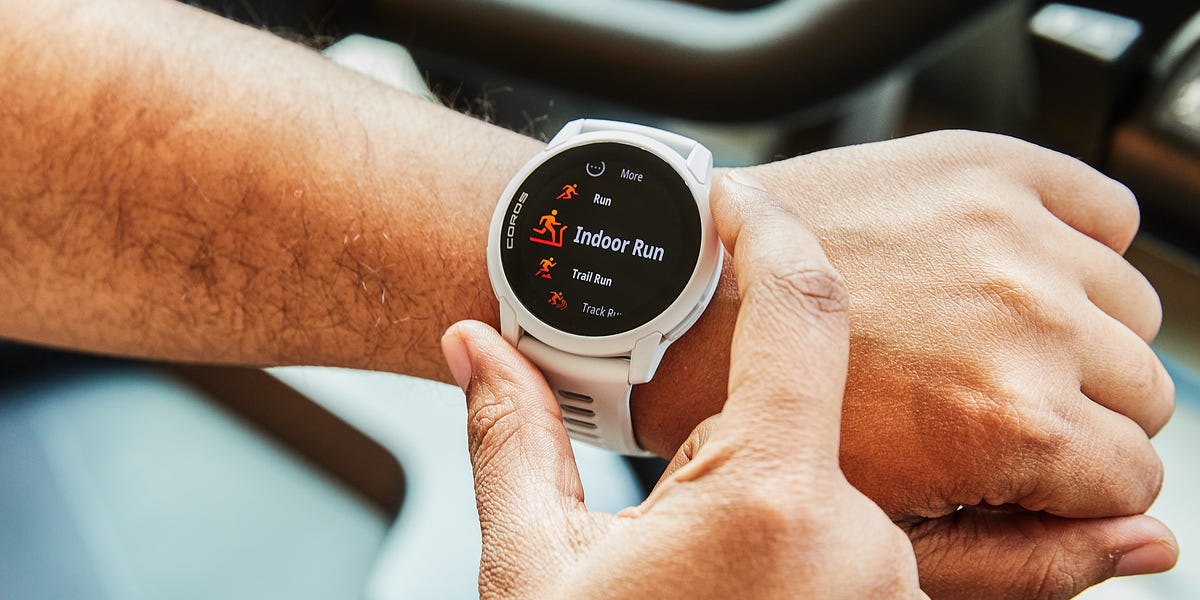
ProsI get incredibly accurate GPS compared to many other watches and heart rate data that matches or beats more expensive watchesThe built-in LED torch is surprisingly handy for low-light safetyThe ECG and skin temperature sensors add new layers of health insights I didn’t have beforeConsSome of the best running analytics only unlock with an HRM 600 chest strapBattery life in smartwatch mode could be better, so I’m charging more oftenThe Garmin Forerunner 970 is the best running watch currently available. It perfectly balances fancy tech, durability, and a metric ton of training features. It has a vibrant 1.4-inch AMOLED display with a scratch-resistant sapphire crystal lens housed in a pretty titanium bezel. The watch introduced Garmin’s latest Elevate Gen 5 optical heart rate sensor, including medically certified ECG and skin temperature monitoring, offering detailed biometrics for recovery and performance. And yes, it can basically guilt you in 15 languages at this point, and it frequently does. GPS tracking is exceptional with multiband SatIQ technology delivering precise location data, even in dense urban areas or heavy tree cover. Testing against chest straps and a Holter monitor, I have found that the HRM in this device is more accurate than others I have tested.The Forerunner 970 makes an impact with its advanced training analytics, including new running economy and impact load metrics, although some of the advanced stats require purchasing Garmin’s HRM 600 chest strap, which thankfully isn’t uncomfortable or overly pricey. Offline color topo maps and dynamic routing tools like ClimbPro and Up Ahead help the navigation for trail runners and adventure athletes. It also supports music storage, Bluetooth calls, and Garmin Pay for contactless payments, integrating lifestyle convenience with serious training tools. I am a huge fan of the daily wrap-ups that you get at night and of the morning reports. I have a tendency to overdo it when it comes to training, and Garmin likes to let me know. When it tells me to “slow it down a bit or you’re going to burn out” (paraphrasing here), I tend to do so.Battery life for intensive GPS activities has improved slightly from previous models, providing up to 23 hours in SatIQ mode, though smartwatch mode endurance is shorter than some rivals. The watch weighs 56 grams and remains comfortable for 24/7 wear, essential for continuous health monitoring and training insights. Its water resistance rating is 50 meters, suitable for swimming and triathlons.When it comes to multisport, it is connecting to more and more third-party apps every day, and even if your app isn’t there yet, putting yourself in "free lifting" mode seems to track your effort pretty well. It’s incredibly accurate finding your distance when swimming, but like most treadmill tracking, it’s kind of best to match your distance from what the treadmill says or sync the ’mill to your watch first.The app is still clunky, which I pray they fix soon. However, I wear this watch almost every day, and I adore it. It’s basically an extension of me at this point (when I’m not testing other watches).Garmin Forerunner 970 ReviewKey SpecsBiometricsElevate Gen 5 sensor with continuous optical heart rate, medically certified ECG, skin temperature, blood oxygen monitoringBattery Life23 hours of battery life in GPS mode and up to 15 days in smartwatch modeDisplay1.4-inch AMOLED sapphire crystal displayContactless PaymentYesProsGreat battery life, even compared to other modelsVoice features are user-friendly and convenientGPS has improved significantlyConsThe buttons are fiddly, especially while wearing glovesJeff Dengate says that the Coros Pace 4 redefines what runners should expect from an entry-level GPS watch. Noting, if you want the basics and solid operation, it’s a great pick for under $250. The watch’s GPS accuracy is on point, making it a budget-friendly pick that still looks good thanks to the AMOLED display. Battery life has improved, and he says: “The Pace 4 battery life has gone up compared to the 3, even with the addition of the brighter display,” boasting 31 hours of battery life in max GPS mode.Lightweight design is a highlight, says Dengate: “Coros claims 32 grams, but that’s with the nylon strap with the silicone strap, the weight bumps up by a whopping 8 grams.” New features like voice logging elevate the experience: “Voice is a new feature you’d be hard pressed to not find this insanely useful,” allowing users to record post-run comments that are automatically transcribed in the Coros app. Downsides include the “digital dial” that “stinks when you’re running—especially when you’re wearing gloves” and “notification text is too small.” Ultimately, though, for runners on a budget, you can’t beat it. Coros Pace 4 ReviewAdvertisement - Continue Reading BelowProsBest in class battery lifeOffline mapping at no extra chargeFlashlight on watchApp is user friendlyMultiband GPSConsOverly sensitive buttonsMusic storage not greatStrap changing is a painI’ve tested a lot of watches, and the Amazfit Cheetah Pro is one of the best you can get for the money. The value here is almost hard to believe. It delivers features I’d expect from watches costing two or three times as much, and it does it really well. This watch is the first running watch that is a real threat to Garmin and Coros when it comes to GPS, battery life, and features.Let’s look at the multiband GPS: it locks on fast and stays accurate even under tree cover and in Manhattan. There’s a flashlight with both red and white options, plus a boost in SOS mode, which is great for dark runs and finding your keys in your purse. The battery is tremendous, better than any in this category I’ve tested. Add 170 sport modes and the ability to make and receive Bluetooth calls, and you’ve got a contender for much pricier watches like the 970. It also offers structured training that doesn’t just tell you what to do but explains why. Finally, it has free, full-color, downloadable offline mapping that shows up beautifully on the AMOLED display.My gripes: The charger is easier than Garmin’s magnetic prong style, but the strap suffers the same irritations as a pin-style. You are getting top-of-the-line sapphire glass and titanium fittings, but the strap itself feels like the plasticky material that it is.While the app experience is beautifully thought out and designed, the actual experience on the watch needs work. The buttons are overly sensitive—I’ve accidentally started a workout, and worse, paused one midrun more times than I’d like. Also, the music integration is a pain, and not third-party ready just yet. Fix those things, and this watch is nearly flawless.Key SpecsBiometricsHR, O2, HRV, VO2Max, Sleep, air qualityBattery Lifeup to 2 weeks regular useDisplayAMOLEDContactless PaymentYesProsLightweight4 gb music storageAdvanced running metricsConsNo offline mappingNot multiband GPSThe Forerunner 170 Music hits that sweet spot for runners who want access to serious training metrics, phone-free music, and a good-looking light watch that comes in a bunch of fun colors—without paying flagship prices for it.Garmin’s full training stack is here: Training Readiness, HRV Status, Training Load, VO2 max, and the adaptive Garmin Running Coach, all geared toward helping you chase your next PR. The 1.2-inch AMOLED touchscreen is bright and responsive, battery life runs up to 10 days, and Garmin Pay means you can stop for a mid-run Italian ice (or hop on a bus because you’re exhausted) without carrying your wallet.Phone-free streaming works seamlessly with Spotify, Amazon Music, and Deezer (Apple Music users, you’re SOL). The Strava sync is instant, the GPS lock is speedy as heck, and the five-button-plus-touchscreen setup navigates intuitively once you’ve had a few runs to settle in.The one real competitor to consider is the older Forerunner 265, which occasionally hits this same price point on sale and adds multiband GPS—but the 265 is running older software and older hardware. For most runners, the 170 Music is the smarter buy. Two weeks in, it’s hard not to be impressed.Key SpecsBiometricsHR, O2, Sleep, V02Max, HRV, Body Battery, Irregular Heart Beat, Respiration Rate Battery Lifeup to 10 daysDisplayAMOLEDContactless PaymentYesAdvertisement - Continue Reading BelowProsIntuitive design for people used to touchscreen formatThe large screen is easy to read and has a ton of fun face layout optionsLighter and lower profile than other square watchesConsI wish I didn’t need to hit button all the time for Garmin payThe biometrics could better match those on the 970The Garmin Venu X1 is like that perfect running buddy who also happens to look good. It also looks a bit more like the most popular smartwatch on the market. It’s sleek, stylish, and ready to crush workouts without weighing you down. Its massive 2-inch AMOLED screen is bright and vibrant enough to make sunrise runs feel cinematic. And yes, it’s super slim and comfy, so wearing it all day (and night) is no big deal. I’ve run in a ton of watches, and this one is the slimmest I’ve tried. It sits only 8 mm top-to-bottom, and it’s downright featherlight compared with the Ultra or 970. You get all the power of other watches without the bulky weight and height.I’m obsessed with the 100-plus sport modes, meaning no matter what weird workout I dream up or when I hit the Hyrox gym, this watch is ready and ready fast. It doesn’t have all the buttons of other Garmins, but if you’ve worn an Apple Watch, you’ll be good. I’m a big fan of the phone convenience features and Do Not Disturb setting. And don’t sleep on the offline maps and navigation—they’re clutch when I’m trail exploring without a clue where I am. I also love how you can easily change backgrounds, straps, and fonts to better show off your personal style.Sure, the battery isn’t going to last a week on GPS, but honestly, the Venu X1 balances power and portability better than most. It’s packed with smart recovery tools like Body Battery and Training Readiness, so I actually know when to push or chill. A few minor glitches pop up here and there, but Garmin’s updates usually put those to rest quickly.If you want a watch that’s equal parts smartwatch chic and serious sportster, the Venu X1 nails it with personality, precision, and panache.Garmin Venu X1 ReviewKey SpecsBiometricsHRM, O2, temperatureBattery Life7 to 14 days dependingContactless PaymentYesDisplay2-in. AMOLEDProsCellular connectivity and satelliteHuge, easy-to-read screenExcellent maps and turn-by-turn directionsConsBattery could be betterWe wish you didn’t need an extra step for sat connection and cell connectionJeff Dengate has long been a fan of Garmin’s rugged multisport watches, and the Fenix 8 Pro continues that streak—while pushing the line even further. “I love the Fenix series of watches because they have huge screens that I can read with my failing eyesight and huge batteries that rarely need charging,” he says. Just as important to him are “the actual maps and turn-by-turn directions,” which he relies on both when traveling and when plotting new long runs at home.But the Fenix 8 Pro, Dengate says, “is a game changer.” Garmin essentially “packed an InReach satellite device and cellular connectivity into the watch.” The execution of cellular isn’t flawless, though. “It works. But it requires your contacts to use the Garmin Messenger app to get in touch with you—unlike the Apple Watch which really mirrors your actual phone.”Out in the mountains, the satellite communicator stands out. “I regularly run in upstate New York where cell signal is crap,” Dengate notes. Even with a phone, connection is unreliable—but now, “I can ping my wife to let her know that I made it to the summit okay, or give an ETA when I want to stay out longer.”All that power comes at a cost. “Those functions ding the battery pretty good,” he admits, recalling that he’s had to charge the Fenix 8 Pro more frequently than its predecessor.Key SpecsBiometricsElevate Gen 5 sensor with continuous optical heart rate, medically certified ECG, skin temperature, blood oxygen monitoringBattery LifeSmartwatch: Up to 27 days (15 days always-on) Battery Saver Watch Mode: Up to 34 days GPS Only: Up to 78 hours (56 hours always-on) All Satellite Systems: Up to 60 hours (47 hours always-on) All Satellite Systems + Multi-band: Up to 53 hours (41 hours always-on) All satellite mode 21 hoursContactless PaymentYesDisplay51 mm AMOLED sapphire crystalAdvertisement - Continue Reading BelowProsBest battery lifeSeamless connectivityThe buttons are oversized and easy to use even with cold handsVery light on the wristConsIt’s massive. If you have smaller hands, it will look a bit funnyYou’re going to want to buy another strapI’ve logged more miles in trail shoes than I care to think about. Finding a watch that can keep up at ultradistances isn’t the easiest. And finding a watch that does that while also having all the bells, whistles, and metrics of a truly superb running watch felt impossible, but the Garmin Enduro 3 managed quite well.For those of us already living in Garmin’s ecosystem, this watch, in spite of its rugged durability and advanced form factor, feels like coming home. The layout is slightly different from their Forerunner line, but not so much that you can’t quickly figure it out.Let’s talk about that battery. This is where the Enduro 3 becomes a dream for ultrarunners. I’m not kidding when I tell you that you can get up to 90 (!!!) hours in GPS mode, and with the solar charging and Power Glass lens, you’re extending that time even further. I’ve gone into multiday running events without worry that my watch would crap out. (The same cannot be said for my headphones. Pro tip: Have a new pair in every drop bag.)Beyond just that long-lasting battery life, other features like the surprisingly bright flashlight give you added safety. The phone connectivity is seamless, syncing your music and making things simple. In short, it’s a beast of a watch.Key SpecsBiometricsElevate Gen 5 sensor with continuous optical heart rate, medically certified ECG, skin temperature, blood oxygen monitoringBattery LifeSolar charging, 90 hours in GPS, 300 in smart watch modeContactless PaymentYesDisplaySunlight-visible, transflective memory-in-pixel (MIP)ProsWay more rugged than previous modelsDirect-to-emergency and family SOS by satelliteImproved GPS over previous modelsConsThe battery life is not for ultrarunnersHeavy on the wristApple fans are finally getting a serious piece of running equipment from the Ultra 3, and it’s my favorite sport watch it’s ever put out. Here’s why: The Ultra 3 nails the essentials for serious runners with a bright 1.93-inch OLED display that’s easy to read midrun and a rugged titanium case that can take a beating. The customizable Action button is perfect for quickly starting workouts or marking laps without fumbling through menus. While the watch offers detailed running metrics—like vertical oscillation and cadence—what sets it apart from previous Apple Watches is how smoothly it integrates satellite calling. This feature allows you to send emergency SOS messages even when you’re miles from cell coverage, adding peace of mind on remote trail runs or ultramarathons.That said, if you’re a GPS perfectionist, the Ultra 3 isn’t quite flawless. While its GPS is solid and reliable for most runs, it still falls just short of the precision Garmin’s flagship models deliver. Garmin’s specialized multi-GNSS tech and processing give it a slight edge in tricky urban canyons and dense forested routes. So if absolute GPS accuracy is your top priority, Garmin still leads. But for runners who want an all-around smartwatch blending solid GPS, strong safety features, seamless Apple ecosystem compatibility, and sleek styling, the Ultra 3 is a jaw-dropping upgrade.Battery life supports long training sessions, offering up to 20 hours of GPS-tracked activity and fast charging that gets you back out quickly. Overall, the Ultra 3 raises the bar impressively—it’s a watch that finally delivers for Apple-loving runners, even if Garmin still has the edge in GPS precision.Key SpecsBiometricsO2, HRM, sleep and blood pressure notification, thermometerBattery Life20 hours in tracking, up to 72 in low power modeContactless PaymentYesDisplaySapphire crystal displayAdvertisement - Continue Reading BelowProsThe display is gorgeous and bright, easily a match for Garmin’s AMOLED screensBest laid-out maps in the biz, but they need downloadingThe hardware feels fast and responsive thanks to the upgraded processorConsThe initial setup was clunky and pairing issues were frustratingThe battery can’t quite rival the ultra-long-endurance watches like Garmin Enduro 2Our resident extreme runner, Pat Heine-Holmberg, and I have been testing this watch for several weeks, and he’s gotten a lot more time with it than I have. But as we are both pretty much always training for marathons and ultramarathons, his notes and mine have pretty much lined up, which, my friends, is very rare.The Suunto Race 2 feels like a true return to form for the brand—the kind of performance focus Suunto had with the old Ambit series and early Suunto 9 models. Everything about this watch reminds me of when Suunto was at the top of endurance wearables. It’s clear to us they’ve brought development back to Finland because this watch finally feels engineered with precision again. Setup was frustrating—pairing issues and a required firmware update that forced me to re-pair multiple times—but once I got through that, phone connectivity has been totally stable.The new AMOLED screen is bright, crisp, and legible in all lighting conditions, even in harsh mountain sun. Navigating sport mode takes a little focus since Suunto relies on icons instead of short text for metrics—not my favorite choice. The GPS, though, is excellent. It locks faster than the last few generations of Suunto devices, and accuracy is almost dead even with my Garmin, off by just 0.02 miles over a 5-mile loop. Interval mode has improved too: I can set time- or distance-based intervals with rest segments, though I wish it had distinct beeps for interval vs. auto-laps.Battery life claims up to 55 hours with dual-frequency GPS, and that seems realistic. Heine-Holmberg charges about once a week with daily wear and 5 to 7 hours of running—far better than older models, though his Garmin Enduro 2 still lasts longer. I charge mine about every five days because I find that when I am using it for both weight training and running that the battery wanes a lot faster. The charger finally works as it should, with strong magnets that actually stay put as opposed to the old “I hope this stays charged if my cat taps it” charger it used to have. The biggest annoyance is Suunto’s inconsistent touchscreen logic—Heine-Holmberg can’t disable it outside sport mode, but it’s automatically off during workouts. And I have issues moving the maps and going from set to set. Could there be a watch update fix for this eventually?Despite these quirks, the Race 2 feels like Suunto’s comeback as a serious contender for runners and multisport athletes. The hardware is fast, the app is more data-rich, and the fit and finish make it one of the most refined Suunto watches yet.Key SpecsBiometricsPulse ox, HRMBattery Life55 hours (dual-frequency GPS mode); 200 hours (Tour mode); 16 days (smartwatch mode, all sensors on); 22 days (low-power mode)Contactless PaymentNoDisplay1.5-in. LTPO AMOLED (466x466), 2,000 nitsCat Bowen, senior editor of commerce; reviews, is a seasoned runner with more than 20 years of distance running experience, including dozens of marathons, half marathons, and even a few ultra marathons. For over a decade, she has tested parenting, fitness, home, and running gear and written in-depth guides to help readers with their next purchase. Holding multiple advanced degrees and currently studying kinesiology, Cat Bowen brings research-backed insight to all of her guides. Passionate about women’s health and neurodivergent inclusion, she advocates for closing research gaps and helping others—especially AudHD people—find joy in running and fitness.Jeff is Runner-in-Chief for Runner’s World and the director of product testing. He has tested and reviewed running shoes, GPS watches, headphones, apparel, and more for nearly two decades. He regularly tests more than 100 pairs of shoes each year, and once had a 257-day streak running in different models. Jeff can usually be found on the roads, racing anything from the mile to a marathon, but he also enjoys racing up mountains and on snowshoes. When he’s not running, you’ll probably find him hanging from a ladder making repairs and renovations to his house (he’s also director of product testing for Popular Mechanics).
The 9 Best Running Watches for Training Like a Pro
Full Article
Original Source
Read the full article at Runnersworld →KhanList aggregates and links to publicly available news content. We do not host full articles from third-party sources. Always verify important information with original sources.