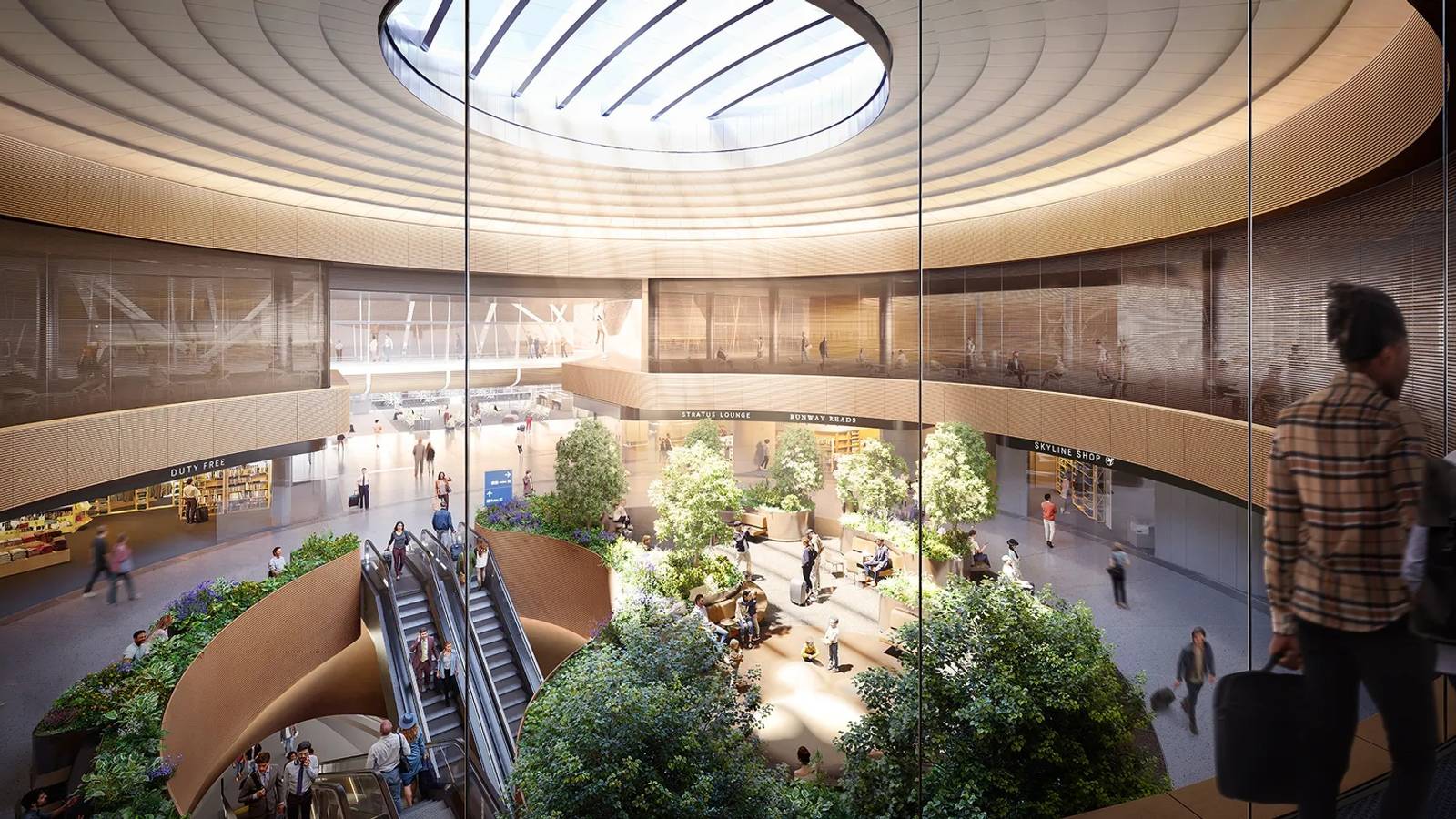
Published Aug 16, 2026, 7:00 PM EDT Brandon's passion for aviation started at a young age. Growing up, he was involved in the flight simulator and VATSIM communities, and he went on to earn his private pilot license while in college. Brandon holds a BSE in computer science and currently works as a software engineer. Outside of work, he continues to build flight hours and explore new airports around the country. Chicago O'Hare International Airport (ORD) handles over 80 million passengers per year through a terminal complex that has not received a major capital investment in more than 25 years. The O'Hare 21 modernization program, approved in 2018 with an $8.5 billion budget that has since grown to approximately $12 billion in current dollars, is designed to replace, expand, and modernize the airport's passenger facilities over a construction period that now extends to 2034. The program includes a new 2.2 million square foot (204,387 square meters) Global Terminal, two satellite concourses, an underground tunnel system, and renovations to existing terminals. The Terminal 5 expansion, the first major component, was completed in 2023 and added 10 new widebody gates and 25% more international capacity. Satellite Concourse 1 began vertical construction in April 2026. The Global Terminal, designed by Chicago architect Jeanne Gang, will follow. Here is what each project involves, how they fit together, and why the timeline has doubled from the original eight-year target to sixteen. What O'Hare 21 Is And Why The Airport Needs It Credit: OHare 21 | Simple Flying Chicago O'Hare International Airport is one of the busiest airports in the United States, handling over 80 million passengers annually. Terminal 2, the facility at the center of the redevelopment program, dates to the early 1960s. Terminal 1 was redesigned by architect Helmut Jahn and reopened in 1987 as the United Airlines terminal. Terminal 3, which serves primarily as American Airlines' domestic terminal, has received incremental updates over the decades but no comprehensive rebuild. Terminal 5, the international terminal, was built in 1993. The infrastructure passengers move through at O'Hare was designed across different eras, and the oldest portions predate modern security screening requirements, current widebody aircraft gate standards, and the hub-and-spoke traffic volumes the airport now handles. The O'Hare 21 program was approved in 2018 with an $8.5 billion budget to modernize the airport's terminal complex over approximately 15 years. The program covers three major components: the expansion and modernization of Terminal 5, the Terminal Area Plan that includes a new Global Terminal and two satellite concourses, and the completion of Runway 9C-27C as part of the broader O'Hare Modernization Program. The runway work was finished in 2020, capping a $6 billion, 16-year airfield reconfiguration that replaced O'Hare's legacy runway layout with parallel runways. The city reported a 64% reduction in delays over the life of the runway project. The terminal work is the remaining and most visible portion of the program. The $8.5 billion figure represents the 2018 authorization, and current estimates place the total program cost closer to $12 billion after inflation and scope adjustments. Robert Hoxie, Chief Development Officer at the Chicago Department of Aviation, described O'Hare 21 as "a generational capital investment in O'Hare's facilities that will take approximately 15 years to put in place." The airport's role as a connecting hub for both United Airlines and American Airlines, which together operate the majority of O'Hare's daily departures, makes the modernization a national infrastructure priority as well as a local one. The O'Hare Global Terminal The Global Terminal is the centerpiece of the O'Hare 21 program and the most architecturally ambitious component. Designed by Chicago architect Jeanne Gang and her firm Studio Gang as part of a team called Studio ORD, which includes Solomon Cordwell Buenz, Corgan, Milhouse Engineering and Construction, and STLarchitects, the terminal won an international design competition that attracted submissions from firms worldwide. At 2.2 million square feet (204,387 square meters), it will more than double the size of the Terminal 2 it replaces and become one of the largest terminal buildings in the United States. The design uses a Y-shaped plan inspired by the three branches of the Chicago River, with three converging volumes meeting at a central hub. At the center, a dramatic Oculus sits beneath a six-pointed glass skylight referencing the Chicago flag. The roof structure uses long-span steel trusses clad in wood, with the spacing and orientation of the pleated ceiling panels designed to maximize natural daylight. The interior includes groves of trees, natural wood finishes, and an environment that Studio Gang has described as establishing "a vibrant new neighborhood in the heart of O'Hare's campus." The terminal will house both international and domestic operations for United Airlines and American Airlines, with its own customs and immigration checkpoint allowing both carriers and their alliance partners to process international arrivals without routing passengers through Terminal 5. The design-build contract was awarded to a joint venture led by Clark Construction and Clayco. Work on the existing Terminal 2 is scheduled to begin in 2026, with demolition proceeding after flights are relocated to the satellite concourses. The Global Terminal's completion is currently targeted for 2032, though the overall program timeline has been pushed to 2034. The $2.2 billion terminal represents the largest single component of the O'Hare 21 budget and the project that will most visibly transform the passenger experience at the airport when it opens. The Satellite Concourses And The Underground Tunnel Credit: O'hare 21 The two satellite concourses are being built west of the existing terminal complex and will provide approximately 1.3 million square feet (120,774 square meters) of new gate and amenity space. Both concourses will serve international and domestic passengers and connect to the Global Terminal through an underground tunnel system. The concourses are separate buildings from the main terminal, which means passengers will move between the Global Terminal and the satellites via the tunnel rather than through a continuous above-ground connection. The satellite model is common at large international airports, including Atlanta, Denver, and Kuala Lumpur, but is new to O'Hare. Satellite Concourse 1, designated Concourse D, was designed by Skidmore Owings and Merrill and Norviska. The $1.45 billion facility began vertical construction in April 2026 with a targeted completion date of late 2028. Mayor Brandon Johnson and the Chicago Department of Aviation unveiled the concourse design in November 2025, describing it as one of the largest components of the O'Hare 21 program. The concourse will be the first major new terminal building to open at O'Hare under the program and will serve as the initial relocation point for flights currently operating from Terminal 2, which must be vacated before demolition can begin to make way for the Global Terminal. The construction sequence changed in May 2024 when Mayor Johnson and the airlines reached an agreement to adjust the original timeline. The 2018 plan called for building both satellite concourses and the connecting tunnel first, then constructing the Global Terminal after Terminal 2 was demolished. The revised sequence builds Satellite Concourse 1 first, then the Global Terminal, with the second satellite concourse built last. The change pushes the overall program completion from 2032 to 2034 but allows the first satellite to open earlier and begin absorbing Terminal 2 traffic sooner. The second satellite concourse has not yet received a public design unveiling or a firm construction start date. Terminal 5 Expansion And Terminal 3 Renovation Credit: Shutterstock The Terminal 5 expansion is the only major terminal project under O'Hare 21 that is already complete. Construction began in March 2019, continued through the pandemic, and finished in 2023. The $1.2 billion project, led by the Austin Power Partners joint venture and designed by HOK and GFT (formerly Muller and Muller), added approximately 350,000 square feet (32,516 square meters) of new space and renovated 750,000 square feet (69,677 square meters) of the existing building. Terminal 5 opened in 1993 as O'Hare's international terminal and had not received a major expansion in the 30 years before the project began. The expansion added 10 new widebody gates with a flexible configuration that allows the concourse to shift between 10 widebody positions and 15 narrowbody positions depending on the aircraft mix. The new gates separate arriving international and domestic passengers into two streams, allowing the concourse to handle both types of flights simultaneously without mixing secured and unsecured passenger flows. Passenger amenity areas grew by 75%, and a $3.5 million art program integrated installations by local artists throughout the arrivals and departures areas. The Terminal 5 expansion increased O'Hare's international gate capacity by 25% and now delivers the highest gate utilization of any terminal at the airport. Terminal 3, which serves primarily as American Airlines' domestic terminal, is being renovated under the ElevateT3 program at a cost of approximately $300 million. The project received $90 million in FAA Airport Terminal Program grants across 2023 and 2024. The renovation updates the interior finishes, passenger amenities, and infrastructure of a terminal that dates to the original O'Hare construction era. Unlike the Global Terminal and satellite concourses, which are new-build projects, ElevateT3 is a modernization of an existing facility that will continue operating in its current role after the renovation is complete. Why The Timeline Has Slipped From 2026 To 2034 Credit: Shutterstock When the O'Hare 21 program was approved in 2018, the target completion date was 2026. That timeline assumed construction of both satellite concourses and the connecting tunnel would begin in 2022, followed by demolition of Terminal 2 and construction of the Global Terminal, with the entire program wrapping up within eight years. The FAA's environmental review took four years, with approval granted in November 2022. Construction of the satellite concourses did not begin until after that approval, pushing the start of the terminal area work two years beyond the original schedule before a single foundation was poured. The sequencing change agreed upon in May 2024 between Mayor Johnson and the airlines added further time. The original plan built both satellites and the tunnel simultaneously, then the Global Terminal. The revised plan builds Satellite Concourse 1 first, then the Global Terminal, then the second satellite. Building in sequence rather than in parallel extends the overall timeline but reduces the peak capital expenditure in any single year and allows each phase to be completed and occupied before the next begins. The trade-off is that the program now takes 16 years from approval to completion rather than eight, with the current target set at 2034. The $8.5 billion authorization was set in 2018 dollars with explicit escalation language built into the funding structure. Inflation, material cost increases, and scope adjustments since 2018 have pushed the current-dollar estimate for the full program to approximately $12 billion. In March 2024, the Chicago Department of Aviation announced that it had identified $1.5 billion in cost-saving measures, including engineering and design efficiencies, which the department said would allow the program to move forward within its original budget framework despite the escalation. The program is funded through airline fees and airport revenue bonds rather than general tax revenue, meaning the cost is ultimately borne by passengers through ticket prices and airlines through their use agreements with the airport.
The $8.5 Billion Project Turning Chicago O'Hare Into A Modern Global Hub
Full Article
Original Source
Read the full article at Simpleflying →KhanList aggregates and links to publicly available news content. We do not host full articles from third-party sources. Always verify important information with original sources.