
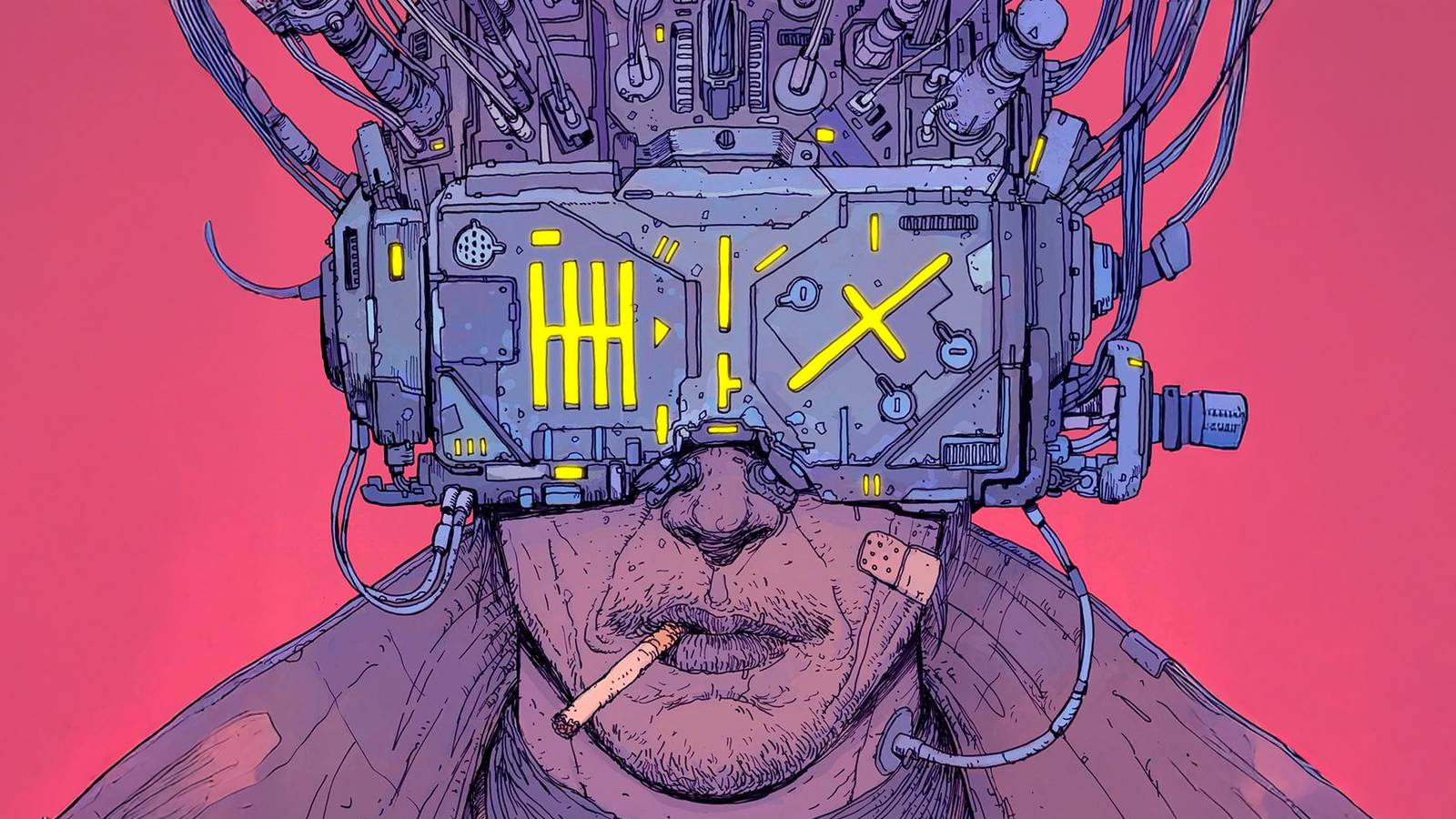
Image via Editora Aleph Published Oct 23, 2026, 8:23 AM EDT Luc Haasbroek is a writer and videographer from Durban, South Africa. He has been writing professionally about pop culture for eight years. Luc's areas of interest are broad: he's just as passionate about psychology and history as he is about movies and TV. He's especially drawn to the places where these topics overlap. Luc is also an avid producer of video essays and looks forward to expanding his writing career. When not writing, he can be found hiking, playing Dungeons & Dragons, hanging out with his cats, and doing deep dives on whatever topic happens to have captured his interest that week. Sign in to your Collider account Sci-fi has produced some of the most ambitious works in literary history. At its best, the genre does considerably more than imagine futuristic technology or distant planets. It uses speculative ideas to explore real-world issues of politics, philosophy, and psychology, while still serving up an absorbing plot. With that in mind, this list looks at some of sci-fi's defining classics and critical darlings, the crowd-pleasers and pioneers, the books that continue to shape the whole genre. Without further ado, here are some of the most universally acclaimed (pun unintended) sci-fi stories ever. 8 'The Forever War' (1974) Image via St. Martin's Press “Tonight we're going to show you eight silent ways to kill a man.” The main character here is William Mandella, a soldier conscripted into an interstellar conflict against an alien civilization known as the Taurans. The novel is full of great hard sci-fi concepts, the most ingenious of them being relativistic time dilation. While Mandella experiences months or years of military service, decades and eventually centuries pass on Earth. Every time he returns home, he discovers a society that has changed beyond recognition. Author Joe Haldeman, himself a Vietnam vet, uses that premise to tell a powerful story about alienation and the difficulty of readjusting to civilian life after combat. Before The Forever War, most military sci-fi leaned heavily into gung-ho, idealized patriotism (epitomized in the original Starship Troopers novel). Haldeman stripped away the romanticism, treating a soldier's experience with biting irony. 7 'The Left Hand of Darkness' (1969) Image via Ace Books “Light is the left hand of darkness and darkness the right hand of light.” Penned by Ursula K. Le Guin, the mind behind the Earthsea fantasy series, The Left Hand of Darkness transports readers to Gethen, a frozen planet whose inhabitants possess a radically different relationship with biological sex and gender. Rather than being permanently male or female, Gethenians are ambisexual, assuming sexual characteristics only during particular periods of their reproductive cycle. Our protagonist, Genly Ai, a human from Terra (a future version of Earth), arrives as an envoy representing an interstellar organization seeking to establish diplomatic relations with Gethen. However, his mission becomes increasingly complicated by his inability to fully understand the planet's social structures. Le Guin uses that premise for a lot of smart social commentary, making this one of the most intellectually ambitious sci-fi stories of its era. 6 'Neuromancer' (1984) Image via Ace Books “The sky above the port was the color of television, tuned to a dead channel.” The cornerstone of cyberpunk. In a future dominated by cybernetic enhancements and multinational corporations, disgraced hacker Case finds himself drawn into a conspiracy involving powerful AIs and a mysterious employer whose motivations remain uncertain. Joined by Molly, a formidable mercenary with high-tech modifications, Case journeys into a world of high-tech and lowlifes. Here, author William Gibson pioneered a ton of concepts, including coining terms like 'cyberspace', and establishing the fundamentals of the entire cyberpunk aesthetic. Indeed, there would be no Ghost in the Shell or The Matrix without Neuromancer. Long before the internet was mainstream, Gibson was imagining virtual reality and the commodification of data. On top of that, he also hits us with fantastic, memorable prose, deliberately disorienting and frequently quotable. All in all, a forward-thinking banger. 5 'Foundation' (1951) Image via Grafton Books “Violence is the last refuge of the incompetent.” This is the defining book by genre giant Isaac Asimov. It centers on Hari Seldon, a mathematician who develops psychohistory, a discipline capable of forecasting the behavior of enormous populations through statistical analysis. Seldon predicts that the Galactic Empire is approaching collapse, threatening humanity with thousands of years of chaos. To shorten the coming dark age, he establishes an organization dedicated to preserving knowledge and guiding civilization toward eventual recovery. From here, Asimov presents a series of interconnected stories spanning generations. Each explores a different political or social crisis confronting the Foundation as it gradually expands its influence. Rather than leaning into flashy gadgets or green-skinned aliens, these episodes are built around diplomacy, economics, religion, and strategic thinking. At the time, this was an unusually cerebral kind of sci-fi, one that has proved deeply influential. 4 'Childhood's End' (1953) Image via Ballantine Books “The stars are not for man.” This is the book that put Arthur C. Clarke on the map, and it's still generally regarded as his masterpiece. In Childhood's End, enormous alien spacecraft suddenly appear above Earth's major cities, announcing the arrival of an extraordinarily advanced extraterrestrial civilization. Yet rather than invading humanity or destroying its cities, the mysterious Overlords begin guiding human civilization toward an apparently peaceful and prosperous future. This was a massive break with genre convention for the time. However, as the novel progresses, the supposedly idyllic society the aliens usher in has problems of its own. In a world without war, hardship, or struggle, human creativity, art, and scientific curiosity begin to stagnate. In other words, the book suggests that a frictionless utopia might actually kill the human spirit. Deeply philosophical and endlessly inventive. 3 'Nineteen Eighty-Four' (1949) Image via Simon & Schuster “Big Brother is Watching You.” Although fundamentally more of a dystopian political allegory than a straight sci-fi, Nineteen Eighty-Four is so highly regarded that it deserves a place on this list. Indeed, it's one of the greatest cautionary tales in all of literature. Here, George Orwell shows us a future ruled by a totalitarian society, the citizens crushed under the boot heel of ceaseless surveillance, psychological coercion, and propaganda so complete that it involves the literal rewriting of history. Along the way, the book introduces several concepts that have since become part of the political lexicon: Big Brother, doublethink, thoughtcrime, thought police, memory hole, and, of course, the adjective 'Orwellian'. All this is proof of how perceptive Nineteen Eighty-Four is. Although rooted in the historical moment in which it was written, its warnings about human nature are timeless and universal. 2 'Dune' (1965) Image via Chilton Books “Fear is the mind-killer.” Arguably the most influential sci-fi epic ever written. Here, we travel to Arrakis, a desert planet containing the universe's only known source of spice, a substance essential to interstellar travel and the functioning of galactic civilization. The plot zeroes in on Paul Atreides, whose noble family assumes control of Arrakis only to become the target of a devastating political conspiracy. Forced into the desert, Paul is soon involved with the indigenous Fremen and discovers that he possesses extraordinary abilities. The world-building here is rich and colorful, replete with prophecies, scheming noble houses, corrupt emperors, giant sandworms, and fanatical religions. Indeed, Dune is also a fierce deconstruction of savior myths, a dire warning about charismatic leaders. Paul's arc isn't one of classic space opera triumph but slow-moving tragedy, and it commands our attention the whole way through. 1 'Frankenstein' (1818) Image via Penguin Random House “Beware; for I am fearless, and therefore powerful.” A genuine classic of English literature, often cited as the origin point of the whole sci-fi genre. Its central premise is deceptively simple: Victor Frankenstein, an ambitious young scientist, discovers a means of creating life and constructs a living being from dead human remains. Horrified by his achievement, he immediately abandons his creation, setting in motion a tragedy that destroys nearly everyone connected to him. With Victor, author Mary Shelley (just a teenager at the time) was essentially updating the myth of Prometheus. In the process, she created the archetypal mad scientist, the essence of every reckless nuclear researcher or rogue AI developer to follow. In this sense, Frankenstein is an enduring warning about the dangers of technological hubris and humanity's tendency to lose control of its most incredible creations. Collider Exclusive · Sci-Fi Survival Quiz Which Sci-Fi World Would You Survive? The Matrix · Mad Max · Blade Runner · Dune · Star Wars Five universes. Five completely different ways the future went wrong — or sideways, or up in flames. Only one of them is the world your instincts were built for. Eight questions will figure out which dystopia, galaxy, or desert wasteland you'd actually make it out of alive. 💊The Matrix 🔥Mad Max 🌧️Blade Runner 🏜️Dune 🚀Star Wars TEST YOUR SURVIVAL → 01 You sense something is deeply wrong with the world around you. What do you do? The first instinct is often the truest one. APull on every thread until I understand the system — then figure out how to break it. BStop asking questions and start stockpiling — food, fuel, weapons. Questions don't keep you alive. CKeep my head down, observe carefully, and trust no one until I know who's pulling the strings. DStudy the patterns. Every system has a rhythm — learn it, and you learn how to survive it. EFind the people fighting back and join them. You can't fix a broken galaxy alone. NEXT QUESTION → 02 In a world of scarcity, what resource do you guard most fiercely? What we protect reveals what we believe survival actually requires. AKnowledge. If you understand the system, you don't need resources — you can generate them. BFuel. Everything else — movement, power, escape — runs on it. CTrust. In a world of fakes and informants, a truly reliable ally is rarer than any commodity. DWater. And after water, information — the two things empires are truly built on. EShips and credits. The galaxy is big — you survive it by being able to move through it freely. NEXT QUESTION → 03 What kind of threat keeps you up at night? Fear is useful data — if you're honest about what you're actually afraid of. AThat reality itself is a lie — that everything I experience has been constructed to keep me compliant. BA raid. No warning, no mercy — just the roar of engines and then nothing left. CBeing identified. Once someone with power decides you're a problem, you're already out of time. DBeing outmanoeuvred — losing a political game I didn't even know I was playing. EThe Empire tightening its grip until there's nowhere left to run. NEXT QUESTION → 04 How do you deal with authority you don't trust? Every dystopia has a power structure. Your approach to it determines everything. ASubvert it from the inside — learn its rules well enough to weaponise them against it. BIgnore it and stay out of its reach. The further from any power structure, the better. CAppear to comply while doing exactly what I need to do. Visibility is the enemy. DManoeuvre within it carefully. You can't beat a system you refuse to understand. EResist openly when I have to. Some things are worth the risk of being seen. NEXT QUESTION → 05 Which environment could you actually endure long-term? Survival isn't just tactical — it's physical, psychological, and very much about where you are. AUnderground bunkers and server rooms — cramped, artificial, but with access to everything that matters. BOpen wasteland — brutal sun, no shelter, constant movement. At least the threat is honest. CA dense, rain-soaked city where you can disappear into the crowd and nobody asks questions. DMerciless desert — extreme heat, no water, and something enormous living beneath the sand. EThe fringe — backwater planets and busy spaceports where the Empire's attention rarely reaches. NEXT QUESTION → 06 Who do you want in your corner when things fall apart? The company you keep is the clearest signal of who you actually are. AA tight crew of believers who've seen behind the curtain and have nothing left to lose. BOne or two people I'd trust with my life. Any more than that and someone talks. CNobody, ideally. Alliances are liabilities. I work alone unless I have no choice. DA community bound by shared hardship and mutual survival — people who need each other to last. EA ragtag team with wildly different skills and total commitment when it counts. NEXT QUESTION → 07 Where do you draw the line — if you draw one at all? Every survivor eventually faces a moment that tests what they're actually made of. AI won't harm the innocent — even the ones who'd report me without hesitation. BI do what I have to to protect the people I've chosen. Everything else is negotiable. CThe line shifts depending on who's asking and what's at stake. DI draw a long-term line — nothing that compromises my people's future, even if it'd help now. ESome lines, once crossed, can't be uncrossed. I know which ones they are. NEXT QUESTION → 08 What would actually make survival worth it? Staying alive is one thing. Having a reason to is another. AWaking others up — dismantling the illusion so no one else has to live inside it. BFinding somewhere — or someone — worth protecting. A reason to keep moving. CAnswers. Understanding what I am, what any of this means, before time runs out. DLegacy — shaping the future in a way that outlasts me by generations. EFreedom — for myself, for others, for every world still living under someone else's boot. REVEAL MY WORLD → Your Fate Has Been Calculated You'd Survive In…Your answers point to the world your instincts were built for. This is the universe your temperament, your survival instincts, and your particular brand of stubbornness were made for. The MatrixYou took the red pill a long time ago — probably before anyone offered it to you. You're a systems thinker who can't help but notice the seams in things. You're drawn to understanding how the system works before figuring out how to break it. You'd find the Resistance, or it would find you — your instinct for spotting constructed realities is the machines' worst nightmare. You function best when you have access to information and the freedom to act on it. The Matrix built an airtight prison. You'd be the one probing the walls for the door. Mad MaxThe wasteland doesn't reward the clever or the well-connected — it rewards those who are hard to kill and harder to break. That's you. You don't need comfort, community, or a cause larger than the next horizon. You need a vehicle, a clear threat, and enough fuel to outrun it — and you're good at all three. You are unsentimental enough to survive that world, and decent enough — just barely — to be something more than another raider. In the wasteland, that distinction is everything. Blade RunnerYou'd survive here because you know how to exist in moral grey areas without losing yourself completely. You read people accurately, keep your circle small, and ask the questions others prefer not to answer. In a city where humanity is a legal designation rather than a feeling, you hold onto something that keeps you functional. You're not a hero. But you're not lost, either. In Blade Runner's world, that distinction is everything. DuneArrakis is the most hostile environment in the known universe — and you are precisely the kind of person it rewards. Patience, discipline, and political awareness are your core strengths — and on Arrakis, they're survival tools. You understand that the long game matters more than any single victory. Others come to Dune and are consumed by it. You'd learn its logic and earn its respect. In time, you wouldn't just survive Arrakis — you'd begin to reshape it. Star WarsThe galaxy far, far away is vast, loud, and in a constant state of violent political upheaval — and you wouldn't have it any other way. You find meaning in being part of something larger than yourself — a cause, a crew, a rebellion. You'd gravitate toward the Rebellion, or the fringes, or whatever pocket of the galaxy still believes the Empire's grip can be broken. You fight — not because you have to, but because standing aside isn't something you're capable of. In Star Wars, that willingness is what makes all the difference. ↻ RETAKE THE QUIZ
The 8 Most Universally Acclaimed Sci-fi Books of All Time, Ranked
Full Article
Original Source
Read the full article at Collider →KhanList aggregates and links to publicly available news content. We do not host full articles from third-party sources. Always verify important information with original sources.