
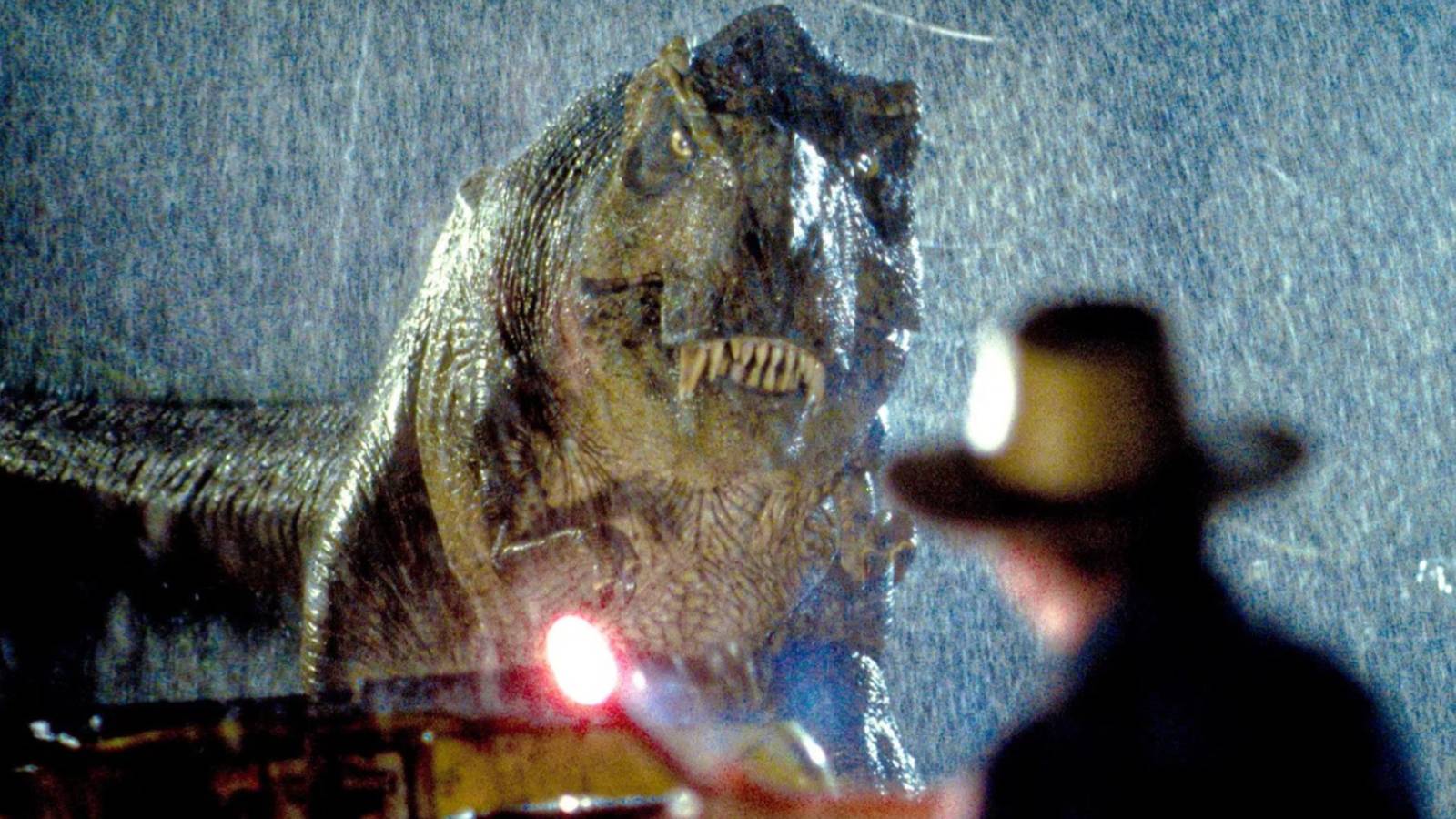
Image via Universal Pictures Published Sep 15, 2026, 9:12 PM EDT A New York native, Joe graduated from an avant-garde theater school upstate, where he was obsessed with sketch comedy. There, he and his lunatic friends founded The Sketchies — which still lives on at Skidmore College today. Living in New York City, a screenwriter friend of his then taught him how to write for film. This awakened a new passion in Joe. Since then his scripts have garnered over 200 festival selections, nominations, and wins all over the globe (including the BlueCat Best Feature award). Several of his screenplays have been made into feature films — some of them not that bad! Overall, he loves to create unique, hilarious, touching, and bizarre stories. Sign in to your Collider account Believe it or not, kids, but reading can be fun. In fact, it was considered the most fun form of entertainment…before TV came around to rot our brains. Nevertheless, when certain novels are adapted into films, the ensuing result can be magical, to say the least. All the images, characters, and locations conjured up in one’s mind suddenly become 3-dimensional, and for the truly fun films out there, these visual and auditory delights become seared into the viewer’s mind, sometimes for life. Here are the most fun movies that were created from literary source material. Some of these films stay very close to the plot of the novel they were born from, while others take a more liberal path in telling the same basic story. Either way, all the page-turners turned into moving pictures listed here are engaging, riveting, and most importantly, as fun as a barrel of literate (flying) monkeys. Image via 20th Century Studios While the novel and film both deal with some truly heavy themes of racial and gender inequity, the indomitable spirit of both of these works of art is so inspiring that the film version is a pure joy to watch. The novel by Margot Lee Shetterly, Hidden Figures: The American Dream and the Untold Story of the Black Women Mathematicians Who Helped Win the Space Race, details the true account of how a group of female African American mathematicians were the driving force behind NASA’s space program (from the times of World War II to the Space Race era). Director Theodore Melfi obviously took quite a few liberties with the literary material in turning this into an incredibly vibrant, poignant, and thoroughly uplifting film. The perfectly cast trio, Taraji P. Henson (as Katherine G. Johnson), Octavia Spencer (as Dorothy Vaughan), and Janelle Monáe (as Mary Jackson), all delivered rousing performances. Hidden Figures was nominated for the Best Picture Oscar in 2016, and it’s no secret why; the story is moving, the true-life topic is amazing, the soundtrack features fun tracks produced by Pharrell Williams, and the actors give it their heartfelt all. 7 'Matilda' (1996) image via Sony Pictures Classics Turning a kid’s book into a film can be challenging. How does one capture the whimsy and innocent charm of a children’s tale and bring it to life on the big screen (without, y’know, being cloying/annoying)? Director (and comedy legend) Danny DeVito certainly found the right formula with his depiction of the 1988 children’s novel Matilda, written by Roald Dahl. The story is a fun one from the onset. Matilda is a precocious little girl blessed with the powers of telekinesis. Unfortunately, she’s cursed with a dreadful family and forced to interact with a litany of irksome grown-ups (DeVito also stars, alongside his real-life wife Rhea Perlman). Fortunately, for audiences, Matilda uses her crafty powers with ingenuity, as she exacts fitting revenge on all the adults who have wronged her. It’s a mischievously fun concept, and the titular character, played by Mara Wilson, is a delight to watch — for kids and adults alike. 6 'The Devil Wears Prada' (2003) Image via 20th Century Studios The source material for this film is really what makes the final cinematic product so satisfyingly fun. The author of the novel (of the same name, The Devil Wears Prada), Lauren Weisberger, penned a fictional story…that was largely based on her own harrowing experiences in the fashion world; working at Vogue magazine. Here she received tutelage and terrors from the famed “dragon lady” herself, Anna Wintour. The book is a great beach read, filled with caustic, wry commentary on the cut-throat fashion business. Director David Frankel’s film captures as much of that milieu as possible, and is bolstered by some truly dynamic performances. Andy Sachs (Anne Hathaway) is a fresh-faced college grad, ready to make her mark on the world of journalism. She gets a gig as an assistant to Miranda Priestly (Meryl Streep, with one of her most striking, bedeviled performances), the editor of one of the most influential fashion mags of all time. Andy endures countless personal attacks and HR-nightmare jabs as she struggles to keep her head above water. A great supporting cast rounds this film out too, with Stanley Tucci (as Nigel) and Emily Blunt (in the part of Emily) delivering the goods (and even Gisele Bündchen was enjoyable in this, as Gisele, er, “Serena”). All in all, a devilishly good time (with a wickedly received sequel). 5 'The Da Vinci Code' (2003) Image Via Sony Pictures Releasing Naysayers can critique this movie all they want, but the simple truth is that Dan Brown scribed a highly digestible, perfectly-paced page-turner of a mystery, and Ron Howard turned it into an exhilaratingly fun film. While the Catholic Church may not have found the film to be all that “fun,” viewers the world over consumed it with guilty-pleasure glee. The plot of the film stays pretty true to the one in the book. The curator of the Louvre is shot within the famed Parisian museum, but before he dies he’s able to configure his body in the shape of Leonardo Da Vinci’s Vitruvian Man, and leave behind some invisible ink clues. Harvard professor Robert Langdon (Tom Hanks, having an absolute blast with this role, with some wacky long hair, to boot) is called in to help unravel the mystery, along with a forensic cryptologist, Sophie Neveu (Audrey Tautou, captivating for all the right reasons). Just like in the book, the audience is invigoratingly invited along to help solve the arty-religious case, and it’s a wild roller-coaster thrill ride the entire run-time. Collider Exclusive · Oscar Best Picture Quiz Which Oscar Best PictureIs Your Perfect Movie? Parasite · Everything Everywhere · Oppenheimer · Birdman · No Country Five Oscar Best Picture winners. Five completely different visions of what cinema can be — and what it can do to you. One of them is the film that was made for the way your mind works. Ten questions will figure out which one. 🪜Parasite 🌀Everything Everywhere ☢️Oppenheimer 🐦Birdman 🪙No Country for Old Men FIND YOUR FILM → 01 What kind of film experience do you actually want? The best movies don't just entertain — they leave something behind. ASomething that pulls the rug out — that makes me think I'm watching one kind of film and then reveals I'm watching another entirely. BSomething overwhelming — funny, sad, absurd, and genuinely moving, all at once. CSomething grand and weighty — a film that makes me feel the full scale of what I'm watching. DSomething formally daring — a film that pushes what cinema can even do. ESomething lean and relentless — pure tension with no wasted frame. NEXT QUESTION → 02 Which idea grabs you most in a film? Great films are driven by a central obsession. What's yours? AClass, inequality, and what people are willing to do when desperation meets opportunity. BIdentity, family, and the chaos of trying to hold your life together when everything is falling apart. CGenius, moral responsibility, and the catastrophic weight of a decision you can never take back. DEgo, legacy, and the terror of becoming irrelevant while you're still alive to watch it happen. EEvil, chance, and whether moral order actually exists or if we just tell ourselves it does. NEXT QUESTION → 03 How do you like your story told? Form is content. The way a story is shaped changes what it means. AGenre-twisting — I want it to start in one lane and migrate into something completely different. BMaximalist and genre-blending — comedy, action, drama, sci-fi, all in one ride. CEpic and non-linear — cutting between timelines, building a mosaic of cause and consequence. DA single unbroken flow — I want to feel like I'm living it in real time, no cuts to safety. ESpare and precise — every scene doing exactly what it needs to do and nothing more. NEXT QUESTION → 04 What makes a truly great antagonist? The opposition defines the protagonist. What kind of opposition fascinates you? AA system — invisible, structural, and almost impossible to fight because it has no single face. BThe self — the ways we sabotage, abandon, and fail the people we love most. CHistory — the unstoppable momentum of events that no single person can stop or redirect. DThe industry — the machinery of culture that chews up talent and spits out irrelevance. EPure, implacable evil — a force so certain of itself it becomes almost philosophical. NEXT QUESTION → 05 What do you want from a film's ending? The final note is the one that lingers. What do you want it to sound like? AShock and inevitability — a conclusion that recontextualises everything that came before it. BEarned emotion — I want to cry, laugh, and feel genuinely hopeful, even if the world is a mess. CDevastation and grandeur — an ending that makes me sit in silence for a few minutes after. DAmbiguity — something that leaves enough open that I'm still thinking about it days later. EBleakness — an honest refusal to pretend the world is tidier than it actually is. NEXT QUESTION → 06 Which setting pulls you in most? Where a film takes place shapes everything — mood, stakes, what's even possible. AA gleaming modern city with a hidden underside — beauty masking rot, wealth masking desperation. BA collapsing suburban life that opens onto something infinite — the multiverse of a single ordinary person. CThe corridors of power and science at a world-historical turning point — where decisions echo for decades. DThe grimy, alive chaos of New York and Hollywood — fame as both destination and trap. EVast, indifferent landscape — desert and highway where violence arrives without warning or reason. NEXT QUESTION → 07 What cinematic craft impresses you most? Every great film has a signature — a technical or artistic element that makes it unmistakable. AProduction design and mise-en-scène — every frame composed to carry meaning beneath the surface. BEditing and tonal control — the ability to move between registers without losing the audience. CScore and sound design — music that becomes inseparable from the dread and awe of what you're watching. DCinematography as performance — the camera not recording events but participating in them. ESilence and restraint — what's left unsaid and unshown doing more work than any dialogue could. NEXT QUESTION → 08 What kind of main character do you root for? The protagonist is the lens. Who you choose to follow says something about you. ASomeone smart and resourceful who makes increasingly dangerous decisions under pressure. BSomeone overwhelmed and ordinary who turns out to be capable of something extraordinary. CA brilliant, tortured figure whose gifts and flaws are inseparable from each other. DA self-destructive artist whose ego is both their superpower and their undoing. EA quiet, principled person trying to make sense of a world that has stopped making sense. NEXT QUESTION → 09 How do you feel about a film that takes its time? Pace is a choice. Some films sprint; others let tension accumulate slowly, deliberately. AI love a slow build when I know the payoff is going to be seismic — patience for a devastating reveal. BGive me relentless momentum — I want to feel breathless and emotionally spent by the end. CEpic runtime doesn't scare me — if the material demands three hours, give me three hours. DI want it to feel propulsive even when nothing is technically happening — restless energy throughout. EDeliberate and unhurried — I want dread to accumulate in the spaces between the action. NEXT QUESTION → 10 What do you want to feel walking out of the cinema? The best films leave a mark. What kind of mark do you want? AUnsettled — like I've just seen something I can't fully explain but can't stop thinking about. BMoved and energised — like the film reminded me what actually matters and gave me something to hold onto. CHumbled — like I've been in the presence of something genuinely important and overwhelming. DExhilarated — like I've just seen cinema doing something it's never quite done before. EHaunted — like a cold, quiet dread that stays with me for days. REVEAL MY FILM → The Academy Has Decided Your Perfect Film Is…Your answers have pointed to one Oscar Best Picture winner above all others. This is the film that was made for the way your mind works. ParasiteYou are drawn to films that operate on multiple levels simultaneously — that begin in one genre and quietly, brilliantly migrate into another. Bong Joon-ho's Parasite is a film about class, desire, and the architecture of inequality that manages to be darkly funny, deeply suspenseful, and genuinely shocking across a single extraordinary running time. Your instinct is for cinema that hides its true intentions until the moment it's ready to reveal them. Parasite is exactly that — a film that rewards close attention and punishes assumptions, right up to its devastating final image. Everything Everywhere All at OnceYou want it all — and this film gives you all of it. The Daniels' Everything Everywhere All at Once is one of the most maximalist films ever made: action comedy, multiverse sci-fi, family drama, existential crisis, and a genuinely earned emotional core that sneaks up on you amid the chaos. You are someone who responds to ambition, who doesn't want cinema to choose between being entertaining and being meaningful. This film refuses that choice entirely. It is overwhelming by design, and its overwhelming nature is precisely the point — because the feeling of being crushed by infinite possibility is exactly what it's about. OppenheimerYou are drawn to cinema on a grand scale — films that understand history not as a backdrop but as a force, and that place their characters inside that force and watch what happens. Christopher Nolan's Oppenheimer is a film about the terrifying gap between what we can do and what we should do, told with the full weight of one of the most consequential moments in human history behind it. You want your films to feel important without feeling self-important — to earn their ambition through sheer craft and the gravity of their subject. Oppenheimer does exactly that. It is enormous, complicated, and refuses easy comfort. BirdmanYou are drawn to films that foreground their own construction — that make the how of the filmmaking part of the what it's about. Alejandro González Iñárritu's Birdman, shot to appear as a single continuous take, is cinema examining itself through the cracked mirror of a fading actor's ego. You respond to formal daring, to the feeling that a film is doing something that probably shouldn't be possible. Michael Keaton's performance and Emmanuel Lubezki's restless camera create something genuinely unlike anything else — a film that is simultaneously about creativity, relevance, self-destruction, and the impossibility of ever truly knowing if your work means anything at all. No Country for Old MenYou are drawn to cinema that trusts silence, that refuses to explain itself, and that treats dread as a form of meaning. The Coen Brothers' No Country for Old Men is a film about the arrival of a new kind of evil — implacable, arbitrary, and utterly indifferent to the moral frameworks we use to make sense of the world. It is one of the most formally controlled films ever made, and its controlled restraint is what makes it so terrifying. You want your films to haunt you, not comfort you. You are not interested in resolution if resolution would be dishonest. No Country for Old Men is honest in a way that most cinema never dares to be. ↻ RETAKE THE QUIZ 4 'The Wizard of Oz' (1939) Image via Metro-Goldwyn-Mayer One of the most iconic films in the fantasy realm has certainly stood the test of time (aided in small part by the use of “technicolor,” as it was the first big movie to utilize this brand of cutting-edge, colorful tech). The novel, The Wonderful Wizard of Oz, was written in 1900 by L. Frank Baum, and was already a classic “children’s” story (even with its decidedly adult and frightening themes...and witches). When the director trio of Victor Fleming, George Cukor, and Norman Taurog released the film version, The Wizard of Oz, in 1939, audiences were wowed and floored by how downright entertaining the tale was displayed on the silver screen. The plot is a wild one, full of archetypical characters and thrillingly unique motifs. Dorothy (the songbird Judy Garland, in her career-defining role — that would inspire one billion Halloween costumes), is a simple girl living in Kansas. When a tornado whips her into another dimension, the infamous Land of Oz, she meets a host of kooky characters, and forms an alliance with a cadre of curious creatures all seeking something specific (if only some people could be as self-aware as the Scarecrow (Ray Bolger)…as he knew he was brainless). The original novel spawned countless sequels and reimaginings, like the 70s version The Wiz, and the current Wicked franchise. Simply put, is there anything more fun than flying monkeys? 3 'Breakfast at Tiffany's' (1961) Image via Paramount Pictures Truman Capote is one of the most famed authors in American literary history, with his expansive novels spanning a range of topics (he wrote the first true crime novel with In Cold Blood). While his 1958 novella Breakfast at Tiffany’s was obviously much lighter in tone, it still covered some cerebrally dark territory. The brilliance of the film adaptation, directed by Blake Edwards, was that it eschewed the sometimes melancholic timbre of the book and elevated the tale by focusing on the light-hearted romantic comedy elements that have since become some of cinema’s most amusing. The story is about a zesty Manhattan socialite, effervescently named Holly Golightly (portrayed by Audrey Hepburn, in arguably her most notable, remarkable role — and definitely her most fashionable one). Holly meets a struggling writer, Paul Varjak (George Peppard), and the two strike up an unlikely “friendship.” The foibles they encounter within each other, all while trying to navigate “high society,” lend to an incredibly charming (and style-defining) flick all around. In the book, Holly and Paul don’t end up together, but, naturally, in the film they find quirky love. 2 'The Princess Bride' (1987) Image via 20th Century Studios The 80s were loaded with rom-coms that made an indelible mark on the history of cinema (When Harry Met Sally, Say Anything, Moonstruck), but none may have been as simultaneously heartwarming, humorous, and inventive as director Rob Reiner’s The Princess Bride. Based on the 1973 novel, wait for it, The Princess Bride: S. Morgenstern's Classic Tale of True Love and High Adventure, The "Good Parts" Version, by William Goldman, this classic story is so packed with endearing (and insanely quotable) elements it's impossible to properly highlight them all. The whimsical, somewhat mythical tale follows Westley (the dashing Cary Elwes), a farmhand, on his epic quest to find his one true love, Princess Buttercup (the dewy yet fiery Robin Wright). Basically, everyone he meets on his journey is equal parts hilarious and enchanting, with their own idiosyncratic characteristics that help to make this movie truly unforgettable. Cameos by Billy Crystal and Carol Kane are hysterical, and even Andre the Giant is lovable and poignant in his delivery. In an adorable nod to the book, the film is framed by a grandpa (Peter Falk, at his avuncular best) reading the “story” to his grandkid (Fred Savage, never cuter). From the enduring speech by Inigo Montoya (Mandy Patinkin) to the Rodents of Unusual Size, this movie is fun on all fantastical fronts. 1 'Jurassic Park' (1993) Image via Universal Pictures In contention for one of the most fun movies ever, Steven Spielberg’s Jurassic Park takes everything in the Michael Crichton sci-fi novel of the same name and brings it to vital, T. Rex-chomping life. While Crichton is known for his thought-provoking, and sometimes intensely dark, science-based books (several of which have been made into films), Jurassic Park is pure fun from frame one. The immediately engaging story is about a small team of scientists who are brought to a theme park island to do some “quality control.” The scientists in question are paleontologists (and one chaos theory-specializing mathematician), as the prime exhibits on this island feature real-live dinosaurs. Just this premise alone is fun for literally all ages. With Sam Neill (as Grant), Laura Dern (as Ellie) and Jeff Goldblum (Malcolm) all delivering stellar lead performances, and Wayne Knight (in the role of Nedry) and Samuel L. Jackson (as Arnold) providing comedic relief, and the collection of dinos (as themselves) all giving the best animatronic performances ever, this is surely the most, hands-(and tails)-down, fun adaptation of any literary work, ever.
The 8 Most Fun Movies Based on Books, Ranked
Full Article
Original Source
Read the full article at Collider →KhanList aggregates and links to publicly available news content. We do not host full articles from third-party sources. Always verify important information with original sources.