
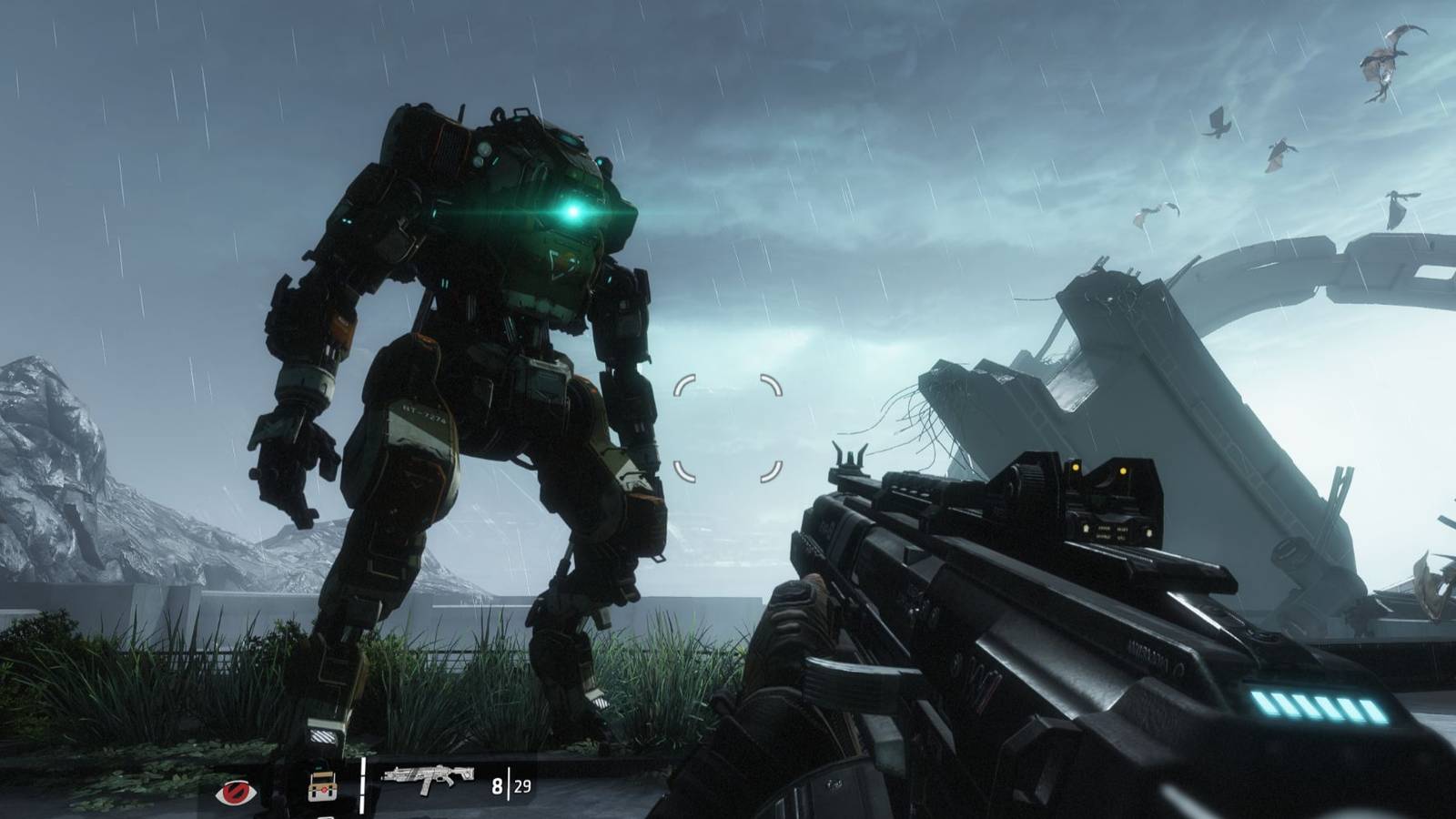
Image via Respawn Entertainment Published Sep 27, 2026, 8:35 AM EDT Sign in to your Collider account There is a wonderfully primitive test for a first-person shooter. Give someone the controller, point them toward trouble, and see how long it takes before their posture changes. The great ones get into your hands before they get into your head. Suddenly you are leaning around corners in real life, shouting directions at friends who absolutely cannot hear you through the television, or restarting a checkpoint because that last twenty seconds felt so good you want another go immediately. And this isn’t about taste either. Historical importance can only carry a game so far. Perfect gun balance does not automatically beat the shotgun that makes you laugh every time it fires. A celebrated campaign can lose to four friends surviving a disaster by pure panic. Sometimes the winner is simply the game that makes movement, shooting, improvising, and barely surviving feel like one continuous good idea. Think of Apex Legends surviving so much despite all that trash talk from gamers against it. Let’s get started. 8 'GoldenEye 007' (1997) Image via Nintendo Put four people around an N64, pick Facility, and within minutes somebody is accusing everyone else of screen-peeking. GoldenEye 007 belongs to an era when multiplayer required everyone to occupy the same couch, which meant every cheap kill came with the added pleasure of hearing the victim complain three feet away. The campaign deserves plenty of affection too. Sneaking through Soviet facilities as Bond, shooting cameras before alarms went off, fumbling with gadgets, and chasing objectives through levels that occasionally felt much larger than they actually were made console shooting feel genuinely new. But multiplayer is where the memories became permanent. Proximity mines could turn a hallway into a personal grudge. The Golden Gun made one player insufferable. Oddjob created arguments that have somehow survived decades. The controls obviously show their age now. The urge to play one more round with the right group barely does. 7 'Half-Life 2' (2004) Image via Valve City 17 feels wrong before Gordon Freeman has even acquired a crowbar. Armed Combine patrol the streets, citizens have learned to keep their heads down, and Dr. Breen’s enormous face keeps appearing on screens explaining why everybody should be grateful. Half-Life 2 lets that unease build naturally, then hands Gordon the Gravity Gun and starts discovering how much fun physics can be when weaponized. That one tool changes the personality of the whole game. Saw blades become projectiles. Radiators become shields. Explosive barrels become extremely tempting solutions to ordinary problems. Ravenholm turns environmental improvisation into survival horror while Father Grigori cheerfully behaves as though the zombie apocalypse has improved his social life. Later, the vehicle sections and Strider battles keep widening the resistance without turning Gordon into a spectator. Plenty of shooters tell you the world is interactive. Half-Life 2 lets you pick up half the room and throw it at somebody. Think of it like a Counter-Strike 1.6 that went abroad for higher studies. 6 'Borderlands 2' (2012) Image via Gearbox Software Handsome Jack spends Borderlands 2 insulting you over the radio while behaving like the hero of his own story, and honestly, Pandora would be less entertaining without him. The planet is hostile, ugly, full of homicidal lunatics, and overflowing with guns generated in quantities that begin to feel medically irresponsible. Finding those guns is half the addiction. One shotgun fires like a normal weapon. Another screams when you reload it. A pistol may suddenly become obsolete because something absurdly better fell out of a random enemy five minutes later. The four Vault Hunters encourage completely different kinds of bad behavior, especially once co-op turns every firefight into a competition over loot nobody wants to admit they desperately need. Then Tiny Tina, Claptrap, Scooter, and the rest of Pandora keep filling the downtime with personalities that refuse to behave normally. The humor occasionally screams too loudly for attention, but when combat, co-op, and loot all start feeding each other, losing an evening to Borderlands 2 becomes dangerously easy. Obviously, the new era is more about multiplayer games so the reception isn’t as strong but again, taste is irrelevant here. 5 'Halo 3' (2007) Image via Microsoft Game Studios Some games carry memories bigger than the actual missions. Halo 3 has plenty of those. The first time a Scarab stomps into the battlefield. Four-player campaign nights that were supposed to end hours earlier. Someone driving the Warthog beautifully right until the exact moment a cliff appears. Master Chief’s fight against the Covenant and the Flood arrives with huge stakes, but Bungie keeps giving the player room to create the fun rather than scripting every second. Vehicles can completely change how a battle unfolds. Grenades create accidents nobody planned. A misplaced rocket can turn a heroic co-op push into three people laughing at one friend for the next ten minutes. Then multiplayer adds Forge, custom games, and the particular madness of modes like Grifball. Halo 3 arrived when Xbox Live still felt like somewhere you went to meet everyone after school. For a generation, that menu music practically meant the night was about to start and Halo 3 was home. 4 'Doom' (2016) Image via Bethesda The opening minutes tell you how little patience Doom has for ceremony. The Doom Slayer wakes up chained to a slab on Mars, kills the first demon he sees, gets dressed, and responds to an earnest corporate explanation of the catastrophe by shoving the monitor out of the way. Perfect. The game understands that standing still should feel wrong. Imps force movement, heavier demons demand priority, Glory Kills turn weakened enemies into health opportunities, and the chainsaw converts monsters into exploding ammunition supplies. Suddenly aggression is not reckless behavior. It is how the combat economy works. The Super Shotgun feels obscene in exactly the way a Super Shotgun should. Mick Gordon’s music makes every arena feel like somebody plugged the soundtrack directly into your pulse. The story is there if you care. Doom Slayer frequently behaves like he would rather get back to work. That shared impatience between player and character is half the charm. 3 'Left 4 Dead 2' (2009) Image Via Valve I used to think back when finding playable servers on GameTracker for Counter-Strike 1.6 was the only way to find gems back in 2008. And I used to spot Left 4 Dead servers too on the side. That’s actually how I found out about the game. Every Left 4 Dead 2 story eventually becomes a story about the friend who ruined everything. Somebody startled the Witch. Somebody wandered off alone. Somebody saw a perfectly good safe room and decided the team needed one more Molotov first. That unpredictability is why it remains such a phenomenal co-op game. The AI Director changes enemy pressure, item placement, and pacing, so familiar campaigns can still become disasters in new places. A Charger can grab one survivor and suddenly split the whole team. A Smoker can drag somebody away while everyone is looking elsewhere. Then a Tank arrives and whatever plan existed five seconds earlier becomes irrelevant. The campaigns have personality too, from the carnival of Dark Carnival to the desperate concert finale where pyrotechnics and infected share the stage. Four competent players can look beautifully coordinated. Four friends having slightly too much confidence are much funnier. 2 'Doom Eternal' (2020) Image via Bethesda Softworks Doom Eternal looks at the magnificent brutality of Doom and asks a dangerous question. What if the player had to think faster too? The answer is combat that feels less like ordinary shooting and more like violently solving a puzzle at full speed. The shotgun’s Meat Hook pulls the Doom Slayer toward enemies. Flame Belch turns targets into armor. The chainsaw restores ammunition. Glory Kills provide health. Weak points reward choosing the right weapon before another demon forces the decision to change. Once the rhythm clicks, arenas stop feeling like rooms full of enemies and start feeling like playgrounds built for improvisation. Marauders may test the patience of anyone who simply wants to unload a magazine, but even that friction forces a different rhythm. Doom Eternal asks a lot from your hands. The reward is feeling absurdly capable when everything finally connects. 1 'Titanfall 2' (2016) Image via Electronic Arts Most shooters ask how good it feels to fire the gun. Titanfall 2 asks why you are still touching the ground. Wall-running, double-jumping, sliding, grappling, and chaining momentum together make ordinary corridors feel like wasted opportunities. Then the game lets you call down BT-7274, climb into a Titan, and switch from hypermobile pilot to enormous mechanized warfare without either half feeling like the lesser attraction. BT also happens to be funny, loyal, and more emotionally convincing than a military robot really had any right to be. The campaign keeps introducing ideas other games would have stretched across entire sequels. “Effect and Cause” lets Jack Cooper jump between two different points in time while moving through the same facility, turning traversal and combat into one beautiful little brain scramble. “The Beacon” gives the movement system enormous space to breathe. The factory sequence keeps changing what counts as stable ground. And then multiplayer takes those mechanics and lets actual human beings become terrifyingly good at them. Plenty of FPS games make shooting addictive but Titanfall 2 makes simply getting from one side of the room to the other feel fantastic. Collider Exclusive · James Bond Personality Quiz Which James Bond Actor Are You Most Like? Connery · Moore · Dalton · Brosnan · Lazenby · Craig Six actors. Six completely different visions of the same man — dangerous, charming, complicated, and almost certainly wearing a very good suit. Only one of them shares your particular way of moving through the world. Eight questions will figure out which Bond you really are. 🏴Connery 😄Moore 🎭Dalton ✨Brosnan 🤵Lazenby 💠Craig FIND YOUR BOND → 01 How do you carry yourself when you walk into a room? Bond is always the most interesting person in the room. The question is how he makes you feel it. AWith absolute authority — I don't announce myself. I simply make everyone aware that I've arrived. BWith a raised eyebrow and a ready quip — I'd rather disarm a room than dominate it. CWith focused intensity — I'm taking everything in, and people can tell. DWith polish and ease — I look like I belong everywhere, because I've decided I do. EWith quiet confidence — I'm still figuring out my place, but I carry myself as if I already know it. FWith guarded stillness — I notice everything and give nothing away until I choose to. NEXT QUESTION → 02 How do you handle a dangerous situation? Every Bond faces it differently. What does your version look like? AWith dangerous calm — I've been here before, and the threat already knows it's made a mistake. BWith improvisation and a degree of theatrical flair — tension should never be wasted. CHead-on and without hesitation — I don't need gadgets. I have training, and I use it. DWith the right tool for the job — I came prepared, and preparation is its own form of confidence. EInstinctively — I react faster than I think, and it usually works out. FWith controlled brutality — I don't enjoy it, but I don't flinch from what the moment requires. NEXT QUESTION → 03 How do you charm someone you need on your side? Bond always gets what he needs. The method varies considerably. AI make them feel like the most interesting person in the room — for exactly as long as I need them to be. BI make them laugh — a shared laugh is the fastest way to make someone trust you. CI'm direct and honest — I tell them what I need and why. Manipulation wastes time. DWith surface perfection — the right words, the right smile, deployed with enough precision to look effortless. EBy being present and genuine — I'm still developing my technique, but sincerity covers a lot of ground. FReluctantly and sparingly — I'd rather earn trust through actions than manufacture it through charm. NEXT QUESTION → 04 How do you handle your emotions on the job? Every Bond deals with this differently. Most of them not particularly well. AI suppress them completely — detachment is a professional requirement, not a personal failing. BI deflect with humour — a well-timed joke is the best defence against genuine feeling. CI let them show — I'm not ashamed of feeling things, and I think pretending not to is its own kind of weakness. DI compartmentalise with precision — everything in its place, nothing bleeding into the mission. EWith difficulty — I haven't quite worked out the system yet, and sometimes it shows. FBy burying them — deeply, imperfectly, in ways that eventually cost me something important. NEXT QUESTION → 05 How would your colleagues describe your working style? MI6 has opinions about all of its 00s. What are theirs about you? AEffective and uncompromising — results-focused to the point where the methods occasionally become a concern. BReliably brilliant in the field, occasionally exasperating in the briefing room. CPrincipled to a fault — they'd rather do it right than do it fast, and they'll tell you so. DPolished, capable, and slightly too good at making it look easy. ERaw potential — still developing, but there's something there that's hard to teach. FA weapon. Pointed at problems, usually effective, occasionally unpredictable. NEXT QUESTION → 06 How do you feel about operating within the rules? The licence to kill comes with terms and conditions. Not everyone reads them. ARules are for people who haven't earned the judgement to know when to break them. BI follow them in spirit and bend them in practice — the important thing is the outcome. CI take them seriously — there are things I won't do regardless of what the mission requires. DI work within them effectively and creatively — the system has its uses if you know how to navigate it. EI'm still working out where my lines are — the job has a way of moving them on you. FI follow orders until I decide the order is wrong. Then I act on my own judgement and accept the consequences. NEXT QUESTION → 07 What is your relationship with love? Every Bond has a different answer. None of them have found it easy. AA liability I've learned to manage — I don't let it interfere with the work, and I try not to examine why. BA pleasure I take seriously in the moment, lightly in the long term, and honestly in between. CSomething I want genuinely — and struggle to reconcile with the life I've chosen. DPart of the performance — I'm charming, and I enjoy it, but I keep the door to anything deeper firmly closed. ESomething that surprised me — I found it when I wasn't looking and it changed everything, briefly. FA wound I carry — something happened, and I haven't fully processed what it means for everything since. NEXT QUESTION → 08 When the mission is over, how do you want to be remembered? The name is Bond. The rest is entirely up to the man behind it. AAs the original — the one who defined what this could be before anyone else knew what it was. BAs someone who made it enjoyable — who understood that entertainment is its own kind of excellence. CAs someone who took it seriously — who refused to coast and pushed harder than the role required. DAs the complete package — who had the looks, the timing, and the ability to make it all seem inevitable. EAs an underrated chapter — one that deserved more time and more credit than it received. FAs the one who made it human — who found the cost beneath the cool and didn't look away from it. REVEAL MY BOND → The Name Has Been Determined Your Bond Is…Six actors. One role. Your answers point to the Bond who shares your presence, your method, and your particular way of carrying the weight of being the most dangerous person in the room. Sean ConneryYou are the original — and you carry that fact without needing to announce it. There is an authority in the way you occupy a room that others spend careers trying to replicate. You don't explain yourself, justify yourself, or soften yourself for anyone's comfort. The confidence is structural, not performed. Connery's Bond established everything — the tone, the danger, the cool — because Connery himself had the innate presence to make something that had never existed feel inevitable. You share that quality: the sense that you were always going to end up exactly here, doing exactly this. The name is Bond. In your case, it always was. Roger MooreYou understand something that more serious people miss: that wit is its own form of intelligence, and that making people laugh is not a retreat from danger but a way of mastering it. Moore's Bond is underrated precisely because the effortlessness looks easy — and effortlessness is the hardest thing to manufacture. You have the same quality: a lightness that disarms people before they realise how sharp you actually are. The raised eyebrow, the perfectly timed quip, the refusal to be rattled — these are not affectations. They are a philosophy about how to move through a world that would like to take itself too seriously. You have never let it. Timothy DaltonYou took the role seriously when everyone wanted you to coast — and that refusal to take the easy version of anything is the most defining thing about you. Dalton's Bond has genuine moral weight: he feels the cost of what he does, he has lines he won't cross, and he is not interested in the version of himself that pretends otherwise. You share that intensity. You push harder than the situation technically requires, because you have a standard and you hold yourself to it. He was ahead of his time — the Bond the franchise wasn't quite ready for yet, arriving exactly when he was meant to. You know what that feels like. Pierce BrosnanYou are the complete package — and you know it, which is part of what makes you so effective and occasionally so infuriating to the people around you. Brosnan arrived at the role looking exactly like Bond was supposed to look, and he delivered on that expectation with a professionalism that made it seem effortless. You have the same quality: a smooth competence, a charm that operates like a precision instrument, and the ability to make even difficult things look like they weren't. His era was the most commercially successful in the franchise's history. There is a reason for that. The reason is that some people simply fit their moment perfectly. You are one of those people. George LazenbyYou stepped into something enormous with less preparation than anyone around you thought was sufficient — and you delivered something genuine anyway, which is the more impressive achievement. Lazenby's single outing is, by many measures, one of the finest Bond films ever made — and he is not a small part of why. You share his quality of raw authenticity: less polished than the alternatives, more honest for it, capable of something real that technique alone can't produce. He was underestimated, and then he wasn't, and then history caught up with him. You are the kind of person history catches up with. Give it time. Daniel CraigYou stripped everything back and found what was underneath — and what was underneath was harder, more honest, and more human than anyone expected. Craig's Bond is the franchise's most psychologically complete: a man doing a brutal job, carrying its costs imperfectly, capable of love and loss in ways that can't be dismissed. You share that depth. You don't hide behind the role or the charm or the suit — you let the work show what it actually costs. He was controversial from the moment he was announced and definitive by the time he was finished. The sceptics became the believers. That arc — of being underestimated and then undeniable — is one you know intimately. ↻ RETAKE THE QUIZ
The 8 Most Fun FPS Games of All Time, Ranked
Full Article
Original Source
Read the full article at Collider →KhanList aggregates and links to publicly available news content. We do not host full articles from third-party sources. Always verify important information with original sources.