
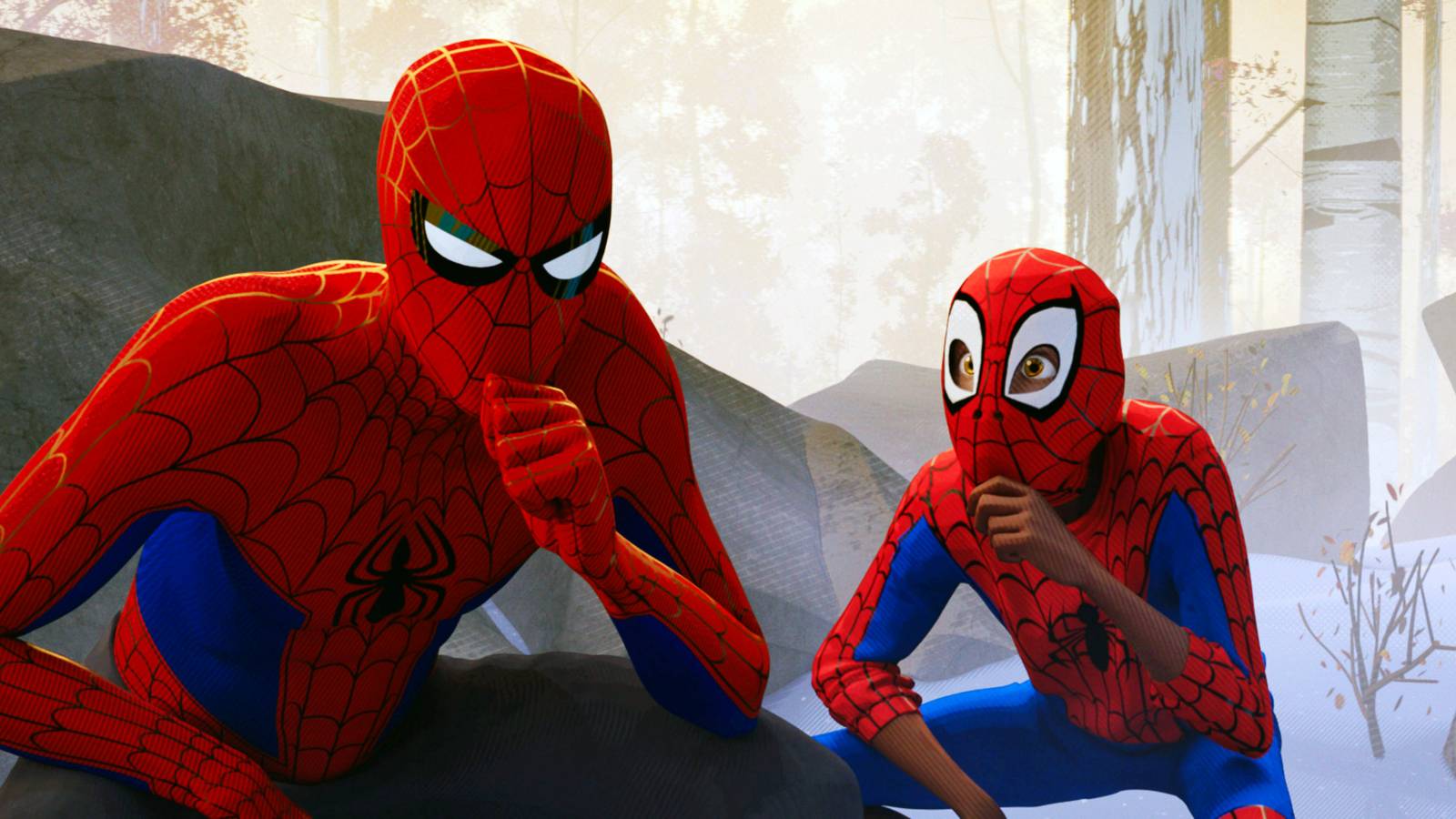
Image via Sony Pictures Releasing Published Sep 12, 2026, 3:49 PM EDT Sign in to your Collider account You know the kind of animated movie that wins this argument before anyone starts arguing. Someone puts it on “for the kids,” the adults stop checking their phones, and twenty minutes later everybody is quoting the same line they have quoted for years. And somebody who doesn’t want to watch the movie just keeps coming by, stands around, can’t help but get indulged a bit before walking away again? Nobody cares whether the animation is historically important in that moment. You are simply having a ridiculously good time. That is the version of best that matters here. These movies move, joke, surprise, and give you characters you genuinely enjoy spending time with. They are warm, chaotic, and a couple can suddenly hit much harder emotionally than you expected. But all eight have that rare quality where revisiting them feels less like rewatching homework from childhood and more like hanging out with something that still knows exactly how to entertain you. 8 'The LEGO Movie' (2014) Image via Warner Bros. Emmet (Chris Pratt) is so ordinary that the people around him struggle to remember anything specific about him. Then he accidentally finds the Piece of Resistance and gets mistaken for the “Special” destined to stop Lord Business (Will Ferrell) from freezing the entire LEGO world with the Kragle. The LEGO Movie somehow takes that completely ridiculous setup seriously enough to make it exciting while never forgetting that everything around Emmet is made of tiny plastic bricks. The jokes come at you constantly, but the movie is funniest when it treats LEGO logic as perfectly normal. Spaceships can be built from whatever is lying around. Batman (Will Arnett) is an insufferably confident boyfriend. Benny (Charlie Day) spends what feels like half the movie desperately waiting for permission to build a spaceship. “Everything Is Awesome” starts as an annoying corporate anthem and ends up becoming part of the story’s argument about conformity. Then the live-action reveal adds an emotional layer without draining any of the fun. It is basically ninety minutes of somebody dumping the toy box onto the floor and somehow finding a real story inside it. 7 'Kung Fu Panda' (2008) Image via DreamWorks Animation Po (Jack Black) works in his father’s noodle shop, worships kung fu from a distance, and has absolutely no reason to believe he belongs beside the Furious Five. Then he crashes into the Dragon Warrior ceremony and gets chosen anyway. That is the joke at the center of Kung Fu Panda, but the movie never treats Po himself as the joke. He loves this world too much for that. Watching him train is where the movie really comes alive. Shifu (Dustin Hoffman) eventually realizes that traditional discipline is useless on Po, so dumplings become motivation and lunch becomes combat. Meanwhile, Tai Lung (Ian McShane) escapes prison in a sequence that briefly makes you wonder when this cheerful panda movie became an action film. Po’s eventual confidence grows out of everything that made him seem unsuitable in the first place rather than some sudden personality transplant. It is warm, fast, endlessly quotable, and almost impossible to finish in a bad mood. 6 'The Emperor's New Groove' (2000) Image via Walt Disney Animation Kuzco (David Spade) is young, rich, powerful, and so spectacularly self-absorbed that becoming a llama might genuinely qualify as character development. The Emperor's New Groove wastes almost no time getting there. Yzma (Eartha Kitt) wants the throne, Kronk (Patrick Warburton) mixes up the poison, and suddenly the emperor is stuck in the jungle with Pacha (John Goodman), the same man whose home he was planning to demolish for a swimming pool. The whole movie operates on a wonderful lack of dignity. Yzma and Kronk take a roller coaster to the secret lab. A lever drops someone into an alligator pit for no apparent reason. Kronk argues with miniature versions of his conscience and remains extremely proud of his spinach puffs. Even the movie itself occasionally stops so Kuzco can complain about how the story is treating him. Pacha keeps enough heart underneath the madness to make Kuzco’s gradual improvement believable. Nothing here wants to feel majestic or important. It just wants to make you laugh, and twenty-five years later, it is still absurdly good at it. 5 'Shrek 2' (2004) Image via DreamWorks Animation Shrek was great. The second installment was better. Meeting your partner’s parents is stressful enough without discovering they expected their daughter to marry a handsome prince and you are, inconveniently, an ogre. That is where Shrek 2 begins, sending Shrek (Mike Myers) and Fiona (Cameron Diaz) to Far Far Away while King Harold (John Cleese) desperately tries to undo a marriage he never wanted. Then Fairy Godmother (Jennifer Saunders) enters with a business plan for true love, Prince Charming (Rupert Everett) brings his hair, and the movie somehow gets even more entertaining. Everything is turned up just enough. Puss in Boots (Antonio Banderas) tries to murder Shrek, gets caught, widens his eyes, and instantly becomes impossible to hate. Shrek drinks the Happily Ever After potion and briefly wakes up looking like he should be selling cologne. The giant gingerbread man attacks a castle while people scream “Mongo,” and Fairy Godmother belts out “Holding Out for a Hero” over the entire thing. Underneath the chaos is a very relatable fear that the person you love might deserve somebody better. Shrek 2 gets the joke, the insecurity, and the huge fairy-tale ending exactly right. Collider Exclusive · Oscar Best Picture Quiz Which Oscar Best PictureIs Your Perfect Movie? Parasite · Everything Everywhere · Oppenheimer · Birdman · No Country Five Oscar Best Picture winners. Five completely different visions of what cinema can be — and what it can do to you. One of them is the film that was made for the way your mind works. Ten questions will figure out which one. 🪜Parasite 🌀Everything Everywhere ☢️Oppenheimer 🐦Birdman 🪙No Country for Old Men FIND YOUR FILM → 01 What kind of film experience do you actually want? The best movies don't just entertain — they leave something behind. ASomething that pulls the rug out — that makes me think I'm watching one kind of film and then reveals I'm watching another entirely. BSomething overwhelming — funny, sad, absurd, and genuinely moving, all at once. CSomething grand and weighty — a film that makes me feel the full scale of what I'm watching. DSomething formally daring — a film that pushes what cinema can even do. ESomething lean and relentless — pure tension with no wasted frame. NEXT QUESTION → 02 Which idea grabs you most in a film? Great films are driven by a central obsession. What's yours? AClass, inequality, and what people are willing to do when desperation meets opportunity. BIdentity, family, and the chaos of trying to hold your life together when everything is falling apart. CGenius, moral responsibility, and the catastrophic weight of a decision you can never take back. DEgo, legacy, and the terror of becoming irrelevant while you're still alive to watch it happen. EEvil, chance, and whether moral order actually exists or if we just tell ourselves it does. NEXT QUESTION → 03 How do you like your story told? Form is content. The way a story is shaped changes what it means. AGenre-twisting — I want it to start in one lane and migrate into something completely different. BMaximalist and genre-blending — comedy, action, drama, sci-fi, all in one ride. CEpic and non-linear — cutting between timelines, building a mosaic of cause and consequence. DA single unbroken flow — I want to feel like I'm living it in real time, no cuts to safety. ESpare and precise — every scene doing exactly what it needs to do and nothing more. NEXT QUESTION → 04 What makes a truly great antagonist? The opposition defines the protagonist. What kind of opposition fascinates you? AA system — invisible, structural, and almost impossible to fight because it has no single face. BThe self — the ways we sabotage, abandon, and fail the people we love most. CHistory — the unstoppable momentum of events that no single person can stop or redirect. DThe industry — the machinery of culture that chews up talent and spits out irrelevance. EPure, implacable evil — a force so certain of itself it becomes almost philosophical. NEXT QUESTION → 05 What do you want from a film's ending? The final note is the one that lingers. What do you want it to sound like? AShock and inevitability — a conclusion that recontextualises everything that came before it. BEarned emotion — I want to cry, laugh, and feel genuinely hopeful, even if the world is a mess. CDevastation and grandeur — an ending that makes me sit in silence for a few minutes after. DAmbiguity — something that leaves enough open that I'm still thinking about it days later. EBleakness — an honest refusal to pretend the world is tidier than it actually is. NEXT QUESTION → 06 Which setting pulls you in most? Where a film takes place shapes everything — mood, stakes, what's even possible. AA gleaming modern city with a hidden underside — beauty masking rot, wealth masking desperation. BA collapsing suburban life that opens onto something infinite — the multiverse of a single ordinary person. CThe corridors of power and science at a world-historical turning point — where decisions echo for decades. DThe grimy, alive chaos of New York and Hollywood — fame as both destination and trap. EVast, indifferent landscape — desert and highway where violence arrives without warning or reason. NEXT QUESTION → 07 What cinematic craft impresses you most? Every great film has a signature — a technical or artistic element that makes it unmistakable. AProduction design and mise-en-scène — every frame composed to carry meaning beneath the surface. BEditing and tonal control — the ability to move between registers without losing the audience. CScore and sound design — music that becomes inseparable from the dread and awe of what you're watching. DCinematography as performance — the camera not recording events but participating in them. ESilence and restraint — what's left unsaid and unshown doing more work than any dialogue could. NEXT QUESTION → 08 What kind of main character do you root for? The protagonist is the lens. Who you choose to follow says something about you. ASomeone smart and resourceful who makes increasingly dangerous decisions under pressure. BSomeone overwhelmed and ordinary who turns out to be capable of something extraordinary. CA brilliant, tortured figure whose gifts and flaws are inseparable from each other. DA self-destructive artist whose ego is both their superpower and their undoing. EA quiet, principled person trying to make sense of a world that has stopped making sense. NEXT QUESTION → 09 How do you feel about a film that takes its time? Pace is a choice. Some films sprint; others let tension accumulate slowly, deliberately. AI love a slow build when I know the payoff is going to be seismic — patience for a devastating reveal. BGive me relentless momentum — I want to feel breathless and emotionally spent by the end. CEpic runtime doesn't scare me — if the material demands three hours, give me three hours. DI want it to feel propulsive even when nothing is technically happening — restless energy throughout. EDeliberate and unhurried — I want dread to accumulate in the spaces between the action. NEXT QUESTION → 10 What do you want to feel walking out of the cinema? The best films leave a mark. What kind of mark do you want? AUnsettled — like I've just seen something I can't fully explain but can't stop thinking about. BMoved and energised — like the film reminded me what actually matters and gave me something to hold onto. CHumbled — like I've been in the presence of something genuinely important and overwhelming. DExhilarated — like I've just seen cinema doing something it's never quite done before. EHaunted — like a cold, quiet dread that stays with me for days. REVEAL MY FILM → The Academy Has Decided Your Perfect Film Is…Your answers have pointed to one Oscar Best Picture winner above all others. This is the film that was made for the way your mind works. ParasiteYou are drawn to films that operate on multiple levels simultaneously — that begin in one genre and quietly, brilliantly migrate into another. Bong Joon-ho's Parasite is a film about class, desire, and the architecture of inequality that manages to be darkly funny, deeply suspenseful, and genuinely shocking across a single extraordinary running time. Your instinct is for cinema that hides its true intentions until the moment it's ready to reveal them. Parasite is exactly that — a film that rewards close attention and punishes assumptions, right up to its devastating final image. Everything Everywhere All at OnceYou want it all — and this film gives you all of it. The Daniels' Everything Everywhere All at Once is one of the most maximalist films ever made: action comedy, multiverse sci-fi, family drama, existential crisis, and a genuinely earned emotional core that sneaks up on you amid the chaos. You are someone who responds to ambition, who doesn't want cinema to choose between being entertaining and being meaningful. This film refuses that choice entirely. It is overwhelming by design, and its overwhelming nature is precisely the point — because the feeling of being crushed by infinite possibility is exactly what it's about. OppenheimerYou are drawn to cinema on a grand scale — films that understand history not as a backdrop but as a force, and that place their characters inside that force and watch what happens. Christopher Nolan's Oppenheimer is a film about the terrifying gap between what we can do and what we should do, told with the full weight of one of the most consequential moments in human history behind it. You want your films to feel important without feeling self-important — to earn their ambition through sheer craft and the gravity of their subject. Oppenheimer does exactly that. It is enormous, complicated, and refuses easy comfort. BirdmanYou are drawn to films that foreground their own construction — that make the how of the filmmaking part of the what it's about. Alejandro González Iñárritu's Birdman, shot to appear as a single continuous take, is cinema examining itself through the cracked mirror of a fading actor's ego. You respond to formal daring, to the feeling that a film is doing something that probably shouldn't be possible. Michael Keaton's performance and Emmanuel Lubezki's restless camera create something genuinely unlike anything else — a film that is simultaneously about creativity, relevance, self-destruction, and the impossibility of ever truly knowing if your work means anything at all. No Country for Old MenYou are drawn to cinema that trusts silence, that refuses to explain itself, and that treats dread as a form of meaning. The Coen Brothers' No Country for Old Men is a film about the arrival of a new kind of evil — implacable, arbitrary, and utterly indifferent to the moral frameworks we use to make sense of the world. It is one of the most formally controlled films ever made, and its controlled restraint is what makes it so terrifying. You want your films to haunt you, not comfort you. You are not interested in resolution if resolution would be dishonest. No Country for Old Men is honest in a way that most cinema never dares to be. ↻ RETAKE THE QUIZ 4 'Ratatouille' (2007) Image via Pixar Animation Studios Remy (Patton Oswalt) has an extraordinary sense of taste and dreams of becoming a chef. Unfortunately, he is also a rat, which is generally considered a problem in professional kitchens. Ratatouille solves this through one of Pixar’s most charmingly stupid ideas. Remy hides under Linguini (Lou Romano)’s chef hat and controls him by pulling his hair. That’s a great dad joke for the wife by the way. The movie commits to that arrangement so completely that you stop questioning it almost immediately. Linguini flails around the kitchen while Remy tries to save dinner from underneath a toque. Colette Tatou (Janeane Garofalo) explains the brutality of surviving a professional kitchen at approximately machine-gun speed. Anton Ego (Peter O'Toole) sits at his table looking like he has personally outlawed happiness, then one spoonful of ratatouille sends him straight back to childhood. That moment gives the movie its heart without turning it sentimental. Ratatouille understands the pleasure of being genuinely good at something and the even greater pleasure of surprising people who decided what you were capable of before you started. 3 'The Incredibles' (2004) Image via Pixar Animation Studios Bob Parr (Craig T. Nelson) used to save lives as Mr. Incredible. Years later, he is sitting in a cubicle being reprimanded because he keeps helping insurance customers too much. That is such a perfect setup for The Incredibles because everybody in this family has something extraordinary inside them and absolutely nowhere sensible to put it. Bob secretly returns to superhero work and immediately starts acting like someone who has rediscovered the gym, his favorite hobby, and his twenties at the same time. Helen Parr (Holly Hunter) eventually has to chase him down while Violet Parr (Sarah Vowell) and Dash Parr (Spencer Fox) turn a rescue mission into a family argument with superpowers. Edna Mode (Brad Bird) appears, insults everyone, bans capes, and leaves with basically the entire movie in her pocket. Syndrome (Jason Lee) brings real danger because his resentment began as fandom and hardened into something ugly. Yet the best fun often comes from the family itself. “Where is my super suit?” is still funny because Frozone (Samuel L. Jackson) arguing with his wife during a citywide emergency somehow feels completely reasonable. 2 'Spider-Man: Into the Spider-Verse' (2018) Image via Sony Pictures Releasing Miles Morales (Shameik Moore) gets bitten by a radioactive spider and reacts the way a teenager probably would. He panics, sticks to things accidentally, cannot control half his powers, and has no idea why his pants suddenly seem too small. Then several other Spider-People begin dropping into his universe, including an older Peter B. Parker (Jake Johnson) who has seen better days, Gwen Stacy (Hailee Steinfeld), Spider-Man Noir (Nicolas Cage), Peni Parker (Kimiko Glenn), and an actual cartoon pig. Into the Spider-Verse gets enormous mileage from that collision and for its unique animation, but Miles keeps the movie human. His relationship with his dad Jefferson Davis (Brian Tyree Henry) is loving and awkward. Uncle Aaron Davis (Mahershala Ali) is effortlessly cool until Miles learns something he desperately wishes he did not know. Peter B. Parker is supposed to train him and spends much of the experience looking like a man who would rather order takeout. Then Miles finally takes the leap, the city flips beneath him, and the movie turns one teenager finding confidence into pure visual adrenaline. It looks unlike almost anything before it, yet the reason people keep returning is simple. Watching Miles finally believe he can do this feels incredible. 1 'Toy Story' (1995) Image via Pixar Animation Studios Most children have wondered whether their toys move when nobody is looking. Toy Story answers yes, and apparently they also hold meetings, worry about birthday presents, develop jealousy problems, and get extremely stressed when the family moves house. Woody (Tom Hanks) has been Andy Davis (John Morris)’s favorite for years until Buzz Lightyear (Tim Allen) arrives and unknowingly turns the bedroom hierarchy upside down. Buzz sincerely believes he is a space ranger, Woody is far more bothered by this than he would ever admit, and their rivalry gets both of them stranded in the outside world. That gives us Pizza Planet, the claw-obsessed aliens, Sid Phillips (Erik von Detten)’s horrifying bedroom, and Buzz’s painful discovery that the commercial on television is advertising him. The movie can make you laugh at Mr. Potato Head (Don Rickles) insulting everyone, then suddenly make you feel awful for a plastic astronaut sitting alone on a staircase. That balance is why Toy Story still wins. It is funny without trying too hard, emotional without begging for tears, and fun in the way only a movie you have loved for years can be. Toy Story Release Date November 19, 1995 Runtime 81 minutes Cast Tim Allen Buzz Lightyear (voice)
The 8 Most Fun Animated Movies of All Time, Ranked
Full Article
Original Source
Read the full article at Collider →KhanList aggregates and links to publicly available news content. We do not host full articles from third-party sources. Always verify important information with original sources.