
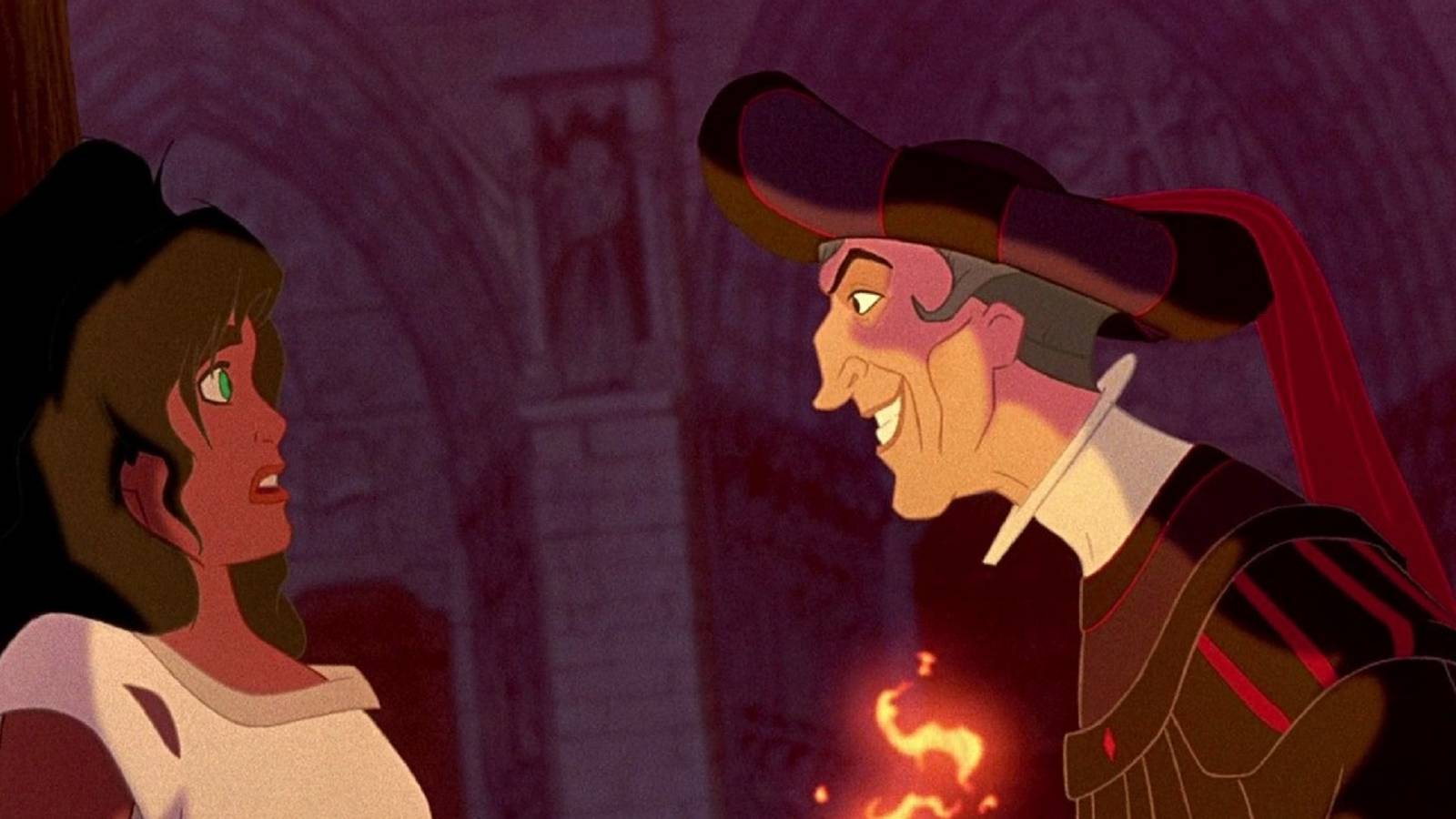
Image via Walt Disney Studios Motion Pictures Published Nov 17, 2026, 6:21 PM EST Jessica is a young writer from Brisbane, Australia. An avid consumer and lover of all things Film and TV, you will never tear her away from a screen. A tendency rooted from childhood, she once had dreams of becoming a member of the famed kids-band 'Hi-5'. Perhaps that's what pushed her to secure an education with a theater background. But now, as dreams evolved, her passions have turned to admiring performances from afar. Frankly, she's just grateful that she can put her binging skills to good use. Outside of work, Jessica recently completed her undergraduate double degree in Arts/Communications. Other than that, she spends most of her free time with family and friends, probably never forgetting to talk about the new movie or show she watched the day prior. Sign in to your Collider account There's an assumption that family movies are meant to be the safe option, whether that be from its colorful worlds, lovable characters, or stories that leave you feeling warm and fuzzy. But that's not always the case, as some of the films we grew up watching were considerably heavier than we might remember. From devastating losses and childhood trauma to religious persecution, and the threat of nuclear destruction, these movies tackle some surprisingly bleak subject matter without softening its blow. Sure, they might be made appropriate for younger audiences, but that doesn't mean they're afraid to break (and horrify) a few hearts along the way. To buckle up because this is going to be a heavy watch. 8 'Bambi' (1942) Image via Disney Under the watchful eye of his mother (Paula Winslowe), Bambi begins to explore the world around him, until his idyllic childhood is quickly shattered by the actions of a hunter. Now growing older, Bambi (Donnie Dunagan) must learn to navigate the dangers of the wilderness, while also learning about friendship, love, and the realities of life—alongside his companions Thumper (Peter Behn) and Flower (Stan Alexander). For a film often remembered as a sweet childhood classic, Bambi doesn't pull its punches when it comes to loss. The death of Bambi's mother remains one of Disney's most heartbreaking moments, made all the more devastating by how suddenly it happens and how little the young deer understands. It's also a surprisingly mature and profound story about growing up, with the changing seasons reflecting the joys and hardships that come with each stage of life. 7 'The Secret of NIMH' (1982) Image via MGM In Don Bluth's animated fantasy, Mrs Brisby (Elizabeth Hartman) is a widowed field mouse facing an impossible dilemma: her family must leave their home before the farmer plows the field, but her youngest son, Timothy (Ina Fried), is too sick to make the journey. Desperate to save him, she seeks help from a group of highly intelligent rats living beneath a rose bush. There's a surprising amount of darkness packed into The Secret of NIMH, from its eerie atmosphere and unsettling imagery to its exploration of grief, sacrifice, and mortality. Mrs Brisby's determination to save her family gives the story its emotional heart, but the film never pretends that doing the right thing comes without risk. Its willingness to tackle genuinely frightening ideas makes it a far more intense watch than its talking-animal premise might suggest—proving that you don't have to underestimate what younger audiences can handle. 6 'My Girl' (1991) Image via Columbia Pictures Set during the summer of 1972, 11-year-old Vada Sultenfuss (Anna Chlumsky) is a precocious hyperhondriac girl growing up in a funeral home run by her widowed father. Her closest companion is Thomas J. Sennett (Macaulay Culkin), an equally awkward boy who shares her curiosity about the world. But as Vada navigates her first crushes, family changes, and the tribulations of growing up, she's forced to confront a loss far more devastating than anything she could've imagined. My Girl is a deceptively gentle coming-of-age story that builds such a warm connection between its young characters that its emotional gut punch feels almost unfair. Chlumsky and Culkin are wonderfully natural together, capturing the innocence and intensity of a childhood friendship. But it's the film's treatment of grief that's particularly affecting because it doesn't offer easy explanations or try to make tragedy feel meaningful. Instead, it shows the messiness of a young person beginning to process something well beyond their years. 5 'Holes' (2003) Image via Disney Based on Louis Sacher's bestselling novel, Stanley Yelnats (Shia LaBeouf), a teenager who's wrongly convicted of stealing a pair of shoes, is sent to Camp Green Lake, a juvenile detention facility in the middle of the desert. There, he and the other boys are forced to dig enormous holes everyday under the watch of the intimidating Warden (Sigourney Weaver). The official explanation is that the digging builds character, but as Stanley uncovers the camp's secrets, he also begins to unravel a family curse stretching back generations. For all its quirky humor and mystery-solving, Holes has a surprisingly bleak view of justice as its characters are dealing with abandonment, prejudice, and the consequences of choices made long before they were born. Luckily, Stanley's friendship with Zero (Khleo Thomas) gives the film its emotional center, particularly as the pair find solidarity in a place designed to break them down. Consider this a clever, satisfying adventure, but one that also understands how much a little kindness and loyalty can matter in an unfair world. COLLIDERInteractive Ballot sealed Movies/Academy Awards/Best Picture Collider · Best Picture Which Oscar Best PictureIs Your Perfect Movie? Five winners · ten questions · one envelope Five Oscar Best Picture winners. Five completely different visions of what cinema can be and what it can do to you. One of them is the film made for the way your mind works, and ten questions will work out which. The nominees 2020Parasite 2023Everything Everywhere All at Once 2024Oppenheimer 2015Birdman 2008No Country for Old Men Open the envelope Question 01 of 10TONE 01 What kind of film experience are you really after? The best movies do not just entertain. They leave something behind. ASomething that pulls the rug out, that makes me think I am watching one kind of film and then reveals I am watching another entirely. BSomething overwhelming: funny, sad, absurd and genuinely moving, all at once. CSomething grand and weighty, a film that makes me feel the full scale of what I am watching. DSomething formally daring, a film that pushes what cinema can even do. ESomething lean and relentless, pure tension with no wasted frame. ← Back Keys 1 to 5 or A to E · Enter to advance Next Question 02 of 10THEME 02 Which idea grabs you most in a film? Great films are driven by a central obsession. What is yours? AClass, inequality, and what people are willing to do when desperation meets opportunity. BIdentity, family, and the chaos of holding your life together while everything falls apart. CGenius, moral responsibility, and the catastrophic weight of a decision you can never take back. DEgo, legacy, and the terror of becoming irrelevant while you are still alive to watch it happen. EEvil, chance, and whether moral order exists at all or we just tell ourselves it does. ← Back Keys 1 to 5 or A to E · Enter to advance Next Question 03 of 10STRUCTURE 03 How do you like your story told? Form is content. The way a story is shaped changes what it means. AGenre-twisting. I want it to start in one lane and migrate into something completely different. BMaximalist and genre-blending: comedy, action, drama and sci-fi in one ride. CEpic and non-linear, cutting between timelines to build a mosaic of cause and consequence. DA single unbroken flow. I want to feel like I am living it in real time with no cuts to safety. ESpare and precise, every scene doing exactly what it needs to do and nothing more. ← Back Keys 1 to 5 or A to E · Enter to advance Next Question 04 of 10VILLAIN 04 What makes a truly great antagonist? The opposition defines the protagonist. What kind of opposition fascinates you? AA system: invisible, structural, and almost impossible to fight because it has no single face. BThe self, and the ways we sabotage, abandon and fail the people we love most. CHistory, and the unstoppable momentum of events no single person can stop or redirect. DThe industry, the machinery of culture that chews up talent and spits out irrelevance. EPure, implacable evil, a force so certain of itself it becomes almost philosophical. ← Back Keys 1 to 5 or A to E · Enter to advance Next Question 05 of 10ENDING 05 What do you want from a film's ending? The final note is the one that lingers. What do you want it to sound like? AShock and inevitability, a conclusion that recontextualizes everything before it. BEarned emotion. I want to cry, laugh and feel hopeful, even if the world is a mess. CDevastation and grandeur, an ending that leaves me sitting in silence for a few minutes. DAmbiguity, something open enough that I am still turning it over days later. EBleakness, an honest refusal to pretend the world is tidier than it is. ← Back Keys 1 to 5 or A to E · Enter to advance Next Question 06 of 10WORLD 06 Which setting pulls you in most? Where a film takes place shapes everything: mood, stakes, what is even possible. AA gleaming modern city with a hidden underside, beauty masking rot and wealth masking desperation. BA collapsing suburban life that opens onto something infinite, the multiverse inside one ordinary person. CThe corridors of power and science at a world-historical turning point, where decisions echo for decades. DThe grimy, alive chaos of New York and Hollywood, fame as both destination and trap. EVast, indifferent landscape, desert and highway where violence arrives without warning or reason. ← Back Keys 1 to 5 or A to E · Enter to advance Next Question 07 of 10CRAFT 07 What cinematic craft impresses you most? Every great film has a signature, the element that makes it unmistakable. AProduction design and mise-en-scène, every frame composed to carry meaning beneath the surface. BEditing and tonal control, the ability to move between registers without losing the audience. CScore and sound design, music that becomes inseparable from the dread and awe of what you see. DCinematography as performance, the camera not recording events but taking part in them. ESilence and restraint, what is left unsaid doing more work than any dialogue could. ← Back Keys 1 to 5 or A to E · Enter to advance Next Question 08 of 10PROTAGONIST 08 What kind of main character do you root for? The protagonist is the lens. Who you follow says something about you. ASomeone smart and resourceful who makes increasingly dangerous decisions under pressure. BSomeone overwhelmed and ordinary who turns out to be capable of something extraordinary. CA brilliant, tortured figure whose gifts and flaws cannot be separated from each other. DA self-destructive artist whose ego is both their superpower and their undoing. EA quiet, principled person trying to make sense of a world that has stopped making sense. ← Back Keys 1 to 5 or A to E · Enter to advance Next Question 09 of 10PACE 09 How do you feel about a film that takes its time? Pace is a choice. Some films sprint. Others let tension accumulate slowly, deliberately. AI love a slow build when the payoff is going to be seismic. Patience for a devastating reveal. BGive me relentless momentum. I want to feel breathless and emotionally spent by the end. CEpic runtime does not scare me. If the material demands three hours, give me three hours. DI want it propulsive even when nothing is technically happening, restless energy throughout. EDeliberate and unhurried. I want dread to accumulate in the spaces between the action. ← Back Keys 1 to 5 or A to E · Enter to advance Next Question 10 of 10AFTERMATH 10 What do you want to feel walking out of the cinema? The best films leave a mark. What kind of mark do you want? AUnsettled, like I have just seen something I cannot fully explain and cannot stop thinking about. BMoved and energized, like the film reminded me what matters and gave me something to hold onto. CHumbled, like I have been in the presence of something important and overwhelming. DExhilarated, like I have just watched cinema do something it has never quite done before. EHaunted, like a cold, quiet dread that stays with me for days. ← Back Keys 1 to 5 or A to E · Enter to advance Reveal my film The envelope, pleaseAnd the Oscar goes to ★ Best Picture, 2020 Parasite Bong Joon-ho, 2019 A film that hides its true intentions until the moment it is ready to reveal them. You are drawn to films that operate on several levels at once, that begin in one genre and quietly, brilliantly migrate into another. Bong Joon-ho's Parasite is a film about class, desire and the architecture of inequality that manages to be darkly funny, deeply suspenseful and genuinely shocking across a single extraordinary running time. Your instinct is for cinema that rewards close attention and punishes assumptions, right up to its devastating final image. From the Collider file The first film not in the English language to win Best Picture, in the Academy's 92-year history to that point. It took four Oscars in one night: Picture, Director, Original Screenplay and International Feature. It won the Palme d'Or at Cannes in 2019 by a unanimous jury vote, the first Korean film to do so. The Park family's modernist house was not a location. It was built from scratch on an outdoor lot. Reads between the lines Loves a reveal Attention to detail ★ Best Picture, 2023 Everything Everywhere All at Once Daniel Kwan and Daniel Scheinert, 2022 A film that refuses to choose between being entertaining and being meaningful. You want it all, and this one gives you all of it. The Daniels' Everything Everywhere All at Once is among the most maximalist films ever made: action comedy, multiverse science fiction, family drama, existential crisis, and an emotional core that sneaks up on you in the middle of the chaos. You respond to ambition. Being overwhelmed is the design, not the side effect, because the feeling of being crushed by infinite possibility is exactly what the film is about. From the Collider file Seven Oscars, including three acting wins for Michelle Yeoh, Ke Huy Quan and Jamie Lee Curtis. Michelle Yeoh became the first Asian woman to win Best Actress. The visual effects were handled by a team of fewer than ten people, most of them self-taught. Ke Huy Quan had all but left acting for two decades before this role brought him back. Wants everything Big swings Soft center ★ Best Picture, 2024 Oppenheimer Christopher Nolan, 2023 A film about the gap between what we can do and what we should do. You are drawn to cinema on a grand scale, films that treat history not as a backdrop but as a force, then place their characters inside that force and watch what happens. Christopher Nolan's Oppenheimer sits inside one of the most consequential moments in human history and refuses to look away from it. You want your films to feel important without being self-important, earning their ambition through craft and the gravity of the subject. This one is enormous, complicated, and offers no easy comfort. From the Collider file Seven Oscars, including Nolan's first wins for directing and for Best Picture. Cillian Murphy and Robert Downey Jr. both took their first Academy Awards for it. Kodak engineered a black-and-white 65mm stock that did not previously exist so Nolan could shoot those sequences on IMAX. A three-hour, R-rated drama about theoretical physics that passed 950 million dollars worldwide. Thinks in decades Scale and weight No easy comfort ★ Best Picture, 2015 Birdman Alejandro G. Iñárritu, 2014 A film doing something that probably should not be possible. You are drawn to films that foreground their own construction, where the how of the filmmaking becomes part of the what it is about. Alejandro G. Iñárritu's Birdman, stitched to appear as one continuous take, is cinema examining itself through the cracked mirror of a fading actor's ego. You respond to formal daring. Michael Keaton's performance and Emmanuel Lubezki's restless camera make something unlike anything else: a film about creativity, relevance, self-destruction and never quite knowing whether your work means anything at all. From the Collider file Four Oscars, among them Best Picture and Best Director for Iñárritu. Emmanuel Lubezki's win here was the middle of three consecutive cinematography Oscars, after Gravity and before The Revenant. Antonio Sánchez's improvised drum score was ruled ineligible for the score category, which caused a minor uproar. The long-take illusion was built from a handful of extended shots joined by hidden cuts. Formally daring Camera as character Ego and art ★ Best Picture, 2008 No Country for Old Men Joel and Ethan Coen, 2007 A film that treats dread as a form of meaning. You are drawn to cinema that trusts silence, refuses to explain itself, and lets unease do the talking. The Coen Brothers' No Country for Old Men is about the arrival of a new kind of evil: implacable, arbitrary, and indifferent to the moral frameworks we use to make sense of things. It is one of the most tightly controlled films ever made, and that control is the source of the terror. You want your films to haunt you rather than comfort you, and you have no interest in a resolution that would be a lie. From the Collider file Four Oscars: Picture, Director, Adapted Screenplay, and Supporting Actor for Javier Bardem. Adapted from Cormac McCarthy's 2005 novel, with much of his dialogue carried over intact. Carter Burwell's score runs about sixteen minutes and is nearly inaudible by design. Roger Deakins was nominated twice that year, for this and The Assassination of Jesse James, and won for neither. Trusts silence Dread over answers No tidy endings Ballot tally · your top three 1 2 3 ↻ Retake the quiz Copied to your clipboard Ballot counted byCOLLIDERCollider.com · The Awards Desk 4 'The Hunchback of Notre Dame' (1996) Image via Walt Disney Studios Motion Pictures Quasimodo (Tom Hulce) is a young man who has spent his entire life hidden away in the bell tower of Paris' Notre Dame Cathedral. Raised by the treacherous Judge Claude Frollo (Tony Jay), who convinces him that the outside world will reject him because of his appearance, Quasimodo longs to experience life beyond the cathedral walls. Thankfully, the Festival of Fools takes place, where he finally ventures into the city and befriends Esmerelda (Demi Moore), a Romani dancer whose compassion challenges everything he's been taught about the world and those within it. As one of Disney's darkest films, The Hunchback of Notre Dame tackles prejudice, religious hypocrisy, persecution, and the abuse of power with a seriousness that still sets it apart from the studio's other family classics. All of this stems from the chilling villain Frollo, whose treatment of Quasimodo remains a sustained exercise in emotional abuse, while his persecution of the Romani people escalates into imprisonment, torture, and genocide. Even its final show-stopping number becomes an unsettling exploration of lust and self-righteous cruelty, making the film's dark themes hard to miss. 3 'The Iron Giant' (1999) Image via Warner Bros. Pictures Set in 1950s America at the height of Cold War paranoia, young Hogarth Hughes (Eli Marienthal) discovers a gigantic robot that has crash-landed near his small town. And despite its enormous size and mysterious origins, the Giant (Vin Diesel) is gentle and curious, leading the two to quickly form an unlikely friendship. But when a government agent becomes convinced the machine is a threat to national security, Hogarth must find a way to protect his new friend before fear and suspicion turn into something much more dangerous. Beneath its charming adventure lies a surprisingly moving story about identity, empathy, and the choice between destruction and compassion. Sure, The Giant may have been built as a weapon, but Hogarth teaches him that he doesn't have to be defined by what he was made to do. That message gives the film a powerful emotional core, particularly as the threat of nuclear war hangs over the story. Its final moments are among the most affecting in animated cinema, proving that even a giant robot can deliver one of the most human tales about sacrifice and love. 2 'The Prince of Egypt' (1998) Image via DreamWorks Pictures DreamWorks' epic animated musical retells the biblical story of Moses (Val Kilmer), who is raised as an Egyptian prince alongside his brother Rameses (Ralph Fiennes), both unaware of his true heritage. But when he discovers the truth about his birth and the suffering of his people under Egyptian rule, Moses leaves the palace and eventually returns with a divine mission: to convince Rameses to free the enslaved. For a so-called family film, The Prince of Egypt doesn't soften the brutality of the story it tells. For one, its opening depicts soldiers tearing infants from their mothers and throwing them into the Nile, while the eventual plagues bring increasingly devastating consequences, including the deaths of Egypt's firstborn children. The spectacle is truly impressive, but the film's real weight comes from the personal cost of the conflict, particularly the painful divide between Moses and Rameses. There's no doubt that this is an ambitious family film that takes the themes of faith and suffering very seriously. 1 'Bridge of Terabithia' (2007) Image via Disney Based on Katherine Paterson's classic novel, Jess Aarons (Josh Hutcherson) is a lonely young boy who struggles to fit in at school and feels overlooked at home. But his life changes when he befriends Leslie Burke (AnnaSophia Robb), a new girl with a vivid imagination and a knack for seeing magic in the ordinary. Together, they create an imaginary kingdom called Terabithia, where they can escape their everyday troubles and become the heroes of their own adventure. Sadly, their friendship is put to the ultimate test when tragedy strikes. What makes Bridge to Terabithia so heartbreaking is the way it captures the intensity of childhood friendship before suddenly confronting its audience with a devastating loss. What can we say? The film's reputation for making audiences cry is well-earned as it beautifully showcases grief from a child's perspective. By allowing Jess to struggle with guilt and anger, the story doesn't offer an easy way out. As a result, Terabithia becomes more than an imaginary escape—it's a way for Jess to hold onto his friend and carry something of her with him. What a devastating reminder that childhood doesn't always protect you from utter heartbreak.
The 8 Heaviest Family Movies, Ranked
Full Article
Original Source
Read the full article at Collider →KhanList aggregates and links to publicly available news content. We do not host full articles from third-party sources. Always verify important information with original sources.