
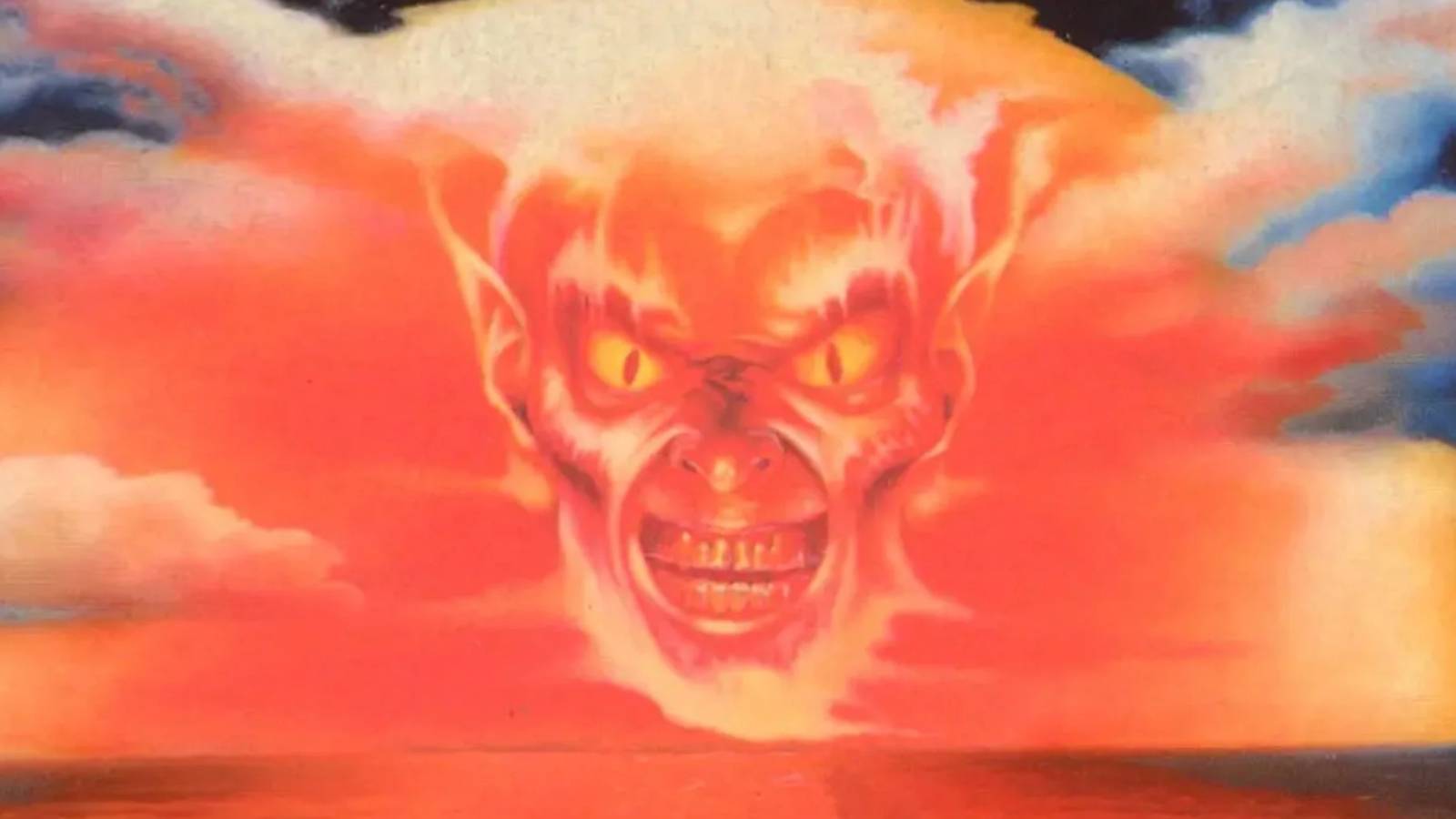
Image via Pocket Books Published Oct 26, 2026, 1:14 PM EDT Jeremy has more than 2800 published articles on Collider to his name, and has been writing for the site since February 2022. He's an omnivore when it comes to his movie-watching diet, so will gladly watch and write about almost anything, from old Godzilla films to gangster flicks to samurai movies to classic musicals to the French New Wave to the MCU... well, maybe not the Disney+ shows. His favorite directors include Martin Scorsese, Sergio Leone, Akira Kurosawa, Quentin Tarantino, Werner Herzog, John Woo, Bob Fosse, Fritz Lang, Guillermo del Toro, and Yoji Yamada. He's also very proud of the fact that he's seen every single Nicolas Cage movie released before 2022, even though doing so often felt like a tremendous waste of time. He's plagued by the question of whether or not The Room is genuinely terrible or some kind of accidental masterpiece, and has been for more than 12 years (and a similar number of viewings). When he's not writing lists - and the occasional feature article - for Collider, he also likes to upload film reviews to his Letterboxd profile (username: Jeremy Urquhart) and Instagram account. He has achieved his 2025 goal of reading all 13,467 novels written by Stephen King, and plans to spend the next year or two getting through the author's 82,756 short stories and 105,433 novellas. Sign in to your Collider account Plenty of horror books prove scary without having any fantastical or sci-fi elements, and then there are also, perhaps even more obviously, fantasy books that don’t count as works of horror, even if they might have frightening or horrific situations. Take A Song of Ice and Fire, for example, because there are things that happen in some of those books that are more upsetting than most works of horror, but it’s still largely fantasy. If the final books ever come out, and the White Walkers end up being an extended threat in one of them, then perhaps that one might be classifiable as horror. But the following titles are some of the best fantasy horror books of all time, with extra points given, in effect, for those that most evenly balance those two genres. A few here might lean more toward fantasy than horror, or vice versa, but if there are enough identifiable elements from both genres, and the work itself holds up when judged as either a fantasy or horror book, then it’s probably worth including. 8 'Interview with the Vampire' (1976) Image via Macdonald Raven UK Maybe Interview with the Vampire lives in the shadow of another vampire book (that, don’t worry, will be mentioned later), but so too does almost every vampire book that isn't, uh, that one. But it’s worth including this one because it’s quite heavy on fantasy elements and isn't solely about being frightening the way a good many books, TV shows, and movies about vampires are. Admittedly, some vampire-related stories venture even further away from horror (Twilight, of course, which remains hard to ignore), but Interview with the Vampire does have a balance, and so here it is. There’s also a whole series of books written by Anne Rice, of which this one is the first, yet as is often the case, this initial one does stand as the most iconic and essential of the bunch. 7 'Swan Song' (1987) Image via Pocket Books Robert R. McCammon is one of the more underrated horror writers out there, and even if he’s got a few misses under his belt, the hits make him worth getting familiar with if you enjoy books that aim to frighten. His best achievement to date also happens to cross over into the fantasy genre: Swan Song, which is more dark fantasy than most books about surviving the end of the world, since a lot of post-apocalyptic fiction crosses over into sci-fi territory. The conflict here is ultimately quite epic in scope, which is likely the thing that’s made it difficult to adapt over the years (though for what it’s worth, it is cinematic and would make for a good movie or miniseries, if handled properly). This book’s huge, being almost 1000 pages in length, and the conflict here is ultimately quite epic in scope, which is likely the thing that’s made it difficult to adapt over the years (though for what it’s worth, it is cinematic and would make for a good movie or miniseries, if handled properly). The dark fantasy, post-apocalypse, and horror elements all make it comparable to another epic that was published about a decade earlier than Swan Song, admittedly, but don’t worry… that one will be gotten to shortly. 6 'King Sorrow' (2025) Image via Cemetery Dance Publications Of all the books here, King Sorrow probably feels the most like classic fantasy, but it sets itself apart from a lot of fantasy by not feeling old-fashioned setting-wise. It’s almost contemporary fantasy, because the plot here begins in the late 1980s and then spans many years going forward, but it’s also about a dragon and its connection to some kind of more outwardly fantastical realm, so the contrast and style here is interesting, to say the least. King Sorrow functions as something of an epic because it balances a fair few characters and also covers a good deal of time. It keeps the pace going well throughout, which is definitely needed when the book itself is so long. Thankfully, King Sorrow is pretty effortless for a long read, and is worth checking out because of the interesting spin it puts on some fantasy conventions, all the while having a decent amount by way of horror sprinkled throughout, too. 5 'Something Wicked This Way Comes' (1962) Image via Simon & Schuster If you’ve just read one Ray Bradbury book, it’s probably the dystopian Fahrenheit 451, but if you’ve read two Ray Bradbury books, they're probably Fahrenheit 451 and Something Wicked This Way Comes. They're both very well-told stories belonging to different genres, since the latter isn't sci-fi-related, and is instead a quintessential dark fantasy novel that gets dark enough at some points to also qualify as a horror book. As for the basic plot, Something Wicked This Way Comes focuses on a pair of young boys who find their lives turned upside down and endangered by a particularly bizarre traveling carnival that comes through their town. It’s compelling and engaging on one level, and then, as is the case with lots of Bradbury’s work, there’s quite a bit more to uncover if you want to go digging and get analytical with the whole thing. 4 'The Dark Tower VII: The Dark Tower' (2004) The seventh book in The Dark Tower series concludes the whole thing in a grand and somewhat unconventional way, with certain things here being divisive, even compared to other Stephen King books. But King always writes like King, staying true to himself to a fault, and this does feel like how he always wanted to end his iconic series; one that, it should be stressed for present purposes, crosses over into so many different genres throughout. The series, to simplify things, is about a man named Roland trying to reach the titular Dark Tower, and he ventures across a strange landscape (and into some other worlds) to find companions and further his quest. Sure, you need the other six main books in the series to fully appreciate this one, so consider them honorably mentioned… though it’s The Dark Tower VII that most captures the overall potential of the series, standing as its most impactful entry, and having the most by way of memorable (and unusual) fantasy elements alongside some genuinely horrific and upsetting stuff, too. 3 'Dracula' (1897) Image via Penguin Classics It’s cool how you can go back so far in time and still find so essential a work of horror, with Dracula being something published in the 19th century. And sure, Dracula is now well-known because of various adaptations, but this novel existed before feature films were even really a thing, and so that is a testament to how much of an obvious classic this vampire book to end all vampire books is. Well, that’s a fairly silly thing to say from a certain point of view, because Dracula was more or less the start of all vampire books, definitely having an influence on the previously mentioned Interview with the Vampire and so many other works of horror. It’s at least the start of vampire fiction as it’s currently understood, a little like how George A. Romero’s Night of the Living Dead (1968) birthed the zombie genre as it’s now understood and appreciated, even if some works of horror made before 1968 used the word “zombie.” 2 'House of Leaves' (2000) Image via Doubleday While something like King Sorrow was probably more fantasy-focused than horror-heavy, House of Leaves is admittedly something that fits more neatly into the horror genre than the fantasy one. That being said, any opportunity to talk about it is worth taking, and also, this book’s so ambitious and willing to take on so many genres that it definitely has fantasy elements at points, with the horror being otherworldly and not really science fiction-related, even if some of the analysis of certain horrors gets technical in an almost hard sci-fi sort of way. There’s also a large part of House of Leaves that concerns a Minotaur, or some creature like a Minotaur, and so you’ve got that and other allusions to mythology and (in effect) ancient/classic fantasy. But then you can also push a bit further and say House of Leaves is so much more than a horror book, because it is, being about as postmodern as postmodern books get, potentially even satirizing horror to some extent while definitely trying to prove emotions other than fear at other points. It’s an incredible and mind-bending book, and one that’s always worth preaching about, to be perfectly honest. 1 'The Stand' (1978/1990) Image via Doubleday Books The Stand was alluded to earlier when talking about Swan Song, since it’s got a very similar premise, though it did come first (unless you're talking about the uncut version of The Stand, since that was published in 1990). It’s more self-contained, obviously, than any of the individual books in The Dark Tower series, so it feels most worthy of highlighting here, as Stephen King’s best single book that blends together horror and fantasy quite perfectly. There are other genres here as well, since The Stand has some adventure elements, and then other parts of the novel are a little less narrative and conflict-focused, working as almost drama/slice-of-life chapters about a different sort of life, because so much was disrupted and ended by a deadly flu outbreak (which is the main difference between it and Swan Song, with the end of the world coming about there because of nuclear war). Anyway, The Stand is so impressive as an epic, and the kind of thing where just calling it a dark fantasy and/or horror book is underselling it, simply because of how much it manages to do across all its many pages. The Stand Release Date 1994 - 1994-00-00 Directors Mick Garris
The 8 Best Fantasy Horror Books of All Time, Ranked
Full Article
Original Source
Read the full article at Collider →KhanList aggregates and links to publicly available news content. We do not host full articles from third-party sources. Always verify important information with original sources.