
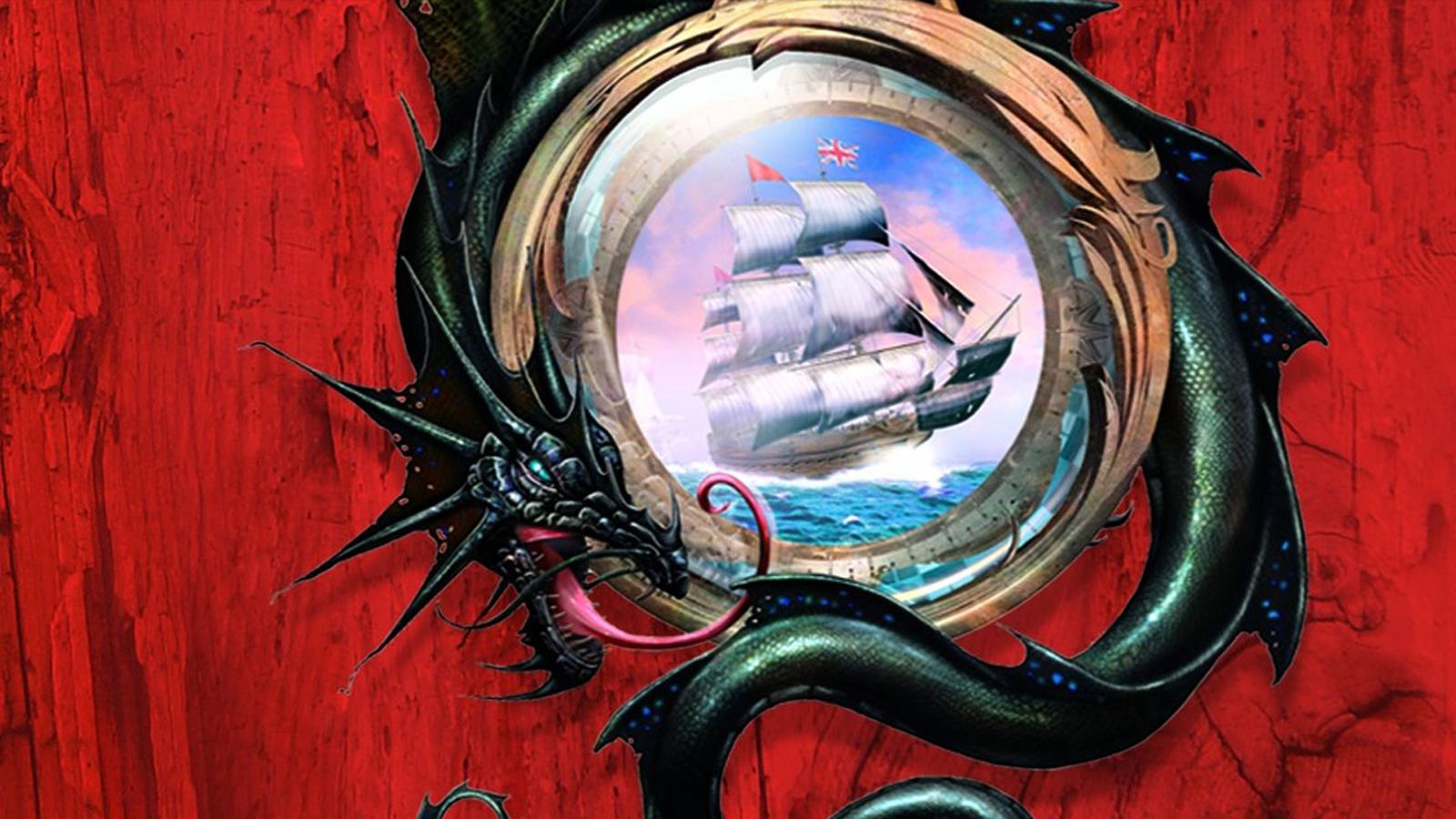
Image via Del Rey/Voyager Published Nov 16, 2026, 7:51 AM EST Luc Haasbroek is a writer and videographer from Durban, South Africa. He has been writing professionally about pop culture for eight years. Luc's areas of interest are broad: he's just as passionate about psychology and history as he is about movies and TV. He's especially drawn to the places where these topics overlap. Luc is also an avid producer of video essays and looks forward to expanding his writing career. When not writing, he can be found hiking, playing Dungeons & Dragons, hanging out with his cats, and doing deep dives on whatever topic happens to have captured his interest that week. Sign in to your Collider account Fantasy doesn't always have to revolve around castles, kingdoms, and sword-wielding knights. Flintlock fantasy takes the genre into a more technologically advanced era, inspired by the 17th, 18th, and early 19th centuries, when firearms were transforming warfare and political revolutions were reshaping entire societies. These novels combine gunpowder weapons and industrial innovation with traditional fantasy elements such as sorcery and mythical creatures. Their worldbuilding tends to draw on the Age of Exploration, the Enlightenment, the American and French Revolutions, or the Napoleonic Wars, and the plots tend to have a military and political focus. These are the best books in the Flintlock subgenre, proving that it's a subgenre full of endless possibility. 7 'The Waking Fire' (2016) Image via Orbit "True change has never been bloodless." In this one, the first of a trilogy, we're transported to a society where the blood of dragons possesses extraordinary properties, allowing certain individuals known as the Blood-blessed to perform supernatural feats. These abilities have become essential to commerce and warfare, with powerful trading companies competing to control the increasingly scarce dragon blood supply. The blood is kind of like the spice in Dune, the way it warps culture and politics. Against that backdrop, petty thief Claydon Torcreek is recruited for a dangerous expedition into unexplored territory, while highly skilled corporate agent Lizanne Lethridge undertakes an undercover mission, and Corrick Hilemore, the second lieutenant of an ironship, pursues brigands. Together, these characters give us an expansive understanding of its fictional world. That said, the action sequences are probably the highlight, combining espionage and naval combat, guns and blood magic. 6 'The Thousand Names' (2013) Image via Roc "Can you be haunted by someone who isn't dead?" Django Wexler has written many solid fantasy books, including some for Dungeons & Dragons and Magic: The Gathering. Ranking among the best of them, The Thousand Names is the opening entry in his Shadow Campaign series, which draws heavily from the Napoleonic era. It focuses on the soldiers of the Vordanai army stationed in a distant colonial territory. After a rebellion forces the surviving troops into retreat, the enigmatic Colonel Janus promises to transform their fortunes. Among the soldiers serving under his command is Winter Ihernglass, a woman who has disguised herself as a man to escape her troubled past. Meanwhile, the ambitious officer Marcus d'Ivoire struggles to understand the increasingly unconventional strategies employed by his brilliant new commander. While the plot is juicy, the book ultimately stands out thanks to its unusually meticulous treatment of military organization and battle tactics. 5 'The Alloy of Law' (2011) Image via Tor Books "Doesn't matter how good your bullets are if you don't aim carefully." The Alloy of Law is set 300 years after author Brandon Sanderson's bestseller Mistborn, retaining that book's magic system (which involved "burning" certain metals for special powers) but surrounding it with a world inspired by the Wild West and the Industrial Revolution, all gun-slinging and train robberies. The main character is Waxillium Ladrian, a nobleman who has spent years working as a lawman in the frontier territories. Following a personal tragedy, Wax returns to the bustling city of Elendel to assume responsibility for his family's declining fortunes, only to find himself up against a dangerous criminal organization. Fortunately, he's no pushover. Wax's unusual combination of powers allows him to manipulate metal and alter his weight. This means he can deflect incoming bullets, launch himself across rooftops, and alter the momentum of his own shots midair. Needless to say, his abilities make for some cool gunfights. 4 'Guns of the Dawn' (2015) Image via Tor UK "The secret of gunpowder is that anyone—a man, a woman, a child, a cripple—can kill with it." Guns of the Dawn is a brutal standalone novel by author Adrian Tchaikovsky, perhaps best known for writing the masterful sci-fi novel Children of Time. It centers on Emily Marshwic, a young woman from a respectable family in the kingdom of Lascanne. When a devastating war against the neighboring nation of Denland breaks out, Emily is conscripted, forced to abandon her comfortable existence and confront the horrors of the frontline. From here, the book nimbly fuses a Regency-era comedy of manners with gritty black-powder warfare, kind of like Jane Austen meets military fantasy. The tale takes us from drawing rooms and rolling estates to war-torn swamps ringing with the crack of muskets and the thud of artillery, the bite of a bayonet never far away. 3 'His Majesty's Dragon' (2006) Image via Penguin Random House "I am beginning to feel the need of a glass of wine to fortify myself against this conversation." This gem reinterprets the Napoleonic Wars by introducing dragons into the armies of Europe's competing empires. The plot follows William Laurence, a disciplined British naval captain whose life changes dramatically after his crew captures a French vessel carrying an extraordinarily valuable dragon egg. When the creature hatches, Laurence unexpectedly forms a bond with the young dragon, whom he names Temeraire. This development forces him to abandon his promising naval career and join Britain's Aerial Corps, where dragons and their human crews play an essential role in defending the country against Napoleon. Adding dragons to any setting generally makes it more fun, but here author Naomi Novik's does so without sacrificing all that much historical authenticity. Indeed, the social conventions and military hierarchies of the era still feel real and well-researched. Collider Exclusive · 8 Questions · 2 Minutes What Fantasy World Do You Belong To? Middle-earth · Grand Line · The Continent · Camp Half-Blood Pick your magic, your crew, where you want to wake up and who you would rather be fighting, and we will tell you which world you actually belong in. Four are open to you: an ancient kingdom living through its last good age, an endless sea full of pirates, a continent that pays people to kill monsters, and a summer camp where the Greek gods are extremely real and mostly a nuisance. 💍Middle-earth(Rings of Power) 👒Grand Line(One Piece) 🐺The Continent(The Witcher) 🔱Camp Half-Blood(Percy Jackson) FIND YOUR WORLD → 01 What kind of power do you want? Every one of these worlds runs on a completely different sort of magic. ASomething ancient and half forgotten that came down through my family. BSomething completely ridiculous that works in a fight and gets a laugh. CNo magic at all, just training, potions and a very sharp sword. DSomething I inherited from a parent I have barely met. NEXT QUESTION → 02 Who is travelling with you? Nobody gets through any of these stories entirely on their own. AA fellowship drawn from every corner of the world who barely trust each other. BA crew I picked up one at a time, all of whom would die for me. CTwo or three people I would never describe out loud as friends. DTwo mates from school who are exactly as out of their depth as I am. NEXT QUESTION → 03 Where do you want to wake up tomorrow? The best fantasy is usually just somewhere you would genuinely like to live. AA high city of white stone with the sea somewhere far below. BA ship under sail, with an island ahead that nobody has mapped. CA rented room over a tavern, in a town I am leaving in the morning. DA cabin at a summer camp with everybody else already awake outside. NEXT QUESTION → 04 How are you making a living out there? Even in fantasy somebody has to pay for the horse. AI am not, because somebody far older than me decided this was my duty. BTreasure, and I am not always careful about whose it used to be. CI take contracts, since people will pay well for what they will not touch. DI am fifteen and this is all technically a school trip. NEXT QUESTION → 05 There is something in the woods. What do you do about it? All four of these worlds keep something unpleasant out there in the dark. ASend word to somebody who has seen this before, then hold the line. BWalk straight in, because it is interesting and possibly edible. CAsk what it has been eating and what the village is willing to pay. DWork out which myth it escaped from, then improvise very badly. NEXT QUESTION → 06 Who is the villain of your story? The enemy tells you far more about a world than the hero ever does. AAn ancient evil that has been patient for several thousand years. BA government that has spent a long time calling itself the good guys. CA man who turns out to be far worse than anything I hunt for money. DA god, or possibly my own family, and quite likely both at once. NEXT QUESTION → 07 What do you actually believe in out there? Every world hands its heroes one rule and asks them to hold onto it. ASome things are worth defending even when the odds are hopeless. BNobody gets to tell me where I can go or what I am allowed to want. CPick the lesser evil, and never pretend afterwards that it was not evil. DMy friends come before anything a prophecy has to say about it. NEXT QUESTION → 08 A thousand years from now, how are you remembered? Eight questions in, this is the one that decides your world. AIn a song, in a language hardly anybody still speaks. BAs the one who got there first and proved the whole thing was possible. CBarely, and mostly wrongly, in ballads I would absolutely hate. DOn a plaque at a camp, read by kids about to do the same thing. REVEAL MY WORLD → The Map Is Drawn Your World Is…Four worlds and four completely different ideas of what a good life looks like. This is where you belong, what it would ask of you, and what you would get back in return. Middle-earthYou belong somewhere old enough that the mountains have names and somebody can still tell you who gave them. Middle-earth is for people who think the right thing is worth doing even when it will not be finished in their lifetime. This is the only world on the list where doing good is understood as a very long defeat, fought anyway, by people who will never see how it ends. You are drawn to grandeur, to white cities and deep forges and the sense that almost everything you touch is older than your entire family line. The Rings of Power is set in the last good age before it all goes wrong, which gives every quiet scene in it a slightly unbearable weight. You would take the hard road, and you would take it on foot. The Grand LineYou want the sea, a crew, and absolutely nobody telling you where you are allowed to go. The Grand Line is the world for people whose main ambition in life is finding out what is over there. One Piece has run for decades on one very simple engine, which is a group of people who each want something impossible and have decided to go and get it together. You collect people. Your ideal crew is a set of misfits who were each written off somewhere else before you turned up and offered them a better idea. The world is enormous and deliberately ridiculous, and the emotional gut punches land harder because of that rather than in spite of it. You would set sail knowing the map runs out, which is more or less the entire point of it. The ContinentYou would rather be feared and useful than liked and useless. The Continent is a world where the monsters are the straightforward part of the job and the people are where it all gets complicated. Witchers get paid to do what nobody else will and resented for existing at all, which is a trade most people would refuse and you would probably accept. You have no real illusions about which side is the good one, largely because on the Continent that question tends to have a disappointing answer. The best of these stories are not about the fighting. They are about somebody with a rigid code being repeatedly cornered into caring about people. You would take the coin, finish the job properly, and be out of town before the story got told wrong. Camp Half-BloodYou want the myths to be real and loose in the actual world, and you want to find out at about thirteen that you were never anywhere near as ordinary as everybody kept telling you. Percy Jackson takes the oldest stories we have and drops them into car parks and diners, which makes the gods considerably funnier and a great deal worse. You would be the kid every school gave up on, who turns out to have been built for something nobody thought to test for. The series is genuinely about friendship rather than destiny, and it says so out loud every time a prophecy tries to get in the way. Camp Half-Blood is the real fantasy here: a place where the thing that made you difficult everywhere else is the thing that makes you belong. ↻ RETAKE THE QUIZ 2 'Promise of Blood' (2013) Image via Orbit "Age is no guarantee of maturity." Promise of Blood is a combustible mix of adventure, revolution, elaborate magic systems, and hard-hitting gunpowder warfare. Kicking off the Powder Mage trilogy, it begins with Field Marshal Tamas orchestrating a bloody coup against the monarchy of Adro, overthrowing (and executing) the country's sorcerous elite. However, the revolution quickly creates new dangers, including political instability, foreign intervention, and even the possibility of divine retribution. As Tamas attempts to consolidate his authority, his son Taniel, a talented powder mage, becomes involved in a deadly investigation, while retired investigator Adamat uncovers conspiracies threatening the fragile new government. The politics and intrigue are compelling, and the magic system is entertaining, too. Unlike traditional wizards, powder mages ingest or snort black powder to enter an addictive "powder trance" that grants superhuman strength and heightened senses, letting them extend rifle ranges far beyond normal limits and even curve bullets with their mind. 1 'Jonathan Strange & Mr Norrell' (2004) Image via Bloomsbury "Can a magician kill a man by magic?" Simply put, this is one of the greatest historical fantasy novels of all time, layering ancient supernatural traditions onto Regency-era England and the Napoleonic wars. Set in an alternative version of early 19th-century Britain, the story follows Gilbert Norrell, a reclusive scholar who astonishes English society by demonstrating that practical magic still exists. His accomplishments eventually attract the attention of Jonathan Strange, a younger and considerably more adventurous magician who becomes Norrell's pupil. Eventually, their contrasting philosophies metastasize into a bitter rivalry, particularly concerning the dangerous and mysterious legacy of England's forgotten magical traditions. Writer Susanna Clarke grounds all these fantastical elements in an immersive world, richly recreating the period's social conventions. She even borrows from the prose style of the era's classic writers such as Jane Austen and Charles Dickens. Talk about ambitious.
The 7 Greatest Flintlock Fantasy Books of All Time, Ranked
Full Article
Original Source
Read the full article at Collider →KhanList aggregates and links to publicly available news content. We do not host full articles from third-party sources. Always verify important information with original sources.