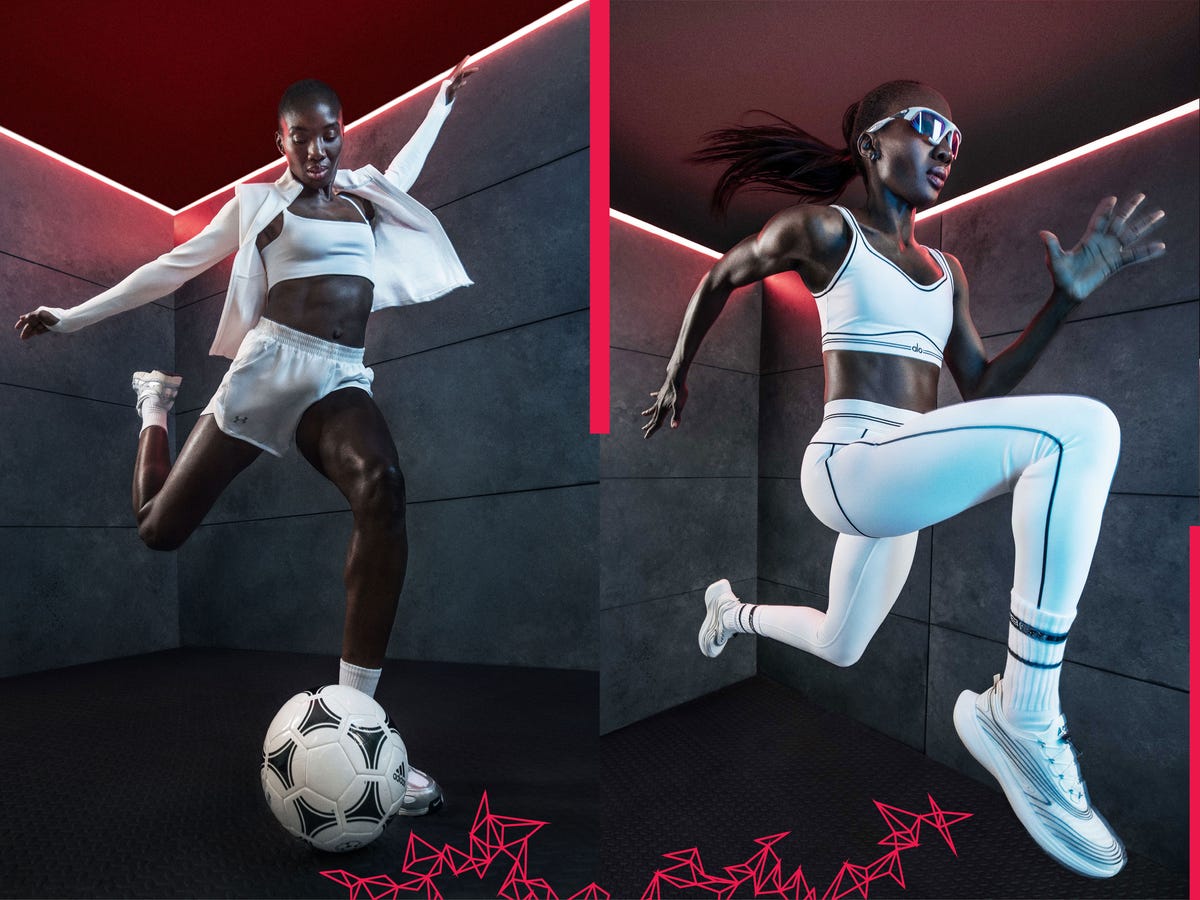
11 min readWhen Seattle Storm forward Jordan Horston tore her anterior cruciate ligament (ACL) in 2025, she knew the injury would sideline her that season. What she didn’t know was how much it would challenge every single aspect of her life.The ACL injury took Horston out of the sport for more than a year, forcing her to trade games and practices for rehabilitation and the daily struggle of rebuilding how she moved and even how she thought.“It was a lot of ups and downs,” she says.The “ups” came in the form of personal growth and a deeper understanding of her body. The “downs” were the impossibly hard, uncertain days when rehab felt overwhelming and recovery seemed too far away to ever be real. Horston admits she wasn’t fully prepared for how deeply it would test her, mentally and emotionally.At the same time, Horston’s WNBA teammate Katie Lou Samuelson was navigating a parallel experience after tearing her ACL during practice. For Samuelson, the injury came a couple years after giving birth to her daughter, leaving her wondering whether pregnancy-related physiological changes could have played a role in her injury. On Horston’s end, she happened to be on her period when she got hurt; she’s curious if her ACL tear was somehow related to the timing of her menstrual cycle. “I remember a few other people sharing their stories about being on their periods and having season-ending injuries happen to them then,” Horston says.The athletes are still searching for their answers—and may be for a while, until the field of sports science fully catches up. At the highest levels of sport, injury is inevitable. But for women like Samuelson and Horston, the risk isn’t just the game itself—it’s the lack of information.Today, women make up roughly half the population yet they remain dramatically underrepresented in sports and exercise science. Only 6 percent of published research in sports and exercise journals has focused exclusively on women, per a study published in the Women in Sport and Physical Activity Journal—a staggering gap that has implications for everything from training to recovery.Across every stage of the athlete life cycle, from preparation to performance, information is limited when it comes to understanding women’s bodies. Sports professionals are often forced to rely on data that was never designed for female athletes in the first place (and mainly collected from male subjects).The consequences are playing out in real time across women’s sports.Cory VanderploegAthleta bra; ALO shorts; PB5star socks; ON sneakers; Laura Lombardi earringsHow We Got HereIt’s been over 400 days since USC’s JuJu Watkins, one of the brightest stars in college basketball, laced up her shoes to play in a game after tearing her ACL in her right knee just five minutes into her team’s second-round game in the 2025 NCAA March Madness tournament. During the 2026 Winter Olympics, hockey star and Team USA captain Hilary Knight competed with a torn medial collateral ligament in one of her knees, while American alpine ski racer Lindsey Vonn’s leg injuries became one of the defining storylines of the Games. Five-time WNBA All-Star Napheesa Collier missed the start of the 2026 WNBA season while recovering from ankle surgery.These may seem like isolated incidents, but they’re not.Ankle sprains and stress fractures are more common in female athletes than they are in males, according to Yale Medicine. When it comes to knee injuries, women athletes are up to eight times more likely to suffer an ACL tear or sprain than men, according to a study published in the Journal of Orthopaedics, a disparity that researchers still cannot fully explain. The injury occurs when one of the knee’s primary stabilizing ligaments tears, often during a sudden pivot, stop, or landing. For athletes like Watkins, Vonn, Horston, and Samuelson, the result is often more than a year of recovery and rehabilitation.Some emerging research has explored whether hormonal fluctuations throughout the menstrual cycle may influence injury risk for women athletes, particularly when it comes to changes in estrogen and progesterone. While the theory has gained attention due to anecdotal evidence and athlete experiences like Horston’s, the science behind it is still inconclusive. And there’s still no scientific consensus that hormones directly contribute to higher rates of ACL injuries among women athletes.The result of all this uncertainty? An entire system built using limited data. Training protocols, injury prevention strategies, recovery timelines, and even equipment are developed with male bodies as the default, then applied to women later.“Female athletes are just not small male athletes,” says Elizabeth Matzkin, MD, an orthopedic surgeon and chief of women’s sports medicine at Brigham and Women’s Hospital. “We’re very different, with distinct physiology and anatomy.” (Dr. Matzkin also serves as the head team orthopedic surgeon for Boston Legacy FC in the National Women’s Soccer League, part of the club’s larger collaboration with Mass General Brigham, its official medical provider and sports medicine partner.)“Female athletes are just not small male athletes.”Dr. Matzkin cites limited information regarding a woman’s menstrual cycle as one of the key reasons for the staggering gender gap in sports medicine. “When researchers thought about the menstrual cycle, it was just a confounding variable,” she says. “It just made their studies more complicated and more expensive or more complex, so they just avoided it and they studied men.”However, what was once seen as a complication is now understood by women’s health care providers like Dr. Matzkin to be critical when it comes to women’s health and sport performance. In other words, the menstrual cycle isn’t a reason to exclude women from research—it’s exactly why more research is needed. Dr. Matzkin points out that while many athletes and practitioners can anecdotally recognize how hormonal fluctuations impact performance—whether it’s changes in energy or race-day outcomes—the lack of consistent, data-backed evidence to support and quantify those experiences is holding the industry back.So why hasn’t more data been collected to get to the bottom of it all? A lack of funding, for one. “If we don’t have funding, we can’t get the data, and if we don’t have the data, we don’t have any answers,” says Dr. Matzkin. “If we don’t have the money to collect the data the right way, it’s hard to answer all those questions.”It’s a cycle that has reinforced itself for decades: Limited research leads to limited understanding, which leads to limited investment. But that cycle is finally beginning to shift, as new investment (from private institutions) and innovation (by universities and start-ups) are stepping in to close the gap and build solutions.Cory VanderploegFP Movement bra; ALO skirt; Adidas socks; ON sneakers; Laura Lombardi earrings; Suddora sweat bandsA Long-Overdue ShiftIn very recent years, a wave of awareness and an influx of resources have begun to reshape the landscape of women’s sports science: There is growing recognition that closing the data gap is about equity, yes, but it’s also a critical step when it comes to performance, longevity, and opportunity.One of the most ambitious efforts to close this gap is being led by U.S. Soccer in partnership with women’s sports pioneer and business leader Michele Kang. In 2025, U.S. Soccer launched the Kang Women’s Institute with a $25 million investment from Kang, which created a first-of-its-kind platform designed to accelerate advancements in the women’s game through science and innovation.“For too long, women have trained, played, and recovered using models built for men,” Kang said when she announced her investment in U.S. Soccer. The institute aims to create systems and tailored training methods designed specifically for women and girls, so they’re not training under models and protocols built for male physiology.Most recently, the institute announced a partnership with the University of North Carolina at Chapel Hill to conduct a study examining how menstrual cycle tracking can be effectively integrated into real-world performance environments, directly addressing that key factor that researchers once avoided altogether. By establishing best practices for applying menstrual cycle data, the research is attempting to define what actionable implementation actually looks like. The goal is not just to generate insight, but to make it usable.“If we don’t have funding, we can’t get the data, and if we don’t have the data, we don’t have any answers.”By translating research into day-to-day protocols, the study has the potential to fundamentally change how female athletes train, compete, and recover. In doing so, it would lay the groundwork for more precise injury-prevention strategies and more personalized performance plans, not to mention a deeper understanding of women’s health in general.At the University of California, Berkeley, a similar effort is under way to redefine not just sports performance, but women’s health more broadly. The Women’s Health and Performance Initiative (WHPI)—led by Janet Napolitano, former secretary of homeland security under President Obama—is using data from women’s collegiate and professional sports to predict injuries and improve return-to-play timelines.For the WHPI, the hope is that the research will benefit not only athletes but also women in high-performance professions, such as first responders, military personnel, and others whose roles demand peak physical readiness. In other words: Fixing sports science for women could help fix health outcomes for women everywhere.Momentum is also building at the league level. In April 2026, the NWSL and the National Women’s Soccer League Players Association joined Project ACL, a global, player-centric effort to better understand and reduce ACL injuries in professional women’s soccer. Originally launched in England’s Women’s Super League, the initiative brings together stakeholders such as FIFPRO (the global federation of professional soccer player unions), Nike, and Leeds Beckett University to study not just the physical causes of injury, but also factors like workload, travel, and scheduling.That same shift toward proactive, data-driven solutions is taking shape in other leagues as well.In 2025, the Professional Women’s Hockey League (PWHL) partnered with the Gatorade Sports Science Institute to bring individualized data to athlete performance, starting with hydration. Across four Canadian teams, 100 players are being sweat-tested, since women may have different fluid replacement needs than men. The goal: to move beyond one-size-fits-all standards and tailor hydration strategies to each athlete.“We’re trying to help our athletes get the best possible data so that they can excel individually,” says Jayna Hefford, a four-time Olympic gold medalist for Team Canada and executive vice president of hockey operations for the PWHL.Beyond working with PWHL athletes, Gatorade has expanded its efforts in this area, launching a multiyear global research commitment called the Body of Science to study women’s needs across life stages and critical experiences, such as the menstrual cycle and pregnancy. The initiative was begun in response to research showing that 65 million women report that dehydration negatively impacts their health, mood, focus, and energy, underscoring the need for more female-specific sports science and hydration research.Cory VanderploegALO Yoga bra and leggings; PB5star Socks; APL sneakers; Laura Lombardi earrings; Oakley sunglassesThe Ripple Effect One more major consequence of the lack of data is that many of the products and facilities that women athletes rely on for training and competition are not designed for them.When Laura Youngson had the idea for Ida Sports in 2018—the only company in the soccer-cleat and turf-sports industries that is exclusively designing footwear for women—she quickly realized just how little research existed on something as fundamental as the female foot.To better understand the problem, Youngson’s team consulted more than 1,000 podiatrists, physical therapists, athletic trainers, and athletes, ultimately finding that women’s feet are structurally different from men’s.From there, Ida’s mission became clear: to make soccer cleats that support the unique biomechanics of women and girls. That work is now attracting institutional backing: Ida Sports has received investment from Michele Kang’s Kynisca, which is focused on advancing research and innovation in women’s sports, a recognition of both the size of the opportunity and the urgency of closing the data gap.Health care systems are also stepping in. Similar to how Mass General Brigham is collaborating with Boston Legacy FC, Kaiser Permanente recently partnered with the Portland Thorns (of the NWSL) and Portland Fire (of the WNBA) to develop a state-of-the-art, dual-sport performance center, designed to set a new standard in medical care for women athletes.“The last thing that we want is for these athletes to be out of play and off the pitch,” says Jackie Brady, MD, a sports medicine physician with Kaiser Permanente Northwest and the team doctor for the Thorns and Fire. Dr. Brady notes that the cost of injury isn’t just physical; it’s emotional and professional—and can also directly affect the bottom line.“The last thing that we want is for these athletes to be out of play and off the pitch.”When star players are sidelined, teams and leagues lose talent, which means they risk losing visibility…and revenue. From ticket sales and broadcast ratings to sponsorship value and fan engagement, the absence of top athletes creates a ripple effect across the entire ecosystem. In that sense, injuries are a business risk.“I could show you a myriad of articles that show a direct relationship between injury and time out of work and sport,” Dr. Brady adds. “If we can prevent injury and avoid surgery in the first place, the near-term benefit is clear.”Closing the research gap protects the long-term value of women’s sports itself.By Women, for WomenOne thing all of these efforts have in common is that the push to fix women’s sports science is led largely by women who have personally experienced the consequences of getting it wrong.“Having women in medicine helps a lot because we’ve lived this story,” says Dr. Brady, who, in addition to treating professional women athletes, also played college basketball at Vanderbilt. Though she never experienced a major injury while competing, Dr. Brady notes that even when seeking treatment for minor injuries, she commonly witnessed shortcomings in the care that was being provided. “We’ve seen the gap firsthand from the patient side of things, which lends compassion and empathy.”But it’s more than empathy—it’s lived expertise. Many of the leaders driving change today—like Youngson and Hefford—are former athletes who competed within a system that wasn’t built for them. They’ve navigated ill-fitting equipment, one-size-fits-all training plans, and recovery protocols that don’t account for their bodies. That firsthand experience gives them a sharper understanding of where the gaps exist and a clearer vision for how to fix them.“We’ve come a long way from my mother’s generation, who weren’t allowed to cross half-court in a basketball game because they might jostle their reproductive organs,” says Dr. Brady.While progress is ongoing, the work is far from finished. As more of these athletes-turned-leaders step into positions of influence, they’re turning lived experience into lasting change. The goal is to solve the 6 percent problem, but also to build a system in which women are no longer an afterthought.For current athletes like Horston and Samuelson, that change can’t come soon enough. More research means more than just data points and published studies; it means giving athletes real-life information to better understand their bodies.As Horston puts it, “With more research you have more knowledge, you have more information—so you know what to do, how to prepare, and how to move forward.”Until that future arrives, Horston continues to navigate recovery with resilience. “What helped me get through it was finding the little wins and small victories through it all,” she says.Perhaps that’s the most fitting way to view the progress being made in women’s sports science today. The industry is still far from where it needs to be, but each new study or investment represents another small victory and step toward parity. As Horston notes, “When the light feels very far away, you’ve just got to find what you can find and be grateful for the smallest things.”The challenge now is turning the small wins into permanent change—for all women.Photographs: Cory VanderploegStylist: Jasmine FontainaStylist Assistant: Ava HornerHair Stylist: Charles McNair for See ManagementMakeup Artist: Alice Lane for See ManagementModel: Ava Malfany for State ManagementVisual Director: Sally BermanArt Director: Christine Giordano
The 6% Problem: The Research Gap Putting Women Athletes at Risk
Full Article
Original Source
Read the full article at Womenshealthmag →KhanList aggregates and links to publicly available news content. We do not host full articles from third-party sources. Always verify important information with original sources.