
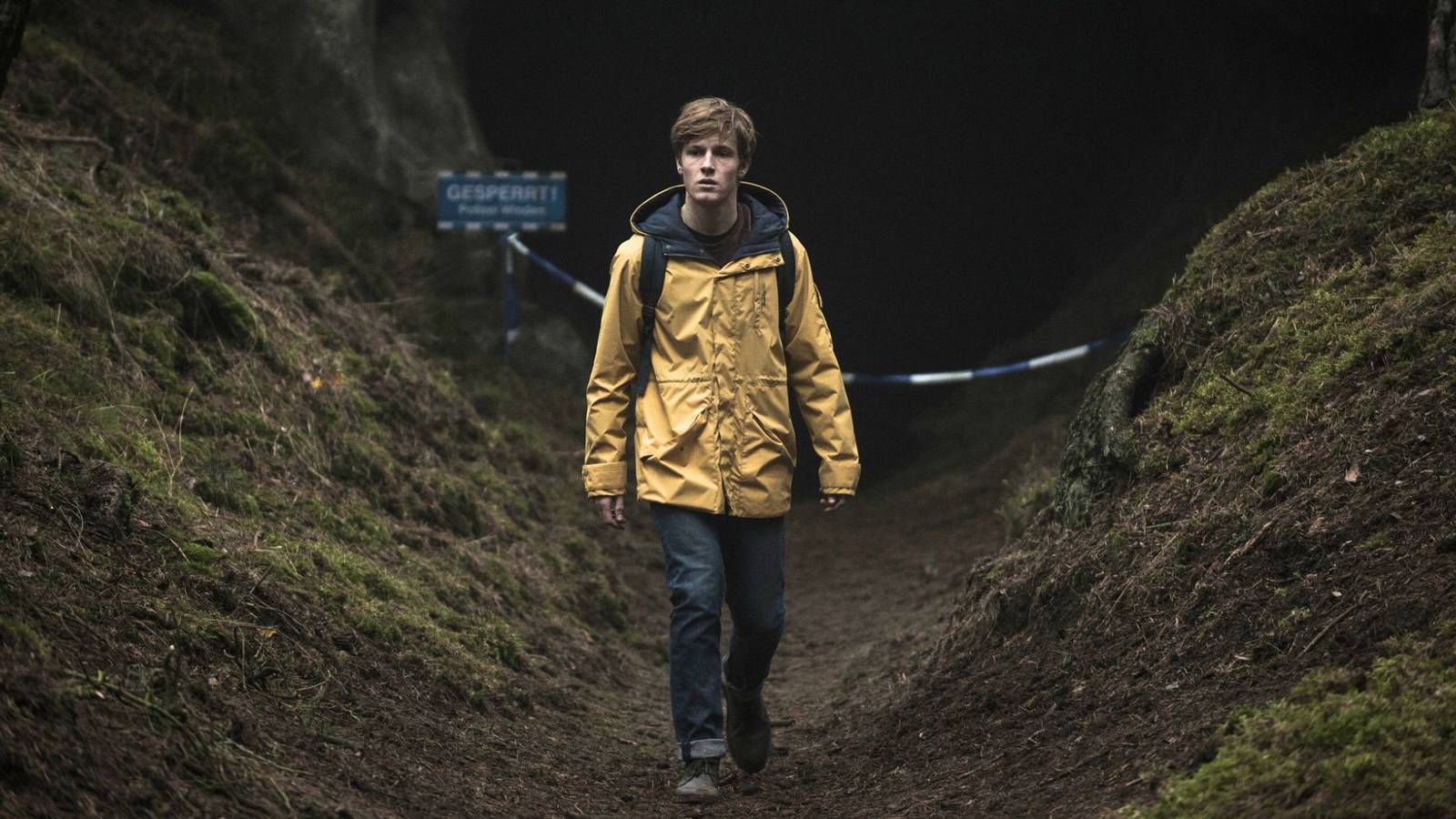
A hopeless thriller is one that keeps you grabbed by the neck but still ends in a painful manner. Someone in a thriller says, “We just need to find the truth,” and I immediately start worrying about them. Because finding the truth is one thing. Surviving what it does to your life is another. I've watched characters sacrifice everything to uncover a secret, only to discover that knowing the answer doesn't give them the slightest power to change it. It's infuriating. It's heartbreaking. And when a show earns that feeling, I cannot look away. I think helplessness becomes truly frightening when you can understand every decision that leads somebody there. You wouldn't necessarily have behaved differently. You might have trusted the same person, followed the same evidence, or convinced yourself that one more sacrifice would finally put things right. These six thrillers are merciless about that very human tendency. 6 'The Killing' (2011–2014) Image via AMC Sarah Linden (Mireille Enos) is preparing to leave the Seattle Police Department when the disappearance of teenager Rosie Larsen interrupts her plans. She works alongside detective Stephen Holder (Joel Kinnaman) and investigates a murder that tears through Rosie's family and becomes entangled with a political campaign. The Killing makes the investigation painfully personal, particularly for Rosie's parents, Stan (Brent Sexton) and Mitch (Michelle Forbes). What gets under my skin is how little the truth can actually repair. Mitch can barely function inside the home where her daughter should still be living. Stan's grief keeps twisting into anger, leaving him vulnerable to decisions that could destroy what's left of his family. Meanwhile, Linden's inability to abandon the case damages her relationship with her own son. Everybody wants justice, but nobody can promise that justice will make living any easier. I find that distinction absolutely devastating. 5 'The Fall' (2013–2016) Image via BBC Paul Spector (Jamie Dornan) has a wife, children, and a job as a grief counselor. He also stalks and murders women in Belfast. Detective Superintendent Stella Gibson (Gillian Anderson) arrives to investigate the killings, gradually closing in on a man who appears disturbingly ordinary outside his crimes. The Fall makes no secret of the murderer's identity. We know who he is, and the awful suspense comes from watching him move through a city full of people who don't. Dornan's most disturbing moments aren't necessarily the violent ones. Sometimes Paul is simply behaving affectionately toward his children, and I want him as far away from them as possible. His domestic life offers camouflage without making his affection straightforwardly false, which is a sickening contradiction. Gibson is formidable, but intelligence and determination cannot undo what his victims have experienced. Even catching him means confronting the lasting damage he's inflicted. This is a thriller where the prospect of victory never feels remotely satisfying enough. 4 'Mr. Robot' (2015–2019) Image via USA Network Mr. Robot begins with a thrilling fantasy of rebellion. Elliot Alderson (Rami Malek) works in cybersecurity while secretly hacking people and organizations he believes deserve exposing. When the mysterious Mr. Robot (Christian Slater) recruits him into a movement determined to destroy the financial power of E Corp, Elliot sees an opportunity to strike back at a system he despises. The movie gradually questions whether Elliot understands the consequences of his own actions. I remember being almost embarrassingly excited about fsociety's ambitions. Then the economic damage starts spreading, ordinary people suffer, and the promised revolution becomes another nightmare. But Elliot's loneliness is even harder to endure. He can access almost anybody's private information while remaining terrified of genuine human intimacy. Sam Esmail, the show's creator, pushes that contradiction to its most painful extreme during Elliot's conversations with therapist Krista. The man determined to expose the world's hidden cruelty has spent years struggling to confront his own suffering. There is compassion here, thankfully, but very little comes without a terrible emotional cost. 3 'Hannibal' (2013–2015) Image via NBC Will Graham (Hugh Dancy) possesses a remarkable ability to understand how murderers think, making him invaluable to FBI investigator Jack Crawford (Laurence Fishburne). His increasingly fragile mental state leads him into therapy with Dr. Hannibal Lecter (Mads Mikkelsen), an extraordinarily sophisticated psychiatrist who happens to be a cannibalistic serial killer. Hannibal transforms their relationship into a psychological battle where affection, manipulation, and violence become almost impossible to separate. I've never hated a fictional friendship quite so passionately. Hannibal recognizes Will's loneliness and offers him the intoxicating possibility of being completely understood. That attention feels almost loving, even as Hannibal deliberately destabilizes the person receiving it. Mikkelsen can turn a quiet dinner invitation into something sinister, while Dancy makes Will's desperate need for connection painfully convincing. The second season's confrontation at Hannibal's home is among the cruelest emotional disasters I've watched on television. What destroys me is that neither man can simply dismiss their attachment afterward. Understanding one another has become another form of imprisonment. Collider Exclusive · Villain Personality Quiz Which Criminal Mastermind Would Be Your Nemesis? Lecter · Joker · Moriarty · Chigurh Four of the finest criminal minds ever put on screen. One of them would look at you and see something worth their time. Eight questions decide which one comes for you, why they picked you, and what they would want when they arrived. 🍷Lecter 🃏Joker ♟️Moriarty 🪙Chigurh MEET YOUR NEMESIS → 01 What would a criminal mastermind notice about you first? Great villains choose their opponents carefully. Something about you got their attention. AMy manners, and everything I am careful not to say. BThat I still believe people are basically decent. CThat I am clever, and quietly enjoy proving it. DThat I handle things myself, and always have. NEXT QUESTION → 02 How do they make first contact? The introduction tells you everything about what is coming next. AA polite letter. Beautiful handwriting. Quietly wrong. BSomething on fire, with a message left beside it. CA puzzle, left where only I would look. DNo contact. Just the aftermath, and a coin. NEXT QUESTION → 03 What do you actually believe about right and wrong? Every nemesis is really an argument about the thing you believe most. AThere are lines. Mine are private and absolute. BRules are the only thing keeping us from being animals. CMorality is a system, and systems can be solved. DThings happen. Most of it was never up to me. NEXT QUESTION → 04 What finally gets under your skin? Everybody has a pressure point. Finding yours is the whole plan. ABeing seen clearly by somebody I cannot read. BWatching good people do something ugly. CLosing to someone who was simply better prepared. DHaving no move left that changes anything. NEXT QUESTION → 05 They have made their move. How do you fight back? This is the part of the film where the audience finds out who you are. ACarefully, and never where they expect to be touched. BLoudly. I would rather lose than play their game. CWith a better plan. I can out-think this. DDirectly, once, with whatever is closest to hand. NEXT QUESTION → 06 What would they use against you? A good villain never brings a weapon you have not already handed them. AMy privacy. I have kept far too much to myself. BMy conscience. I will not cross the line they want. CMy ego. I cannot resist a worthy opponent. DMy certainty that I can handle it alone. NEXT QUESTION → 07 What do they actually want from you? The money is never the point. Something else always is. ATo understand me better than anyone ever has. BTo prove I am no better than they are. CTo finally be beaten by someone worth the trouble. DNothing at all. I stepped into the wrong path. NEXT QUESTION → 08 How does it end between the two of you? Eight questions in, this is the one that decides who comes for you. AA conversation I will be replaying for years. BA choice forced on me that has no clean answer. COne final move, and the better mind wins. DA coin in the air, and nothing I can say. REVEAL MY NEMESIS → The Case File Is Complete Your Nemesis Is…Four criminal masterminds. One of them was always going to be yours. Here is who comes for you, why they picked you out of everyone available, and what they want from the encounter. Hannibal LecterYour nemesis does not want to beat you. He wants to know you completely, and he is patient enough to wait for it. The frightening part is how good the conversation is. Lecter is the most dangerous kind of opponent: the one who finds you interesting. He never raises his voice, because he has never needed to. You keep a great deal to yourself and you are careful about what you show. That reserve is exactly the door he would knock on. The films understood something other thrillers missed. The horror is not the violence. It is being perfectly understood by the wrong person. He would be unfailingly polite about all of it. That is the worst part. The JokerYour nemesis is not after money, territory or revenge. He is after a demonstration, and you are the person he has chosen to prove his point on. The Joker only picks opponents who believe in something. Your decency is not a defence against him. It is the entire reason he showed up. He has no plan you can predict and nothing you can take away, which removes every tool you would normally reach for. His whole argument is that you are one bad day away from being him, and you would spend the rest of your life proving him wrong. He would call it a magic trick. You would call it the worst night of your life. MoriartyYour nemesis respects you, which sounds flattering until you work out what it means. He chose you because nobody else was worth his time. Moriarty is the original criminal mastermind, the template every later one borrows from: a mind the equal of the hero's, pointed the wrong way. You enjoy being the cleverest person in the room. He is counting on exactly that, and he has already built the room. This is the rare nemesis who would be genuinely disappointed if you lost badly. He needs the game to be worth playing. It ends the way these things always end. Two people, one problem, and only one way down. Anton ChigurhYour nemesis has no personal interest in you whatsoever, and that is precisely what makes him unsurvivable. You are not a rival. You are a stop on the way. Chigurh does not negotiate, gloat or explain. He arrives, he asks one question, and the answer was decided long before you opened your mouth. You trust yourself to handle things. He is the one problem in the world that has no interest in how capable you are. No Country for Old Men rewrote the screen villain by removing the thing audiences quietly rely on: the sense that talking might work. Call it. He will wait. ↻ RETAKE THE QUIZ 2 'Utopia' (2013–2014) Image via Channel 4 A mysterious graphic novel called The Utopia Experiments draws a group of internet acquaintances into a conspiracy involving a ruthless organization known as the Network. Ian (Nathan Stewart-Jarrett), Becky (Alexandra Roach), Wilson Wilson (Adeel Akhtar), and young Grant (Oliver Woollford) find themselves pursued by killers who will do practically anything to obtain the manuscript. The original British Utopia turns their attempts to survive into an increasingly terrifying struggle against an organization whose influence seems limitless. “Where is Jessica Hyde?” I swear, those four words become enough to make me nervous. Arby (Neil Maskell) asks the question with horrifying calm, as though killing people is simply an inconvenient part of his workday. The Network's resources are staggering, but the truly sickening part is its conviction that committing atrocities can be justified as serving humanity's future. Dennis Kelly's writing refuses to offer the comfort of uncomplicated heroes either. Survival gradually demands compromises that make the protagonists resemble the people they're fighting. The show was canceled after two seasons, leaving its extraordinary atmosphere of dread hanging over an unfinished story. Somehow, that feels appropriately cruel. 1 'Dark' (2017–2020) Image via Netflix A young boy disappears in the German town of Winden, leading several families toward a mystery involving a network of caves, disturbing family secrets, and events separated by decades. Jonas Kahnwald (Louis Hofmann) becomes central to the investigation as Dark gradually establishes a world where time travel connects generations of people who barely understand the consequences of their own decisions. Ulrich Nielsen (Oliver Masucci) is the character who really breaks my heart. His desperation to find his missing son pushes him toward an act he believes could prevent decades of suffering. Watching that certainty turn into something terrible is almost unbearable. But the show's bleakest idea extends far beyond one father's mistake. Parents damage children they haven't met yet. Lovers become trapped by histories they don't understand. Attempts to prevent catastrophes can help bring them about. Creators Baran bo Odar and Jantje Friese construct a world where love repeatedly becomes the reason people perpetuate suffering. And the cruelest part is that I never stop hoping alongside them. I want Jonas to save Martha. I want Ulrich to find his family. I want somebody, anybody, to escape the terrible inheritance passed between generations. Dark Release Date 2017 - 2020-00-00 Network Netflix Cast Louis Hofmann Jonas Kahnwald Lisa Vicari Martha Nielsen
The 6 Most Hopeless Thriller TV Shows, Ranked
Full Article
Original Source
Read the full article at Collider →KhanList aggregates and links to publicly available news content. We do not host full articles from third-party sources. Always verify important information with original sources.