
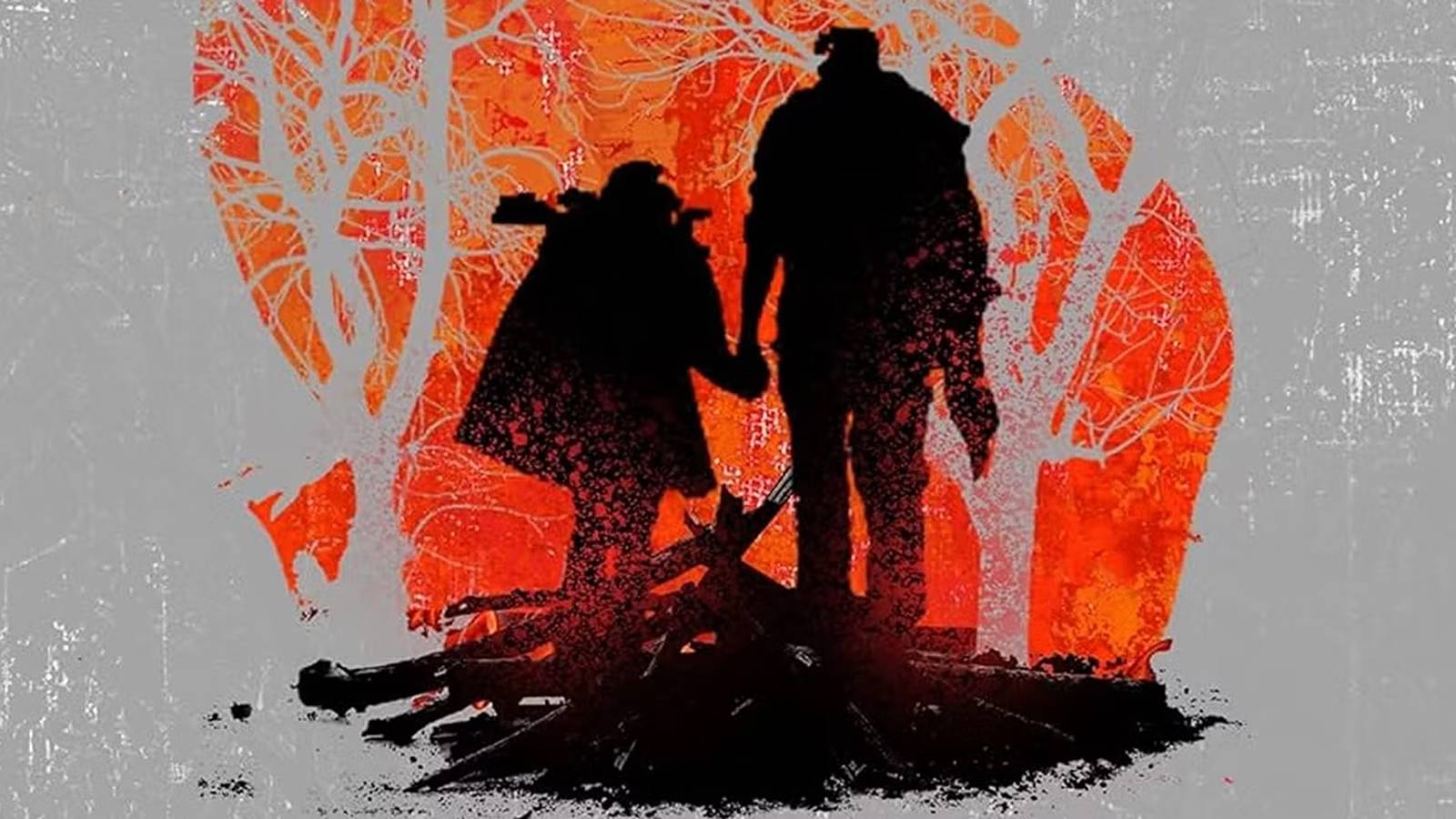
Image via Picador Collection Published Nov 20, 2026, 6:15 AM EST David is a Senior Editor at Collider focused primarily on Lists. His professional journey began in the mid-2010s as a Marketing specialist before embarking on his writing career in the 2020s. At Collider, David started as a Senior Writer in late 2022 and has been a Senior Editor since mid-2023. He is in charge of ideating compelling and engaging List articles by working closely with writers, both Senior and Junior, as well as other editors. Occasionally, David also reviews movies and TV shows and writes episode recaps. Currently, David is also writing his second novel, a psychological horror satire that will, hopefully, be picked up for publication sometime next year. Sign in to your Collider account In terms of literature, there is a before 1984 and an after. George Orwell's 1949 novel is a foundational piece of 20th-century literature and one of the most celebrated dystopian books ever written. The world Orwell crafted — oppressive and ruthless — has inspired countless future works and even influenced the language, coining terms like "doublethink" and "thoughtcrime." Indeed, no piece of fiction is more crucial to the dystopian genre. However, since its release, many other books have greatly contributed to the dystopian genre. Most might not rise to the levels of quality and influence achieved by Orwell's magnum opus, but many come remarkably close. The entries on this list are the best dystopian books released since 1984, the ones that have kept the genre going and taken it to newer, greater heights that anyone could've imagined. 'Fahrenheit 451' (1953) Image via Ballantine Books Debuting merely four years after Orwell's masterpiece, Fahrenheit 451 is another crucial entry into the dystopian genre. Ray Bradbury's book is set in a futuristic world where books have been outlawed and special firefighter squads set fire to any they find. The plot follows Guy Montag, a fireman who becomes disillusioned with his life and becomes a rebel dedicated to preserving literature and other writings. Written at the height of McCarthyism, Fahrenheit 451 is a clear statement against authoritarianism and censorship. By targeting the things that are meant to make us more knowledgeable, the system takes away part of our humanity by making us complacent. The book also deals with themes of illiteracy and the dangers of a society so ignorant and uncurious that it becomes easily manipulated and molded. Today, Fahrenheit 451 feels eerily prophetic, like a wholly plausible future that we might already be heading towards. 'Do Androids Dream of Electric Sheep?' (1968) Image via Rapp & Whiting Set in a post-apocalyptic world of 1992 (lol) San Francisco, Do Androids Dream of Electric Sheep? is the basis for the iconic cult classic Blade Runner. The main plot concerns Rick Deckard, a bounty hunter assigned to "retire" six rogue androids who have escaped from Mars and traveled to Earth. Deckard hopes to earn enough money to buy a real animal and replace the sole electric sheep he and his wife, Iran, have at home. Today, most people think of Harrison Ford when they hear the name "Rick Deckard." However, the source material is a whole other beast, a lot more introspective in its exploration of what it means to be human, especially in a world that seems wholly unconcerned with humanity. Here, Philip K. Dick presents empathy as the ultimate trait of a human; yet, all those Deckard finds are increasingly detached and disinterested, while the androids are so desperate to be that they become far more empathetic with each other. It's a fascinating exploration of what it means to be alive, which has only grown more relevant in the years since. 'The Handmaid's Tale' (1985) Image via Vintage Books Margaret Atwood's The Handmaid's Tale is one of the most chilling dystopian novels of the last 50 years. The story is set in a future where the US has collapsed, overthrown by a religious and totalitarian state known as the Republic of Gilead. Society is structured to give men all the power, with women organized into a tightly controlled, role-based system. The protagonist is Offred, a Handmaid forced to bear children for powerful men. The Handmaid's Tale has often been referred to as a feminist version of 1984. Indeed, the Republic of Gilead has become synonymous with oppression and how easy it is for women to lose their rights, especially when a single group is given too much power. Atwood has been adamant that her book isn't necessarily a purely feminist text, but it's indisputable that it has been reclaimed as such by many, especially after the release of the acclaimed, Emmy-winning TV adaptation. Just as easily, The Handmaid's Tale is about sex dynamics in society, a battle of the sexes taken to the extremes. 'The Giver' (1993) Image via Clarion Books No dystopian book of the '90s is more talked about today than The Giver. Lois Lowry's dystopian YA novel is set in a community that has eradicated all trace of emotion — pain and strife, but joy and pleasure, too — to exist in a state of "Sameness." Thus, society is compliant but lacking emotional complexity, existing in a sterile environment. 12-year-old Jonas is selected to become the Receiver of Memory, the one who will inherit all knowledge from before Sameness, leading to his emotional self-discovery and growth. Do not be fooled by its YA façade — The Giver goes all-in on its deeper themes, dealing with everything from religion and race to the dangers of eugenics and the importance of a life rooted in all emotions. In the years since its release, it has become a common part of the school syllabus, although it has also faced a significant amount of censorship. Sure, it's not particularly "elevated," but The Giver is no less worthy of critical discussion, even if its approach is meant to be accessible for young readers. If anything, it should be considered a building block not only to tackle but to genuinely understand dystopian literature as a genre. COLLIDERInteractive Long-range scan active Movies/Science Fiction/Survival Assessment Collider Survival Assessment Which Sci-Fi WorldWould You Survive? 8 questions · 5 worlds · one honest verdict Five of the great screen futures, and not one of them is built for comfort. Answer eight questions about instinct, loyalty and the line you would cross, and the scan will tell you which one you would still be standing in. Worlds in range ▦︎The Matrix ◈︎Mad Max ◑︎Blade Runner ▲︎Dune ✦︎Star Wars Begin the scan Question 01 of 08INSTINCT The world as you know it ends overnight. What is your first move? No wrong answer. There is a wrong hesitation.AFind out what is really going on behind all of it BGrab a vehicle and as much fuel as you can carry CKeep your head down and show up to work anyway DLearn the rules of whoever is in charge now EFind other people and start organizing ← Back Keys 1 to 5 or A to E · Enter to advance Next Question 02 of 08RESOURCE You can stockpile exactly one thing. What is it? Choose carefully. You are not getting a second run.AInformation nobody else has BFuel CClean money and cleaner documents DWater EA ship that can get you off-world ← Back Keys 1 to 5 or A to E · Enter to advance Next Question 03 of 08THREAT Which kind of enemy scares you the most? Be honest about what keeps you up.AOne that can be anywhere, wearing anyone's face BA convoy of people who want what you are carrying CSomeone who looks exactly like you DA rival family that has been planning your downfall for generations EAn empire with unlimited resources and no patience ← Back Keys 1 to 5 or A to E · Enter to advance Next Question 04 of 08AUTHORITY How do you handle the people in charge? Every world has them. Even the ones that pretend otherwise.AAssume they are lying and work around them BNobody is in charge where I am CFollow the orders, file the report, stay invisible DStudy them, get close to them, outlast them EJoin whoever is fighting them ← Back Keys 1 to 5 or A to E · Enter to advance Next Question 05 of 08ENVIRONMENT Pick the place you would rather wake up in: You will be there a while.AA grey city that feels slightly too perfect BAn endless desert highway CA rainy neon street at three in the morning DA dune sea with a fortress on the horizon EA crowded spaceport full of strangers ← Back Keys 1 to 5 or A to E · Enter to advance Next Question 06 of 08ALLIANCE Who do you want standing next to you? Pick one. You only get one.AA guide who knows far more than they are telling you BOne person you trust and nobody else CNobody. You work alone DA loyal circle you grew up with EA crew of misfits who argue the whole way ← Back Keys 1 to 5 or A to E · Enter to advance Next Question 07 of 08MORALITY Which line would you cross to survive? Everybody crosses one.ALying to the people closest to you BTaking what you need by force CLooking the other way DPlaying a long game that costs other people dearly EBlowing something very expensive up ← Back Keys 1 to 5 or A to E · Enter to advance Next Question 08 of 08PURPOSE What are you really fighting for? Last question. Make it count.AThe truth, whatever it turns out to be BTomorrow. Just tomorrow CSomething that finally feels like a real life DYour family's name EEveryone who cannot fight for themselves ← Back Keys 1 to 5 or A to E · Enter to advance Run the scan Scan completeYou would survive ▦︎ The Matrix The Resistance, Zion You take the red pill, you stay in Wonderland, and I show you how deep the rabbit hole goes. You would survive The Matrix because you were never fully sold on the version of reality you were handed. You notice the seams. You ask the second question. In a world built to keep people comfortable and incurious, that instinct is the whole fight, and it is why Morpheus would have found you long before you found him. From the Collider file The Wachowskis' 1999 film won four Academy Awards, including Visual Effects and Film Editing. Bullet time was shot with a rig of roughly 120 still cameras firing in sequence around the actors. Keanu Reeves trained in martial arts for about four months before a frame was shot, recovering from neck surgery the whole time. It opened the same year as Fight Club and eXistenZ, in a run of films about not trusting the world in front of you. Red pill energy Pattern spotter Built to question ◈︎ Mad Max The Wasteland Oh, what a day. What a lovely day. You would survive the Wasteland because you do not waste energy mourning the world that ended. You move, you improvise, and you are very good with whatever is bolted to the thing in front of you. Furiosa would let you drive. That is not a compliment anybody earns easily. From the Collider file Mad Max: Fury Road won six Academy Awards in 2016, more than any other film that year. George Miller storyboarded the entire film as roughly 3,500 panels before there was a script. The chase was shot almost entirely practical in the Namib Desert, with real vehicles and real stunt performers. Anya Taylor-Joy and Chris Hemsworth carried the prequel, Furiosa: A Mad Max Saga, in 2024. Keeps moving Improviser Good with engines ◑︎ Blade Runner Los Angeles, 2049 All those moments will be lost in time, like tears in rain. You would survive 2049 because you know how to be small in a very loud city. You keep your head down, you do the job, and you hold onto one private thing that belongs only to you. That quiet stubbornness is exactly what both Deckard and K run on, and it is what keeps either of them going when the case stops making sense. From the Collider file Blade Runner 2049 won Roger Deakins his first Oscar for cinematography, on his fourteenth nomination. The film also took Best Visual Effects, 35 years after Ridley Scott's 1982 original. Villeneuve shot it on large-format film and kept the fog and rain practical on set wherever he could. Three short films by Luke Scott and Shinichiro Watanabe bridge the 30-year gap between the two movies. Keeps her head down Private Noir soul ▲︎ Dune Arrakis Fear is the mind-killer. Fear is the little-death that brings total obliteration. You would survive Arrakis because you think in decades while everyone around you thinks in weeks. You read the room, you learn the customs, you wait. The desert does not reward speed. It rewards people who understand that patience is a weapon, which is the one lesson the Fremen never had to be taught. From the Collider file Denis Villeneuve's Dune won six Academy Awards in 2022, including Cinematography and Original Score. Hans Zimmer turned down Christopher Nolan's Tenet so he could score Dune instead. Dune: Part Two arrived in 2024 and brought in Austin Butler, Florence Pugh and Christopher Walken. David Lynch's 1984 version and Alejandro Jodorowsky's unmade one are both their own legends by now. Plays the long game Reads the room Patient ✦︎ Star Wars A Galaxy Far, Far Away Rebellions are built on hope. You would survive the galaxy because you never try to survive it alone. You collect people. You end up in the middle of other folks' problems and you stay anyway. Every version of this story, from the Falcon's crew to the Ghost's, runs on somebody exactly like that holding the group together. From the Collider file The 1977 original won six Academy Awards plus a special achievement award for sound effects. John Williams' score was recorded by the London Symphony Orchestra and became the best-selling symphonic film soundtrack ever. Andor took the galaxy somewhere colder and earned Emmy nominations for drama series in both seasons. The saga now runs across eleven feature films and a growing shelf of series on Disney+. Collects people Shows up Hope merchant Compatibility readout · top three 1 2 3 ↻ Retake the quiz Copied to your clipboard Scan filed byCOLLIDERCollider.com · The Sci-Fi Desk 'The Road' (2006) Image via Picador Cormac McCarthy was a particularly ruthless author. His stories are usually full of hopelessness and a rather bleak, borderline nihilistic view of the world. Thus, it's shocking that his most hopeful work is also set in a post-apocalyptic setting. In The Road, a father and his son traverse a devastated US following an unspecified disaster. This world is brutal, reducing whatever's left of society to its most primal instincts. Like other McCarthy works, The Road is full of striking, visceral, nearly unforgiving imagery. Yet, there's a genuine sense of hope here: at the end of the world, McCarthy suggests, humanity will either embrace their darkest impulses or cling to the optimism that things will always get better. The third act is as tragic as you'd expect, but the actual ending is as close to cathartic as it could possibly be. The Road is McCarthy's statement on the power of empathy and the unbreakable nature of the human spirit. It's restrained, powerful, and utterly unforgettable. 'Station Eleven' (2014) Image via HarperCollins Emily St. John Mandel's Station Eleven is the most recent dystopian masterpiece. The book is set in a world ravaged by a global influenza pandemic that brought civilization to its knees twenty years earlier. The protagonist is Kirsten Raymonde, who travels with a nomadic troupe of actors performing classical Shakespeare plays while scavenging homes and wrecks. The novel also tracks several lives before and after the pandemic, tied to famous actor Arthur Leander. Of all the books on this list, none seems as chillingly possible as Station Eleven, particularly in a post-COVID world. Rather than succumbing to despair, the book embraces the hope inherent in the human spirit that endures, even when the situation seems inescapably bleak. The importance of art and culture as one of humanity's leading legacies is also crucial to the story, a way to remind us of our empathy not only for others but also for ourselves.
The 6 Greatest Dystopian Books Released Since '1984'
Full Article
Original Source
Read the full article at Collider →KhanList aggregates and links to publicly available news content. We do not host full articles from third-party sources. Always verify important information with original sources.