
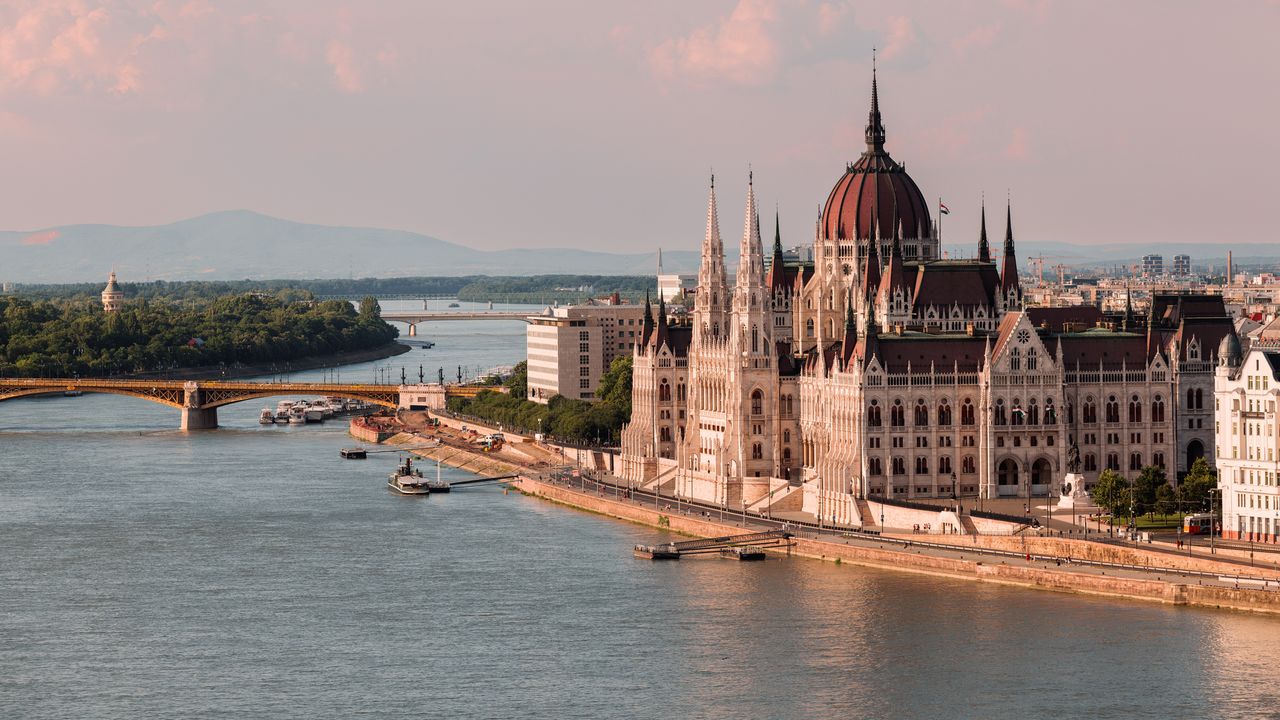
Did you know there are European countries that don't use the euro? Of the 27 nations that make up the European Union (EU), 21 use the euro as their official currency, in the region known as the Eurozone. While most countries that join the EU are required to adopt the euro as part of their membership, there are six member states that have yet to adopt the currency.Of course, there are pros and cons for an EU-member country using a currency specific to their own economy. As far as advantages go, these countries are able to more fully dictate their own financial and monetary policies, without being beholden to the larger group. They can adjust exchange rates and interest rates to suit their economic needs, while avoiding the liabilities associated with being part of a bigger currency union. If a financial crisis affects the euro, the six European countries that don't use the euro will be spared from the brunt of it.If you're planning a Europe trip and want your dollar, pound, or peso to stretch even further, consider heading to a destination with a more favorable currency conversion. Below, explore the non-Eurozone EU member countries and all they have to offer—beyond just a different coin.Constructed in the 1300s, travelers and locals traverse the medieval Charles Bridge in Prague. GettyCzech RepublicLocated in Central Europe, the Czech Republic has no shortage of castles, some dating back to the 1300s, making it a paradise for architecture and history enthusiasts. The Czech capital of Prague is even home to the world’s largest castle complex: the aptly-named Prague Castle. Plus, this country is famed for its tradition of brewing beer, which began as early as 993 AD.Currency: Czech Koruna (CZK) (1 CZK = 0.047 USD)Where to stay:For museum-worthy interiors: Mandarin Oriental, PragueFor an artsy escape: Art Deco Imperial Hotel, PragueFor monastic-turned-modern-luxe: Augustine, a Luxury Collection Hotel, PragueBoats docked along Copenhagen's ever-so-colorful Nyhavn district GettyDenmarkDenmark may be the smallest of Northern Europe’s Scandinavian countries, though it's big on gourmet food, culture, design, and wellness. From vibrant Nyhavn harbor to a stroll along fortress Kastellet, its capital Copenhagen is teeming with green space. Get a taste of Danish design at Frama or Designmuseum Danmark and your retail fix at buzzy Strøget, one of Europe's longest shopping streets.Currency: Danish Krone (DKK) (1 DKK = 0.15 USD)Where to stay:For a lively and social setting: 1 Hotel CopenhagenFor a transformed landmark: Villa CopenhagenFor a pocket of peace away from the city center: Park Lane CopenhagenViews of the Danube River coursing along Budapest GettyHungaryDespite its modest size, the nation has a number of UNESCO Biosphere Reserves, the world’s second-largest thermal lake (Lake Hévz), the largest lake in Central Europe (Lake Balaton), and the largest natural grassland in Europe (Hortobágy). The Hungarian capital, Budapest, is also considered one of the most beautiful cities worldwide, offering a distinct wellness scene and architecture. Stroll along Széchenyi Chain Bridge, visit 13th-century Buda Castle, or explore fairytale Fisherman’s Bastion.Currency: Hungarian Forint (HUF) (1 HUF = 0.0031 USD)Where to stay:For a grandiose escape: The St. Regis BudapestFor a musical hub full of whimsy: Aria Hotel Budapest by Library Hotel CollectionFor an exceptional stay overlooking the Danube: Four Seasons Hotel Gresham Palace BudapestBlue sky, green trees, and colorful Old Town buildings paint the picture of a vibrant summer in Gdansk, Poland. GettyPolandLocated in the heart of Europe, Poland draws the history-inclined, with an abundance of stellar medieval castles for a day's or week's worth of exploration. There are also museums steeped in World War II history, such as the Auschwitz-Birkenau Museum, the Warsaw Uprising Museum, and the POLIN Museum of the History of Polish Jews.Currency: Polish Zloty (PLN) (1 PLN = 0.26 USD)Where to stay:For Art Deco style: Hotel RialtoFor a spot at the edge of Warsaw's Old Town: Mamaison Hotel Le ReginaFor forward-looking sleekness: Nobu Hotel WarsawIn Brasov, Romania, a landscape with the Black Church overlooking the Tâmpa mountain GettyRomaniaThe largest of the Balkan countries, Romania has charming villages, dramatic castles, and some of Europe's most stunning natural landscapes. A paradise for birdwatchers, the Danube Delta is one of the best preserved on the continent, while the spectacular Scărișoara is Europe’s second-largest underground glacier.Currency: Romanian New Leu (RON) (1 RON = 0.22 USD)Where to stay:For sweeping elegance: JW Marriott Bucharest Grand HotelFor a historic spot, in the heart of the capital: InterContinental Athénée Palace BucharestFor old-world charm and utter luxury: Carol Parc HotelSmall-yet-mighty Sweden is full of historic homes and natural offerings. GettySwedenThis Scandinavian beauty boasts one of the strongest and most stable economies in Europe. Though roughly the size of California, Sweden is resplendent with natural wonders, including midnight sun—which brings 24-hour sunlight from May to mid-July in the north—and the ever-famous Northern Lights. Although its capital Stockholm boasts a design-forward scene, rich maritime history, and quite the musical legacy with Abba, consider visiting island Gotland's Visby for centuries-old churches and ruins, or Gothenburg for zero-waste restaurants and sustainable shops.Currency: Swedish Krona (SEK) (1 SEK = 0.10 USD)Where to stay:For a can't-miss location: Grand Hôtel StockholmFor a boutique farm stay: SibbjänsFor a 15th-century barrack-turned-beauty: Hotel SkeppsholmenA version of this article originally appeared in Condé Nast Traveller India.
The 6 European Countries That Don't Use the Euro
Full Article
Original Source
Read the full article at Cntraveler →KhanList aggregates and links to publicly available news content. We do not host full articles from third-party sources. Always verify important information with original sources.