
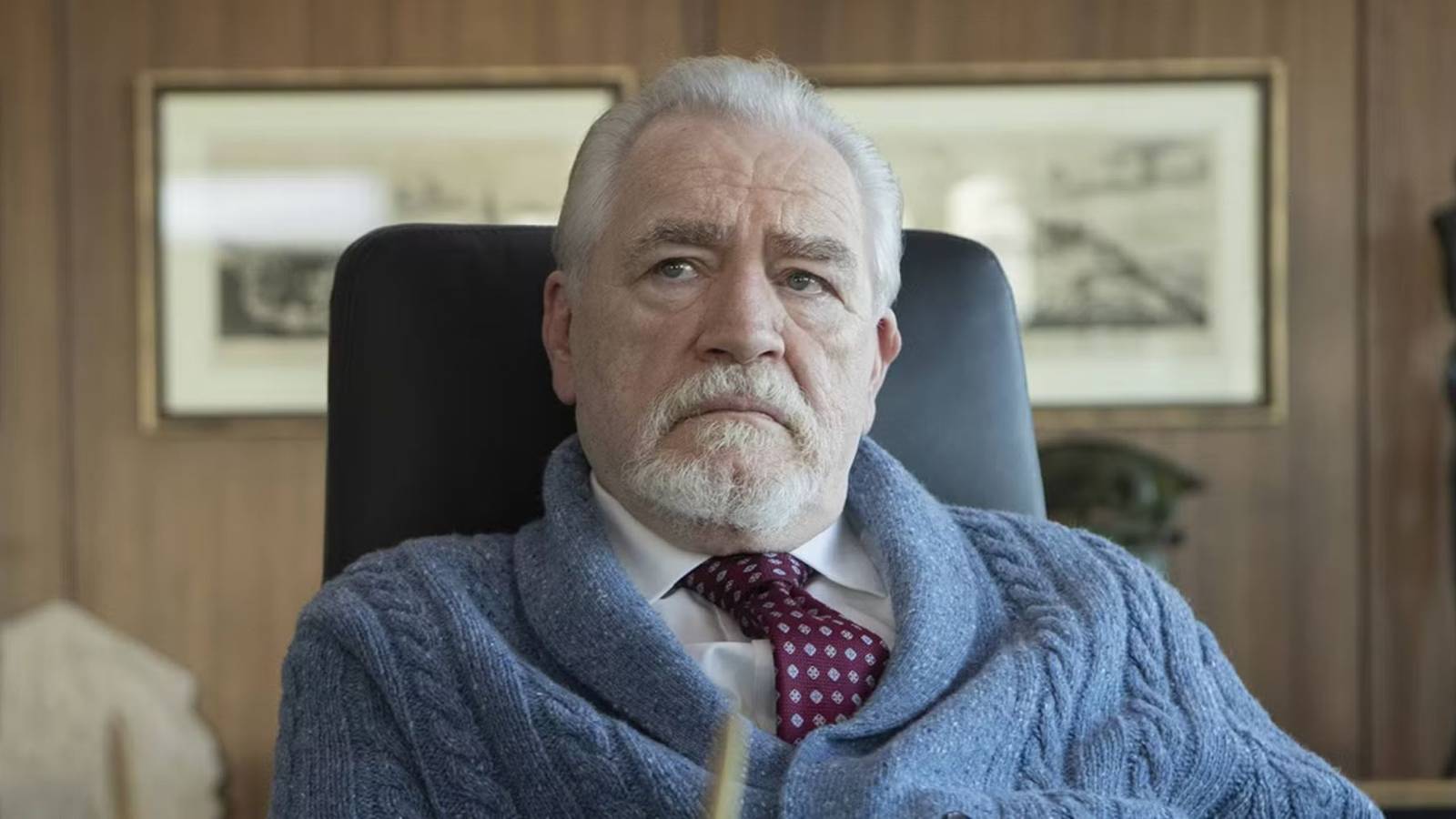
Image via HBO Published Aug 30, 2026, 4:14 PM EDT Sign in to your Collider account a The six shows here also prove how many different shapes prestige television can take. A half-hour comedy can be emotionally devastating. Animation can become one of the sharpest studies of depression ever put on television. A spy drama can turn marriage into an intelligence operation, while a corporate family saga can make a shareholder meeting feel like combat. This is television operating with almost no wasted potential. 6 'Fleabag' (2016–2019) Image via Prime Video Fleabag follows a young woman in London dealing with grief, sex, family tension, money problems, and the collapse of a friendship she cannot stop carrying around. Fleabag (Phoebe Waller-Bridge) speaks directly to the audience, turning us into the one place where she can be funny, dishonest, cruel, embarrassed, and completely exposed without having to explain herself to another person. What initially feels like a comic device gradually becomes part of the emotional architecture of the show. Phoebe Waller-Bridge adapted the series from her one-woman stage play, and the compact twelve-episode run is a huge part of its precision. The first season hides pain underneath speed and sarcasm, while the second complicates that defense through Fleabag’s relationship with the Priest (Andrew Scott). Her glances toward the camera become increasingly important once somebody finally notices them. That tiny shift changes the meaning of a habit the audience has accepted from the beginning. Fleabag is filthy, tender, selfish, generous, and painfully observant about people who know exactly what they are doing and still cannot stop. Twelve episodes are enough to leave a bruise. 5 'BoJack Horseman' (2014–2020) Image via Netflix A washed-up sitcom star trying to become culturally relevant again sounds like standard Hollywood satire. BoJack Horseman turns that premise into a six-season study of addiction, depression, fame, childhood damage, accountability, and the exhausting question of whether understanding your own behavior actually helps you change it. BoJack Horseman (Will Arnett) lives in a world of talking animals and absurd entertainment-industry jokes, yet his emotional problems are treated with unusual seriousness. That contrast gives the series extraordinary range. “Fish Out of Water” communicates almost entirely through visual storytelling. “Free Churro” spends nearly an episode inside one eulogy. “The View from Halfway Down” turns mortality into something genuinely frightening after years of jokes about death and self-destruction. Diane Nguyen (Alison Brie), Princess Carolyn (Amy Sedaris), Todd Chavez (Aaron Paul), and Mr. Peanutbutter (Paul F. Tompkins) also develop lives that refuse to revolve entirely around BoJack, which keeps the show from mistaking one damaged man for the whole universe. It can be hilarious for twenty minutes and then land on one observation that stays uncomfortable for days. Anyone who dismisses it as the sad horse cartoon is missing one of the best character studies television has produced. 4 'The Americans' (2013–2018) Image via FX The Americans centers on Philip Jennings (Matthew Rhys) and Elizabeth Jennings (Keri Russell), two Soviet intelligence officers living undercover as a married couple in suburban Washington during the Reagan era. Their children believe they are ordinary American parents, while their next-door neighbor Stan Beeman (Noah Emmerich) works in FBI counterintelligence. Espionage creates the immediate suspense, but the real story develops inside a marriage that began as an assignment and slowly became much harder to separate from genuine love. Disguises, dead drops, surveillance routes, coded messages, and false identities always carry a personal cost. Philip becomes increasingly uneasy about the work, while Elizabeth remains more committed to the ideology that shaped both of them. Their daughter Paige Jennings (Holly Taylor) eventually forces the family secret into the open, turning political loyalty into a parenting crisis. The series also understands that undercover work creates victims who may never realize they were part of an operation, especially through Philip’s relationship with Martha Hanson (Alison Wright). The Americans rewards patience with one of television’s most complete marriages. Every lie has history behind it. Collider Exclusive · TV Medicine Quiz Which Fictional Hospital Would You Work Best In? The Pitt · ER · Grey's Anatomy · House · Scrubs Five hospitals. Five completely different ways medicine goes sideways on television — brutal, chaotic, romantic, brilliant, and ridiculous. Only one of them is the ward your instincts were built for. Eight questions will figure out exactly where you belong. 🚨The Pitt 🏥ER 💉Grey's 🔬House 🩺Scrubs FIND YOUR HOSPITAL → 01 A critical patient comes through the door. What's your first instinct? Medicine under pressure reveals who you actually are. AStay completely present — block everything else out and work through it step by step, right now. BTriage fast and delegate — get the right people on the right problems immediately. CTrust my gut and move — I work best when I stop overthinking and just act. DAsk the question everyone else is ignoring — what's the thing that doesn't fit? ETake a breath, make a joke to cut the tension, and then get to work — panic helps no one. NEXT QUESTION → 02 Why did you go into medicine in the first place? The honest answer says more about you than the one you'd give in an interview. ABecause I wanted to be where it matters most — right at the edge, when someone's life is actually on the line. BBecause I wanted to help people — genuinely, one patient at a time, in a system that makes it hard. CBecause I was drawn to the intensity of it — the stakes, the drama, the feeling of being fully alive. DBecause medicine is the most interesting puzzle there is — and I needed a problem worth solving. EBecause I wanted to make a difference — and also, honestly, I didn't know what else to do with my life. NEXT QUESTION → 03 What do you actually want from the people you work with? Who you want beside you under pressure is who you are. ACompetence and calm — I need people who don't fall apart when things get bad. BTrust and reliability — I want to know that when I pass something off, it's handled. CConnection — I want colleagues who become family, even if that gets complicated. DIntelligence and the willingness to be challenged — I have no interest in people who just agree with me. EFriendship — people I actually like spending twelve hours a day with, because those hours are going to happen either way. NEXT QUESTION → 04 You lose a patient you fought hard to save. How do you carry it? Every doctor who's worked a long shift has had to answer this question. AI carry it. All of it. I don't look for ways to put it down — that weight is part of doing this work honestly. BI process it and move — you have to, or the next patient suffers for the one you just lost. CI feel it deeply and lean on the people around me — I don't think you're supposed to handle that alone. DI go back over every decision — not to punish myself, but because I need to understand what I missed. EI grieve it genuinely, find some way to laugh about something unrelated, and try to be kind to myself — imperfectly. NEXT QUESTION → 05 How would your colleagues describe the way you work? Your reputation on the floor is usually more accurate than your self-image. AIntense and completely present — no small talk during a shift, but exactly who you want there. BSteady and dependable — not the flashiest in the room but never the one who drops something. CPassionate and occasionally chaotic — brilliant on the hard cases, prone to drama everywhere else. DBrilliant and difficult — right more often than anyone else, and everyone knows it, including me. EWarm and self-deprecating — not the most intimidating presence, but genuinely good at this and easy to like. NEXT QUESTION → 06 How do you feel about hospital protocol and procedure? Every institution has rules. What you do with them is a choice. AProtocol is the floor, not the ceiling — I follow it until the patient needs something it can't provide. BI respect it — the system is broken in places, but the structure is there for a reason and I work within it. CI follow it until my instincts tell me not to — and my instincts are usually right, even when they cause problems. DRules are for people who haven't thought hard enough about when to break them. EI try to follow it and mostly do — with a few memorable exceptions that still come up in meetings. NEXT QUESTION → 07 What does this job cost you personally? Nobody works in medicine without paying a price. What's yours? AEverything outside these walls — I've given this job my full attention and the rest of my life has gone around it. BMy idealism, mostly — I came in believing the system could be fixed and I've made a complicated peace with that. CStability — my personal life has been as chaotic as the OR, and that's not entirely a coincidence. DMy relationships — I am not easy to know, and the people who've tried to would probably agree. EMy sense of gravity — I use humour as a coping mechanism, which not everyone appreciates in a hospital. NEXT QUESTION → 08 At the end of a long shift, what keeps you coming back? The answer to this question is the most honest thing about you. AThe fact that it's real — that nothing else I could be doing would matter this much, right now, today. BThe patients — individual human beings who needed something and got it because I was there. CThe people I work with — I have walked through impossible things with these people and I'd do it again. DThe next unsolved case — there's always another puzzle, and I'm not done yet. EBecause despite everything — the exhaustion, the loss, the absurdity — I actually love this job. REVEAL MY HOSPITAL → Your Assignment Has Been Made You Belong In…Your answers have pointed to one fictional hospital above all others. This is the ward your instincts, your temperament, and your particular brand of dysfunction were built for. The PittYou are built for the most unsparing version of emergency medicine television has ever shown — one that puts you inside a single fifteen-hour shift and doesn't let you look away. You need your work to be real, not romanticised — meaning over drama, honesty over aesthetics. You find purpose inside the work itself, not in the chaos surrounding it. You've made peace with the fact that this job takes from you constantly, and gives back in ways that are harder to name. Pittsburgh Trauma Medical Center demands exactly that kind of person — and you would not want to be anywhere else. ERYou are the person who keeps the whole floor running — not the most brilliant in the room, but possibly the most essential. You show up, do the work, absorb the losses, and come back the next day without needing the job to be anything other than what it is. You care about patients as individual human beings, not as cases to solve or dramas to live through. You believe in the system even when it fails you — and you understand that emergency medicine is about holding the line just long enough. ER is television about endurance. You have it. Grey's AnatomyYou came to medicine with your whole self — your ambition, your emotions, your relationships, your history — and you have never quite managed to leave any of it at the door. You feel things fully and form deep attachments to the people you work with. Your personal and professional lives are permanently, chaotically entangled — and that entanglement drives both your greatest disasters and your most remarkable saves. You understand that extraordinary medicine often happens at the intersection of clinical skill and profound human connection. It's messy at Grey Sloan. You would not have it any other way. HouseYou are drawn to the problem above everything else — the symptom that doesn't fit, the diagnosis hiding underneath the obvious one. You're not primarily motivated by the patient as a person — though you are capable of caring, even if you'd deny it. You work best when the stakes are highest and the standard answer is wrong. Princeton-Plainsboro exists to house one extraordinary, impossible mind — and everyone around that mind is there because they're smart enough to keep up. The only way forward here is to think harder than everyone else in the room. That is exactly what you do. ScrubsYou understand that medicine is tragic and absurd in almost equal measure — and that the only sane response is to hold both of those things at the same time. You are warm, self-aware, and funnier than most people in your field. You use humour to get through terrible moments — and at Sacred Heart, that's not a flaw, it's a survival strategy. You lean on the people around you and let them lean back. The laughter and the grief are genuinely inseparable here. Scrubs is a show about learning to become someone worthy of the job. You are still very much in the middle of that process — which is exactly right. ↻ RETAKE THE QUIZ 3 'The Leftovers' (2014–2017) Image via HBO Two percent of the world’s population disappears without explanation in The Leftovers, leaving everyone else to live with an event that refuses to provide meaning. The series begins in Mapleton, New York, where police chief Kevin Garvey (Justin Theroux) struggles with his fractured family while groups like the Guilty Remnant build entire belief systems around the Sudden Departure. The mystery sounds enormous, but the show becomes more interested in what unexplained loss does to the people who remain. That decision gives The Leftovers its unusual emotional power. Nora Durst (Carrie Coon) lost her husband and two children in the same instant, which makes ordinary conversations about grief feel almost insulting around her. Matt Jamison (Christopher Eccleston) keeps trying to interpret catastrophe through faith. Kevin increasingly doubts his own mind as reality grows less stable around him. The second season’s move to Jarden expands the world without discarding the intimate pain underneath it, and the third turns questions about belief, love, and acceptance into something almost impossible to categorize. The series never cheapens its central mystery by pretending one answer could heal everyone. Give it time to find its rhythm and it becomes fiercely personal. 2 'Better Call Saul' (2015–2022) Image via AMC Better Call Saul begins before Saul Goodman exists. Jimmy McGill (Bob Odenkirk) is a struggling Albuquerque lawyer trying to build a legitimate career while living in the shadow of his respected older brother Chuck McGill (Michael McKean). His talent for persuasion is obvious, but so is his instinct for shortcuts, performance, and bending rules whenever the honest route feels too slow. The show follows the gradual construction of Saul alongside the criminal world involving Mike Ehrmantraut (Jonathan Banks), Gus Fring (Giancarlo Esposito), and the Salamanca family. Its brilliance lies in how carefully consequences accumulate. Jimmy’s relationship with Kim Wexler (Rhea Seehorn) gives the series its emotional center because their chemistry makes their worst decisions understandable long before those decisions become frightening. Chuck’s resentment toward Jimmy also cuts deeper than a simple sibling rivalry because both brothers understand each other’s weaknesses with surgical precision. The cartel material runs on a different frequency, yet Mike’s methodical professionalism and Nacho Varga (Michael Mando)’s desperation eventually connect that world to Jimmy’s in ways that feel inevitable rather than engineered. Better Call Saul turns paperwork, parking booths, conference rooms, and tiny ethical compromises into gripping television. Patience here is rewarded generously. 1 'Succession' (2018–2023) Image via HBO Succession follows the Roy family as aging media mogul Logan Roy (Brian Cox)’s declining health turns the future of Waystar Royco into a war among his children, executives, investors, and political allies. Kendall Roy (Jeremy Strong) wants the throne badly enough to destroy himself chasing it. Shiv Roy (Sarah Snook) believes intelligence should compensate for limited corporate experience. Roman Roy (Kieran Culkin) hides insecurity behind cruelty and jokes. Connor Roy (Alan Ruck) has money, distance, and ambitions that somehow remain completely his own. Every family gathering doubles as a business negotiation, and every business decision carries decades of family damage underneath it. Greg (Nicholas Braun) is a gem of a naive cousin and so is Tom Wambsgans (Matthew Macfadyen), Shiv’s husband. The writing understands power at a microscopic level. Who sits closest to Logan can matter. A compliment can be a trap. A delayed phone call can change somebody’s standing inside the family before a board vote ever happens. Kendall’s repeated attempts to escape his father’s control become more painful because he keeps reproducing the same instincts he hates. Shiv and Roman are equally sharp until affection, fear, or ego enters the room. Even the comedy comes from recognizable behavior rather than relief from the drama. Succession makes extraordinarily wealthy people look powerful and emotionally starving at the same time. Four seasons never dilute that contradiction, which is why the show already feels like one of the defining dramas of its era. And never forget — you can’t make a Tomlette without breaking some Gregs. Succession Release Date 2018 - 2023-00-00 Network HBO Showrunner Jesse Armstrong
The 6 Best TV Shows Released Since 2010, Ranked
Full Article
Original Source
Read the full article at Collider →KhanList aggregates and links to publicly available news content. We do not host full articles from third-party sources. Always verify important information with original sources.