
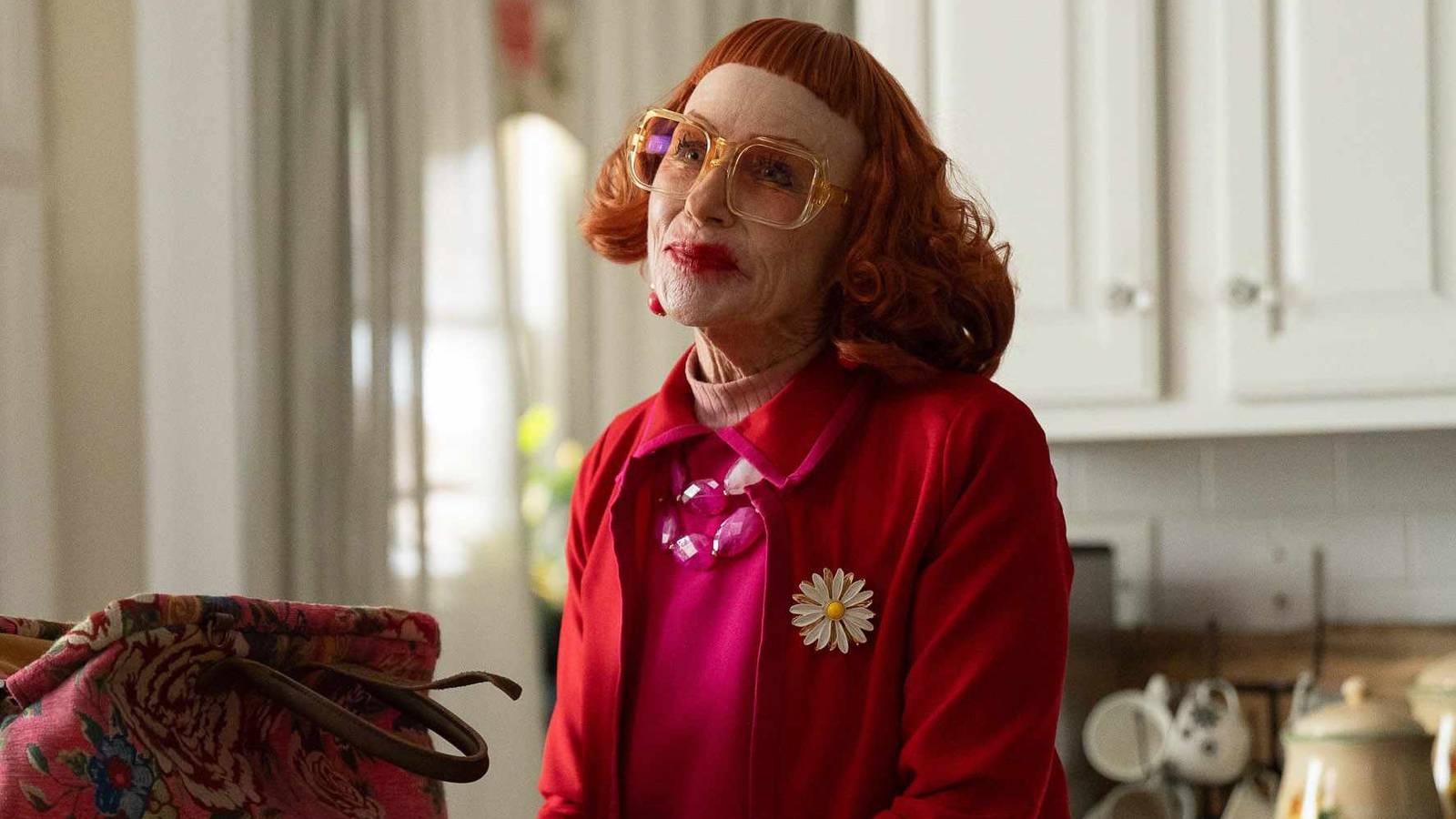
Image via Warner Bros. Pictures Published Nov 5, 2026, 5:20 PM EST Michael Block is a 14 time GLAM Award nominated writer, producer, and host of the podcast Block Talk. Throughout his time in the entertainment industry, he has worked on and off Broadway as a stage manager, written several produced plays, critiqued hundreds of theatrical performances, drag and cabaret shows, and has produced events randing from drag competitoons to variety concerts! On Block Talk, he interviews nightlife personalities, covers the wide world of entertainment through features, ranking episodes, and recaps ALL of Drag Race, as well as Dragula and Survivor. He has interviewed hundreds of RuGirls that span the globe at DragCon NYC, DragCon LA, and DragCon UK. In his free time, he makes one-of-a-kind jewelry and gift baskets with his mom. He is a proud member of the LGBTQ+ community. Sign in to your Collider account The thrill of a thriller is how the story makes you feel. A great thriller film relies on sustained tension, high stakes, and constant uncertainty that keeps you on the edge of your seat. A great thriller works by manipulating how and when the audience learns crucial information. Often featuring tight editing, sharp sound design, dim lighting, and deliberate pacing to suffocate the comfort zone and build toward a memorable climax, a thriller becomes legendary when it leaves a lasting impression. The 21st century has provided some extraordinary entries within the genre, but this current decade seems to be turning into a profound golden age. Since 2020, the thriller has become brilliantly risky, mixing big-budget masterpieces with mind-blowing indie projects that have altered the landscape. With so many brilliant films over the last six years, the six on this list have emerged as the very best. From game-changing horror thrillers to psychological dramas that mess with your mind, these six films became instant classics the moment they were released. What’s your favorite thriller of the 2020s? 6 'Pig' (2021) Image via Neon In the highly underrated Pig, directed by Michael Sarnoski, Rob Feld (Nicolas Cage) is a reclusive truffle hunter living in the Oregon wilderness whose beloved foraging pig is suddenly stolen. To rescue her, he must return to his past life in the Portland culinary scene and confront the grief he left behind. It is a quiet, meditative drama about loss, artistic expression, and connection, not a traditional revenge thriller. By subverting genre tropes, Pig became the antithesis of thrillers, honing in on themes of authenticity and the power of connection. Initially set up to look like a gritty "John Wick with a pig," where a hermit tracks down his stolen pet, the film abandons blood and retribution in favor of deep conversations and emotional vulnerability. Cage delivers a grounded, mournful, and restrained performance, moving into a new chapter of his storied career. The dynamic between Rob and his young, status-obsessed truffle buyer Amir (Alex Wolff) acts as a mirror for both to face their traumas head-on. The film becomes a poetic examination of how people process loss, regret, and the difference between fake artifice and genuine passion. Pig is a mesmerizing and moving story of love and loss that redefined how a thriller can be presented. 5 'Anatomy of a Fall' (2023) Image via Neon Don’t sleep on foreign films! The 2020s have seen a rise of foreign films finding their way into the Hollywood mainstream. Such was the case for Anatomy of a Fall. Directed by Justine Triet, the psychological courtroom thriller follows Sandra Voyter (Sandra Hüller), a German writer accused of murdering her French husband, Samuel Maleski (Samuel Theis), after he falls to his death from their secluded alpine chalet. With their visually impaired son, Daniel Maleski (Milo Machado-Graner), as the sole witness, the trial transforms from a forensic investigation into an intense, public dissection of the couple's turbulent marriage and conflicting realities. Ultimately, Anatomy of a Fall explores the ambiguous boundaries of truth, language, and memory when a relationship is put on trial. The film emerged as a legal and psychological thriller because it treats the "truth" as an elusive, multi-layered question rather than a simple puzzle to be solved. It turns a murder investigation into a surgical dissection of an ordinary, flawed, and decaying relationship. Through the ambiguity of truth, the narrative explores how personal history, bias, and fiction can be weaponized in a courtroom. The film put the sensational Hüller on the map thanks to her stoic, razor-sharp, and deeply vulnerable performance. Earning the Palme d'Or at Cannes, Anatomy of a Fall strips away genre clichés to offer a haunting look at how private grief is put on public trial. Image via Searchlight Pictures You’ll never look at your food the same after watching The Menu. Directed by Mark Mylod and written by Seth Reiss and Will Tracy, the film follows a young couple, Tyler (Nicholas Hoult) and Margot (Anya Taylor-Joy), and a group of ultra-wealthy elites who travel to a remote island to dine at an exclusive restaurant. The evening takes a sinister turn as the enigmatic celebrity chef, Chef Slowik (Ralph Fiennes), reveals that each conceptual course is part of a calculated, deadly plan to punish his pretentious guests. The Menu serves as a sharp satire on class divide, foodie culture, and the exploitation of the service industry. The Menu stands out as an acid-tongued examination of the pretentious, hyper-exclusive fine-dining industry, using it as a microcosm to skewer classism, economic inequality, and the vanity of the ultra-wealthy. Set almost entirely on a remote private island, the movie builds claustrophobic, uninterrupted tension where every course on the menu escalates the dread. With biting thrills and shocking twists, The Menu delivers a delicious dish in which the audience laughs wholly at absurd foodie culture one moment and feels genuinely disturbed the next. Fiennes commands the screen as the terrifying, cult-leader-like Chef Slowik, while Taylor-Joy masters the grounded outsider who becomes the beacon of promise. The Menu brilliantly keeps you off-guard until the very last dish is presented. Collider Exclusive · 8 Questions · 2 Minutes What Is Your Biggest Horror Nightmare? Elm Street · Chucky · Scream · The Conjuring Four horror franchises. Four completely different ways of scaring you. One waits until you fall asleep. One makes sure nobody believes you. One is already in your group of friends. And one is in the house with your family. Answer eight quick questions about how you actually watch horror, and find out which nightmare was built for you. 😴Elm Street(Freddy Krueger) 🧸Chucky(Child's Play) 📞Scream(Ghostface) 🕯️The Conjuring(The Warren Files) FIND YOUR NIGHTMARE → 01 Which horror scene makes you cover your eyes? Four classic images. One of them is worse than the others for you. ASomebody falling asleep when they really should not. BA toy that has moved, and nobody touched it. CA phone ringing in an empty house. DA child talking to somebody who is not there. NEXT QUESTION → 02 You are home alone and you hear a noise. First thought? Everybody has one. It arrives before you have decided anything. AI am exhausted and my mind is playing tricks on me. BSomething in this room is not where I left it. CSomebody is in here with me. DThis house has never felt entirely right. NEXT QUESTION → 03 Which horror movie rule would you break first? Everybody thinks they would survive. Almost nobody actually does. ANever fall asleep. BNever leave it out of your sight. CNever answer the phone. DNever go down to the basement. NEXT QUESTION → 04 Something genuinely frightening happens. What do you do? Not in a film. In your actual living room, tonight. AConvince myself I imagined the whole thing. BTell someone, and brace for them not believing me. CWork out which person I know could be behind it. DGet everybody in the house into one room. NEXT QUESTION → 05 How do you actually watch a horror film? Be honest about this one. Nobody is checking. AFine during. Wide awake at two in the morning. BShouting at the screen that nobody is listening. CCalling the twist out loud before it lands. DThrough my fingers, holding on to something. NEXT QUESTION → 06 Somebody offers you serious money. Which do you still refuse? The amount does not matter. There is one on this list you are not doing. AFall asleep in a room I have never been in before. BKeep an old doll on the shelf facing my bed. CAnswer every unknown number that calls after midnight. DSpend one night alone in a house with a history. NEXT QUESTION → 07 Which feeling stays with you a week after the film? Good horror does not stop when the credits do. ANot wanting to turn the bedroom light off. BNot trusting one particular object in my house. CLooking twice at people I have known for years. DFeeling like something came home with me. NEXT QUESTION → 08 Something wakes you at 3am. What is the worst possibility? Eight questions in, this is the one that decides your nightmare. AThat I am still asleep, and it knows it. BThat the thing nobody believed me about is here. CThat somebody with a key is downstairs. DThat something is in the doorway, watching us sleep. REVEAL MY NIGHTMARE → The Lights Just Went Out Your Nightmare Is…Four franchises, four completely different ways of getting underneath your skin. This is the one built out of your particular fear, why it works so well on you, and what it would leave behind. Elm StreetYour nightmare does not wait outside the door. It waits for you to close your eyes, which you are going to have to do eventually, because nobody has ever won that particular argument. Freddy is horror's cruellest idea: a threat that lives in the one place you cannot guard, cannot lock, and cannot avoid forever. You are the one who is fine during the film and wide awake at two in the morning. Your own head is where this does its damage. These films understood exhaustion as a horror engine. The kids on Elm Street do not lose because they are weak. They lose because they are tired. You can lock every door in the house. You still have to sleep. ChuckyYour nightmare is not really the doll. It is the face of the person you tell, and the way they decide, very kindly, that you have imagined all of it. Chucky works precisely because he is absurd. That is the trap: the more accurately you describe him, the less anybody is going to believe you. You are the one shouting at the screen because the characters are not listening. You know that feeling from real life too. The franchise is at its best when the adults in the room are the real obstacle, and you have met those adults. By the time somebody finally believes you, you will have handled most of it on your own. ScreamYour nightmare has your number, knows your name, and has almost certainly been inside your house before. The worst part is that you already know them. Scream is the only one of these where the killer takes the mask off and turns out to be somebody who was at the party. You are the person who calls the twist out loud before it lands. You watch people the same way you watch films. The franchise made the rules of horror part of the plot, which means the survivors are the ones paying attention. You would be paying attention. Everybody is a suspect, including the person who just offered to walk you home. The ConjuringYour nightmare is not really about you. It is about the people asleep down the hall, and the feeling that whatever is here is not interested in leaving. The Conjuring films are domestic horror. The house, the family, the perfectly ordinary room that quietly stops feeling ordinary. Your instinct is to get everybody into one room. Your fear is protective rather than personal, which is rarer than it sounds. This is the one franchise where belief is the weapon. The people who come through it are the ones who are not alone and refuse to be. Whatever is here did not come for you. It came for the household, and you are the one standing in the hallway. ↻ RETAKE THE QUIZ 3 'The Invisible Man' (2020) Image via Universal Pictures A masterclass in modernizing a classic text, The Invisible Man brings fear, terror, and profound social commentary. Written and directed by Leigh Whannell, The Invisible Man tells the story of Cecilia Kass (Elisabeth Moss) as she escapes her abusive, wealthy optics scientist boyfriend, Adrian Griffin (Oliver Jackson-Cohen). After Adrian seemingly commits suicide, Cecilia becomes convinced she is being stalked and terrorized by an unseen, invisible force. With no one else believing her claims, she must fight independently to uncover the deadly truth and save herself. The Invisible Man earns its honorable reputation by transforming a classic sci-fi monster tale into a tense, grounded study of domestic abuse and gaslighting. Instead of focusing on the mad scientist, the narrative centers on the victim. It mirrors the psychological isolation of real-world coercive control and gaslighting, where no one believes that an abuser is still haunting you. Whannell frequently frames Cecilia off-center in wide shots, leaving empty hallways and seemingly vacant rooms on screen, forcing you to scan the background, generating constant paranoia and suspense. Moss delivers an intensely physical performance, reacting to empty space, silent dread, and invisible physical force with visceral realism. It’s one of her best performances to date. The film is a masterclass in thrills, putting Whannell on the visionary map. 2 'Obsession' (2026) Image via Focus Features 2026 is the year of low-budget horror masterpieces. Leading the charge is the incomparable Obsession. Written and directed by Curry Barker, the story follows a socially awkward man named Bear Bailey (Michael Johnston) who uses a cursed novelty toy called the One Wish Willow to force his coworker crush, Nikki Freeman (Inde Navarrette), to fall in love with him. While his wish initially seems to come true, Nikki's affection quickly warps into an extreme, violent, and terrifyingly possessive fixation. As the supernatural compulsion takes over, Bear finds himself trapped in a dangerous nightmare of his own making that escalates into fatal consequences. Earning itself a spot as a towering cinematic phenomenon, Obsession brilliantly injects terror into a seemingly basic "be careful what you wish for" setup. Shot on a microbudget, Obsession shocked the world by grossing over $500 million worldwide. The viral word-of-mouth campaign worked as audiences were taken by the brilliant premise and conversations it sparked. On the surface, the film plays with a classic Faustian premise that becomes a brutal critique of male entitlement. The true psychological horror doesn't come from a masked killer, but from Bear’s willingness to strip away Nikki's autonomy and stay with her terrifying, cursed doppelgänger just to preserve his own wish-fulfillment fantasy. The film’s instant legendary status was earned through the dynamic duo of Johnston and Navarette. Barker builds suspense through classic tricks and craftsmanship. The boxed-in frame physically traps the audience with the characters, amplifying the intense feelings of domestic captivity and dread. It’s a masterclass in making silence itself feel threatening, using subtle tonality shifts and unsettling audio rumbles to make viewers physically uncomfortable. Obsession continues the trend of new voices and faces reshaping the genre's landscape. 1 'Weapons' (2025) Image via Warner Bros. One of the most groundbreaking and masterful thrillers in decades, Weapons is sheer brilliance. Written and directed by Zach Cregger, the supernatural mystery-horror thriller centers on a small town thrown into chaos after seventeen third-grade children from the same classroom inexplicably vanish into the dark at exactly 2:17 AM. The story utilizes a non-linear, multi-perspective narrative to follow a pariah teacher, Justine Gandy (Julia Garner), a grieving father, Archer Graff (Josh Brolin), and other local figures as they unearth a sinister web of blood rituals, police corruption, and witchcraft. Beneath its terrifying mystery is a story centered on the eccentric Aunt Gladys (Amy Madigan). Weapons serves as a deeper, personal allegory exploring generational trauma, grief, and the destructive nature of addiction. In a time when franchises and blockbusters dominated Hollywood, Weapons delivered something genuinely ambitious, unnerving, and profound. Cregger weaves an intricate web across six distinct chapters, building tension purely through withheld information. Shot by cinematographer Larkin Seiple, the film utilizes constant, creeping tracking shots and slow zooms that refuse to let the audience look away. The claustrophobic nature is matched by a haunting sound design, generating visceral dread even when the horrors occur entirely off-screen. The film effortlessly balances bleak, psychological terror with sharp, pitch-black humor. Its tonal agility lets it shift from pure terror to surreal absurdity without ever breaking its spell. The film earned high honors thanks to Madigan’s iconic performance. She ensured Aunt Gladys earned a spot in the horror villain hall of fame. Weapons is a thriller masterpiece that became the new gold standard. Weapons Release Date August 8, 2025 Runtime 128 minutes
The 6 Best Thrillers Released Between 2020 and Now
Full Article
Original Source
Read the full article at Collider →KhanList aggregates and links to publicly available news content. We do not host full articles from third-party sources. Always verify important information with original sources.