
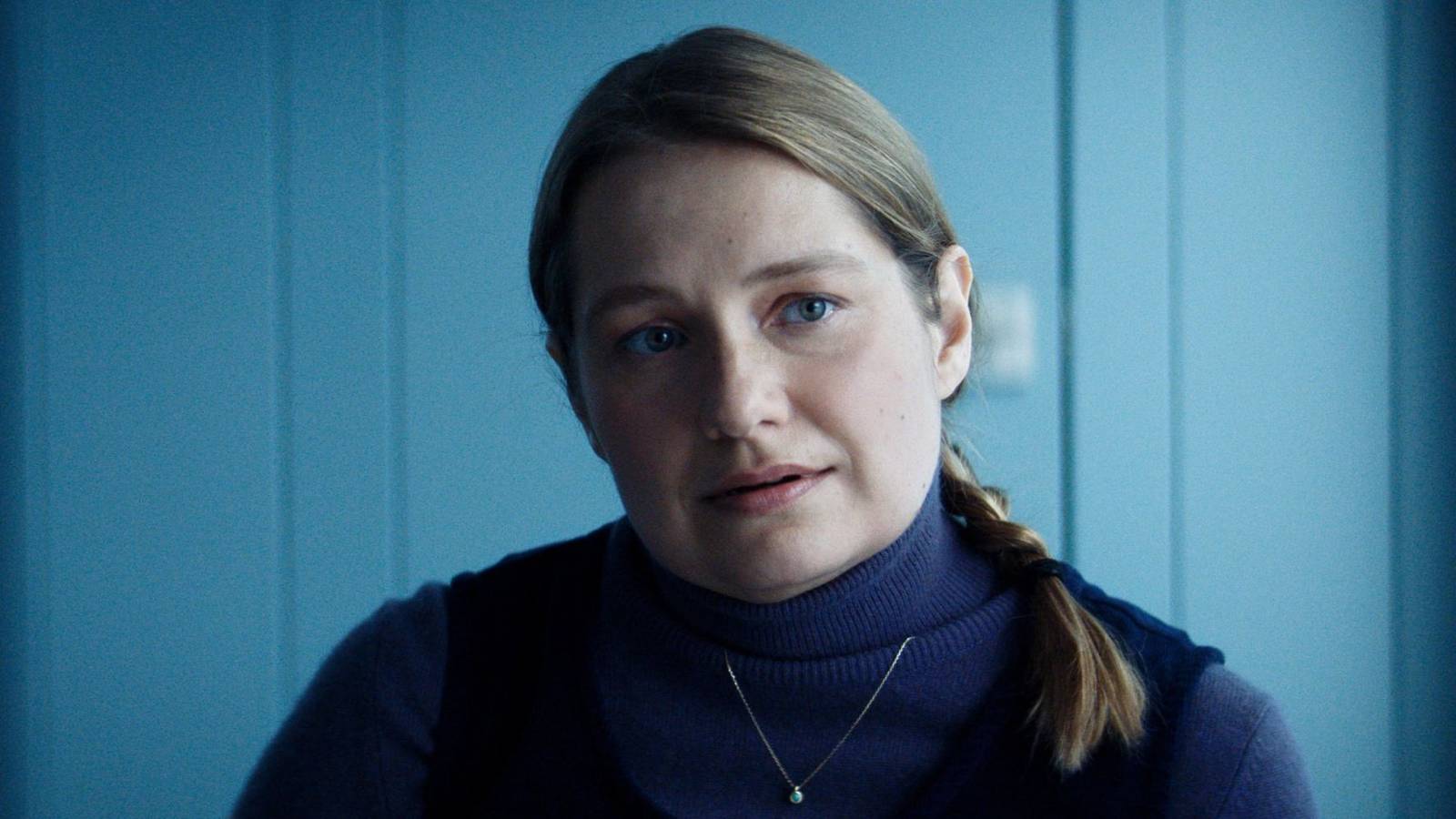
Image via ©Apple TV+ / Courtesy Everett Collection Published Aug 28, 2026, 8:24 AM EDT Sign in to your Collider account Science fiction television got much braver after 2000. Networks and streamers increasingly trusted audiences with fractured timelines, morally compromised heroes, dense political systems, artificial consciousness, and entire episodes built around ideas that might take hours to fully unpack. The genre stopped needing to simplify itself just because it had a weekly schedule. The best series from this period also understand that one clever premise cannot carry fifty hours of television, which is the main problem of shows that majorly came in the 90s. A world needs people whose decisions change it. Technology needs consequences. Politics need personal stakes. And when a show really gets all of that right, finishing an episode at midnight becomes an extremely dangerous decision. These 6 sci-fi TV shows were released in the 21st century and they’re my favorites. 6 'Severance' (2022– ) Image via Apple TV Severance takes the familiar fantasy of leaving work at work and turns it into something horrifyingly literal. Employees at Lumon Industries can undergo a procedure that separates their workplace memories from everything outside the office, creating an “innie” who never experiences home and an “outie” who never experiences the job. Mark Scout (Adam Scott) enters that system while grieving his wife, then gradually discovers that Lumon’s immaculate corridors are hiding far more than an unusual employment policy. Apple renewed the series for a third season after its second became the platform’s most-watched series at the time. The corporate satire is vicious, yet the show gains its emotional power from treating innies as full human beings instead of conceptual puzzles. Helly R. (Britt Lower)’s rebellion, Irving Bailiff (John Turturro)’s attachment to Burt Goodman (Christopher Walken), Dylan George (Zach Cherry)’s growing curiosity about his outside life, and Mark’s divided existence keep widening the moral problem. Even waffle parties and employee rewards become unsettling once Lumon controls the workers’ entire reality. Few current shows turn office furniture into this much psychological pressure. 5 'Dark' (2017–2020) Image via Netflix A child disappears from the German town of Winden in Dark, pulling four interconnected families into a mystery spanning generations. What initially resembles a missing-person thriller gradually exposes caves, nuclear history, family secrets, and a relationship with time that becomes increasingly complicated. Netflix’s three-season series follows that structure all the way through rather than stretching its mystery indefinitely. The achievement is organizational as much as emotional. Parents, children, younger selves, older selves, and family relationships keep crossing until remembering who someone is can become its own intellectual workout. Yet the complexity always circles back to recognizable desires. People want to save children, undo mistakes, preserve relationships, or escape grief, and those understandable impulses repeatedly create larger problems. Dark rewards concentration more than almost any streaming-era series. 4 'Black Mirror' (2011– ) Image via Channel 4 Black Mirror has spent seven seasons taking recognizable human behavior and giving it slightly more dangerous technology. Its anthology format means one episode can explore artificial consciousness while another attacks social status, surveillance, digital grief, entertainment, or the temptation to preserve every memory. Netflix released six additional episodes with Season 7 in 2025, extending a series that has survived partly because its central anxiety keeps finding new material. Its strongest stories understand that technology rarely creates the weakness being examined. Jealous people become more dangerous when memories can be replayed. Cruel people gain new tools inside virtual environments. Lonely people will accept uncomfortable compromises when software offers companionship. That grounding explains why episodes such as “The Entire History of You,” “San Junipero,” and “USS Callister” feel completely different while belonging to the same show. You can sample Black Mirror instead of committing to it chronologically, although one episode has a habit of becoming three. Collider Exclusive · Sci-Fi Survival Quiz Which Sci-Fi World Would You Survive? The Matrix · Mad Max · Blade Runner · Dune · Star Wars Five universes. Five completely different ways the future went wrong — or sideways, or up in flames. Only one of them is the world your instincts were built for. Eight questions will figure out which dystopia, galaxy, or desert wasteland you'd actually make it out of alive. 💊The Matrix 🔥Mad Max 🌧️Blade Runner 🏜️Dune 🚀Star Wars TEST YOUR SURVIVAL → 01 You sense something is deeply wrong with the world around you. What do you do? The first instinct is often the truest one. APull on every thread until I understand the system — then figure out how to break it. BStop asking questions and start stockpiling — food, fuel, weapons. Questions don't keep you alive. CKeep my head down, observe carefully, and trust no one until I know who's pulling the strings. DStudy the patterns. Every system has a rhythm — learn it, and you learn how to survive it. EFind the people fighting back and join them. You can't fix a broken galaxy alone. NEXT QUESTION → 02 In a world of scarcity, what resource do you guard most fiercely? What we protect reveals what we believe survival actually requires. AKnowledge. If you understand the system, you don't need resources — you can generate them. BFuel. Everything else — movement, power, escape — runs on it. CTrust. In a world of fakes and informants, a truly reliable ally is rarer than any commodity. DWater. And after water, information — the two things empires are truly built on. EShips and credits. The galaxy is big — you survive it by being able to move through it freely. NEXT QUESTION → 03 What kind of threat keeps you up at night? Fear is useful data — if you're honest about what you're actually afraid of. AThat reality itself is a lie — that everything I experience has been constructed to keep me compliant. BA raid. No warning, no mercy — just the roar of engines and then nothing left. CBeing identified. Once someone with power decides you're a problem, you're already out of time. DBeing outmanoeuvred — losing a political game I didn't even know I was playing. EThe Empire tightening its grip until there's nowhere left to run. NEXT QUESTION → 04 How do you deal with authority you don't trust? Every dystopia has a power structure. Your approach to it determines everything. ASubvert it from the inside — learn its rules well enough to weaponise them against it. BIgnore it and stay out of its reach. The further from any power structure, the better. CAppear to comply while doing exactly what I need to do. Visibility is the enemy. DManoeuvre within it carefully. You can't beat a system you refuse to understand. EResist openly when I have to. Some things are worth the risk of being seen. NEXT QUESTION → 05 Which environment could you actually endure long-term? Survival isn't just tactical — it's physical, psychological, and very much about where you are. AUnderground bunkers and server rooms — cramped, artificial, but with access to everything that matters. BOpen wasteland — brutal sun, no shelter, constant movement. At least the threat is honest. CA dense, rain-soaked city where you can disappear into the crowd and nobody asks questions. DMerciless desert — extreme heat, no water, and something enormous living beneath the sand. EThe fringe — backwater planets and busy spaceports where the Empire's attention rarely reaches. NEXT QUESTION → 06 Who do you want in your corner when things fall apart? The company you keep is the clearest signal of who you actually are. AA tight crew of believers who've seen behind the curtain and have nothing left to lose. BOne or two people I'd trust with my life. Any more than that and someone talks. CNobody, ideally. Alliances are liabilities. I work alone unless I have no choice. DA community bound by shared hardship and mutual survival — people who need each other to last. EA ragtag team with wildly different skills and total commitment when it counts. NEXT QUESTION → 07 Where do you draw the line — if you draw one at all? Every survivor eventually faces a moment that tests what they're actually made of. AI won't harm the innocent — even the ones who'd report me without hesitation. BI do what I have to to protect the people I've chosen. Everything else is negotiable. CThe line shifts depending on who's asking and what's at stake. DI draw a long-term line — nothing that compromises my people's future, even if it'd help now. ESome lines, once crossed, can't be uncrossed. I know which ones they are. NEXT QUESTION → 08 What would actually make survival worth it? Staying alive is one thing. Having a reason to is another. AWaking others up — dismantling the illusion so no one else has to live inside it. BFinding somewhere — or someone — worth protecting. A reason to keep moving. CAnswers. Understanding what I am, what any of this means, before time runs out. DLegacy — shaping the future in a way that outlasts me by generations. EFreedom — for myself, for others, for every world still living under someone else's boot. REVEAL MY WORLD → Your Fate Has Been Calculated You'd Survive In…Your answers point to the world your instincts were built for. This is the universe your temperament, your survival instincts, and your particular brand of stubbornness were made for. The MatrixYou took the red pill a long time ago — probably before anyone offered it to you. You're a systems thinker who can't help but notice the seams in things. You're drawn to understanding how the system works before figuring out how to break it. You'd find the Resistance, or it would find you — your instinct for spotting constructed realities is the machines' worst nightmare. You function best when you have access to information and the freedom to act on it. The Matrix built an airtight prison. You'd be the one probing the walls for the door. Mad MaxThe wasteland doesn't reward the clever or the well-connected — it rewards those who are hard to kill and harder to break. That's you. You don't need comfort, community, or a cause larger than the next horizon. You need a vehicle, a clear threat, and enough fuel to outrun it — and you're good at all three. You are unsentimental enough to survive that world, and decent enough — just barely — to be something more than another raider. In the wasteland, that distinction is everything. Blade RunnerYou'd survive here because you know how to exist in moral grey areas without losing yourself completely. You read people accurately, keep your circle small, and ask the questions others prefer not to answer. In a city where humanity is a legal designation rather than a feeling, you hold onto something that keeps you functional. You're not a hero. But you're not lost, either. In Blade Runner's world, that distinction is everything. DuneArrakis is the most hostile environment in the known universe — and you are precisely the kind of person it rewards. Patience, discipline, and political awareness are your core strengths — and on Arrakis, they're survival tools. You understand that the long game matters more than any single victory. Others come to Dune and are consumed by it. You'd learn its logic and earn its respect. In time, you wouldn't just survive Arrakis — you'd begin to reshape it. Star WarsThe galaxy far, far away is vast, loud, and in a constant state of violent political upheaval — and you wouldn't have it any other way. You find meaning in being part of something larger than yourself — a cause, a crew, a rebellion. You'd gravitate toward the Rebellion, or the fringes, or whatever pocket of the galaxy still believes the Empire's grip can be broken. You fight — not because you have to, but because standing aside isn't something you're capable of. In Star Wars, that willingness is what makes all the difference. ↻ RETAKE THE QUIZ 3 'The Expanse' (2015–2022) Image via Amazon The Expanse imagines humanity spread across the solar system while remaining stubbornly human about territory, resources, identity, and power. Earth, Mars, and the Belt have developed distinct political interests, and the discovery of the protomolecule introduces something genuinely alien into a civilization already struggling to avoid war. James Holden (Steven Strait) and the Rocinante crew eventually become caught inside conflicts much larger than the mystery that originally brought them together. Its sixth season carried that story through the war with Marco Inaros (Keon Alexander) and the Free Navy. The universe feels unusually convincing because economics and physics influence daily life. Belters grow up in low gravity and develop their own culture. Ships accelerate hard enough to punish human bodies. Water, air, distance, and acceleration remain strategic concerns rather than decorative science. The political material has equal weight, especially when personal loyalties collide with planetary ones. The Expanse requires attention during its opening stretch, then suddenly you understand why fans became so attached to one battered little gunship. 2 'The Orville' (2017–2022) Image via FOX The Orville begins with the crew of a mid-level exploratory starship traveling four centuries into humanity’s future, encountering new civilizations while dealing with the ordinary complications of working together. Early episodes lean heavily into workplace comedy, which initially made the show appear much lighter than its ambitions actually were. And right after that, it gets real. They get an AI that’s basically a living ChatGPT or Claude’s finest model. They touch on themes of time, stars affecting a planet’s living and punishment cycle, land on a planet that decides when somebody dies based on their social media rankings, and so much more. One of the episodes of the show focuses on the crew landing on a planet that has a whole simulation of the real-world inside it. And the people living inside don’t even know they’re on a spaceship. That’s how mind-bending it gets. And oh boy, the ending is the literal AI war that we’re now so afraid of. That evolution is exactly why it ranks this high. The series can examine artificial life, gender, prejudice, democracy, cultural interference, war, and relationships while retaining a sincere belief that people can learn from one another. Isaac (Mark Jackson)’s place among the crew and the continuing Moclan (remember that viral 500 cigarettes clip?) stories give several of those ideas room to develop across years rather than resetting after one episode. Anyone who misses optimistic space exploration with genuine ethical arguments should give The Orville more time than its comedic reputation suggests. 1 'Battlestar Galactica' (2004–2009) Image via Syfy Channel Battlestar Galactica begins after the Cylons, artificial beings originally created by humans, nearly eradicate civilization. A surviving fleet led by the aging Galactica searches for a new home while Commander William Adama (Edward James Olmos) protects the ships and President Laura Roslin (Mary McDonnell) attempts to preserve civilian government. The situation becomes immediately more dangerous once survivors learn that some Cylons can appear completely human. The series ran from 2004 through 2009 after the story was relaunched through a 2003 miniseries. From there, the show treats survival as a political and moral problem as much as a military one. Elections still have consequences during extinction. Faith competes with evidence. Security can become an excuse for cruelty. Episodes such as “33” establish that pressure almost immediately, while later conflicts keep testing whether democratic principles can survive fear. Adama, Roslin, Kara “Starbuck” Thrace (Katee Sackhoff), Gaius Baltar (James Callis), Lee “Apollo” Adama (Jamie Bamber), and Number Six (Tricia Helfer) each approach that crisis from different emotional and ideological positions, giving the larger war a deeply personal shape. Battlestar Galactica can deliver enormous space battles, but the arguments afterward are often even better.
The 6 Best Sci-Fi Shows Released Since 2000, Ranked
Full Article
Original Source
Read the full article at Collider →KhanList aggregates and links to publicly available news content. We do not host full articles from third-party sources. Always verify important information with original sources.