
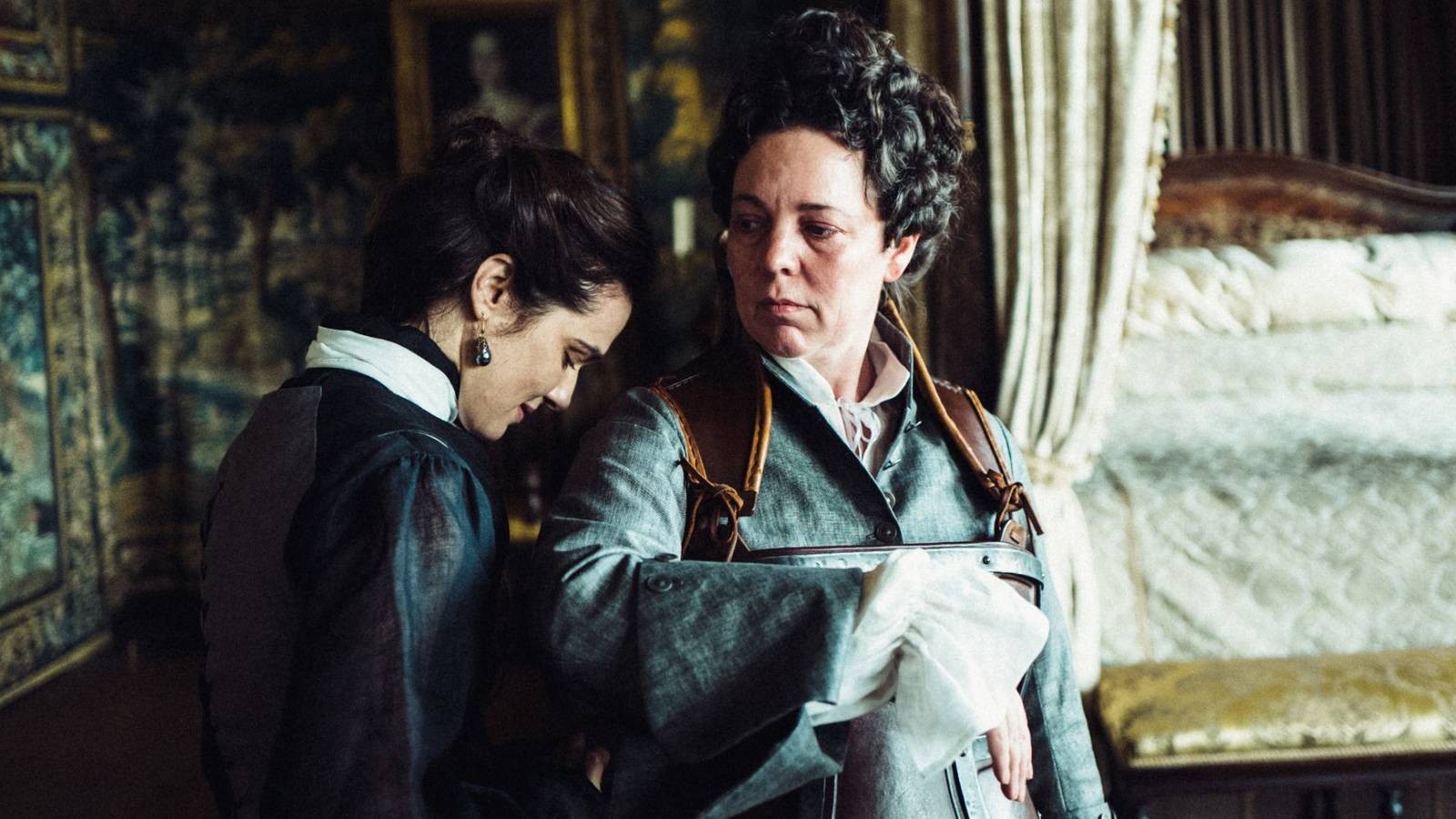
Image via Searchlight Pictures Published Aug 28, 2026, 5:41 AM EDT Sign in to your Collider account It’s almost impossible for a person who has never acted to imagine how taxing mentally and physically it is being an actor. And to pull off something like Heath Ledger did in The Dark Knight? Unimaginable for all. Some performances become cultural shorthand. A walk, a voice, a breakfast order, even the way somebody sits in a chair starts carrying the whole character. That only happens when the acting is detailed enough to survive repeat viewings and alive enough to feel unpredictable the first time. How do you compare someone learning the world from scratch with someone who has spent decades mastering how the world sees her? You really compare control, difficulty, emotional impact, and how completely the character seems to exist beyond the script. These six performances leave almost nothing unattended. Scroll down slowly if you want me going all geeky about this. 6 Emma Stone in 'Poor Things' (2023) Image via Searchlight Pictures Bella Baxter (Emma Stone) begins Poor Things as a woman brought back to life by surgeon Godwin Baxter (Willem Dafoe) with a mind that has barely begun developing. She learns language, movement, pleasure, cruelty, money, philosophy, and independence at astonishing speed, then leaves Baxter’s London home with the spectacularly self-important Duncan Wedderburn (Mark Ruffalo) to experience the world for herself. The role therefore has an unusual problem built into it. Bella has to mature enormously without ever feeling as though the movie simply switched from one version of her to another. That development is visible everywhere. Her early movements are stiff and poorly coordinated, her speech initially treats words like objects she has just discovered, and her curiosity has no embarrassment attached to it because society has not taught her shame yet. As Bella absorbs more of Lisbon, Alexandria, Paris, and the people around her, her physical confidence and language evolve together. Even that gloriously strange Lisbon dance feels like part of the education rather than a comic detour. The role won Stone her second Best Actress Oscar, and the achievement becomes even clearer on a rewatch when you can track how carefully Bella changes from scene to scene. 5 Olivia Colman in 'The Favourite' (2018) Image via Searchlight Pictures Queen Anne (Olivia Colman) occupies the throne in The Favourite (unlike HOTD), but early eighteenth-century England is largely being managed by her close companion Sarah Churchill (Rachel Weisz) while the country fights France. Anne is ill, grieving, lonely, temperamental, and surrounded by people who understand that access to her bedroom can become political power. Abigail Masham (Emma Stone)’s arrival gives Sarah a rival for that access, turning court politics into an intimate struggle over affection, influence, and who understands the Queen well enough to survive her moods. The duck racing is absurd. The emotional stakes underneath it are vicious. Anne could easily have become a collection of eccentricities. Instead, her neediness, cruelty, humor, physical pain, and genuine loneliness keep colliding in ways that make her difficult to reduce to one judgment. The rabbits she keeps are connected to the children she lost, so even one of the film’s strangest visual details carries private grief. Her insults can be hilarious, then a change in her face can expose how frightened she is of being abandoned. That balance is delicate, especially beside two characters constantly trying to manage her. The Academy awarded Colman Best Actress, and it remains one of those wins where the trophy feels almost secondary to how unforgettable the character became. 4 Casey Affleck in 'Manchester by the Sea' (2016) Image via Amazon Studios Lee Chandler (Casey Affleck) has built a tiny life for himself as a janitor in Boston when his older brother dies and forces him back to Manchester-by-the-Sea. He learns that he has been named guardian of his teenage nephew Patrick Chandler (Lucas Hedges), which means staying connected to the town he deliberately left behind. Kenneth Lonergan gradually reveals why Lee cannot simply move home and resume being part of the community, turning an ordinary family responsibility into something he is emotionally unequipped to carry. Lee spends much of the film trying to keep feeling contained inside routine. His shoulders stay tight, conversations end early, and anger arrives faster than language whenever somebody pushes too close. That restraint makes the rare moments when control slips incredibly painful. The encounter with Randi Chandler (Michelle Williams) on the street is especially hard to watch because both people clearly have more to say than either can successfully get out. Lucas Hedges’ Patrick also prevents Lee from disappearing entirely into grief, since guardianship keeps demanding groceries, hockey practices, girlfriends, and practical decisions from a man who would rather shrink his life further. The role earned Affleck the Best Actor Oscar. Collider Exclusive · Oscar Best Picture Quiz Which Oscar Best PictureIs Your Perfect Movie? Parasite · Everything Everywhere · Oppenheimer · Birdman · No Country Five Oscar Best Picture winners. Five completely different visions of what cinema can be — and what it can do to you. One of them is the film that was made for the way your mind works. Ten questions will figure out which one. 🪜Parasite 🌀Everything Everywhere ☢️Oppenheimer 🐦Birdman 🪙No Country for Old Men FIND YOUR FILM → 01 What kind of film experience do you actually want? The best movies don't just entertain — they leave something behind. ASomething that pulls the rug out — that makes me think I'm watching one kind of film and then reveals I'm watching another entirely. BSomething overwhelming — funny, sad, absurd, and genuinely moving, all at once. CSomething grand and weighty — a film that makes me feel the full scale of what I'm watching. DSomething formally daring — a film that pushes what cinema can even do. ESomething lean and relentless — pure tension with no wasted frame. NEXT QUESTION → 02 Which idea grabs you most in a film? Great films are driven by a central obsession. What's yours? AClass, inequality, and what people are willing to do when desperation meets opportunity. BIdentity, family, and the chaos of trying to hold your life together when everything is falling apart. CGenius, moral responsibility, and the catastrophic weight of a decision you can never take back. DEgo, legacy, and the terror of becoming irrelevant while you're still alive to watch it happen. EEvil, chance, and whether moral order actually exists or if we just tell ourselves it does. NEXT QUESTION → 03 How do you like your story told? Form is content. The way a story is shaped changes what it means. AGenre-twisting — I want it to start in one lane and migrate into something completely different. BMaximalist and genre-blending — comedy, action, drama, sci-fi, all in one ride. CEpic and non-linear — cutting between timelines, building a mosaic of cause and consequence. DA single unbroken flow — I want to feel like I'm living it in real time, no cuts to safety. ESpare and precise — every scene doing exactly what it needs to do and nothing more. NEXT QUESTION → 04 What makes a truly great antagonist? The opposition defines the protagonist. What kind of opposition fascinates you? AA system — invisible, structural, and almost impossible to fight because it has no single face. BThe self — the ways we sabotage, abandon, and fail the people we love most. CHistory — the unstoppable momentum of events that no single person can stop or redirect. DThe industry — the machinery of culture that chews up talent and spits out irrelevance. EPure, implacable evil — a force so certain of itself it becomes almost philosophical. NEXT QUESTION → 05 What do you want from a film's ending? The final note is the one that lingers. What do you want it to sound like? AShock and inevitability — a conclusion that recontextualises everything that came before it. BEarned emotion — I want to cry, laugh, and feel genuinely hopeful, even if the world is a mess. CDevastation and grandeur — an ending that makes me sit in silence for a few minutes after. DAmbiguity — something that leaves enough open that I'm still thinking about it days later. EBleakness — an honest refusal to pretend the world is tidier than it actually is. NEXT QUESTION → 06 Which setting pulls you in most? Where a film takes place shapes everything — mood, stakes, what's even possible. AA gleaming modern city with a hidden underside — beauty masking rot, wealth masking desperation. BA collapsing suburban life that opens onto something infinite — the multiverse of a single ordinary person. CThe corridors of power and science at a world-historical turning point — where decisions echo for decades. DThe grimy, alive chaos of New York and Hollywood — fame as both destination and trap. EVast, indifferent landscape — desert and highway where violence arrives without warning or reason. NEXT QUESTION → 07 What cinematic craft impresses you most? Every great film has a signature — a technical or artistic element that makes it unmistakable. AProduction design and mise-en-scène — every frame composed to carry meaning beneath the surface. BEditing and tonal control — the ability to move between registers without losing the audience. CScore and sound design — music that becomes inseparable from the dread and awe of what you're watching. DCinematography as performance — the camera not recording events but participating in them. ESilence and restraint — what's left unsaid and unshown doing more work than any dialogue could. NEXT QUESTION → 08 What kind of main character do you root for? The protagonist is the lens. Who you choose to follow says something about you. ASomeone smart and resourceful who makes increasingly dangerous decisions under pressure. BSomeone overwhelmed and ordinary who turns out to be capable of something extraordinary. CA brilliant, tortured figure whose gifts and flaws are inseparable from each other. DA self-destructive artist whose ego is both their superpower and their undoing. EA quiet, principled person trying to make sense of a world that has stopped making sense. NEXT QUESTION → 09 How do you feel about a film that takes its time? Pace is a choice. Some films sprint; others let tension accumulate slowly, deliberately. AI love a slow build when I know the payoff is going to be seismic — patience for a devastating reveal. BGive me relentless momentum — I want to feel breathless and emotionally spent by the end. CEpic runtime doesn't scare me — if the material demands three hours, give me three hours. DI want it to feel propulsive even when nothing is technically happening — restless energy throughout. EDeliberate and unhurried — I want dread to accumulate in the spaces between the action. NEXT QUESTION → 10 What do you want to feel walking out of the cinema? The best films leave a mark. What kind of mark do you want? AUnsettled — like I've just seen something I can't fully explain but can't stop thinking about. BMoved and energised — like the film reminded me what actually matters and gave me something to hold onto. CHumbled — like I've been in the presence of something genuinely important and overwhelming. DExhilarated — like I've just seen cinema doing something it's never quite done before. EHaunted — like a cold, quiet dread that stays with me for days. REVEAL MY FILM → The Academy Has Decided Your Perfect Film Is…Your answers have pointed to one Oscar Best Picture winner above all others. This is the film that was made for the way your mind works. ParasiteYou are drawn to films that operate on multiple levels simultaneously — that begin in one genre and quietly, brilliantly migrate into another. Bong Joon-ho's Parasite is a film about class, desire, and the architecture of inequality that manages to be darkly funny, deeply suspenseful, and genuinely shocking across a single extraordinary running time. Your instinct is for cinema that hides its true intentions until the moment it's ready to reveal them. Parasite is exactly that — a film that rewards close attention and punishes assumptions, right up to its devastating final image. Everything Everywhere All at OnceYou want it all — and this film gives you all of it. The Daniels' Everything Everywhere All at Once is one of the most maximalist films ever made: action comedy, multiverse sci-fi, family drama, existential crisis, and a genuinely earned emotional core that sneaks up on you amid the chaos. You are someone who responds to ambition, who doesn't want cinema to choose between being entertaining and being meaningful. This film refuses that choice entirely. It is overwhelming by design, and its overwhelming nature is precisely the point — because the feeling of being crushed by infinite possibility is exactly what it's about. OppenheimerYou are drawn to cinema on a grand scale — films that understand history not as a backdrop but as a force, and that place their characters inside that force and watch what happens. Christopher Nolan's Oppenheimer is a film about the terrifying gap between what we can do and what we should do, told with the full weight of one of the most consequential moments in human history behind it. You want your films to feel important without feeling self-important — to earn their ambition through sheer craft and the gravity of their subject. Oppenheimer does exactly that. It is enormous, complicated, and refuses easy comfort. BirdmanYou are drawn to films that foreground their own construction — that make the how of the filmmaking part of the what it's about. Alejandro González Iñárritu's Birdman, shot to appear as a single continuous take, is cinema examining itself through the cracked mirror of a fading actor's ego. You respond to formal daring, to the feeling that a film is doing something that probably shouldn't be possible. Michael Keaton's performance and Emmanuel Lubezki's restless camera create something genuinely unlike anything else — a film that is simultaneously about creativity, relevance, self-destruction, and the impossibility of ever truly knowing if your work means anything at all. No Country for Old MenYou are drawn to cinema that trusts silence, that refuses to explain itself, and that treats dread as a form of meaning. The Coen Brothers' No Country for Old Men is a film about the arrival of a new kind of evil — implacable, arbitrary, and utterly indifferent to the moral frameworks we use to make sense of the world. It is one of the most formally controlled films ever made, and its controlled restraint is what makes it so terrifying. You want your films to haunt you, not comfort you. You are not interested in resolution if resolution would be dishonest. No Country for Old Men is honest in a way that most cinema never dares to be. ↻ RETAKE THE QUIZ 3 Daniel Day-Lewis in 'Phantom Thread' (2017) Image via Focus Features Reynolds Woodcock (Daniel Day-Lewis) runs an elite fashion house in 1950s London with the precision of a private kingdom. His sister Cyril Woodcock (Lesley Manville) controls the machinery around him, wealthy clients depend on his taste, and women tend to move through his personal life without disturbing the routine for long. Then he meets Alma Elson (Vicky Krieps), a waitress who becomes his model and partner and gradually refuses to behave like another temporary piece of the Woodcock system. Suddenly, breakfast can become warfare because somebody buttered toast too loudly. Reynolds is funny partly because his seriousness is absolute. A badly prepared meal, an interruption at the wrong hour, or someone challenging his taste can offend him on a level most people reserve for betrayal. Underneath that fussiness sits real artistic discipline. Day-Lewis studied couture at London’s Victoria and Albert Museum, trained with a professional cutter, and learned enough construction technique to recreate a Balenciaga dress while preparing for the role. That knowledge is visible in the ease with which Reynolds handles fabric and discusses clothes. The pleasure of Phantom Thread grows once you realize this formidable artist has finally met someone who sees his routines clearly and has no intention of worshipping them. 2 Joaquin Phoenix in 'The Master' (2012) Image via Annapurna Pictures Freddie Quell (Joaquin Phoenix) returns from World War II carrying anger, alcoholism, sexual obsession, and almost no idea how to function in ordinary civilian life. He drifts through jobs and drinks concoctions made from whatever chemicals happen to be available until he stumbles onto a yacht belonging to Lancaster Dodd (Philip Seymour Hoffman), the charismatic leader of a movement called the Cause. Dodd becomes fascinated by Freddie as both potential follower and personal experiment, while Freddie seems equally fascinated by a man who believes his chaos can be explained and controlled. Freddie almost seems uncomfortable inside his own skeleton. His shoulders curl forward, one side of his face tightens into a permanent grimace, and his hands frequently settle around his hips as though his body has learned a defensive position his mind never consciously chose. The famous processing exercise with Dodd becomes riveting through repetition, eye contact, and the effort required for Freddie to answer without escaping into violence. Later, the jail sequence turns that same trapped energy physical as he attacks the cell around him while Dodd stands only a few feet away arguing that he can save him. Phoenix received an Oscar nomination for the role. More than a decade later, Freddie still feels less like a constructed character than a damaged human being somebody happened to catch on film. 1 Cate Blanchett in 'Tár' (2022) Image Via Focus Features Lydia Tár (Cate Blanchett) enters Tár with the kind of résumé that makes her sound like a real cultural institution. She is a celebrated conductor leading a major Berlin orchestra, preparing to record Mahler’s Fifth Symphony while teaching, writing, traveling, managing a foundation, and navigating relationships with musicians whose careers can be affected by her attention. Todd Field introduces her through a long public conversation before letting us see the private machinery behind that reputation. Lydia knows how to speak about herself. She also knows exactly what a room expects from someone of her stature. That self-command makes every small disturbance fascinating. The Juilliard masterclass shows how quickly intellectual confidence can turn into domination when somebody challenges her assumptions. Orchestra rehearsals reveal another vocabulary entirely, where a hand movement or correction can communicate authority without a speech. Blanchett prepared by studying conducting, piano, and German, while the musical material was treated seriously enough for professional musicians to share the frame. As pressure starts entering Lydia’s carefully organized life, ordinary sounds and interruptions become harder for her to control, and the character who seemed capable of conducting everything around her starts looking much more vulnerable to disorder. Tár rewards a second viewing enormously. Once you know Lydia’s rhythms, you begin noticing how often she is conducting the room even when there is no orchestra in sight. Tar Release Date October 7, 2022 Runtime 158 minutes
The 6 Best Movie Performances Since 2010, Ranked
Full Article
Original Source
Read the full article at Collider →KhanList aggregates and links to publicly available news content. We do not host full articles from third-party sources. Always verify important information with original sources.