
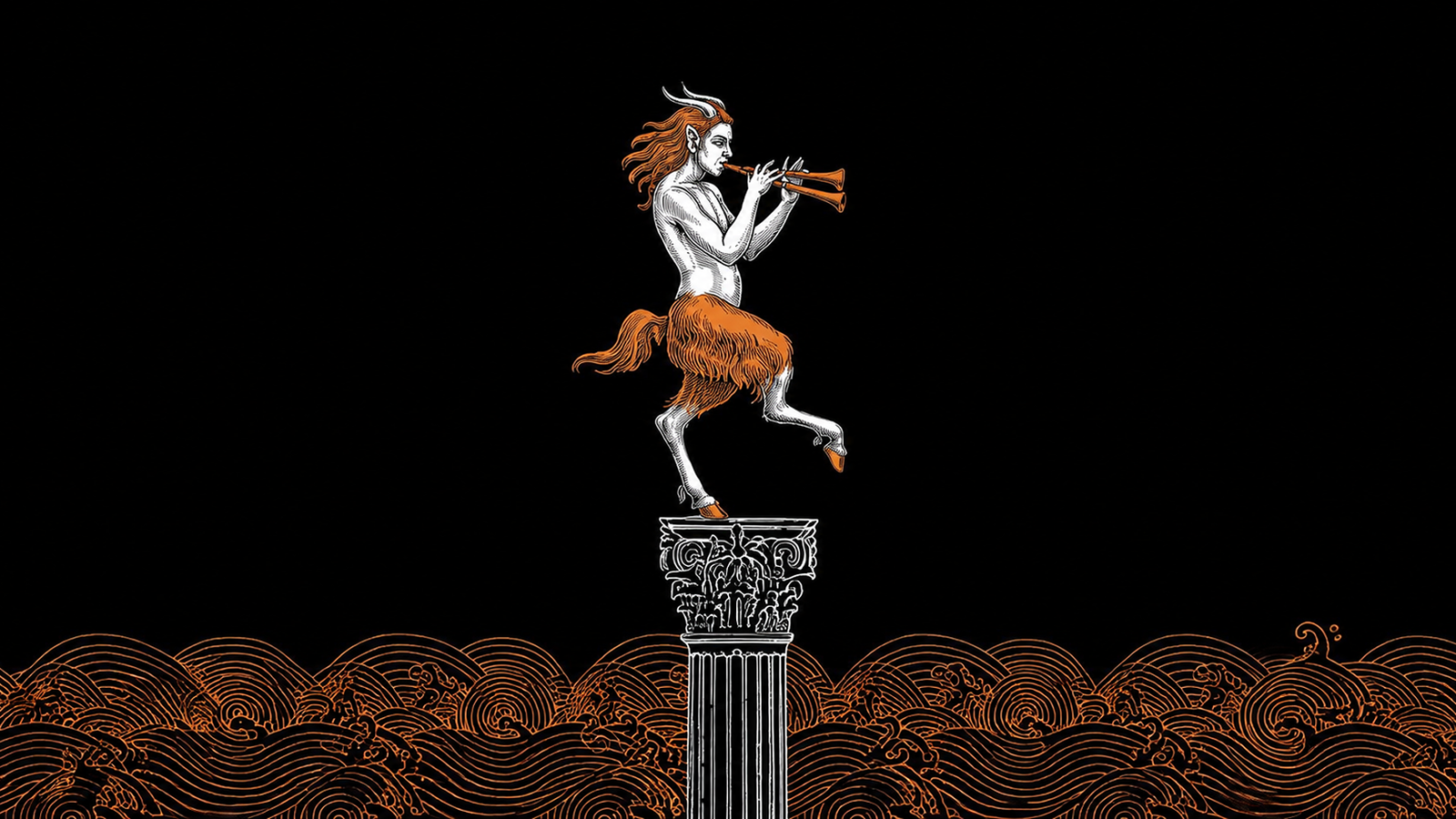
Image via Bloomsbury Publishing Published Sep 15, 2026, 10:48 PM EDT Diego Pineda has been a devout storyteller his whole life. He has self-published a fantasy novel and a book of short stories, and is actively working on publishing his second novel. A lifelong fan of watching movies and talking about them endlessly, he writes reviews and analyses on his Instagram page dedicated to cinema, and occasionally on his blog. His favorite filmmakers are Andrei Tarkovsky and Charlie Chaplin. He loves modern Mexican cinema and thinks it's tragically underappreciated. Other interests of Diego's include reading, gaming, roller coasters, writing reviews on his Letterboxd account (username: DPP_reviews), and going down rabbit holes of whatever topic he's interested in at any given point. Sign in to your Collider account The COVID-19 pandemic was but one of the reasons why the 2020s have been absolutely transformative for not just speculative fiction, but literature as a whole—fantasy literature being no exception. From the boom in popularity of the cozy fantasy subgenre, the rise of romantasy through its popularity on social media, a push for more diverse voices and international mythologies, and a dramatic surge in sales, fantasy literature has seen several key evolutions over the course of the 2020s so far. As a natural result of those transformations have come several exceptional books that, a few decades from now, will likely be counted among the greatest works of fantasy from the first half of the 21st century. Whether we're talking about a momentous installment in a beloved high fantasy book series, such as The Wisdom of Crowds; an unforgettable standalone title for those not looking to get into any new series, such as Piranesi; or any other sort of fantasy gem, the best books that the genre has delivered since 2020 are all proof of how great of a decade this has thus far been for people who love reading fantasy. These last six years have indeed delivered something exceptional for pretty much any and all sorts of fantasy literature fans, so there's no excuse to not check out what contemporary times have to offer in this department. 6 'Piranesi' (2020) Image via Bloomsbury Publishing Piranesi is the second novel by the exceptional English author Susanna Clarke, whose groundbreaking 2004 debut, Jonathan Strange & Mr Norrell, won the 2005 Hugo Award for Best Novel. It was due to a severe case of chronic fatigue syndrome that it took 16 years for the world to be treated to Clarke's sophomore novel, but the wait was more than worth it. Heavily inspired by the short stories of legendary Argentine writer Jorge Luis Borges, Piranesi is written as a journal, following a man who lives alone in a building of infinite size, called The House, whose massive layout he lives to meticulously catalog. People looking for a great standalone fantasy book that requires no series commitment ought to check out Piranesi. Radically original, profoundly emotional, and powerfully surreal in its fantastical world-building. Piranesi is just about as close to true perfection as fantasy can come, a beautifully inventive and hypnotically written work whose themes and environment unsurprisingly resonated greatly with readers locked down in quarantine due to the pandemic. Radically original, profoundly emotional, and powerfully surreal in its fantastical world-building, it's a deep philosophical meditation on themes like identity, the reconstruction of self, and the relationship between humanity and the natural world. The very concept The House was already instantly fascinating on paper, but the way Clarke leverages a unique structure and perfectly-paced prose to elevate that premise makes it all the more admirable. 5 'Jade Legacy' (2021) Image via Orbit Fonda Lee has not yet established herself as a true giant of contemporary speculative fiction, but she's well on her way to doing just that—largely thanks to her incredible Green Bone Saga trilogy, an urban high fantasy story about a family leading a martial arts crime syndicate in a brutal clan war over a rare mineral that grants superhuman powers. The final installment in the series is Jade Legacy, winner of the 2022 Locus Award for Best Fantasy Novel, where the Kaul family's struggle for survival transforms into a decades-long global geopolitical conflict over the monopoly of the titular magical resource. It's one of the best fantasy books of the 2020s so far, because where many high fantasy trilogy conclusions as action-packed as Jade Legacy end up feeling rushed or overly focused on action, Lee develops her story with remarkable patience. Perfectly paced, hugely ambitious, and emotionally riveting, this fantasy epic has a story that spans the course of a whopping three decades, with some of the most masterfully natural and well-executed use of time jumps in the modern history of fantasy literature. All the character arcs come to satisfying boiling points, the world-building (deeply inspired by different Asian cultures) is phenomenal, and the book's philosophical meditations are massively effective. All in all, Jade Legacy is a must-read for fans of both high fantasy and urban fantasy. 4 'Tress of the Emerald Sea' (2023) Image via Tor Fantasy The 21st century has seen many a master of fantasy literature hard at work, but few giants of the genre have been as prolific and successful throughout the last 26 years as Brandon Sanderson. The author and his groundbreaking Cosmere shared universe have completely re-shaped the fantasy genre throughout the 21st century, so it was terribly exciting when Sanderson announced in 2022 that he had written four secret novels during the COVID-19 pandemic. Through a public funding campaign, he released the first of the Secret Projects and the opening installment of the Hoid's Travails series: Tress of the Emerald Sea, about an ordinary girl who stows away on a ship to rescue her friend from a dangerous sorceress. Though sometimes categorized as Young Adult fantasy, this masterpiece inspired by William Goldman's The Princess Bride can be thoroughly enjoyed by fantasy lovers of all ages, seeing as it's one of the best high fantasy books of the last five years. It's an exquisitely subversive fairy tale that feels refreshingly different from the rest of Sanderson's oeuvre, instead delivering a cozier adventure that's a total love letter to classic high-seas swashbuckling fantasy. Tress is a delightful protagonist to follow around on her adventures, the magic system and world-building are about as enrapturing as any Sanderson fan would expect, and Hoid's witty narration is as brilliantly satirical as it is surprisingly deep. 3 'The Burning God' (2020) Image via Harper Voyager R. F. Kuang's Poppy War trilogy is one of the most significant landmarks in the modern history of grimdark fantasy, a masterful series that maps mid-20th-century Chinese history onto a high fantasy setting in ways that proved nothing short of groundbreaking. The final installment in the series is The Burning God, where fire shaman Rin returns to her home village after surviving betrayal and a brutal civil war. While The Poppy War, the first book in the series, heavily mirrored the Second Sino-Japanese War; and The Dragon Republic, its sequel, shifted the focus to political splintering; The Burning God is a specific parallel of the Chinese Civil War and the early years of the People's Republic of China. Deconstructing the archetype of the traditional fantasy hero while masterfully exploring the deepest nuances and intricacies of Chinese history. However, one doesn't need to be Chinese, or even be particularly knowledgeable about Chinese history, in order to deeply enjoy The Burning God is a high fantasy fan. It's one of the best fantasy books of the last 10 years, a brutal tale with a level of commitment to realism and themes of the cyclical trauma of colonization and war that you don't often see in speculative fiction. Deconstructing the archetype of the traditional fantasy hero while masterfully exploring the deepest nuances and intricacies of Chinese history, Western colonialism, and white supremacy, Kuang delivered a gem that's bound to be a modern classic a few years from now. 2 'The Wisdom of Crowds' (2021) Image via Gollancz Joe Abercrombie's First Law series is one of the greatest in the modern history of fantasy. Composed of two trilogies, two short story collections, and three standalone novels, it completely revolutionized grimdark fantasy and showed how the genre could be used to deconstruct traditional epic fantasy tropes. The series' second trilogy is the Age of Madness trilogy, whose final installment, The Wisdom of Crowds, is deemed by some to be Abercrombie's magnum opus. In it, the collapse of an industrialized empire into mob rule replaces old oppression with a chaotic new form of tyranny. What follows is a big part of the reason why the Age of Madness series could be considered one of the best fantasy book trilogies of all time. Packed with the brutal cynicism, sharp sense of satirical humor, and brutal realism that makes the entire First Law series and Abercrombie's oeuvre as a whole so special, Wisdom of Crowds is a masterful study of themes of revolution and the bloody cycle of tyranny which will likely only keep getting better with age. It's flawlessly subversive and full of complex thematic and narrative layers, bolstered by its fascinating character arcs and exceptional pacing. At over 500 pages in length, the book maintains a relentless sense of momentum through it all, aided by Abercrombie's biting dark humor and masterful use of shifting points of view. 1 'Babel' (2022) Image via Harper Voyager Also known as Babel, or The Necessity of Violence: An Arcane History of the Oxford Translators' Revolution, Babel is another masterpiece by the groundbreaking R. F. Kuang, perfect for those who loves the Poppy War trilogy. Set in an alternative fantastical version of Oxford in 1830s England, where Britain's global supremacy are fueled by the use of magic silver bars, the book is a powerful critique of British imperialism, racism, and relentless capitalism. Politically complex, thematically layered, wonderfully imaginative, and perfectly paced, it's more than worthy of being hailed as the greatest fantasy book of the 2020s so far. Babel is one of those fantasy books that are absolutely perfect masterpieces, a magnificently ambitious and meticulously researched fantastical period piece whose vital messages are transmitted with such passion and originality that instead of feeling didactic, they feel genuinely thought-provoking and complex. It's one of the most revolutionary works that the dark academia genre has ever seen, written with a level of understanding of all of its genres and subgenres that it adds something of tremendous value to each and every one of them. If one wanted to understand what has made 2020s fantasy literature so special over the course of these last six years, there would be no better place to start than Babel. Collider Exclusive · Universe Personality Quiz Which Iconic Universe Do You Belong in the Most? Star Wars · Lord of the Rings · Harry Potter · Game of Thrones · Star Trek Five legendary universes. Five completely different visions of what the world could be — or already was. One of them is the world your instincts, your values, and your particular way of existing were built for. Eight questions will tell you which one. 🚀Star Wars 💍Lord of the Rings 🧙Harry Potter 👑Game of Thrones 🖖Star Trek FIND YOUR UNIVERSE → 01 What gives your life its deepest sense of meaning? Every universe is built around a different answer to this question. ABeing part of something larger than myself — a cause, a rebellion, a fight for freedom that outlasts me. BThe journey itself — the places I'll go, the companions beside me, the world I'll discover on the way. CLearning — unlocking what I'm capable of, understanding the world's hidden mechanics, growing into something more. DLegacy — the name I leave behind, the power I build, the mark I make before the world moves on without me. EUnderstanding — exploring what exists beyond the horizon and asking what it means to be alive in a universe this vast. NEXT QUESTION → 02 Which kind of world do you most want to inhabit? The environment shapes who you become. Choose carefully. AA galaxy of planets, each with its own culture — connected by conflict, trade, and the Force. BAncient lands of breathtaking beauty, deep history, and a creeping darkness at the edges. CA world hidden inside our own — full of wonder, community, and magic waiting to be learned. DA brutal, beautiful continent where power is everything and every alliance is a calculation. EA future where humanity has reached the stars — and must decide what kind of species it wants to be. NEXT QUESTION → 03 How do you prefer your conflicts resolved? The shape of a world's conflicts tells you everything about its soul. AThrough sacrifice and courage — someone has to make the impossible choice so others don't have to. BThrough fellowship — the impossible becomes possible when the right people walk the same road. CThrough growth — confronting what you fear, understanding what you lack, and becoming equal to the challenge. DThrough strategy — outthinking, outmaneuvering, positioning yourself so the outcome was never in doubt. EThrough dialogue — finding the third option, the peaceful resolution, the answer that doesn't require a body count. NEXT QUESTION → 04 Who do you want beside you when things get difficult? Your ideal companions reveal the world you were made for. AA small crew — a pilot, a rogue, a warrior — each broken in their own way, unbeatable together. BA fellowship of different kinds of people, bound by purpose and deepened by the long road. CFriends who grew up alongside me — who knew me before I knew myself, and stayed anyway. DAllies whose loyalty I've earned — and tested — and whose ambitions align with mine, for now. EA crew of brilliant, curious, principled people from every corner of known space. NEXT QUESTION → 05 What is your relationship with power? How you seek, wield, or resist power is the map of who you are. AI want to use it to protect — and I'm terrified of what I might become if I'm not careful. BI distrust it. The most important power in this story is the courage to give it up. CI want to earn it — through knowledge, through effort, through becoming someone worthy of it. DI want to wield it. Preferably before someone else decides to wield it against me. EI want to understand it — its structures, its limits, its ethical dimensions. Power without accountability is the real threat. NEXT QUESTION → 06 How does your universe treat good and evil? A world's moral architecture tells you more about it than any map. AThere is a dark side and a light side — and the choice between them is always present, always personal. BEvil is real and ancient and patient — and goodness, however small, is the only thing that can undo it. CGood and evil are real, but they live inside people — and people are complicated, always capable of both. DGood and evil are mostly a matter of perspective and proximity. Power is the only honest currency. EEvil is usually the result of ignorance, fear, or broken systems — and understanding it is the first step to solving it. NEXT QUESTION → 07 What role would you naturally fall into? Every universe has archetypes. Which one fits you without trying? AThe reluctant hero — ordinary origins, extraordinary moment, changed forever by the choice to act. BThe unlikely carrier — the one nobody expected to matter most, quietly bearing the weight of everything. CThe student — not yet who I'll become, learning through every mistake, growing into something the world needs. DThe player — sharp enough to see the game for what it is, ambitious enough to try to win it. EThe explorer — drawn to the unknown, driven by curiosity, most alive when standing somewhere no one has stood before. NEXT QUESTION → 08 What do you ultimately believe about the future? The answer to this is the clearest window into which universe already lives inside you. AThat hope is real — that even in the darkest galaxy, a new hope is always possible. CThat even the smallest person can change the course of the future, if they have the courage to try. CThat love and friendship and doing what's right will matter in the end, even when everything says otherwise. DThat the wheel keeps turning — that power shifts, winters end, and what endures is those willing to fight for it. EThat humanity — or whatever we become — is capable of extraordinary things, if we choose to be. REVEAL MY UNIVERSE → Your Universe Has Been Chosen You Belong In…Your answers point to the iconic universe your values, your instincts, and your particular way of seeing the world were built for. This is where you would find your people — and your purpose. Star WarsYou believe in the cause — in the idea that freedom is worth fighting for even when the odds are impossible and the empire is vast. You are drawn to the moral clarity of a universe where hope itself is a form of resistance. You'd find your people in the Rebellion — a ragtag coalition of true believers held together by conviction more than resources. Star Wars is fundamentally a story about ordinary people choosing to matter in an extraordinary conflict — and that is exactly your kind of story. The Force may or may not be with you. But the will to use it for something larger than yourself certainly is. Lord of the RingsYou understand, in the deepest part of yourself, that the journey matters as much as the destination — and that the world's beauty is worth protecting even at great cost. Middle-earth is a world of ancient wonder, deep friendship, and a darkness that only retreats when enough small acts of courage accumulate. You would thrive here because you value the fellowship more than the glory — the road more than the arrival. Tolkien's universe rewards patience, loyalty, and the willingness to carry something heavy across a very long distance. Those are not burdens to you. They are simply how you move through the world. Harry PotterYou believe that love, loyalty, and doing what's right are not naive sentiments — they are the most powerful forces in any world, magical or otherwise. The Wizarding World is a place of wonder hidden in plain sight, where learning is transformative and the bonds you form at school follow you into every battle. You would flourish here because you take both the magic and the friendships seriously — and you understand that one without the other is incomplete. Harry Potter's universe ultimately rewards those who choose to stand for something even when standing is terrifying. That choice — made quietly, without guarantee — is something you understand completely. Game of ThronesYou see the world clearly — its power structures, its hypocrisies, its brutal arithmetic — and you are not paralysed by that clarity. You use it. Westeros is a world that rewards intelligence, adaptability, and the willingness to understand that every alliance is also a negotiation. You would survive here — possibly thrive here — because you don't confuse the world as it is with the world as you'd like it to be. Game of Thrones is a story about what happens when the idealists and the realists collide. You are sharp enough to know which one lasts longer. Winter always comes. You are already prepared. Star TrekYou believe the future is worth building — that curiosity, cooperation, and the expansion of understanding are not just ideals but the most practical path forward for any civilisation. Star Trek is a universe where the questions matter as much as the answers, and where encountering something utterly alien is cause for wonder rather than fear. You would belong here because you are fundamentally optimistic about what intelligence and decency can achieve — while being honest about how hard that achievement is. The Federation is the universe's most ambitious thought experiment: what if we actually got better? You don't just hope that's possible. You think it's the only thing worth working toward. ↻ RETAKE THE QUIZ
The 6 Best Fantasy Books Released Since 2020, Ranked
Full Article
Original Source
Read the full article at Collider →KhanList aggregates and links to publicly available news content. We do not host full articles from third-party sources. Always verify important information with original sources.