
Credit: Thomas Roell | Shutterstock, Simple Flying Published Sep 29, 2026, 9:00 AM EDT Passionate about promoting aviation, the beauty of flight and the science behind it, Antonio is an avid reader of aviation magazines and books, and he loves visiting airshows all over the world, taking photos and writing about airplanes and helicopters as well. He is currently based in Palermo, Sicily. Sign in to your Simple Flying account On September 15, Prime Minister Mark Carney told Canadians that Ottawa will negotiate long-term concessions to operate the country’s four busiest airports: Toronto Pearson International Airport (YYZ), Montréal–Trudeau International Airport(YUL), Vancouver International Airport (YVR), and Calgary International Airport(YYC). Hours earlier, on the same stage, two of Canada’s largest institutional investors had already unveiled a war chest built to write checks of exactly the size that kind of deal would require. The Maple Fund, a C$50 billion (roughly $36 billion) partnership between CPP Investments and Brookfield Asset Management, wasn’t announced in response to Carney’s plan. Every detail of its design suggests it was built for it in advance. Neither CPP Investments, Brookfield, nor the federal government has confirmed that the Maple Fund will bid on any of the four airports. But the fund’s minimum deal size lines up almost exactly with what a single airport concession would cost, and the paper trail on Brookfield’s interest in Canadian airports predates Carney’s political career, back to when he chaired the company himself. The real questions are whether Ottawa will privatize Pearson, Trudeau, Vancouver, and Calgary; whether the buyer was effectively pre-selected before the “for sale” sign went up; and what that means for every traveler who eventually pays for it through higher fees at the gate. Why a C$50 Billion Fund Launched The Same Day As An Airport Sale Credit: ACHPF | Shutterstock At the inaugural Canada Investment Summit in Toronto, CPP Investments and Brookfield Asset Management launched the Maple Fund on September 15, as reported by Pulse2.0. The fund is structured to deploy up to C$50 billion in equity into Canadian infrastructure and strategic industries. Each partner can commit up to C$25 billion over an initial five-year period, and the fund is built specifically to chase projects with equity values above C$5 billion, a threshold that happens to match almost exactly what a single major airport in concession would cost. Hours after the fund’s launch, Carney confirmed on the same stage, in an official announcement from the Prime Minister’s Office, that Ottawa would seek private capital to operate Canada’s four largest airports, with proceeds reinvested into regional airports and a new sovereign broadband backbone. The scale involved is hard to overstate. As documented by PR Newswire, CPP Investments alone managed C$863.6 billion as of June 30, 2026, while Brookfield oversees more than $1 trillion globally across infrastructure, renewable power, and real estate. Advisors.ca reports that CPP Investments CEO John Graham said the Maple Fund “positions us well to meet this moment” when opportunities of unusual scale and complexity arise, language that reads very differently once an airport concession bid becomes plausible. Brookfield CEO Connor Teskey described the fund as designed to “help drive a generational investment program” for Canadian infrastructure. None of that proves the Maple Fund will end up owning an airport. A fund sized to buy an airport isn’t automatically cleared to buy one, and Ottawa hasn’t published the rules of the sale yet. To see whether the numbers actually connect, the next question is what, precisely, the federal government put up for sale on September 15, and how those assets stack up against what pension capital in Canada has already been buying abroad. What Ottawa Actually Put Up For Sale Credit: Toronto Pearson Airport Carney’s announcement outlined a plan to seek private investment through long-term concessions to operate YYZ, YUL, YVR, and YYC. The plan is not an outright sale of the airports, but a multi-decade lease on the right to run them, similar in structure to the 99-year concession that put Ontario’s Highway 407 in private hands in 1999. Proceeds from those concessions are allocated for regional airport upgrades and a sovereign broadband backbone, part of a broader package that helped push commitments at the summit toward nearly C$500 billion. To understand the scale of what’s on the table, Toronto Pearson alone handled 47.3 million passengers in 2025, more than 950 flights a day, making it the busiest airport in the country by a wide margin, with a runway stretching 11,120 feet (3,389 meters). Vancouver International carried a record 26.9 million passengers last year, Montreal-Trudeau about 22.4 million, and Calgary International 19.4 million, with Canada’s longest civilian runway at 14,000 feet (4,267 meters). Passengers already fund part of the system directly: as reported by Refdesk.ca, Toronto Pearson currently charges an Airport Improvement Fee (AIF) of roughly C$35 ($25) per departing traveler, already one of the highest such fees anywhere, even before any change in ownership. Simple Flying has already covered Toronto Pearson’s multibillion-dollar LIFT modernization program, and Montreal-Trudeau’s C$10 billion, decade-long expansion plan already underway. Any possible new concession holder would inherit both. Airport 2025 Passengers Longest Runway in feet (meters) Current AIF Operator Today Toronto Pearson (YYZ) 47.3 million 11,120 (3,389) C$35 ($25) Greater Toronto Airports Authority Vancouver Intl. (YVR) 26.9 million 11,500 (3,505) C$25 ($18) Vancouver Airport Authority Montreal-Trudeau (YUL) 22.4 million 11,000 (3,353) C$23 ($17) Aéroports de Montréal Calgary Intl. (YYC) 19.4 million 14,000 (4,267) C$20 ($14) Calgary Airport Authority Those numbers raise the harder question: what happens to fees like the AIF, once a private operator, rather than a not-for-profit authority, is the one setting them? To answer that, it helps to look at who has already been buying airports like these, and where. The Brookfield Connection Carney Can’t Fully Step Away From Credit: Chris Loh | Simple Flying The idea behind the Maple Fund is not new. Brookfield reportedly pitched a version of a large Canada-focused infrastructure fund years before the September summit, during the period when Carney chaired Brookfield Asset Management’s board, a role he held from 2020 until he entered federal politics. That timeline matters because it means the fund launched on September 15 wasn’t assembled in the weeks after Carney took office. It was a plan already sitting on the shelf at the company he used to run. Brookfield isn’t new to airports, domestically or abroad. Ontario Teachers' Pension Plan built a global airport portfolio over twenty years, including stakes in Birmingham International Airport(BHX), Bristol International Airport(BRS), and London City Airport (LCY) in the UK, before selling those positions to Macquarie Asset Management earlier this year. PSP Investments, a separate Canadian pension fund, already funds and owns seven airports internationally through its own infrastructure arm and, according to Benefits and Pensions Monitor, wants to bring that experience back home. The pattern is a familiar one in global infrastructure investing: pension funds buy stable, monopoly-like assets abroad, then redeploy that experience domestically once the door opens. What’s unusual here is how quickly, and how precisely, the financing showed up. The next layer worth understanding is not who wants in, but how a concession like this actually gets structured, and what it would take for the Maple Fund, or any bidder, to close. How A Pension Fund Actually Buys An Airport Credit: Vancouver International Airport As mentioned above, a concession isn’t a sale in the traditional sense. Ottawa would retain ownership of the land and the airport itself, while a private operator, potentially a consortium built around the Maple Fund, would pay for the multi-decade right to run operations, collect fees, and fund upgrades, recovering that investment and a return over the life of the contract. To make that kind of long-duration bet more attractive, the federal government paired the airport announcement with a new “Productivity Mega Deduction”, a tax measure that allows immediate expensing of major capital assets, including aircraft, rail track, and bridges, and cuts the marginal effective tax rate on new investment from 13% to 6.4%, the lowest in the G7, as documented by The Rio Times. For a fund built to move slowly and hold assets for decades, that kind of tax treatment materially changes the return math on any bid. A lower tax rate and a familiar concession structure make the deal more attractive to bid on. They do not, on their own, answer the question every traveler actually cares about: what changes at the airport once a private operator, rather than a not-for-profit authority, is running the show. What This Means For The Fees You Already Pay At The Gate Credit: Sorbis | Shutterstock Airport privatization has a well-documented track record internationally, and it isn’t neutral for passengers. Simple Flying has previously examined why Canadian airports can have unusually high landing fees, a cost that can ultimately feed into airline operating expenses and passenger fares. In many countries, private ownership structures have generally coincided with higher landing fees and higher passenger charges over time, costs that airlines pass through in ticket prices, parking, and airport improvement fees. Researchers at the National Bureau of Economic Research analyzed airport acquisitions across different ownership models and found that private ownership was associated with changes in airport fees, with non-private-equity private acquisitions linked to increases in total fees and private-equity acquisitions linked to higher runway fees. In Australia, where major airports operate under private ownership with limited direct price regulation, the competition regulator warned in March 2026 that major infrastructure programs were likely to put upward pressure on airport charges, and that those costs could ultimately flow through to passengers. Toronto Pearson’s AIF, considered among the highest, looks like a plausible starting point rather than a ceiling under a new ownership model. None of this is guaranteed to happen. Toronto Pearson’s current operator has already signaled it isn’t simply handing over the keys, and the fight over how much control Ottawa keeps will decide almost everything that follows. The Number That Will Decide Whether Any Of This Actually Happens Credit: Freshystock | Shutterstock The Greater Toronto Airports Authority, which currently runs Pearson under a not-for-profit lease model, responded to Carney’s announcement by saying it looks forward to working with the federal government on next steps that ensure the airport remains “one of North America’s busiest and high-performing airport hubs,” according to a statement carried by CP24. That’s a far more measured response than a direct succession, and it points to the real fight ahead: whether Ottawa structures these concessions as controlling stakes, which pension funds like PSP have said they require, or as smaller minority positions, which would rule out most of the capital currently circling the deal. We need to watch for two concrete signals over the next year: whether Ottawa issues a formal request for proposals naming a controlling-stake structure, and whether the Maple Fund, or any rival consortium, formally registers interest in any of the four airports once the process opens. Both would be a matter of public record long before any deal closes, and both are more informative than any amount of speculation about who was in the room when Carney and Brookfield’s leadership crossed paths. For now, the sure thing is that CPP Investments and Brookfield built a fund exactly the size of the opportunity Ottawa unveiled that same day, at a company Carney once chaired. Whether Canadians end up paying a private consortium’s return on that bet every time they park at Pearson is a question this fund, and this government, will answer over the next several years, not with an announcement, but with the fine print of a concession contract nobody has written yet.
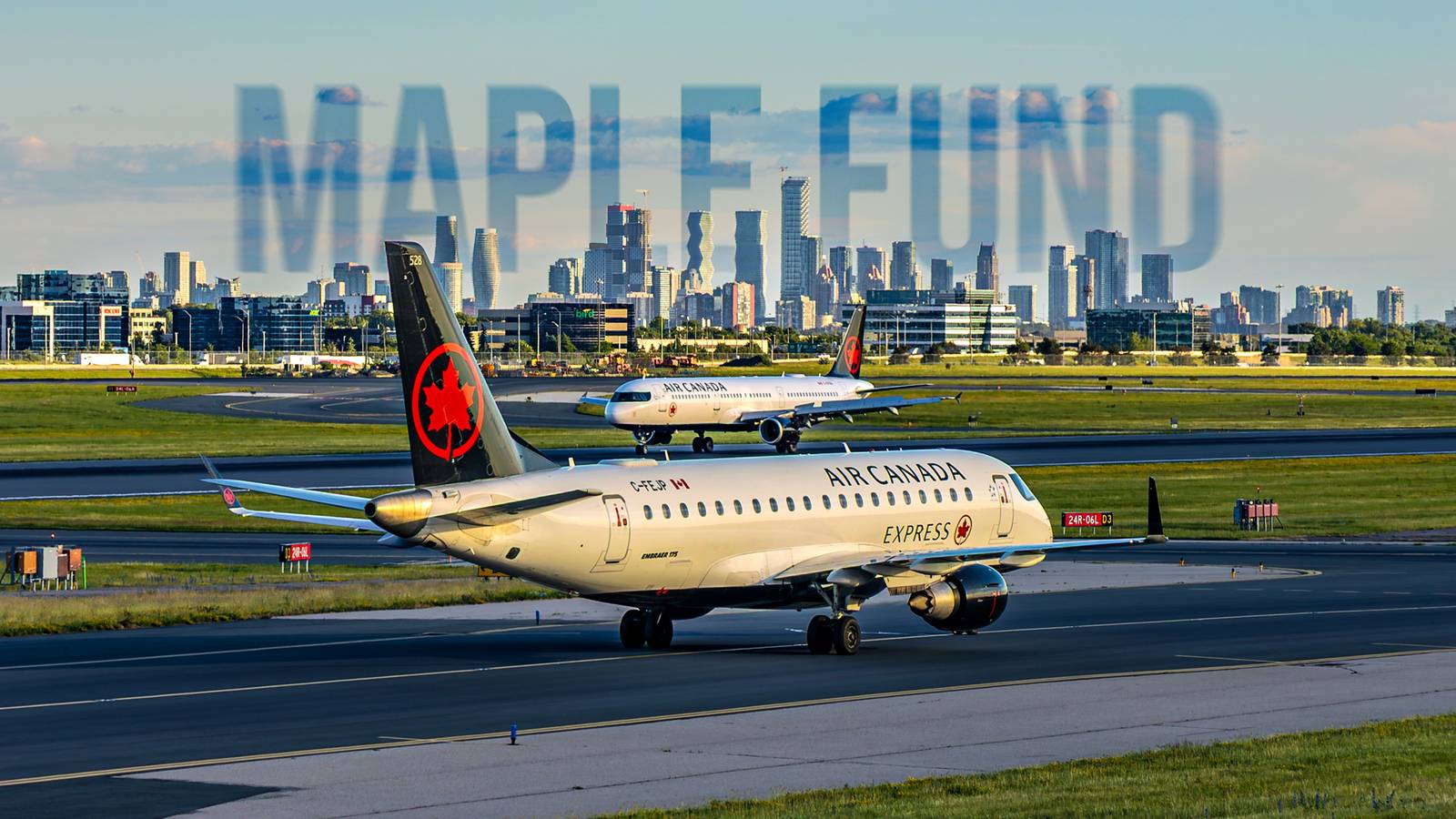
The $50 Billion Fund That Could Take Over Canada's 4 Largest Airports
Full Article
Original Source
Read the full article at Simpleflying →KhanList aggregates and links to publicly available news content. We do not host full articles from third-party sources. Always verify important information with original sources.