
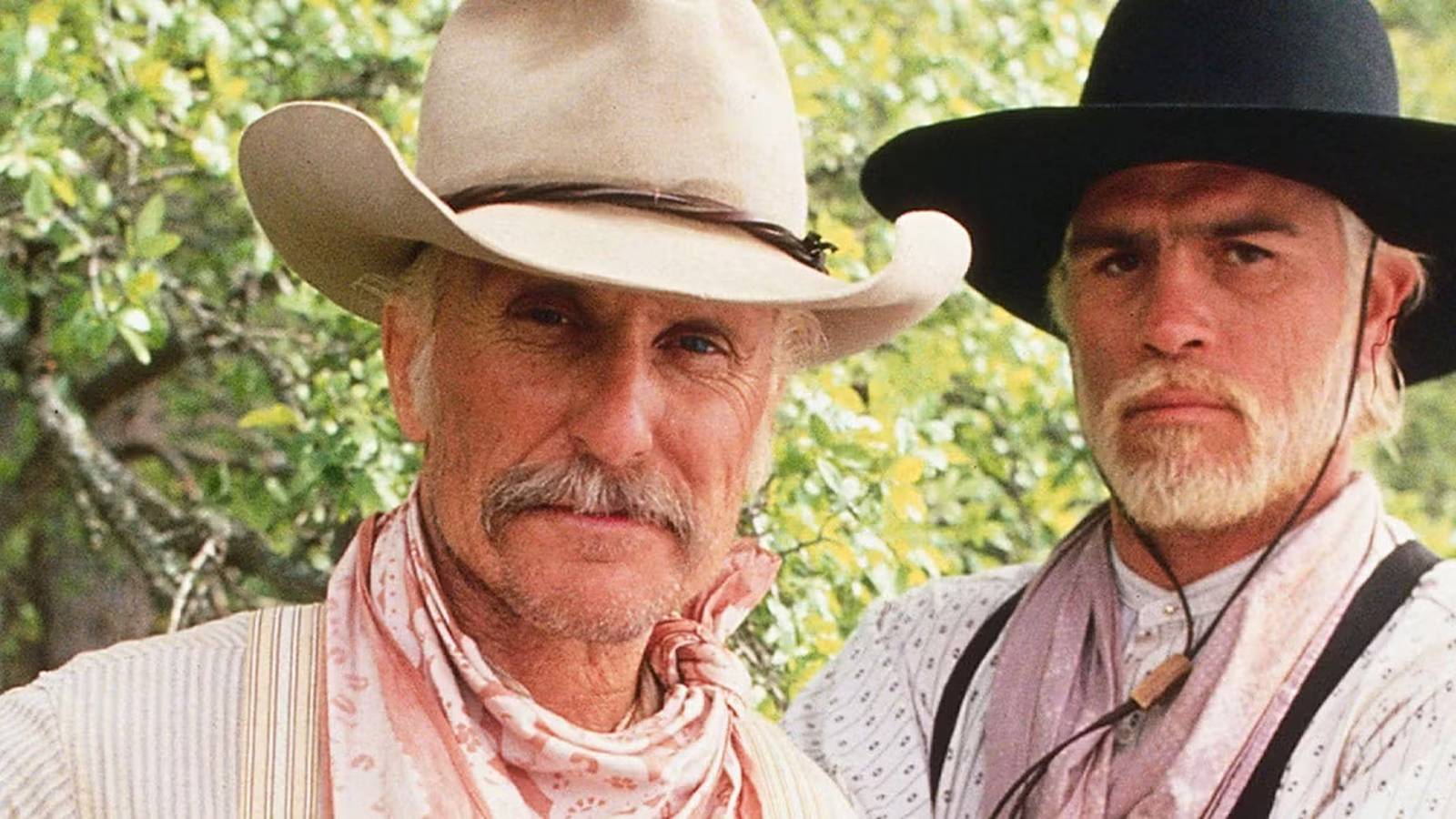
Image via CBS Published Nov 16, 2026, 7:11 AM EST Sign in to your Collider account Imagine missing a crucial episode of your favorite television story because you weren't home on Tuesday night. No streaming service, no convenient replay, and certainly no guarantee that your friends would keep quiet about what happened. Network television once expected millions of people to arrange their evenings around a single story, and the astonishing thing is that some of those stories genuinely deserved the inconvenience. Families gathered around their televisions, strangers discussed characters at work, and fictional tragedies became national conversations. I find something incredibly romantic about that era. These productions were enormous gambles, sometimes asking audiences to spend entire weeks confronting difficult histories or becoming attached to people whose lives stretched across decades. Their costumes and production techniques may have aged, but the best performances haven't lost an ounce of their emotional force. I would happily sacrifice several evenings to experience any of these five for the first time again. 5 'The Thorn Birds' (1983) Image via ABC Growing up on the Australian sheep station Drogheda, Meggie Cleary (Rachel Ward) develops a profound attachment to Father Ralph de Bricassart (Richard Chamberlain), a Catholic priest whose ambitions within the Church become increasingly difficult to reconcile with his feelings for her. Adapted from Colleen McCullough's novel, The Thorn Birds follows their relationship across decades of separation, longing, and decisions neither can comfortably undo. Their circumstances are complicated further by Meggie's formidable aunt Mary Carson (Barbara Stanwyck), whose wealth offers Ralph a particularly cruel temptation. I get genuinely angry watching Ralph convince himself that his religious ambitions somehow excuse the pain he causes Meggie. Chamberlain makes his indecision infuriating because the affection is unmistakable. He simply cannot bring himself to sacrifice the future he imagines for himself. Ward, meanwhile, gives Meggie enough pride and stubbornness that her longing never becomes simple helplessness. The Australian landscapes are gorgeous, but the intimate exchanges are what stay with me. Two people keep finding each other at precisely the wrong moments, and every reunion carries the weight of the years they've wasted. 4 'Shōgun' (1980) Image via NBC John Blackthorne (Richard Chamberlain) arrives in feudal Japan after his Dutch trading ship runs aground, finding himself imprisoned in a society whose language, customs, and political conflicts he barely understands. Shōgun follows his growing involvement with the powerful Lord Toranaga (Toshiro Mifune), who recognizes the English navigator's usefulness in his struggle against rival warlords. Blackthorne's relationship with the intelligent, duty-bound Mariko (Yoko Shimada) gradually makes his new surroundings considerably more personal. Here's a wonderfully bold decision from the original NBC production. Much of the Japanese dialogue was presented without English subtitles, leaving American viewers almost as confused as Blackthorne himself. I love that. His ignorance becomes our ignorance, and every conversation with Mariko feels precious because she's helping him understand a world that could destroy him for one careless mistake. Mifune is magnificent as Toranaga, whose composure makes even a quiet political exchange threatening. But Shimada absolutely steals my heart. Mariko understands obligations Blackthorne can barely comprehend, and watching affection collide with those obligations becomes increasingly painful. Jerry London's direction gives this extraordinary culture clash the scale and patience it deserves. 3 'War and Remembrance' (1988–1989) Image Courtesy of ABC The attack on Pearl Harbor brings America fully into World War II, placing naval officer Victor “Pug” Henry (Robert Mitchum) and his family amid the conflict's increasingly devastating events. Continuing the story begun in The Winds of War, War and Remembrance follows Pug's military responsibilities while his son Byron (Hart Bochner) desperately struggles with the separation from his wife Natalie (Jane Seymour), a Jewish American trapped in Nazi-controlled Europe with their young son. Their experiences intertwine personal relationships with the catastrophic realities of the war and the Holocaust. I find Natalie's storyline extraordinarily difficult to watch. She and her uncle Aaron Jastrow (John Gielgud) understand the danger surrounding them, yet knowledge offers precious little protection against a system designed to strip people of their humanity. Producer-director Dan Curtis filmed portions of the drama at Auschwitz itself, an extraordinary production decision that adds a profoundly disturbing weight to its depiction of Nazi atrocities. Some of the broader military storytelling can feel almost impossibly ambitious, but the contrast is devastating. While governments calculate strategies and armies move across continents, a family is desperately trying to remain together. That human perspective gives this enormous production its emotional power. 2 'Lonesome Dove' (1989) Image via CBS Augustus McCrae (Robert Duvall) and Woodrow Call (Tommy Lee Jones) are retired Texas Rangers who decide to lead a cattle drive from the dusty border town of Lonesome Dove to Montana. Their company includes loyal scout Joshua Deets (Danny Glover), young cowboy Newt Dobbs (Ricky Schroder), and several other travelers whose dreams gradually collide with the brutal realities of the frontier. Based on Larry McMurtry's novel, Lonesome Dove offers an enormous Western adventure built around two old friends who understand each other remarkably well while agreeing on almost nothing. God, I love Gus. He complains, jokes, flirts, and talks enough for three people, while Call seems determined to keep every recognizable emotion securely locked away. Duvall and Jones are so convincing together that you can imagine the countless arguments these men had long before the story began. And then there's Newt, who desperately wants Call to acknowledge the bond between them. His longing becomes increasingly painful because Call is capable of tremendous loyalty yet struggles to express affection. Simon Wincer directed the four-part adaptation, balancing grand Western spectacle with these wonderfully intimate relationships. Collider Exclusive · 8 Questions · 2 Minutes Which Western Icon Are You Most Like? No Name · Doc Holliday · Wyatt Earp · Mattie Ross Pick your name, your gun, your horse and how you spend a night in town, and we will tell you which legend of the Old West you would have been. Four icons are waiting at the end of this: the stranger who never gives his name, the gambler who would die for a friend, the lawman who never wanted the badge, and the girl nobody has ever talked out of anything. 🚬No Name(Dollars Trilogy) 🃏Doc Holliday(Tombstone) ⭐Wyatt Earp(Tombstone) 🐎Mattie Ross(True Grit) FIND YOUR ICON → 01 The town is about to learn your name. What do they call you? In a Western, what people call you is already half the character. AThey never do find it out, so the stranger will have to do. BA nickname I picked up at a card table and never shook off. CMarshal, and most people say it with a bit of respect. DMy full name, and I will correct anybody who tries to shorten it. NEXT QUESTION → 02 What are you carrying? Everything out here is character, right down to what is sitting on your hip. AOne revolver I have had for years and have never once talked about. BA pistol, a knife and a deck of cards, and the cards do most of the damage. CA shotgun, because it tends to end arguments rather than start them. DMy father's gun, which is far too big for me, and I am carrying it anyway. NEXT QUESTION → 03 What are you riding? A hero and their horse is one of the oldest relationships in cinema. ASomething plain that nobody in town would look at twice. BWhatever I won last night, which may not be strictly mine yet. CA big steady horse that will not spook when things get loud. DA pony I overpaid for and named myself, and I will hear nothing against him. NEXT QUESTION → 04 You have got one evening in town. How does it go? The saloon is where these films quietly tell you who somebody really is. AOne drink at the far end of the bar with my back to the wall. BAt the card table, holding court, up forty dollars and climbing. CA quick drink, then a walk round town to see that everything is quiet. DUpstairs with the ledger, working out exactly what tomorrow is going to cost. NEXT QUESTION → 05 A stranger offers you money for a job that sounds like trouble. Somebody always turns up with a full purse and a bad idea. AI ask how much, and then I ask for a good deal more than that. BI say yes before he has finished, mostly because it sounds like a story. CI ask him who gets hurt if I turn him down. DI ask for the terms in writing before anybody shakes on anything. NEXT QUESTION → 06 Somebody is waiting for you in the street. What does the town see? Two people, an empty road, and everybody else watching from behind the shutters. ASomebody walking out very slowly who has not said a single word. BSomebody grinning, which everyone watching finds deeply unnerving. CSomebody making one last attempt to talk the other man down. DSomebody far too young to be out there, walking out regardless. NEXT QUESTION → 07 What is the one thing you will not do out here? The code is about the only thing west of the river that actually holds. AExplain myself to somebody who has not earned an explanation. BRide off and leave a friend standing out there on his own. CLet a whole town pay for a fight it had nothing to do with. DLet a grown man tell me I am too young to be standing here. NEXT QUESTION → 08 The job is finished. Where does the story leave you? Eight questions in, this is the one that decides your icon. AOn a ridge somewhere, riding away, without saying goodbye to anybody. BSomewhere warm and worn out, having enjoyed very nearly all of it. CHome, with the badge on the table and the whole thing behind me. DOlder, changed by it, and telling this story for the rest of my life. REVEAL MY ICON → The Dust Has Settled Your Western Icon Is…Four icons and four completely different ways of walking into trouble. This is the one you would have been out there, why it fits, and what it would have cost you. The Man With No NameYou have never explained yourself and you have never needed to, because people work out fairly quickly that you are the most capable person in the room without you ever having to mention it. Eastwood built the character out of everything he refused to do, stripping away the backstory, the speeches and every bit of reassurance until only the competence was left. You keep your own counsel, and while other people occasionally find that unnerving, you have never felt any real need to fix it for them. The Dollars films work because he genuinely is in it for himself right up until the moment he is not, and he never explains that part either. You would be gone before anybody got a chance to thank you. Doc HollidayYou are the funniest person in most rooms and the most loyal person in all of them, and you would be genuinely insulted if somebody suggested those two things were in any tension. Doc has no real reason to be in this fight beyond the fact that his friend is in it, which is the only reason he has ever needed for anything. You lead with wit, and it does a very effective job of hiding how seriously you take the handful of people you actually care about. Val Kilmer's performance is the most quoted in the entire genre because the jokes keep getting sharper as the situation gets worse. You would spend everything you had on this and still describe it as a good week. Wyatt EarpYou never wanted this job, and you took it anyway because the alternative was standing there watching somebody less careful do it badly, which is the most Western reason there has ever been. Earp is the reluctant authority figure, a man who came to town specifically to be left alone and somehow ended up answerable for all of it. You are protective by instinct, so when something goes wrong your first thought is who is exposed rather than who is to blame. These films understand that keeping order costs far more than breaking it, and that the person holding the line almost never gets thanked. You would do the whole thing again, and you would complain about it the entire time. Mattie RossNobody has ever successfully talked you out of something you had already decided was right, and a long line of grown adults has found that out the hard way. Mattie is the most relentless character in the Western canon and she manages it through argument, paperwork and flat refusal rather than a fast draw. You have no patience for being managed, so you negotiate, you check the details and you turn up exactly when you said you would. True Grit is the rare Western where the moral centre is the youngest person on screen and every adult around her has to catch up. You would get what you came for, and the film is honest about what that takes out of you. ↻ RETAKE THE QUIZ 1 'Roots' (1977) Image via ABC Young Kunta Kinte (LeVar Burton) grows up in eighteenth-century Gambia before being abducted, transported across the Atlantic, and sold into slavery in America. Roots follows his struggle to preserve his identity and traces the experiences of his descendants across generations, including his daughter Kizzy (Leslie Uggams) and grandson Chicken George (Ben Vereen). Adapted from Alex Haley's book, the ABC miniseries examines American slavery through the experiences of a family repeatedly subjected to separation, violence, and attempts to erase their history. Burton is extraordinary as Kunta, particularly when enslavers attempt to force him to accept the name Toby. They can punish his body, but his refusal communicates something far more important than simple defiance. Later, John Amos portrays the older Kunta, whose determination to preserve his African identity becomes part of what he passes to Kizzy. I find that continuity deeply moving. Even when family members are separated, the knowledge of who they are survives through stories and names. And Vereen brings tremendous charisma to Chicken George without diminishing the terrible circumstances shaping his life. The series aired across eight consecutive nights in January 1977, becoming an extraordinary national television event. Roots Release Date 1977 - 1977-00-00 Network ABC Showrunner David L. Wolper
The 5 Greatest Network TV Miniseries of All Time, Ranked
Full Article
Original Source
Read the full article at Collider →KhanList aggregates and links to publicly available news content. We do not host full articles from third-party sources. Always verify important information with original sources.