
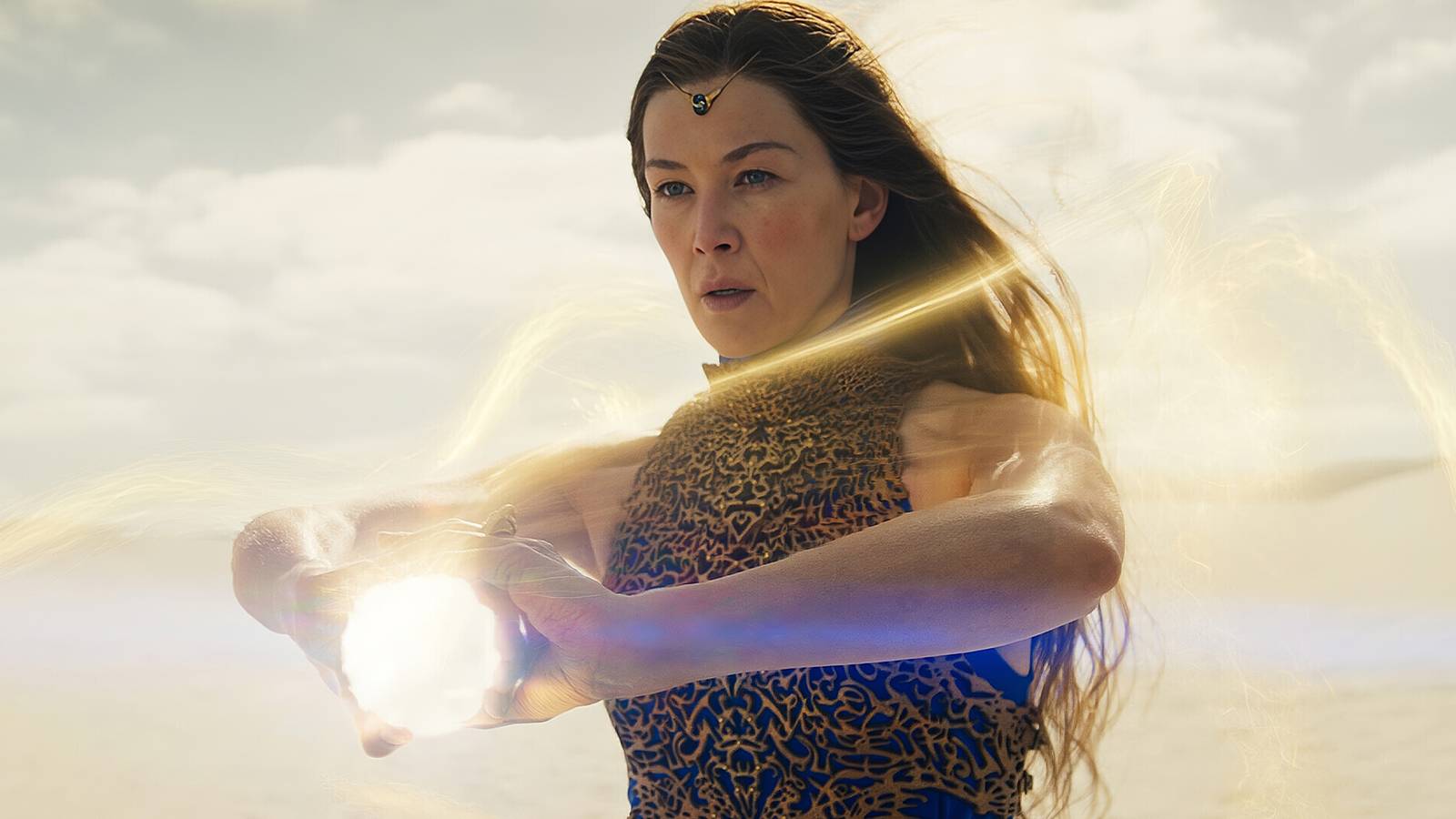
Image via Prime Video Published Aug 23, 2026, 9:22 PM EDT Sign in to your Collider account In the realm of fantasy, magic systems are typically sorted into two main categories: soft and hard magic systems. A soft magic system is generally pretty loose about its rules, with the magic rarely having clear limitations. This type of magic system typically doesn't have a lengthy explanation about how or why it works — it just does. On the flipside, hard magic systems are very structured and rife with rules. There are clear limits, and some even dive into the physics behind them. These magic systems can be found across many forms of media, from books to movies, and even to television. Lots of fantasy TV shows have adopted some pretty complicated magic systems. This is especially true with shows that are based on novels, as the novels are able to detail their systems and relay the information in a way that the screen simply cannot. Though that hasn't stopped them from trying. These are the best fantasy TV shows with hard magic systems, which are almost always complicated and difficult to grasp for new fans. 5 'Shadow and Bone' (2021–2023) Image via Netflix Shadow and Bone is based on a novel series by Leigh Bardugo, who wrote an extensive literary universe known as the Grishaverse. The name "Grisha" is the name of the magic users in this universe. Grishas are gifted with magic from birth, meaning not everybody can learn how to harness the power of magic. Even then, Grishas are pretty limited in what they can and can't do. They are divided into several clans, which are in turn divided into sub-clans based on their particular abilities or talents. First, there are the Corporalki, who can manipulate the human body. These are divided into Heartrenders, who control the heart and organs, Healers, and Tailors, who alter DNA and physical appearance. Then there are the Etherealki, who command natural elements. These are separated into Squallers (wind), Inferni (fire), and Tidemakers (water), with some rarer individuals able to manipulate light or shadow. Lastly, there are the Materialki, the Fabrikators, who control physical objects. These Grishas consist of the Durasts, who manipulate wood, glass, and other materials, and the Alkemi, who control chemicals and poisons. However, each Grisha can only manipulate their environment and cannot conjure things out of thin air; they can typically only use their abilities when their element is present nearby. The magic is treated like a science, and even dives into the physics of things a little bit. It gets even more complicated than that though, which is surprising for a YA series. 4 'The Magicians' (2015–2020) Image via SYFY The Magicians might be a low fantasy TV series, but it still does a good job of presenting an intricate and detailed system of magic. Originally based on the novels by Lev Grossman, the story concerns a man who enrolls at a university to study magic, only to discover that the world from his favorite childhood storybook is real, and more dangerous than he anticipated. This fantasy series is all about magic, so it's important to make the magic system feel rigid, structured, and well-planned. Spells have to be cast in a very exact way — one small slip-up, and it won't work in the way the caster intends it to. First, the caster must perform a highly precise finger gesture paired with an incantation, usually in a dead language like Old Slavonic or Latin. This won't work every single time, though. Each gesture and incantation must be adjusted for the variables in the environment, including weather, time of day, geographical position, and more. This means every magician is practically an advanced scientist, able to perform complex magical calculations of sorts. It's not ideal, but with enough practice, any magician can become an expert at their craft. Though it works slightly differently in the show than it does in the books, it's still pretty complicated. Collider Exclusive · Sci-Fi Personality Quiz Which Sci-Fi Hero Are You Most Like? Paul Atreides · Captain Kirk · Princess Leia · Ellen Ripley · Max Rockatansky Five iconic heroes. Five completely different ways of facing an impossible universe. One of them shares your instincts, your values, and your particular way of refusing to back down. Eight questions will tell you which one. 🏜️Paul Atreides 🖖Capt. Kirk ✊Princess Leia 🔦Ellen Ripley 🔥Max Rockatansky FIND YOUR HERO → 01 How do you lead when the stakes couldn't be higher? The way you lead under pressure is the most honest thing about you. AI absorb everything — every variable, every pattern — and move only when I know the path forward. BI read the room, make the call, and own the consequences. Hesitation costs more than mistakes. CI rally people. A cause needs a voice, and I refuse to let fear be louder than conviction. DI assess the threat, establish what needs doing, and get it done without waiting for permission. EI don't lead. I act. Others can follow or not — I'm already moving. NEXT QUESTION → 02 What is your greatest strength in a crisis? The quality that keeps you alive when everything else fails. APrescience — the ability to see further ahead than anyone else and plan accordingly. BImprovisation — I'm at my best when the plan falls apart and I have to invent a new one. CConviction — I know what I'm fighting for, and that certainty doesn't waver under fire. DComposure — I stay functional when everyone around me is falling apart. Panic is a luxury. EEndurance — I outlast things. I take the hit and keep moving long after others have stopped. NEXT QUESTION → 03 What is the thing you'd sacrifice everything else for? Your deepest motivation is your truest compass. AThe survival and dignity of my people — even if I have to become something frightening to ensure it. BThe safety of my crew — every single one of them. No one gets left behind. CFreedom — for my people, for every world still crushed under the weight of an empire. DThe truth — what actually happened, what's actually out there, whether anyone believes me or not. EThe one person — or the one memory — that still makes any of this worth surviving for. NEXT QUESTION → 04 How do you relate to the people around you? Who you are to others under pressure is who you really are. AWith intensity and distance — I care deeply, but the weight I carry makes closeness complicated. BWith warmth and irreverence — I take the mission seriously, not myself. CWith directness and trust — I say what I mean, and I expect the people I work with to rise to it. DWith professional care but clear limits — I'll protect you, but I won't pretend we're family. EWith wariness that slowly becomes loyalty — I don't trust easily, but when I do, it holds. NEXT QUESTION → 05 You're facing a threat that no one else believes is real. What do you do? How you respond when you're the only one who sees it defines everything. APrepare in silence. If they won't listen, I'll be ready when they finally have to. BKeep pushing until someone listens — and if no one does, handle it myself. CBuild the case, find the allies, and make the threat impossible to ignore. DDocument everything. The truth matters even if no one believes it yet. EStop trying to convince anyone. Survive it. That's the only argument that counts. NEXT QUESTION → 06 What has your heroism cost you personally? Every hero pays. The question is what — and whether they'd pay it again. AMy innocence — I've seen what I'm capable of, and I can't unsee it. BPeople I loved — the command chair has a view, but it's a lonely one. CA normal life — I gave up everything ordinary the moment I chose the cause. DMy sense of safety — I know exactly what's out there now, and I can't pretend otherwise. EAlmost everything — and I'm still not sure what I'm carrying it all for. But I keep going. NEXT QUESTION → 07 How do you feel about the rules of the world you're in? Every hero has a relationship with the system. What's yours? AI understand them deeply — and I know exactly which ones must be broken, and why. BI respect the spirit of them and bend the letter when the situation demands it. CThe system is the problem. I'm not here to work within it — I'm here to dismantle it. DI follow protocol until protocol stops being useful. Then I make the call myself. EThe rules collapsed a long time ago. What's left is instinct, and mine are reliable. NEXT QUESTION → 08 When everything is on the line, what keeps you going? The answer is the most honest thing about you. ADestiny — or something that feels so much like it that the difference no longer matters. BThe people on my ship — their faces, their trust, the fact that they're counting on me. CThe belief that what we're fighting for is worth every sacrifice, including this one. DSheer refusal to let it win — whatever it is. I don't stop. That's just who I am. EI'm not sure anymore. But the road is still there, and I'm still on it. REVEAL MY HERO → Your Hero Has Been Identified Your Sci-Fi Hero Is…Your answers point to the iconic sci-fi hero who shares your instincts, your values, and your particular way of facing the impossible. Paul AtreidesYou carry a weight most people would crumble under — the knowledge of what you're capable of, and the burden of what you might have to become. You see further ahead than others and you plan accordingly, even when the vision frightens you. You are driven by loyalty to your people and a sense of destiny you didn't ask for but can't escape. Paul Atreides is not simply a hero — he is someone who understands the cost of power and chooses to bear it anyway. That gravity, that willingness to carry what others won't, is exactly you. Captain KirkYou lead with instinct, warmth, and an absolute refusal to accept a no-win scenario — because you've always believed there's a third option nobody else has thought of yet. You take the mission seriously without ever taking yourself too seriously. Your crew would follow you anywhere, not because you demand it, but because you've earned it. Kirk's genius isn't tactical — it's human. He reads people, bends rules with purpose, and wills outcomes into existence through sheer conviction. That combination of warmth, audacity, and relentless optimism is unmistakably yours. Princess LeiaYou are the kind of person who holds the line when everyone else is losing faith — not because you're fearless, but because giving up simply isn't something you're capable of. You lead through conviction. Your voice carries because your belief is unshakeable. You gave up everything ordinary the moment you chose the cause, and you've never looked back. Leia is not a supporting character in her own story — she is the moral centre of the entire rebellion. That same fierce, principled, unbreakable core is what defines you. Ellen RipleyYou are not reckless, not grandiose, and not particularly interested in being anyone's hero — you just refuse to stop when it matters. You see threats clearly, you document the truth even when no one listens, and when the time comes you handle it yourself. Ripley's heroism is earned, not performed. She doesn't have a speech — she has a flamethrower and a plan. You share her composure under the worst possible pressure, and her refusal to pretend the monster isn't there. When it counts, you don't flinch. That's everything. Max RockatanskyYou have been through fire that would break most people — and what came out the other side is something the world underestimates at its peril. You don't ask for help, don't need validation, and don't wait for anyone to tell you the rules no longer apply. Your loyalty, when it finally arrives, is absolute — but it's earned in silence and tested in action, not in words. Max is not a nihilist. He is someone who lost everything and found, against his will, that he still has something worth protecting. That bruised, stubborn, ultimately human core is exactly yours. ↻ RETAKE THE QUIZ Image via Studio Bones Fullmetal Alchemist is a Japanese anime based on a manga series by Hiromu Arakawa. The show is a bit of a blend of fantasy and steampunk, which has helped it appeal to a broader audience both domestically and internationally. Though short-lived, the show did take a pretty long look at how magic actually works in its weird and wonderful world. As the title suggests, it is heavily related to the concept of alchemy, an ancient practice that served as a precursor to modern chemistry. As such, most of the magic in the show is about the use of metals or chemicals. First, an alchemist must know the theory of what they're doing so that they can understand what they're doing and not cause a catastrophic explosion. Once this is done, the alchemist uses their gift to break down the material at a molecular level before reconstructing it into an entirely new material, object, or shape. Like most hard magic systems, though, there are limits. It closely follows the real laws of physics, such as the law of equivalent exchange. This means you cannot create something from nothing. It also follows conservation of mass, meaning matter cannot be truly destroyed. For any act of transmutation, it is crucial for the alchemist to transform something into an object that is closely related. This means you cannot turn a rock into fire. You would be better off turning it into a brick, since they have more in common. Should any of these rules be broken, the universe forces a "rebound," giving the alchemist a heavy physical or psychological burden in return. This is just how it works at base level — it actually goes even deeper than that. 2 'The Wheel of Time' (2021–2025) Image via Prime Video The magic system in The Wheel of Time is meticulously detailed in the original novel series by Robert Jordan and Brandon Sanderson. It is rigidly structured and has clear and distinct rules. First, there is the matter of inherent power levels. This is a 72-point scale, with every magic user, called a Channeler, falling somewhere on that scale. Women can only access 66 of those points, meaning men are more powerful. However, women are also more likely to be able to Channel, whereas men are doomed to lose their minds eventually due to the Dark One tainting saidin, the male half of the One Power. The female half is known as saidar. One's power level determines the efficiency with which they can channel. Once the One Power is accessed, a Channeler must weave together magical threads of fire, earth, air, water, and spirit. These can be used as is, or combined to produce different effects, such as healing, coercion, or lightning. This process comes at a cost, however. Each time a Channeler uses their power, it drains a bit of their physical energy. This means excessive magic use can quickly exhaust a Channeler, and in some cases, even kill them. Thus, it is not something to be used lightly. The magic system is complicated enough as it is, but it's made even more intricate by the fact that female Channelers, the Aes Sedai, divide themselves into seven different Ajahs, each focusing on different areas of strength in the power. For example, the Green Ajah is very competent with combative magic like lightning bolts and fireballs, whereas the Yellow Ajah leans more towards healing weaves. The show never got much of a chance to dive as deep into things as the books do — especially due to The Wheel of Time's unfortunate cancelation — but it's still a lot to take in. 1 'The Legend of Vox Machina' (2022–Present) Image via Prime Video The Legend of Vox Machina comes from pretty humble beginnings. It initially began on a podcast called Critical Role, which is about custom campaigns for the popular tabletop role-playing game, Dungeons & Dragons. The podcast absolutely blew up, sparking a deal with Amazon Prime Video, which became the TV show that fans know and love today. What's really cool is that the original actors from the podcast actually voice their in-game characters on the show, making it a treat for the fans who have been there since day one. As for the magic system, because it's based on Dungeons & Dragons, it uses the same system of magic that the tabletop RPG does. Every spell cast requires three specific elements: an incantation, a gesture, and a catalyst. Typically, the catalyst is a physical item or a consumable item used as a fuel source. This sounds simple at first, but it goes deeper than that. Mages also have to consistently level up their spells, which scale separately from their character. They also take up spell slots, meaning a mage must choose their arsenal of magic carefully. This magic system is actually fairly complicated, which fits considering its origins. Though fans of the original game or of the show will know it like the back of their hands, it can be a lot to digest for newcomers. Release Date January 27, 2022 Network Prime Video Showrunner Brandon Auman Cast Taliesin Jaffe Percy (voice)
The 5 Best Fantasy TV Shows With Complex Magic Systems, Ranked
Full Article
Original Source
Read the full article at Collider →KhanList aggregates and links to publicly available news content. We do not host full articles from third-party sources. Always verify important information with original sources.