
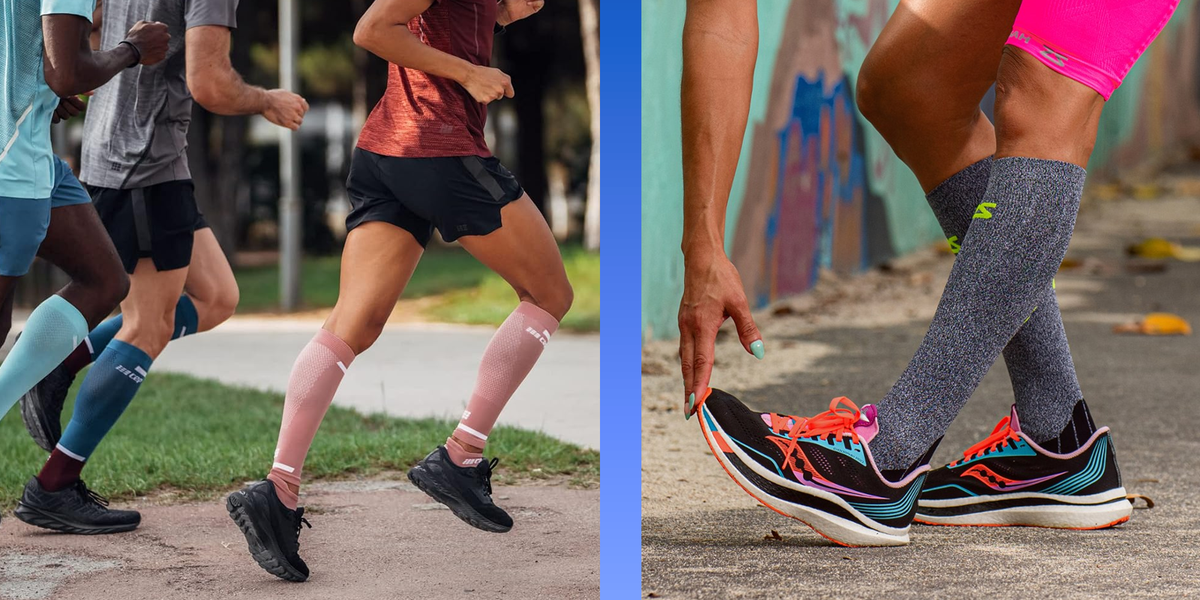
Compression socks are a deceptively simple accessory with a myriad of recovery benefits for runners, travelers, and people who spend all day on their feet. The right style of compression socks can improve blood flow, which helps reduce swelling and gives your legs an active, energized feeling.There are different levels of compression, gradients, and material blends for performance or comfort. Like standard running socks, they also come in a range of heights, though our top picks are all over-the-calf. While some compression socks are made for running, others are best worn in the hours or days after a big race, or even for medical uses beyond running, like treating edema, varicose veins, and deep vein thrombosis.“The best compression socks enhance the body’s ability to circulate blood and deliver oxygen to muscles and tissue efficiently,” says Kaitlyn McCrystal, accessories buyer at Fleet Feet. “They put gentle pressure on your body to keep your lymphatic system functioning at the highest level.”This improved circulation pushes blood back to the heart, helping prevent blood clots and reducing swelling, muscle pain, and inflammation. Studies have even shown that wearing compression socks post-race can help you recover faster. To help you achieve all of these benefits, we gathered the best compression socks, evaluating each pick based on material, height, and more.The Best Compression SocksBest Overall: CEP Tall 5.0 Compression Running SocksBest Post-Race Recovery: 2XU Recovery Compression Socks for RunningBest Women’s Option: Sockwell Women’s Lotus Lift Firm Compression SocksBest Support: Zensah Tech Compression SocksBest Natural Fibers: Sockwell Circulator Compression SocksHow We SelectedI’m a runner, gear tester, and editor in the outdoor realms, with thousands of miles of running, racing, and trail experience. To compile this list, I relied on my personal experiences running and working in these models, as well as that of the Runner’s World staff and wear testers.The original picks were chosen for their range of compression levels and styles, and for this update I looked for the best combination of value, technical fabrics, and ability to wick away sweat and improve recovery. While compression socks aren’t the sexiest running accessory, I did try to find options that looked more athletic and less orthopedic.I also removed several pairs of socks that were discontinued, and opted for newer options that worked for a wider range of runners. I added four new pairs, taking into account material blends as well as a range of gradient compression to suit various needs.I prioritized more natural fibers for a few reasons, including next-to-skin comfort as well as wicking and odor resistance. While compression socks by nature need a higher percentage of synthetic fibers, I always look for ways to incorporate as much natural fiber as possible to help minimize stink and promote softness.Ahead, you’ll find a solid variety of compression socks that hit on all the aforementioned factors I prioritized during research and testing. Alongside our product picks, I also spoke with vascular surgeon and runner Britt H. Tonnessen, MD, and Fleet Feet’s accessories buyer, Kaitlyn McCrystal for extra tips on effectively wearing compression socks.Compression Sock ReviewsProsCompression zones feel beneficial without too much constrictionSweat-wicking and effective moisture managementComfortable for a range of activitiesConsIt’s all synthetic material isn’t as odor-resistantThese socks were top of my list last year, and they’re a hit again this year thanks to the combination of reasonable price point, ample compression, and blister-reducing fit. They’re wrinkle-, bunch-, and twist-resistant, and while the level of compression is moderately high, the gradient keeps the tension around the ankle and lower leg where you want it. This also reduces the compression moving up your leg to help promote blood circulation.While these are good at wicking sweat, they’re made with fully synthetic materials, which means they don’t resist odor as well as natural fibers. However, the tradeoff for this is enhanced durability and structure, which is essential for any runner. This brand offers a somewhat unique sizing range, so be sure to check the size chart to find the best fit.ProsMade with a moisture-wicking material blendHigh level of elastane for shape retentionDurable, reinforced toes and heelConsCould be too long for shorter runnersKey SpecsMaterial80% microfiber nylon, 20% elastaneCompression Level28-33 mmHgSizesS to L; 6-14Washing InstructionsMachine-wash delicateThese lightweight socks are great for post-workout recovery thanks to its finely woven, yet breathable venting panels that help prevent your foot from overheating. The compression gradient decreases up the calf, though these do have more compression overall compared to other socks on this list, and might feel too tight after extended wear.While the socks fit true to size, the sizing is a little funny depending on the retailer. There are two different sizing charts, numeric and standard, the former of which I recommend for the best fit. Fit aside, 2XU uses its own X-Lock technology, which features a combination of ventilation sections and support panels that help provide arch and plantar fascia support, while lowering instances of friction and blisters in high-rub areas.Generally, the socks feel supportive through the arch and midfoot without pinching your toes. They’re padded with arch support for comfort whenever I’m not running.ProsLow-volume design reduces bunching for smaller feetMade mostly of natural fibers for excellent odor resistanceNon-technical colorways and knit designsConsThe ultralight cushion might not provide enough paddingOne of my main issues with compression socks is that they look, well, like compression socks. For times when I don’t feel like looking head-to-toe technical but still want the benefits of gradient compression, these socks are the ones I reach for.With three lotus-patterned options in earthy, muted color ways and contrasting cuffs, these are some of the only compression socks I’ve tested that don’t scream “I am a compression sock!” The blend is made with more than 30% merino, which increases softness while also boosting the odor resistance, and the rayon component comes from bamboo, which is also effective at reducing stink. The rest of the sock is a sturdy nylon with just 5% spandex for stretch and shape.Like many of my other top picks, these have a compression gradient between 20–30 mmHg, which aids in circulation and recovery without feeling too binding. The women’s-specific model has a smaller heel cup and overall volume, which helps these avoid bunching at the toes, and reduces any extra fabric that can cause blisters. These are made with a minimal underfoot cushion, which is great for hot weather, but might not provide enough padding for long distances if you wear them running.ProsLightweight design doesn’t reduce effective supportHigher level of compression for recovery and plane ridesFoot-mapped design helps with ankle and arch supportConsThe technical look isn’t for everyoneZensah’s Tech Compression Socks aren’t my first choice for casual runs, and they aren’t the most fashionable, but the amount of underfoot support and the thicker material weave is a standout when it comes to socks that combine support and compression. These socks have a higher level of compression, and are excellent for both post-run recovery or any time you’re seated for extended periods.The weave feels denser than other socks, but they don’t feel too hot to wear during warm days, and are surprisingly breathable. They almost mimic my favorite trail running socks, with zoned ribbing for arch support, a tighter stitch for ankle stability, and padded, reinforced toes to help prevent chafing and blisters. These only come in standard sizing, so be sure to check Zensah’s size chart before ordering.ProsLightweight and breathable bamboo blendComfortable to wear for long periods of timeFour compression zones to maximize circulationThis sock’s blend uses breathable merino and bamboo fibers. Paired with the nylon and spandex, these socks offer a fantastic combination of softness and odor-resistance without losing their structure and durability. I listed the men’s above, and they don’t have a direct women’s comparison, but the Field Flower from Sockwell has the same gradient compression and material blend.With just 15 to 20 mm Hg, the Circulator are a great in-between pair for when you want extra support and fatigue reduction, but don’t need the maximum compression in your sock drawer. This is a new pick for me, and I really appreciate this level of compression because I get all of the technical and medical benefits of a compression sock, without the hassle of prying them off. These have a limited size range with just two options, so people on the far ends of the bell curve might have trouble finding a precise fit.What to ConsiderCompression LevelCompression is measured in millimeters of mercury, abbreviated as mmHg. We typically recommend runners choose compression socks with somewhere between 20 and 30 mmHg of pressure for running and recovery. This level of compression is considered firm, but it won’t cut off circulation or feel uncomfortable for most runners.You’ll also see a range of compression in each listing. This refers to gradient compression, in which the sock has a controlled amount of pressure at the ankle that gradually decreases up the leg, as opposed to a consistent level of compression throughout. This pushes blood flow and circulation up the leg and helps prevent swelling at the ankle.Not all running compression socks have gradient compression—many of them apply a more even level of pressure around the lower leg. Moreover, most aren’t as firm as medical-grade models.If you need compression socks for medical reasons, make sure to get a recommendation from your doctor or physical therapist. If your compression socks are so tight that they’re digging into your skin or causing pins and needles, size up or switch to gradient socks—your legs should feel supported, not constricted.MaterialLike standard socks, compression socks may consist of a blend of cotton, merino, or nylon paired with a durable, stretchy material like spandex or Lycra. The percentage of elastane and the weave of the sock dictates both the pressure and the stretchiness of the sock.Lycra and spandex are necessary for elasticity. As for the other materials, we chose socks that’ll wick sweat and remain breathable while you run or recover, such as nylon, polyester, and merino.HeightOpt for over-the-calf socks for maximum compression benefits. This allows socks with a gradient compression to help push blood flow through the ankle and up the leg. To find the right size, measure the widest part of your calf and the narrowest part of your ankle, then consult the sizing guides on the manufacturer’s website to make sure you’re getting the right fit.FAQsHow Do Compression Socks Work?The best compression socks enhance the body’s ability to circulate blood and deliver oxygen to muscles and tissue efficiently. They put gentle pressure on your body to keep your lymphatic system functioning at the highest level, and my top picks all have gradient compression with targeted zones.The improved circulation helps prevent blood clots, reduces swelling, and improves the body’s ability to heal. Compression socks’ tornado-shaped profile also aids your body’s natural process to push deoxygenated blood back to the heart for fresh nutrients.“Compression socks help augment venous and lymphatic return in the legs—the primary vascular systems that return fluid and blood from the lower legs,” says Tonnessen.Aching and swelling is common in people with serious circulation problems, and varicose veins can form. This is why medical-grade compression socks have very firm gradient compression, which works to keep fluid and blood circulating from the legs.The best compression socks are gradient, meaning the compression level is tightest at the ankle, and gradually decreases up the calf. The calf muscle acts as the heart of the lower extremity, pumping and recycling blood throughout the legs.How Do You Measure Compression?Because compression socks are considered medical-grade devices, millimeters of Mercury, or mmHg, are the standard unit of measurement. The scale is as follows: mild (8–15 mmHg), medium (15–20 mmHg), firm (20–30 mmHg), extra firm (30–40 mmHg), and RX (40–50 mmHg).Most running compression socks fall into the mild to firm range—the RX range is reserved for serious medical problems like blood clots. Note, though, that some compression sock brands don’t share their mmHg numbers, as outside factors like how the sock fits can cause the amount of pressure to vary a bit.Some studies have shown 20 mmHg is the ideal amount of pressure for at-rest recovery. We also recommend hitting that 20–30 mmHg range, though you might want to experiment to find out what’s most comfortable for you.When Should You Wear Compression Socks?While many runners wear compression socks or sleeves for post-workout recovery, you can reap the benefits of compression gear at any time. Some athletes train and even race in compression socks to help encourage blood flow through the lower leg and calves, but most runners opt for a lighter grade of compression if they are using the sleeves during exercising.McCrystal recommends compression socks for travelers as well as athletes. “Sitting for long periods of time on a plane or car ride can make you more susceptible to developing blood clots in your legs, a condition known as deep vein thrombosis,” she says. “Compression socks that offer effective graduated compression reduce pressure and swelling in the legs and feet to help prevent blood clots and keep your legs feeling fresh.”Maggie Slepian is a full-time freelance writer in the outdoor industry and has tested gear professionally for almost ten years—she is an avid backpacker, trail runner, bikepacker, and horseback rider and has thru-hiked thousands of miles on the Appalachian, Colorado, and Ouachita trails, along with backcountry travel on terrain including coastal trails, the desert, and high alpine peaks. Maggie has written for New York Magazine, Huffington Post, REI, and Outside. She is a columnist with Backpacker Magazine and is the co-founder of BackpackingRoutes.com. Contact her at MaggieSlepian.com.
The 5 Best Compression Socks for Running
Full Article
Original Source
Read the full article at Runnersworld →KhanList aggregates and links to publicly available news content. We do not host full articles from third-party sources. Always verify important information with original sources.