
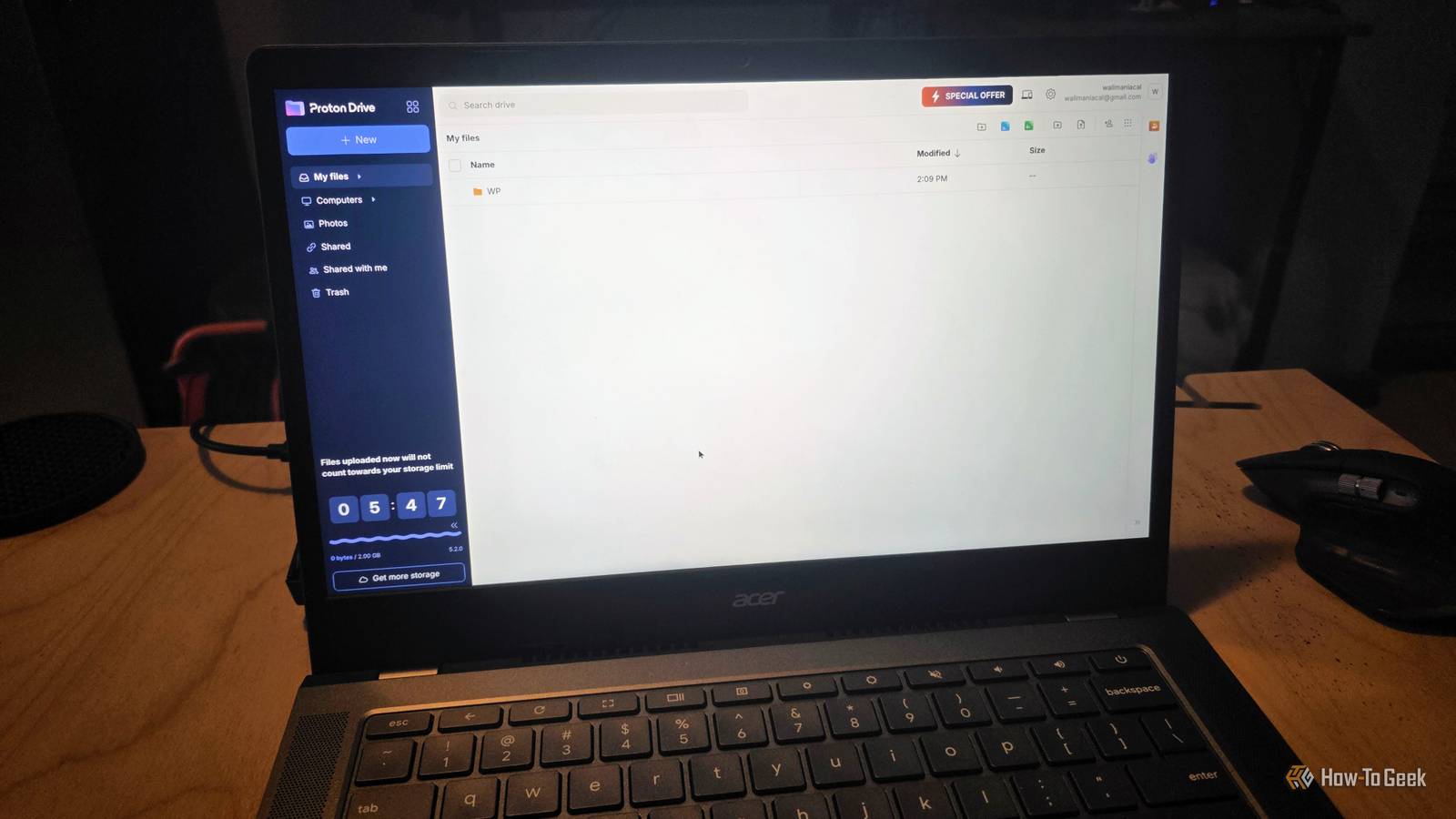
Published Sep 13, 2026, 2:00 PM EDT Sydney Butler is a technology writer with over 20 years of experience as a freelance PC technician and system builder and over a decade as a professional writer. He's worked for more than a decade in user education. On How-To Geek, he writes commerce content, guides, opinions, and specializes in editing hardware and cutting edge technology articles. Sydney started working as a freelance computer technician around the age of 13, before which he was in charge of running the computer center for his school. (He also ran LAN gaming tournaments when the teachers weren't looking!) His interests include VR, PC, Mac, gaming, 3D printing, consumer electronics, the web, and privacy. He holds a Master of Arts degree in Research Psychology with a minor in media and technology studies. His masters dissertation examined the potential for social media to spread misinformation. Outside of How-To Geek, he hosts the Online Tech Tips YouTube Channel, and writes for Online Tech Tips, Switching to Mac, and Helpdesk Geek. Sydney also writes for Expert Reviews UK. He also has bylines at 9to5Mac, 9to5Google, 9to5Toys, Tom's Hardware, MakeTechEasier, and Laptop Mag. When I first tried out Google Drive, it changed everything. Being able to share files and collaborate on documents with others so easily was a complete game-changer, and it made us all so much more productive. But as time has gone by and Google's famous "Don't be evil" mantra was quietly retired, there's been a growing sense of discomfort with the idea that Google knows what's in your emails or in your documents. It can read your tax returns, medical records, or anything else you let it ingest. Then (in theory) use that information to advertise to you, or for worse purposes only limited by our imaginations. But Google Drive is far from the only cloud-based service that offers the features that felt so revolutionary in the first place. Now you have many options, some of which are a far better choice if you care about your privacy. Proton Drive The best all-round Google Drive replacement Proton Drive is an easy recommendation for this list, since so many of us at How-To Geek recommend Proton Mail as a way to effectively de-Google your life. The company has already made a name for itself when it comes to an email service that doesn't use the contents of your email in ways you might not approve of, so why not apply the same model to other files in your cloud drive? The end-to-end encryption it uses means only you and anyone you explicitly share files with can see what's inside. The files are encrypted locally before being uploaded. That's what end-to-end means, after all. When you sign up, you're given a recovery passphrase to store somewhere safe, and if you lose it, Proton can't help you. Encryption locks everyone out without the right credentials! Like Google Drive, Proton offers cloud apps such as a word processor and a spreadsheet app. These tools aren't quite as varied and mature as Google's, but the basics are already in place and most people probably won't need more than what's already on offer. CryptPad The best private alternative to Google Docs and Sheets Credit: CryptPad Speaking of Sheets and Docs, if you're looking for a more private alternative to those tools, in particular, you should give CryptPad a look. CryptPad provides collaborative documents, spreadsheets, presentations, forms, kanban boards, whiteboards, Markdown documents, and code editors. CryptDrive stores those documents alongside uploaded files and organizes them much like a conventional cloud drive. Interestingly, you don't even have to register to use the "flagship instance" of the service. You can use the apps as a guest. However, obviously some features like cloud file storage are more limited if you don't register. But even if you do, you don't even have to provide your email address. Just set up a username and password, and you are ready to go. You don't have to use the official hosted version at all. Since it's open-source software, you can simply set up your own CryptPad server at home, or on a rented server. Just stick it in a Docker container, and you have your own private, encrypted cloud service. Nextcloud The best option if you want to own the cloud Credit: Nextcloud If your main focus is in fact self-hosting, then Nextcloud might actually be the best option. You can install Nextcloud on a home server, NAS, rented virtual server, or hardware managed by your organization. On top of this, you get browser-based file management; you can share folders, use public links, see version histories, and recover deleted files. Just like on Google Drive. Nextcloud is part of a wider ecosystem, though, so there's also a calendar, contacts, text chat, video chat, task management, and collaborative editing of documents. The big problem here is that although you can self-host something like Nextcloud to protect your privacy from the likes of Google, that doesn't mean you have the technical know-how to configure your own hosting platform to protect against hackers or data loss. This is why I'm aiming this recommendation at people who are already pretty deep into homelabbing or other self-hosting solutions. Peergos The privacy-maximalist option Credit: Peergos If none of the options we've looked at so far does anything to lessen your paranoia, then it's time to break out the big guns. Peergos offers "post-quantum" encryption, which means it's protected against attacks from computer systems that don't even exist yet, and might actually never exist. Your files are encrypted locally, and the decryption key resides on your computer and only on your computer. Peergos is also designed to conceal information about the structure of your storage, including filenames and directories, rather than protecting only the contents inside each file. This means that no one can learn anything from your file metadata, which is sometimes possible even when the actual file contents are encrypted. Peergos includes apps like a document editor, and you can share files with others easily, as well as revoke access. That's despite its peer-to-peer nature, where usually you'd need both people online for the file to be shared. Unfortunately, there is no free tier here, but it's quite affordable at the entry level. Mind your own business Even our Smart TVs are spying on us these days, and any bit of additional privacy is welcome if you ask me. While Google Drive is certainly extremely useful, every person has a point where the amount of privacy you need to sacrifice in order to benefit from these tools just doesn't make sense anymore. So I, for one, am glad that there are numerous alternative options, each offering something a little different. After all, we don't have the same needs when it comes to minding our own business.
The 4 Google Drive alternatives for people who actually care about privacy
Full Article
Original Source
Read the full article at Howtogeek →KhanList aggregates and links to publicly available news content. We do not host full articles from third-party sources. Always verify important information with original sources.